What is the Single Cell Analysis Market Size?
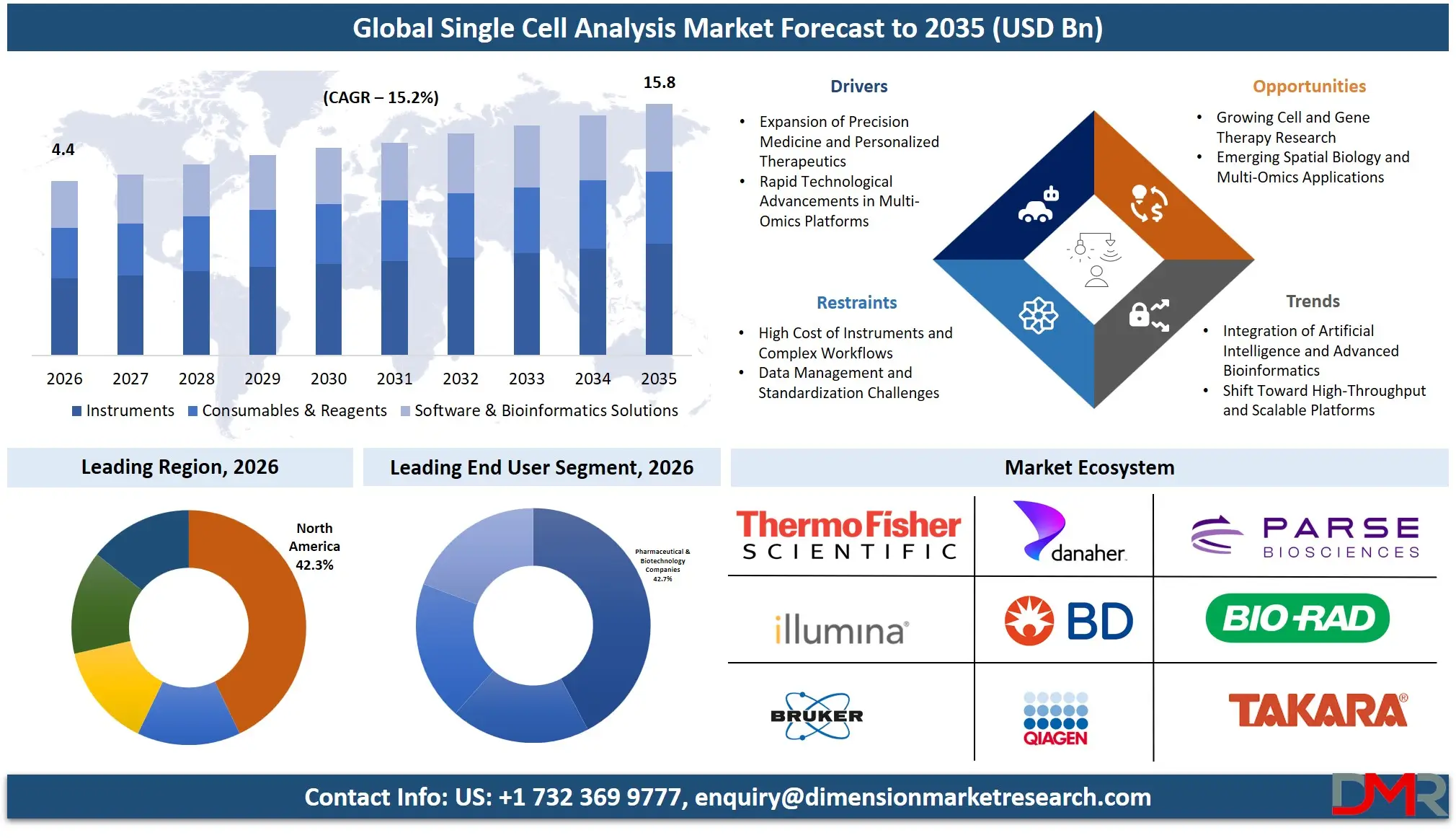
The Single Cell Analysis Market size is expected to be USD 4.4 billion in 2026 and increase at a compound annual growth rate of 15.2% to USD 15.8 billion in 2035 due to precision medicine and personalized therapy market expansion.
ℹ
To learn more about this report –
Download Your Free Sample Report Here
In the Single Cell Analysis Market, rapid market growth is occurring owing to an increased need for highly accurate cellular analysis in oncology, immunology, neuroscience, stem cell research, and precision medicine. The progress being made through NGS, microfluidics, flow cytometry, single-cell multi-omics, and bioinformatics is helping scientists conduct highly accurate analysis of cellular heterogeneity. Moreover, the growing funding for cell and gene therapies, increasing uses in biomarker discovery, and growing use of AI-based analysis software are also contributing to the rapid growth of the market.
The US Single Cell Analysis Market
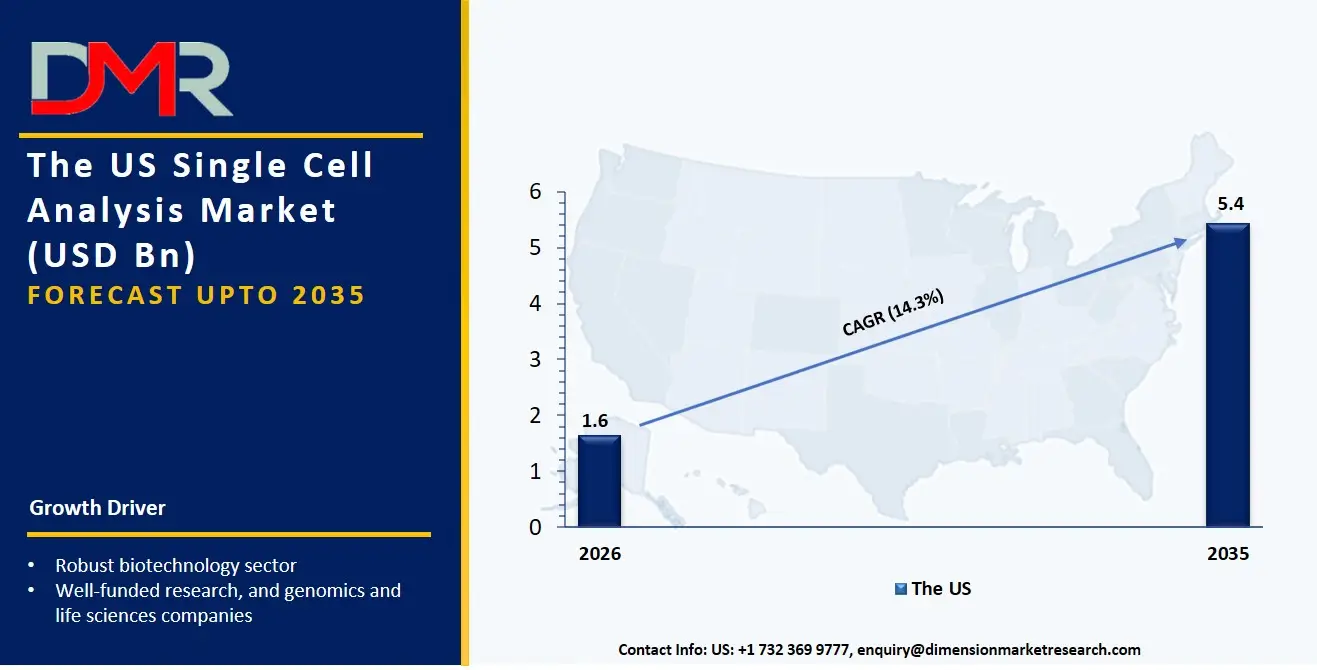
The US Single Cell Analysis Market size is estimated to be USD 1.6 billion in 2026 and is expected to increase at a CAGR of 14.3% over the forecast period.
ℹ
To learn more about this report –
Download Your Free Sample Report Here
The US is one of the leading markets for single cell analysis because of its robust biotechnology sector, well-funded research, and genomics and life sciences companies. The government continues to invest in precision medicine, cancer genomics, and cell therapy programs. These programs require advanced technologies, thereby fueling the demand for single cell analysis. Academics, pharma companies, and biotech companies are increasingly using single cell sequencing and multi-omics technologies in drug discovery and translational research. The area enjoys fast acceptance of artificial intelligence-based bioinformatics platforms and investments in genomics innovations through venture capital.
Europe Single Cell Analysis Market
The Europe Single Cell Analysis Market size is estimated to be USD 1.0 billion in 2026 and is expected to increase at a CAGR of 14.6% over the forecast period.
Europe represents an important player in the worldwide market for single cell analysis due to its excellent research facilities, collaboration programs in science, and conducive funding methods. The programs of Horizon Europe and other life sciences strategies motivate the use of cutting-edge genomic techniques. The region is seeing a rise in the application of single-cell technologies in cancer, immunology, and rare diseases studies. Focus on personalized healthcare, along with the rising investments in precision medicine and bio-technology, further drives market growth.
Japan Single Cell Analysis Market
The market size of Japan Single Cell Analysis will be USD 220 million in 2026 and at a CAGR of 14.8% in the forecast period.
The single cell analysis market in Japan is steadily increasing owing to the increasing investment in regenerative medicine, personalized medicine, and biomedical research. This is attributed to the presence of sophisticated healthcare facilities and an emphasis on innovation in Japan. There is an increasing use of single cell analysis by pharmaceutical firms in the development of drugs and biomarkers. The increasing government initiative in life sciences along with increased demand for personalized medicine and aging associated diseases is expected to create good market conditions.
Key Takeaways
- Market Size & Forecast: The Single Cell Analysis Market size is projected to reach USD 4.4 billion in 2026 and is anticipated to have a value of USD 15.8 billion in 2035.
- Growth Rate & Outlook: The Single Cell Analysis Market size is set to grow at a compound annual growth rate of 15.2% during the forecast period of 2026 to 2035.
- Primary Growth Drivers: Some of the major growth drivers in the market are Precision Medicine and Personalized Therapy Market Expansion, and more.
- Key Market Trends: Some of the major trends in the market are Incorporation of Artificial Intelligence and State-of-the-art Bioinformatics and more.
- By Application Type: Oncology segment is anticipated to get the majority share of the Single Cell Analysis Market in 2026.
- By Product Type: Instruments is expected to get the largest revenue share in 2026 in the Single Cell Analysis Market.
- By End User Type: Pharmaceutical & Biotechnology Companies segment is expected to get the largest revenue share in 2026 in the Single Cell Analysis Market.
- Regional Leadership: North America is set to lead the Single Cell Analysis Market with an estimated 42.3% share in 2026.
What is the Single Cell Analysis?
Single cell analysis is the technique that uses various analytical tools to perform analysis of the genome, transcriptome, proteome, epigenome, and functionalities of the single cells rather than studying the entire cell population together. The single cell analysis uses several equipment such as the flow cytometer, next-generation sequencing machine, PCR machine, microfluidics, cell imaging system, etc. Single cell analysis helps in understanding cellular diversity, analyzing rare cell populations, understanding disease biology, and developing therapies. It is extensively used in the field of precision medicine, cancer research, development of immunotherapy, regenerative medicine, and drug discovery. Some of the current trends in single cell analysis include spatial transcriptomics, multi-omics integration, AI based analytics, and high-throughput single cell sequencing systems analyzing millions of cells at once.
Use Cases
- Single-cell Analysis in Oncology: Single-cell technology allows identifying tumor heterogeneity, monitoring cancer progression, and discovering new biomarkers. The technologies allow scientists to develop individualized treatment and have a better understanding of mechanisms of drug resistance in complex tumor microenvironments.
- Research in Immunology: Single-cell analysis is used by researchers to study characteristics of various types of immune cells and immune responses. The analysis allows developing vaccines, studying autoimmune disorders, and improving immunotherapies.
- Creation of Cell and Gene Therapies: The application of single-cell analysis makes it possible to define characteristics of cell population used for therapy, thus making it easier to improve the quality of treatments. Single-cell analysis can be applied to CAR-T cell therapy, stem cell therapy, and regenerative medicine.
- Research in Neuroscience: Researchers use single-cell analysis to identify neuronal heterogeneity, study brain diseases, and understand cellular interactions within the brain. This makes it easier to conduct research related to neurodegeneration and precision neurology.
How AI Is Transforming the Single Cell Analysis Market
The development of AI technology in single cell research facilitates efficient interpretation of highly complex biological datasets in real time. The use of machine learning can help identify subpopulations of cells, recognize biomarkers, classify diseases and reveal biological insights which might otherwise have been unrecognizable using conventional methods of analysis.
Moreover, the use of AI helps improve workflow automation, facilitate quality control for sequencing data, expedite drug discovery initiatives, and predict cell behavior. With the increasing complexity of multi-omics datasets, the use of bioinformatics platforms driven by AI technology will likely prove crucial to the future.
Market Dynamic
Driving Factors in the Single Cell Analysis Market
Precision Medicine and Personalized Therapy Market Expansion
One of the key trends pushing the single cell analysis market forward is the rising importance of precision medicine. In order to understand mechanisms behind diseases and find appropriate treatment methods, it becomes essential to study patients at the cellular level. Single cell analysis allows gaining in-depth knowledge about patient-specific biological diversity and thus helps develop better treatments. The growth in the use of targeted drugs and immunotherapy fuels further demand for single cell technology.
Restraints in the Single Cell Analysis Market
Expensive Instruments and Complicated Procedures
The use of single-cell analysis is associated with substantial expenses on instruments, reagents, sequencing equipment, and other facilities. High costs may impede the application of the technology in small laboratories or research centers. Also, complicated procedures will not allow those organizations with low levels of technical skills to apply this technology.
Opportunities in the Single Cell Analysis Market
Development in Cell and Gene Therapy
Increased funding in cell and gene therapy opens new possibilities for single cell analytics service companies. It is important to characterize the cellular population in order to increase effectiveness and safety of treatment. There are new pipelines that will continue to generate a need for single-cell technology in the field of oncology, regenerative medicine, and rare disease.
Trends in the Single Cell Analysis Market
Incorporation of Artificial Intelligence and State-of-the-art Bioinformatics
AI-driven analytics is gaining significance in single-cell studies. The machine learning algorithms aid in cell classification, biomarker discovery, pattern recognition, and predictive modeling. This enables scientists to draw useful conclusions from big data while increasing efficiency and reproducibility.
Research Scope and Analysis
Single cell analysis refers to the study of individual cells, which allows a deep insight into understanding heterogeneity of cells, disease development, and precision medicine. Scope of Single Cell Analysis Market covers tools and technologies that are applied in genomics, transcriptomics, proteomics, and cell biology. Market drivers include advances in sequencing technologies, cancer studies, and drug discovery.
ℹ
To learn more about this report –
Download Your Free Sample Report Here
By Product Analysis
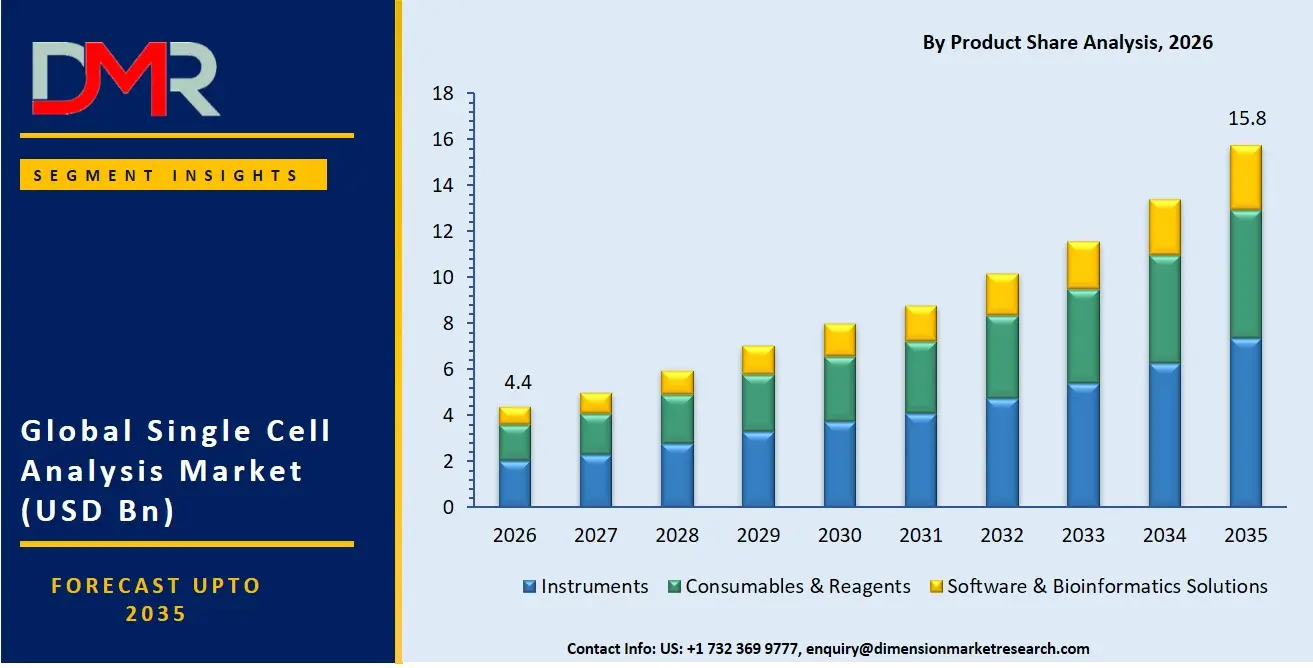
Instruments are projected to retain their dominance as the primary product segment, capturing a market share of an estimated 46.8% in 2026. The popularity of the segment is attributed to widespread use of flow cytometers, NGS systems, PCR systems, microfluidic devices, and high-end imaging systems in research laboratories and pharmaceutical organizations.
ℹ
To learn more about this report –
Download Your Free Sample Report Here
These instruments serve as a basis for single-cell applications and still gain from advances in technology that enhance throughput, sensitivity, and automation. At the same time, the Software & Bioinformatics Solutions segment is set to witness the highest growth rate, owing to the increasing need for complex analytical solutions used to process huge amounts of single-cell data.
By Technology Analysis
Single-Cell Transcriptomics is forecasted to dominate the largest market share of 34.2% in 2026 owing to its extensive use in the profiling of gene expression, identification of biomarkers, and characterizing of diseases. Scientists are turning more towards the use of transcriptomics for understanding cell heterogeneity and cellular mechanisms. This category will keep benefiting from ongoing developments in sequencing technology and falling cost of sequencing. Single-Cell Multi-Omics is forecasted to become the fastest growing technology segment in this industry as it allows scientists to simultaneously analyze the different molecular layers of single cells.
By Application Analysis
Oncology will hold a 38.5% market share in 2026 to emerge as the most dominant application segment. Oncological studies make extensive use of single-cell sequencing techniques for understanding tumor heterogeneity, identifying drug targets, and exploring ways of overcoming therapy resistance. Increasing incidence of cancers and growing interest in precision oncology are the key factors driving growth of the application segment. Cell & Gene Therapy Research will be the fastest growing application segment owing to advances in regenerative medicine and immunotherapies.
By End User Analysis
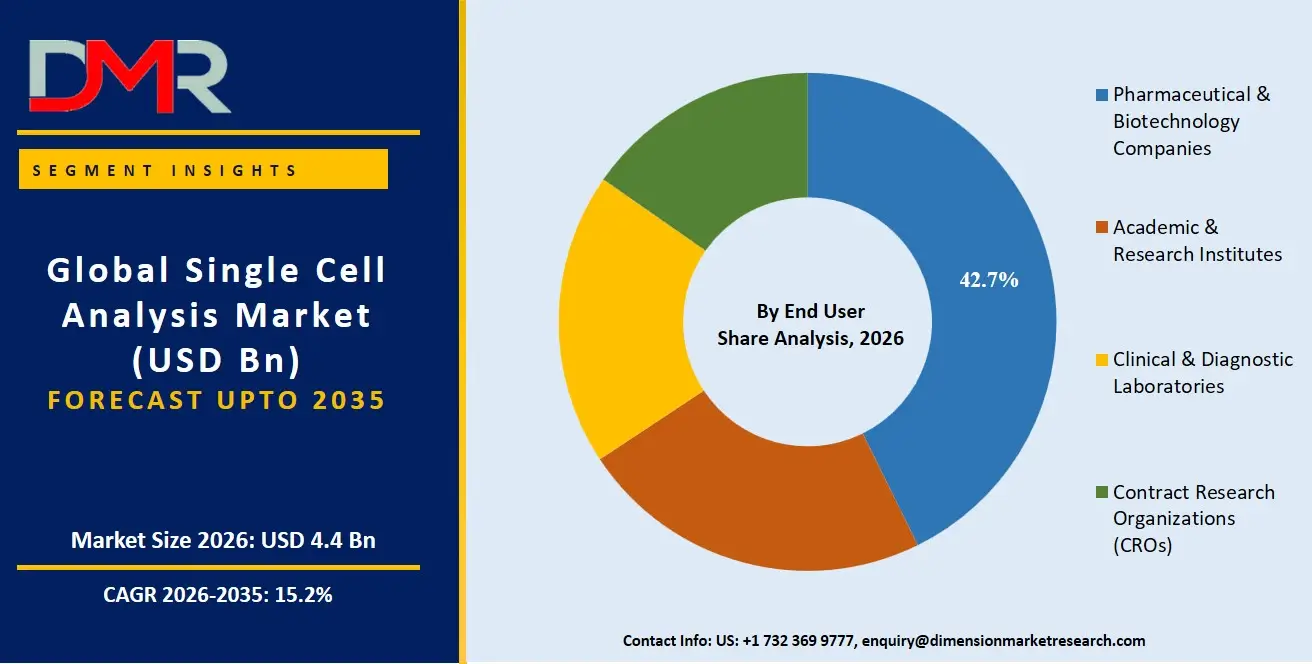
The Pharmaceutical & Biotechnology Companies segment is forecasted to hold a majority market share with around 42.7% of the market in 2026. The use of single-cell technology is quite high within these companies for drug discovery, biomarker discovery, target validation, and development of clinical trials. Investments in precision medicine and biologics further strengthen their leadership position. The fastest growing end user is the Academic & Research Institutes due to increased government and organization investment in genomic and life science studies.
The Single Cell Analysis Market Report is segmented on the basis of the following:
By Product
- Instruments
- Flow Cytometers
- NGS Systems
- PCR & qPCR Systems
- Microfluidics & Cell Isolation Platforms
- Cell Imaging & Analysis Systems
- Consumables & Reagents
- Software & Bioinformatics Solutions
By Technology
- Single-Cell Genomics
- Single-Cell Transcriptomics
- Single-Cell Proteomics
- Single-Cell Epigenomics
- Single-Cell Multi-Omics
By Application
- Oncology
- Immunology
- Stem Cell & Developmental Biology Research
- Neuroscience Research
- Cell & Gene Therapy Research
- Infectious Disease Research
By End User
- Pharmaceutical & Biotechnology Companies
- Academic & Research Institutes
- Clinical & Diagnostic Laboratories
- Contract Research Organizations (CROs)
Regional Analysis
Leading Region in the Single Cell Analysis Market
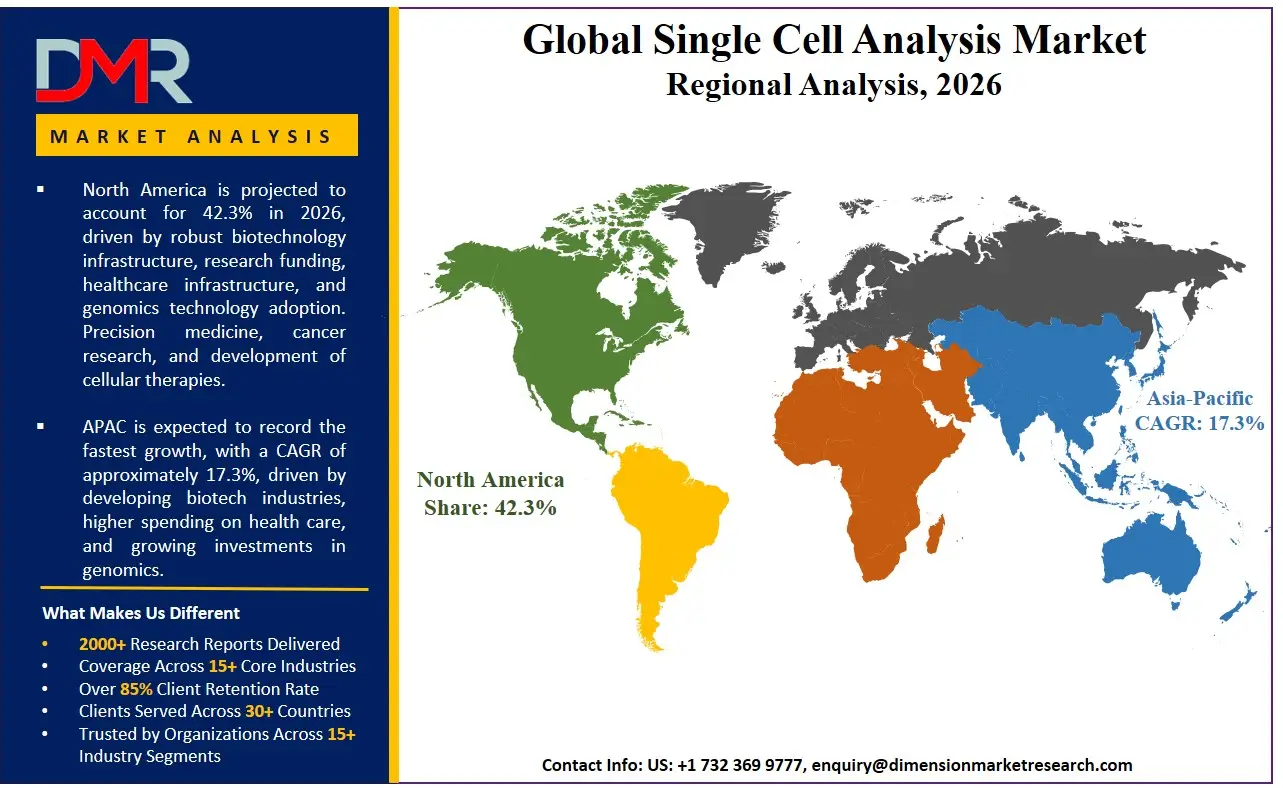
North America is likely to retain its top market position with a forecasted market share of 42.3% in 2026. North America is supported by robust biotechnology infrastructure, research funding, healthcare infrastructure, and genomics technology adoption. Precision medicine, cancer research, and development of cellular therapies are some of the areas where the region continues to make massive investments and thus retains its market dominance. Other factors that have contributed to the market dominance include the presence of research institutions, pharmaceutical companies, and technology firms in the region.
ℹ
To learn more about this report –
Download Your Free Sample Report Here
Fastest Growing Region in the Single Cell Analysis Market
The Asia Pacific is expected to grow at the fastest rate owing to developing biotech industries, higher spending on health care, and growing investments in genomics. Countries including China, Japan, South Korea, Singapore, and India are enhancing their research capabilities and focusing on the development of precision medicines. Higher drug research and development activities, use of advanced sequencing techniques, and favorable government policies are driving the growth of the market.
By Region
North America
Europe
- Germany
- The U.K.
- France
- Italy
- Russia
- Spain
- Benelux
- Nordic
- Rest of Europe
Asia-Pacific
- China
- Japan
- South Korea
- India
- ANZ
- ASEAN
- Rest of Asia-Pacific
Latin America
- Brazil
- Mexico
- Argentina
- Colombia
- Rest of Latin America
Middle East & Africa
- Saudi Arabia
- UAE
- South Africa
- Israel
- Egypt
- Rest of MEA
Competitive Landscape
In the single-cell analysis market, there is intense technological competition, constant innovation in products, and high spending on R&D. Companies operating in this market are concentrating on improving the capability of platforms, increasing throughput, implementing AI analytics, and creating multi-omics solutions as a way to gain competitive advantage. Collaborations with academic organizations, biotech companies, and pharma firms are still among important growth strategies in this market. Barriers to entry that are associated with technology, intellectual property, regulation, and bioinformatics know-how create competitive advantage for market players and favor collaboration in the market.
Some of the prominent players in the global Single Cell Analysis are:
- Thermo Fisher Scientific Inc.
- Danaher Corporation
- Becton, Dickinson and Company
- Illumina, Inc.
- Bio-Rad Laboratories, Inc.
- Agilent Technologies, Inc.
- Merck KGaA
- QIAGEN N.V.
- 10x Genomics, Inc.
- Standard BioTools Inc.
- Takara Bio Inc.
- Bio-Techne Corporation
- Bruker Corporation
- Oxford Nanopore Technologies plc
- Pacific Biosciences of California, Inc.
- Parse Biosciences, Inc.
- Mission Bio, Inc.
- Singleron Biotechnologies
- BioSkryb Genomics, Inc.
- Scale Biosciences, Inc.
- Other Key Players
Recent Developments
- In May 2026, Gustave Roussy, the biggest cancer research institute in Europe, has further strengthened its alliance with One Biosciences, which is a techbio company that specializes in single-cell technology and AI-powered precision diagnosis. As part of this collaboration, One Biosciences will use its OneMap™ platform to analyze anonymized frozen tumors from patients affected by four different types of cancer.
- In January 2026, Illumina, Inc. has unveiled the Illumina Billion Cell Atlas, the largest genetic perturbation dataset in the world that has been developed for accelerating AI-based drug discovery. The program is set as part of a larger project, the goal of which is to build up a 5 billion cell atlas in a period of three years. The Atlas will enable scientists to create an unparalleled mapping of human disease biology. This program has been co-created by the participating companies including AstraZeneca, Merck, and Eli Lilly and Company.
- In January 2026, SeekGene, a leading provider of single cell technology platforms in biotechnology, has launched a high throughput single cell DNA methylation and RNA multi omics solution at the Festival of Genomics & BioData 2026. The platform can be used to analyze simultaneously RNA transcriptomes, immune repertoires (TCR/BCR), and whole genome DNA methylation marks from the same single cell or nucleus. The multi-modal solution allows for an integrated approach to single cell multi-omics studies.
Report Details
| Report Characteristics |
| Market Size (2026) |
USD 4.4 Bn |
| Forecast Value (2035) |
USD 15.8 Bn |
| CAGR (2026–2035) |
15.2% |
| Historical Period |
2021 – 2025 |
| Forecast Period |
2027 – 2035 |
| Base Year |
2025 |
| Estimate Year |
2026 |
| Segments Covered |
By Product, By Technology, By Application, By End User |
| Regional Coverage |
North America – The US and Canada; Europe – Germany, The UK, France, Russia, Spain, Italy, Benelux, Nordic, & Rest of Europe; Asia-Pacific – China, Japan, South Korea, India, ANZ, ASEAN, Rest of APAC; Latin America – Brazil, Mexico, Argentina, Colombia, Rest of Latin America; Middle East & Africa – Saudi Arabia, UAE, South Africa, Turkey, Egypt, Israel, & Rest of MEA |
Frequently Asked Questions
How big is the Single Cell Analysis Market?
▾ The Single Cell Analysis Market size is expected to reach USD 4.4 billion by 2026 and is projected to reach USD 15.8 billion by the end of 2035.
What is the CAGR of the Single Cell Analysis Market from 2026 to 2035?
▾ The market is growing at a CAGR of 15.2 percent over the forecasted period.
What factors are driving the growth of the Single Cell Analysis Market?
▾ Precision Medicine and Personalized Therapy Market Expansion, and more are the factors driving the growth of the Single Cell Analysis Market.
What are the major trends in the Single Cell Analysis Market?
▾ Incorporation of Artificial Intelligence and State-of-the-art Bioinformatics, and more are some of the major trends in the market.
Who are the key players in the Single Cell Analysis Market?
▾ Some of the key players in the Single Cell Analysis Market include BD, Illumina, Merck, and more
How is the Single Cell Analysis Market segmented?
▾ The Single Cell Analysis Market is segmented by product, technology, application, end user.
Which region held the largest share of the Single Cell Analysis Market in 2026?
▾ North America is set to lead the Single Cell Analysis Market with an estimated 42.3% share in 2026.
Which region is expected to grow the fastest in the Single Cell Analysis Market?
▾ Asia Pacific is the fastest-growing region in the Single Cell Analysis Market during the forecast period.h