Spain Radiopharmaceuticals Market Snapshot
- Spain Radiopharmaceuticals Market Size in 2026: USD 224.0 Million
- Spain Radiopharmaceuticals Market Size in 2035: USD 458.0 Million
- Spain CAGR from 2026 to 2035: 8.3%
- Fluorine-18 Derivatives are the leading radioisotope segment in 2026: 43.2%
- Diagnostic Radiopharmaceuticals are the leading type segment in 2026: 68.4%
- Cyclotrons are the leading source segment in 2026: 49.1%
- Oncology is the leading application segment in 2026: 52.6%
- Hospitals are the leading end-user segment in 2026: 61.5%
What is the Spain Radiopharmaceuticals Market and its Market Size?
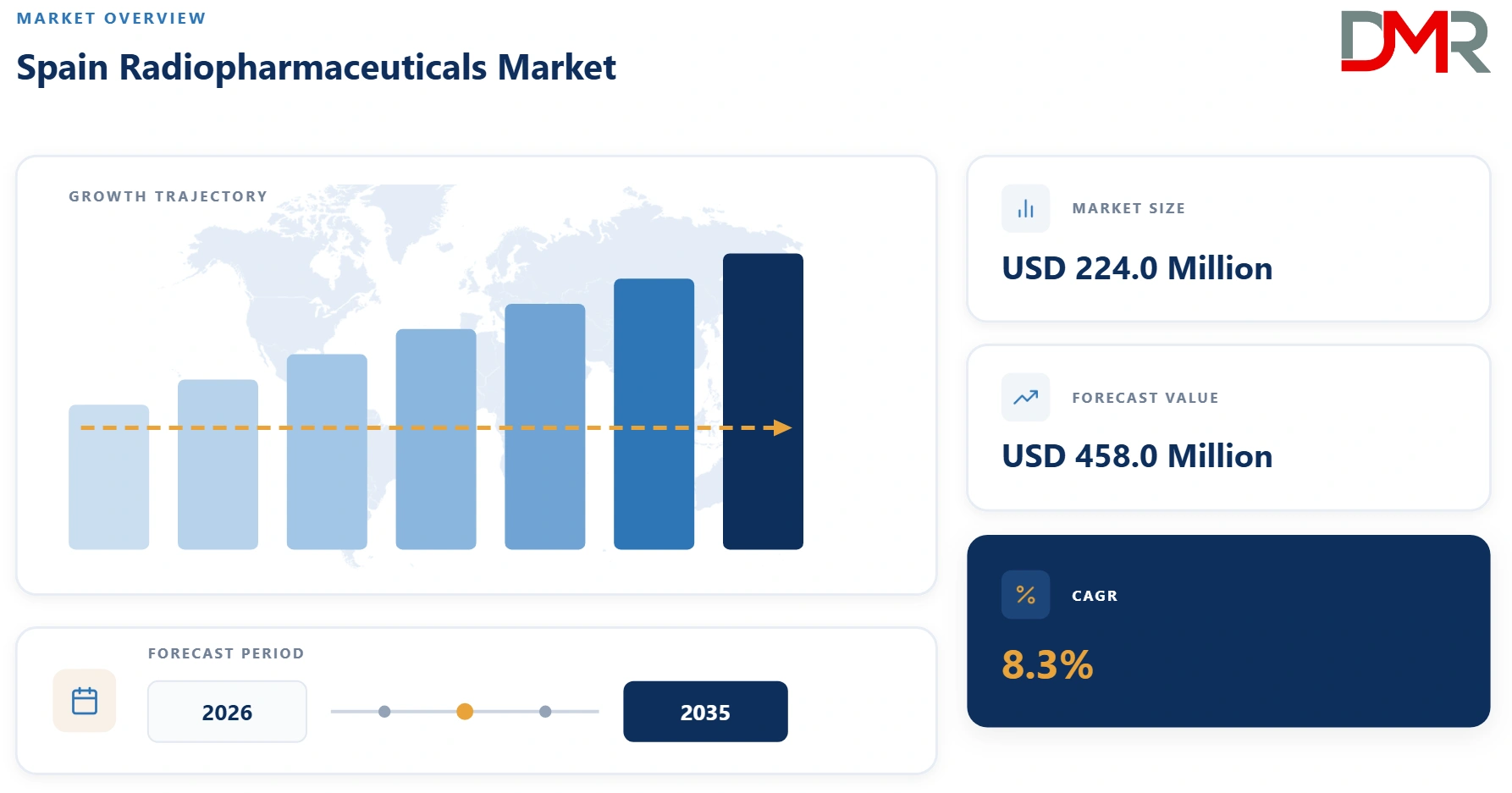
The Spain Radiopharmaceuticals Market is projected to reach USD 224.0 million in 2026 and grow at a compound annual growth rate of 8.3% from there until 2035 to reach a value of USD 458.0 million.
ℹ
To learn more about this report –
Download Your Free Sample Report Here
Radiopharmaceuticals are radioactive medicinal compounds used for diagnosing, monitoring, and treating diseases through nuclear medicine procedures. Spain’s market is supported by expanding PET and SPECT imaging infrastructure, increasing cancer incidence, rising adoption of precision oncology, and wider clinical use of fluorine-18, gallium-68, technetium-99, and lutetium-177 products. Growing hospital investment, advanced cyclotron networks, improved radiotracer availability, and expanding theranostic applications are strengthening demand. However, short isotope half-lives, specialized handling requirements, regulatory complexity, manufacturing costs, and regional differences in nuclear medicine access influence commercial availability and adoption across the country.
Use Cases
- Cancer Diagnosis and Staging: Radiopharmaceuticals support PET and SPECT imaging for detecting primary tumors, staging cancer, identifying metastases, and assessing treatment response. Fluorine-18 FDG remains widely used across multiple cancers, while gallium-68 PSMA and other targeted tracers improve prostate cancer evaluation. These applications help Spanish clinicians select suitable therapies, monitor disease progression, and identify recurrence with greater precision.
- Targeted Radionuclide Therapy: Therapeutic radiopharmaceuticals deliver radiation directly to cancer cells while limiting damage to surrounding healthy tissues. Lutetium-177-based therapies are increasingly used for prostate cancer and neuroendocrine tumors. Their combination with companion diagnostic imaging enables patient selection, treatment planning, response monitoring, and personalized dosimetry, supporting the expansion of theranostic cancer care across specialized Spanish hospitals and oncology institutions.
- Cardiovascular and Neurological Imaging: Nuclear medicine procedures help evaluate myocardial perfusion, cardiac function, cerebral blood flow, dopamine transport, and metabolic activity. Technetium-99m and fluorine-18 tracers assist physicians in detecting coronary artery disease, dementia, epilepsy, and neurodegenerative disorders. Spain’s aging population and growing neurological disease burden are supporting greater demand for non-invasive functional imaging alongside conventional anatomical imaging technologies.
- Endocrine and Organ Function Assessment: Radiopharmaceuticals are used to assess thyroid activity, renal function, bone metabolism, pulmonary perfusion, liver function, and gastrointestinal disorders. Functional information obtained through nuclear imaging can identify physiological abnormalities before structural changes become visible. Hospitals use these procedures for diagnosis, treatment planning, and follow-up, supporting efficient clinical decision-making across endocrinology, nephrology, orthopedics, and other medical specialties.
Key Takeaways
- Market Size: The Spain Radiopharmaceuticals Market is anticipated to be valued at USD 224.0 million in 2026 and is forecast to reach USD 458.0 million by 2035, expanding at a CAGR of 8.3%.
- Growth Outlook: Market expansion is supported by increasing cancer diagnoses, growing PET and SPECT procedure volumes, wider utilization of precision imaging, expanding theranostic applications, new radiotracer approvals, hospital infrastructure modernization, an aging population, and greater clinical adoption of targeted radioligand therapies.
- Primary Growth Drivers: Spain is expected to record approximately 301,184 new cancer cases in 2026, increasing demand for tumor detection, staging, recurrence assessment, therapy selection, and treatment monitoring. Growing prostate and neuroendocrine cancer treatment requirements are particularly strengthening demand for PSMA-targeted imaging and lutetium-177 therapies.
- By Radioisotope Analysis: Fluorine-18 Derivatives are projected to dominate with a 43.2% share in 2026, supported by extensive FDG-PET utilization, cyclotron availability, established oncology workflows, and applications in neurology and cardiology. Lutetium-177 is expected to record the highest CAGR due to expanding radioligand therapy adoption.
- By Type Analysis: Diagnostic Radiopharmaceuticals are anticipated to lead with a 68.4% share in 2026, driven by established PET and SPECT imaging practices and growing demand for early disease detection. Therapeutic Radiopharmaceuticals are expected to register the highest CAGR as targeted radionuclide treatments become increasingly integrated into precision oncology.
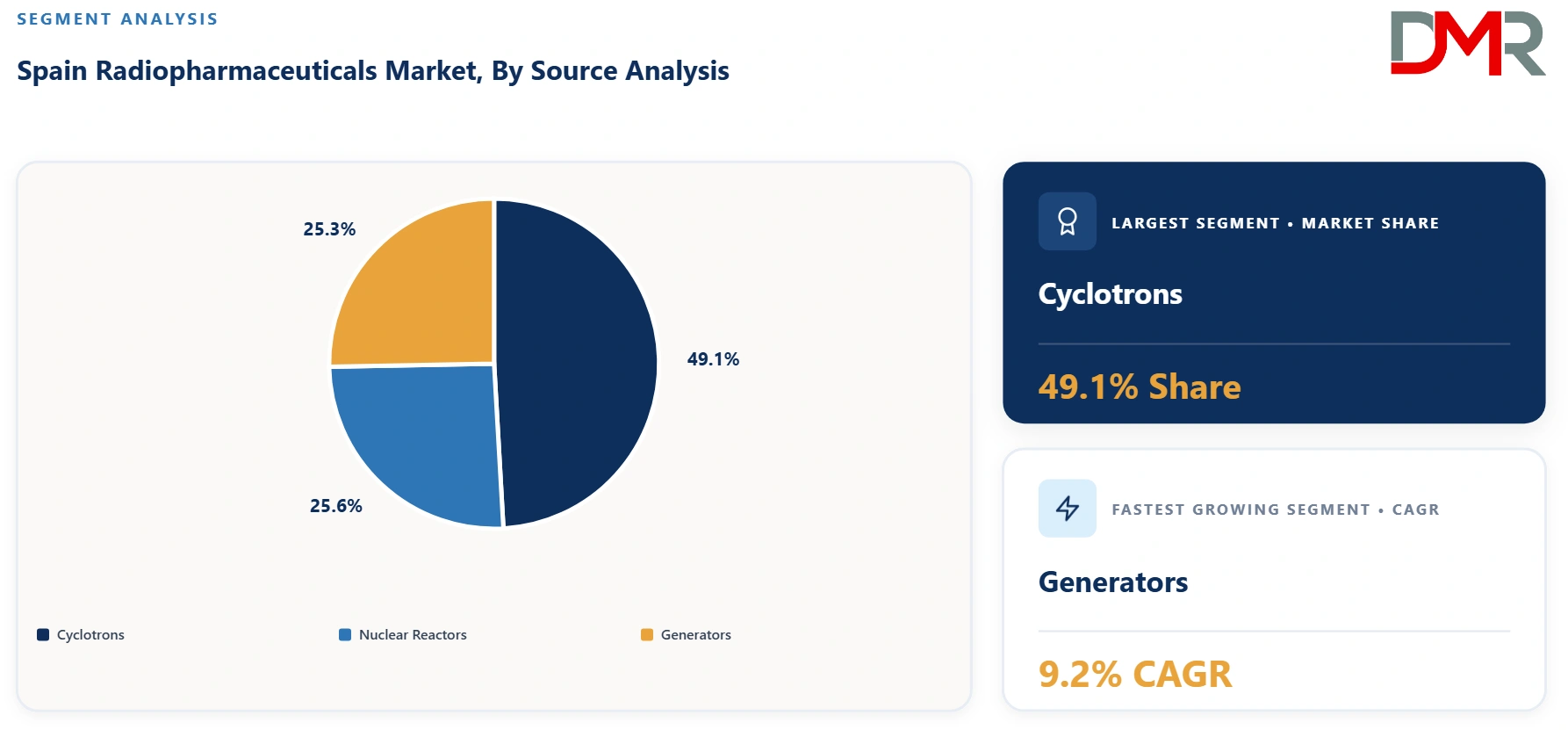
- By Source Analysis: Cyclotrons are projected to hold a 49.1% share in 2026, supported by Spain’s PET radiopharmacy network and the regular production of short-lived isotopes. Generators are expected to show the highest CAGR as gallium-68 and other generator-derived isotopes support decentralized radiopharmaceutical preparation.
- By Application Analysis: Oncology is anticipated to dominate with a 52.6% share in 2026 and record the highest CAGR. Increasing cancer incidence, PSMA-PET adoption, theranostic procedures, targeted treatment planning, and greater utilization of radiopharmaceuticals for staging and recurrence assessment are strengthening the segment.
- By End-User Analysis: Hospitals are expected to lead with a 61.5% share in 2026, supported by integrated oncology departments, nuclear medicine units, inpatient capabilities, and access to multidisciplinary specialists. Medical Imaging Centers are projected to record the highest CAGR as outpatient PET and SPECT services expand.
How AI and GenAI are Transforming the Spain Radiopharmaceuticals Market?
Artificial intelligence is improving radiopharmaceutical discovery, image reconstruction, lesion detection, segmentation, dosimetry, and treatment-response assessment. AI-enabled PET and SPECT workflows can enhance image quality while reducing acquisition time or administered activity, potentially improving patient throughput and radiation management. Predictive models support radiotracer selection, biodistribution analysis, and personalized treatment planning. Generative AI can accelerate molecular design, identify promising ligand-isotope combinations, organize clinical evidence, and automate reporting. Spanish hospitals can also use AI for production scheduling, isotope-demand forecasting, quality control, and logistics optimization, reducing wastage associated with short-lived products while improving nuclear medicine workflow efficiency.
Key Drivers in the Spain Radiopharmaceuticals Market
Increasing Cancer Burden and Demand for Precision Oncology
Spain is projected to record approximately 301,184 new cancer cases in 2026, representing a 2% increase from the 296,103 cases estimated for 2025. This expanding disease burden is increasing demand for radiopharmaceuticals used in tumor detection, staging, treatment selection, recurrence identification, and response monitoring. PET tracers targeting glucose metabolism, somatostatin receptors, and prostate-specific membrane antigen are becoming increasingly important in clinical pathways. Growing use of radioligand therapies for prostate and neuroendocrine tumors is also promoting theranostic models that connect diagnostic imaging with targeted treatment, strengthening radiopharmaceutical utilization across Spanish hospitals and cancer centers.
Expansion of Nuclear Medicine Infrastructure and Clinical Adoption
Investment in PET-CT, SPECT-CT, cyclotron facilities, radiopharmacies, and specialized nuclear medicine departments is expanding access to advanced diagnostic and therapeutic procedures. Hospital Universitario del Vinalopó reported that its annual nuclear medicine procedures increased from 2,393 in 2011 to 9,497 in 2025, demonstrating rising utilization within an individual Spanish institution. The increasing availability of hybrid imaging supports more accurate anatomical and functional assessment, while improved radiopharmacy networks facilitate reliable tracer distribution. Training of nuclear medicine physicians, radiopharmacists, technologists, and medical physicists is further enabling broader adoption across oncology, cardiology, neurology, endocrinology, and other specialties.
Restraints in the Spain Radiopharmaceuticals Market
Short Half-Lives and Complex Supply-Chain Requirements
Several clinically important radioisotopes have short physical half-lives, creating strict production, transportation, scheduling, and administration requirements. Fluorine-18 must reach imaging facilities rapidly, while gallium-68 availability depends on generator capacity or nearby production infrastructure. Manufacturing interruptions, transportation delays, equipment failures, or inaccurate demand planning can lead to product expiration and financial losses. Spain’s geographic distribution, including island territories and areas located far from major radiopharmacies, can complicate timely access. Maintaining backup production capacity, validated transportation systems, radiation-safe packaging, and coordinated hospital schedules adds considerable operational cost and limits consistent availability outside major urban healthcare centers.
Regulatory Complexity and Shortage of Specialized Professionals
Radiopharmaceutical production requires compliance with pharmaceutical manufacturing standards, radiation-protection legislation, nuclear safety requirements, hospital preparation rules, pharmacovigilance obligations, and transportation regulations. Facilities need specialized authorization, validated clean-room operations, quality-control laboratories, trained personnel, and documentation for every production batch. The limited availability of radiopharmacists, nuclear medicine physicians, medical physicists, and qualified production technicians can delay capacity expansion. Small-scale or individualized hospital preparations also require certification from the Spanish Agency of Medicines and Medical Devices. These requirements protect patients but increase capital expenditure, operating costs, approval timelines, and administrative complexity for manufacturers, hospitals, and imaging centers.
Growth Opportunities in the Spain Radiopharmaceuticals Market
Expansion of Theranostics and Targeted Radioligand Therapy
Theranostics represents a major opportunity by using related radiopharmaceuticals to identify eligible patients and subsequently deliver targeted radiation therapy. PSMA-directed products for prostate cancer and somatostatin-receptor products for neuroendocrine tumors are establishing clinical and commercial pathways for this approach. Lutetium-177 adoption can expand as hospitals develop treatment rooms, dosimetry capabilities, radiation-waste systems, and multidisciplinary care teams. Further opportunities exist in alpha-emitting therapies and radiopharmaceuticals targeting fibroblast activation protein, carbonic anhydrase IX, and other tumor biomarkers. Partnerships among manufacturers, Spanish hospitals, research institutes, and oncology networks can accelerate trials, clinical adoption, and patient access to personalized treatment.
Decentralized Production and Broader Regional Access
Generators, compact cyclotrons, automated synthesis systems, and modular radiopharmacies can increase tracer availability outside Spain’s largest metropolitan areas. Decentralized production reduces transportation distances, improves reliability, and enables regional hospitals to introduce gallium-68 and fluorine-18 procedures. Commercial opportunities also exist in dose preparation, quality-control equipment, radiation monitoring, cold kits, software, logistics, and professional training. Public-private investment in regional nuclear medicine networks could reduce geographic inequalities and increase procedure volumes. Longer-lived tracers and improved distribution models may extend access to imaging centers that lack nearby cyclotron infrastructure, creating opportunities for manufacturers and specialist radiopharmaceutical service providers.
Trends in the Spain Radiopharmaceuticals Market
Growing Adoption of PSMA-Based Prostate Cancer Imaging
PSMA-targeted PET imaging is becoming increasingly important for staging, biochemical recurrence detection, treatment planning, and selecting patients for radioligand therapy. Spain’s approval of Telix’s Illuccix gallium-68 PSMA-PET imaging agent in August 2025 expanded the availability of targeted prostate cancer diagnostics. Generator-based preparation can support hospitals without direct access to cyclotron-produced tracers, strengthening decentralized adoption. As clinical guidelines increasingly incorporate PSMA imaging, demand is expected to expand across urology, oncology, radiation oncology, and nuclear medicine departments. Integration with lutetium-177 therapies will further support end-to-end theranostic pathways and personalized prostate cancer management.
Increasing Use of Personalized Dosimetry and Hybrid Imaging
Personalized dosimetry is gaining importance as radiopharmaceutical therapy expands and clinicians seek to optimize tumor radiation while limiting exposure to healthy organs. Quantitative SPECT-CT and PET-CT imaging can measure biodistribution, absorbed doses, and treatment response across multiple therapy cycles. Artificial intelligence, improved detector technology, digital PET systems, and advanced reconstruction software are enhancing image quality and quantification. Spain’s implementation of European radiation-safety requirements is also supporting greater attention to individualized planning. Hospitals that invest in dosimetry software, medical physics expertise, and integrated imaging workflows will be better positioned to provide high-quality therapeutic nuclear medicine and participate in clinical research.
Research Scope and Analysis
Spain Radiopharmaceuticals Market is analyzed by radioisotope covering Fluorine derivatives Technetium Lutetium Gallium Zirconium choline urea and others, by type covering diagnostic and therapeutic products, by source covering cyclotrons reactors and generators, by application covering oncology cardiology neurology endocrinology and others, by end user covering hospitals imaging centers cancer institutes and others.
ℹ
To learn more about this report –
Download Your Free Sample Report Here
By Radioisotope Analysis
Fluorine-18 Derivatives are expected to dominate the radioisotope segment with a 43.2% share in 2026, supported by the established role of FDG-PET in oncology and expanding neurological and cardiac imaging.
Lutetium-177 is projected to register the highest CAGR of approximately 10.2%, exceeding the overall market CAGR, owing to growing adoption of targeted radioligand therapies for prostate and neuroendocrine cancers.
By Type Analysis
Diagnostic Radiopharmaceuticals are anticipated to dominate the type segment with a 68.4% share in 2026, supported by established PET and SPECT procedures and demand for early and accurate disease detection.
Therapeutic Radiopharmaceuticals are expected to record the highest CAGR of approximately 10.6%, above the market average, driven by precision oncology and increasing use of lutetium-based radioligand treatments.
By Source Analysis
Cyclotrons are projected to lead the source segment with a 49.1% share in 2026, owing to regular production of fluorine-18 and other short-lived PET isotopes across established radiopharmacy networks.
Generators are anticipated to record the highest CAGR of approximately 9.2%, supported by decentralized gallium-68 preparation, improving accessibility for hospitals without nearby cyclotron production facilities.
By Application Analysis
Oncology is expected to dominate the application segment with a 52.6% share in 2026, driven by growing cancer incidence and extensive use of radiopharmaceuticals in diagnosis, staging, treatment planning, and monitoring.
Oncology is also projected to register the highest CAGR of approximately 9.1%, supported by PSMA-targeted imaging, theranostics, and expanding radioligand therapy applications.
By End-User Analysis
Hospitals are anticipated to lead the end-user segment with a 61.5% share in 2026, supported by integrated nuclear medicine departments, oncology services, treatment infrastructure, and multidisciplinary clinical capabilities.
Medical Imaging Centers are expected to record the highest CAGR of approximately 8.9%, supported by growing outpatient imaging demand, private investment, and expanding access to PET and SPECT services.
The Spain Radiopharmaceuticals Market Report is Segmented Based on the Following
By Radioisotope
- Fluorine-18 Derivatives
- Technetium-99
- Lutetium Lu 177
- Gallium-68
- Zirconium-89
- 11C-Choline
- 14C-Urea
- Other Radioisotopes
By Type
- Diagnostic Radiopharmaceuticals
- Therapeutic Radiopharmaceuticals
By Source
- Cyclotrons
- Nuclear Reactors
- Generators
By Application
- Oncology
- Cardiology
- Neurology
- Endocrinology
- Other Applications
By End User
- Hospitals
- Medical Imaging Centers
- Cancer Research Institutes
- Other End Users
Regulatory Landscape
Radiopharmaceuticals in Spain are regulated as medicinal products under European Union pharmaceutical legislation and national requirements administered by the Spanish Agency of Medicines and Medical Devices. Production facilities must comply with good manufacturing practices, while radioactive materials are additionally subject to nuclear safety, radiation protection, transportation, environmental, and occupational exposure requirements. Hospital and small-scale preparations require controlled facilities, validated production procedures, trained professionals, batch documentation, and appropriate AEMPS certification. Regulations strengthen patient safety and product quality but increase development and operating costs. Companies with robust quality systems, local regulatory knowledge, dependable pharmacovigilance, and compliant isotope logistics are better positioned to obtain authorization and serve Spanish healthcare institutions.
Technology Analysis
Technological development is shifting Spain’s market toward digital PET-CT, SPECT-CT, automated radiopharmaceutical synthesis, generator-based isotope production, quantitative imaging, and personalized dosimetry. High-sensitivity scanners can reduce acquisition time or administered activity while improving lesion detection. Automated modules limit operator exposure, improve production consistency, and enable hospitals to prepare multiple tracers. Artificial intelligence supports reconstruction, segmentation, workflow prioritization, dose calculation, and treatment-response assessment. Emerging alpha emitters and targeted ligands offer new therapeutic possibilities but require specialized manufacturing and safety infrastructure. Companies providing integrated radiopharmaceutical, scanner, software, dosimetry, and service solutions can capture opportunities as Spanish hospitals modernize nuclear medicine capabilities.
Competitive Landscape
The Spain Radiopharmaceuticals Market combines multinational pharmaceutical companies, specialized nuclear medicine manufacturers, isotope producers, equipment suppliers, and regional radiopharmacies. Curium, Novartis, GE HealthCare, Telix Pharmaceuticals, Bayer, Bracco, and Siemens Healthineers maintain strong positions through established products, distribution networks, manufacturing capabilities, and clinical partnerships. Competition is increasingly centered on PSMA imaging, lutetium-177 therapies, novel PET tracers, supply reliability, and theranostic portfolios. Companies are pursuing regulatory approvals, acquisitions, licensing agreements, hospital collaborations, and production expansion. Local cyclotron access, rapid delivery capabilities, reimbursement, and specialized clinical evidence remain critical competitive factors.
Some of the Prominent Players in the Spain Radiopharmaceuticals Market Are
- Curium Pharma
- Novartis AG
- Advanced Accelerator Applications
- GE HealthCare Technologies Inc.
- Telix Pharmaceuticals Limited
- Bayer AG
- Bracco S.p.A.
- Blue Earth Diagnostics Limited
- Siemens Healthineers AG
- PETNET Solutions Inc.
- Lantheus Holdings Inc.
- Jubilant Radiopharma
- Eckert & Ziegler SE
- IBA RadioPharma Solutions
- ITM Isotope Technologies Munich SE
- Isotopia Molecular Imaging Ltd.
- Orano Med
- NorthStar Medical Radioisotopes LLC
- SHINE Technologies LLC
- NTP Radioisotopes SOC Ltd.
- BWX Technologies Inc.
- Cardinal Health Inc.
- PharmaLogic Holdings Corp.
- SOFIE Biosciences Inc.
- Nucleus RadioPharma Inc.
- AtomVie Global Radiopharma Inc.
- ROTOP Pharmaka GmbH
- ABX Advanced Biochemical Compounds GmbH
- Clarity Pharmaceuticals Ltd.
- Perspective Therapeutics Inc.
- Fusion Pharmaceuticals Inc.
- Bristol Myers Squibb
- RayzeBio Inc.
- Eli Lilly and Company
- POINT Biopharma Global Inc.
- AstraZeneca plc
- Sanofi S.A.
- RadioMedix Inc.
- Radiopharm Theranostics Limited
- Nordion Canada Inc.
- Other Key Players
Recent Developments
- August 2026: Curium agreed to acquire Lantheus Holdings in a transaction valued at up to USD 8.0 billion, combining two major radiopharmaceutical businesses and expanding capabilities across diagnostic imaging agents, therapeutic pipelines, manufacturing, and global distribution.
- January 2026: Telix reported that commercial launches of Illuccix had commenced in Spain and other European markets after receiving Spanish authorization, expanding physician access to gallium-68 PSMA-PET imaging for prostate cancer detection and treatment planning.
- November 2025: Novartis opened a new 10,000-square-foot radioligand therapy manufacturing facility in Carlsbad, California, strengthening its specialized production network and supporting rising international demand for precision radioligand treatments and next-generation therapeutic products.
- August 2025: Telix received Spanish approval for Illuccix, its gallium-68 gozetotide PSMA-PET imaging product. The authorization completed the national phase of its European submission and expanded targeted prostate cancer imaging options for Spanish physicians.
Report Details
| Report Characteristics |
| Market Size (2026) |
USD 224.0 Mn |
| Forecast Value (2035) |
USD 458.0 Mn |
| CAGR (2026–2035) |
8.3% |
| Historical Data |
2021 – 2025 |
| Forecast Data |
2026 – 2035 |
| Base Year |
2025 |
| Segments Covered |
By Radioisotope, By Type, By Source, By Application, By End User |
Frequently Asked Questions
How big is the Spain Radiopharmaceuticals Market?
▾ The Spain Radiopharmaceuticals Market is projected to be valued at USD 224.0 million in 2026 and reach USD 458.0 million by 2035.
What is the CAGR of the Spain Radiopharmaceuticals Market from 2026 to 2035?
▾ The Spain Radiopharmaceuticals Market is expected to expand at a compound annual growth rate of 8.3% between 2026 and 2035.
What factors are driving the growth of the Spain Radiopharmaceuticals Market?
▾ Growth is driven by rising cancer incidence, increasing PET and SPECT utilization, expanding nuclear medicine infrastructure, radiotracer innovation, PSMA imaging, theranostic adoption, targeted radioligand therapies, and demand for personalized disease diagnosis and treatment.
What are the major trends in the Spain Radiopharmaceuticals Market?
▾ Major trends include growing PSMA-PET adoption, increasing use of lutetium-177 therapies, personalized dosimetry, hybrid PET-CT and SPECT-CT imaging, generator-based isotope production, AI-supported image analysis, and integration of diagnostic and therapeutic radiopharmaceuticals.
Who are the key players in the Spain Radiopharmaceuticals Market?
▾ Key players include Curium Pharma, Novartis, Advanced Accelerator Applications, GE HealthCare, Telix Pharmaceuticals, Bayer, Bracco, Siemens Healthineers, Lantheus Holdings, Jubilant Radiopharma, Eckert & Ziegler, and ITM Isotope Technologies Munich.
How is the Spain Radiopharmaceuticals Market segmented?
▾ The market is segmented by radioisotope into Fluorine-18 Derivatives, Technetium-99, Lutetium-177, Gallium-68, Zirconium-89, 11C-Choline, 14C-Urea, and others, by type into diagnostic and therapeutic products, by source into cyclotrons, nuclear reactors, and generators, by application, and by end user.