What is the Spatial Omics Market Size?
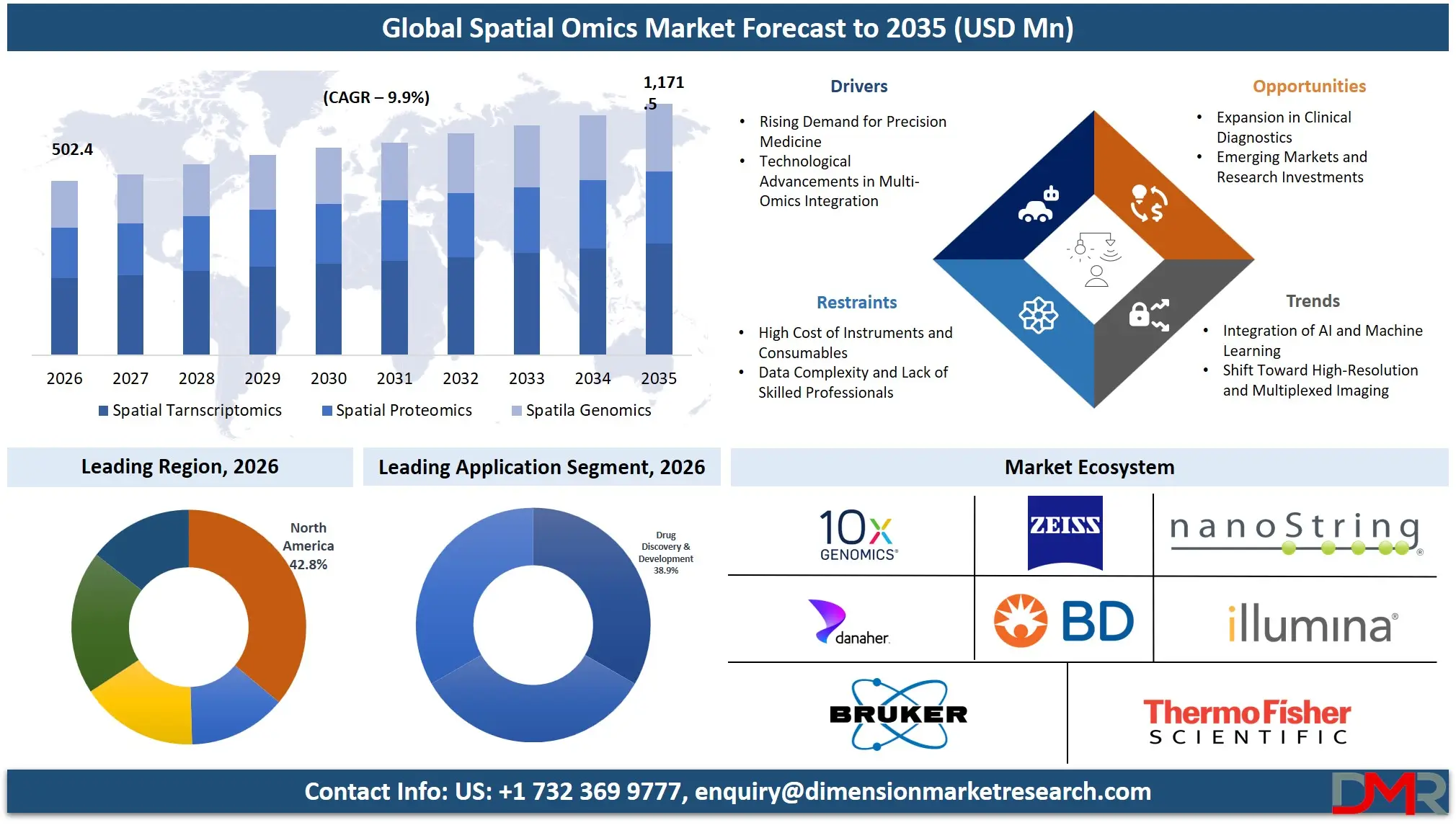
The Spatial Omics Market size is expected to be USD 502.4 million in 2026 and increase at a compound annual growth rate of 9.9% to USD 1,171.5 million in 2035 due to increased demand for personalized medicine.
ℹ
To learn more about this report –
Download Your Free Sample Report Here
There has been a noticeable upsurge in the spatial omics market because of the increasing demand for technologies capable of mapping RNA, DNA, and protein molecules within tissues. Spatial omics technology encompasses spatial transcriptomics, spatial proteomics, and spatial genomics, among others, as well as an extensive range of associated products.
The increased application of this technology to precision medicine, drug discovery, and biomedical research has been a major factor in increasing its adoption rate by entities involved in the pharma and biotech industries as well as academic research institutions. Moreover, advancements in science, particularly the advent of AI integration, multi-omics, and high-resolution imaging technologies, have spurred innovation in this space.
ℹ
To learn more about this report –
Download Your Free Sample Report Here
The US Spatial Omics Market
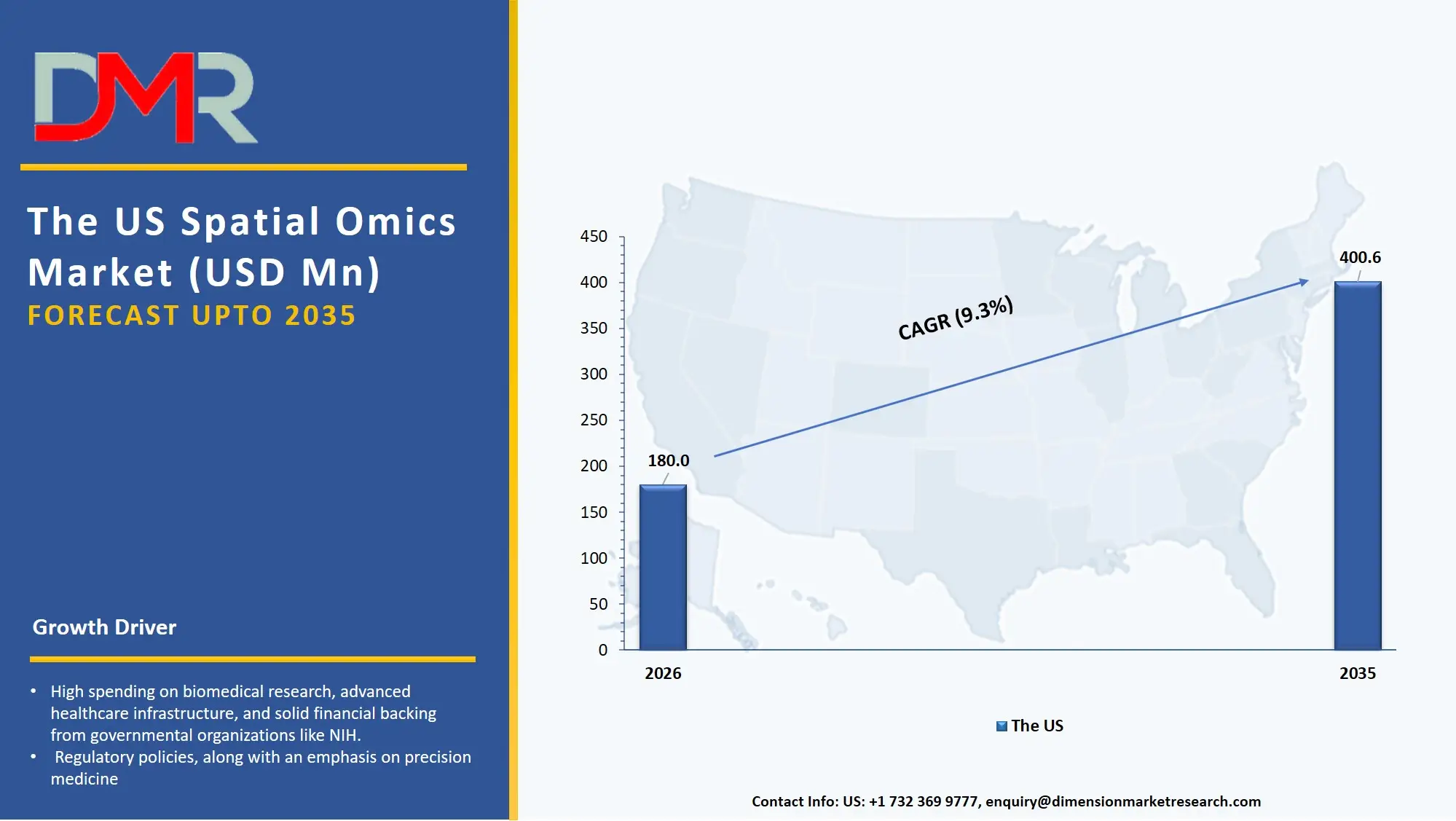
The US Spatial Omics Market size is estimated to be USD 180 million in 2026 and is expected to increase at a CAGR of 9.3% over the forecast period.
ℹ
To learn more about this report –
Download Your Free Sample Report Here
The US spatial omics market is supported by high spending on biomedical research, advanced healthcare infrastructure, and solid financial backing from governmental organizations like NIH. The geographical location enjoys an early adoption of technological innovations along with an excellent synergy between educational institutes and biotechnology companies. Regulatory policies, along with an emphasis on precision medicine, drive the growth. The availability of key players and high demand for applications in oncology research are some of the factors contributing to market dominance.
Europe Spatial Omics Market
The Europe Spatial Omics Market size is estimated to be USD 120.6 million in 2026 and at a CAGR of 9.4% over the forecast period.
The spatial omics industry is gradually growing within Europe due to favorable regulatory regimes and various initiatives such as the European Green Deal, which indirectly encourages innovative practices in the realm of sustainable healthcare. Some of the leading countries in terms of the uptake include Germany, the UK, and France, where the favorable research environment exists. One of the drivers of the industry includes collaboration between public entities and private sector organizations in the sphere of genomic studies.
Japan Spatial Omics Market
The market size of Japan Spatial Omics will be USD 20.0 million in 2026 and at a CAGR of 8.9% in the forecast period.
There is growth in the spatial omics market in Japan fueled by sophisticated healthcare delivery systems, state-funded research and development activities, and increased demand for precision medicines. Urbanization, technology, and innovations in life sciences contribute to this growth. The concentration of research and treatment related to ailments linked to an aging population including cancers and neurodegenerative conditions in Japan leads to a surge in demand. Expensive technology and lack of local production capacity are barriers to growth in this market.
Key Takeaways
- Market Size & Forecast: The Spatial Omics Market size is projected to reach USD 502.4 million in 2026 and is anticipated to have a value of USD 1,171.5 million in 2035.
- Growth Rate & Outlook: The Spatial Omics Market size is set to grow at a compound annual growth rate of 9.9% during the forecast period of 2026 to 2035.
- Primary Growth Drivers: Some of the major growth drivers in the market include Increased Demand for Personalized Medicine, and more.
- Key Market Trends: Some of the major trends in the market are Integration of AI and Machine Learning in Spatial Omics, and more.
- By Application: The drug discovery & development segment is anticipated to get the majority share of the Spatial Omics market in 2026.
- By Technology: Spatial transcription segment is expected to get the largest revenue share in 2026 in the Spatial Omics market.
- By Offering: Consumables segment is expected to get the largest revenue share in 2026 in the Spatial Omics market.
- Regional Leadership: North America is set to lead the Spatial Omics market with an estimated 42.8% share in 2026.
What is the Spatial Omics?
Spatial omics is referred to as a new multidisciplinary area involving the use of molecular biology, imaging techniques, and sequencing technologies to study the expressions of genes, protein localizations, and genetic mutations within tissues in a spatially defined manner. The techniques used in spatial omics include spatial transcriptomics, spatial proteomics, and spatial genomics among others. Spatial omics allows researchers to have high resolution information about the heterogeneity of cells, tissue microenvironment, and biological processes involved. Spatial omics is now becoming relevant in the biomedical field due to their dependence on spatial knowledge.
Use Cases
- Oncology Research via Spatial Omics: Useful for investigating tumor heterogeneity, tumor-microenvironment interactions, and providing a path towards targeted treatments to improve the effectiveness of immunotherapies through biomarker discovery.
- Applications of Spatial Omics in Drug Discovery: Useful for drug target discovery and validation in the tissue setting.
- Neuroscience Research via Spatial Omics: Useful for mapping neurological networks and gene expression within brain tissue to study neurodegenerative diseases such as Alzheimer's and Parkinson's.
- Precision Medicine via Spatial Omics: Useful for creating a personalized medicine approach using molecular spatial analysis.
How AI Is Transforming the Spatial Omics Market?
AI is making a huge difference to the abilities of spatial omics through its ability to analyze massive volumes of complicated data sets. Through the use of AI-based algorithms, spatial omics will be able to identify spatial patterns, interactions between cells, as well as markers for various diseases more accurately.
Through the improvement of imaging, data interpretation and predictive modeling for drug discovery and diagnostic purposes, the use of AI will make decision making more effective and boost innovation through the use of multi-omics data.
Market Dynamic
Driving Factors in the Spatial Omics Market
Increased Demand for Personalized Medicine
The increased demand for personalized medicine is a significant factor that has resulted in the rapid growth of the spatial omics market. The current trend in modern-day medicine is toward personalized medicine, which demands insights into the molecular and spatial attributes of the disease. Spatial omics plays an essential part in deciphering the relationship between some specific biomarkers of diseases and provides an accurate diagnosis of diseases and effective treatment solutions. The rising prevalence of chronic illnesses such as cancer has prompted the demand for advanced diagnostics techniques.
Restraints in the Spatial Omics Market
Complexity of Data and Scarcity of Experts
The emergence of spatial omics has resulted in vast amounts of data which need to be analyzed using sophisticated techniques. The scarcity of experts proficient in fields such as bioinformatics is another major problem facing the development of this technique. The interpretation of spatial data needs expert knowledge, posing an obstacle to research progress.
Opportunities in the Spatial Omics Market
Investments in Life Science Research in Emerging Countries
Increasing spending on research in life science fields in emerging markets is presenting new chances for omics technologies. The governments and private enterprises have invested in projects concerning genomics and precision medicines, leading to the need for more sophisticated solutions. Growth in research facilities and international partnerships further stimulates market development.
Trends in the Spatial Omics Market
Integration of AI and Machine Learning in Spatial Omics
The integration of AI and machine learning has transformed the study of spatial omics by making the process of data analysis quicker and more accurate. The strengths of these technologies involve recognition, prediction, and automation, which enable effective management of work flows.
Research Scope and Analysis
The research report presents an all-encompassing study of the Spatial Omics Market based on technology, application, offering, end-users, and sample type. Growth factors, trends, and performance by each segment are discussed.
ℹ
To learn more about this report –
Download Your Free Sample Report Here
By Technology Analysis
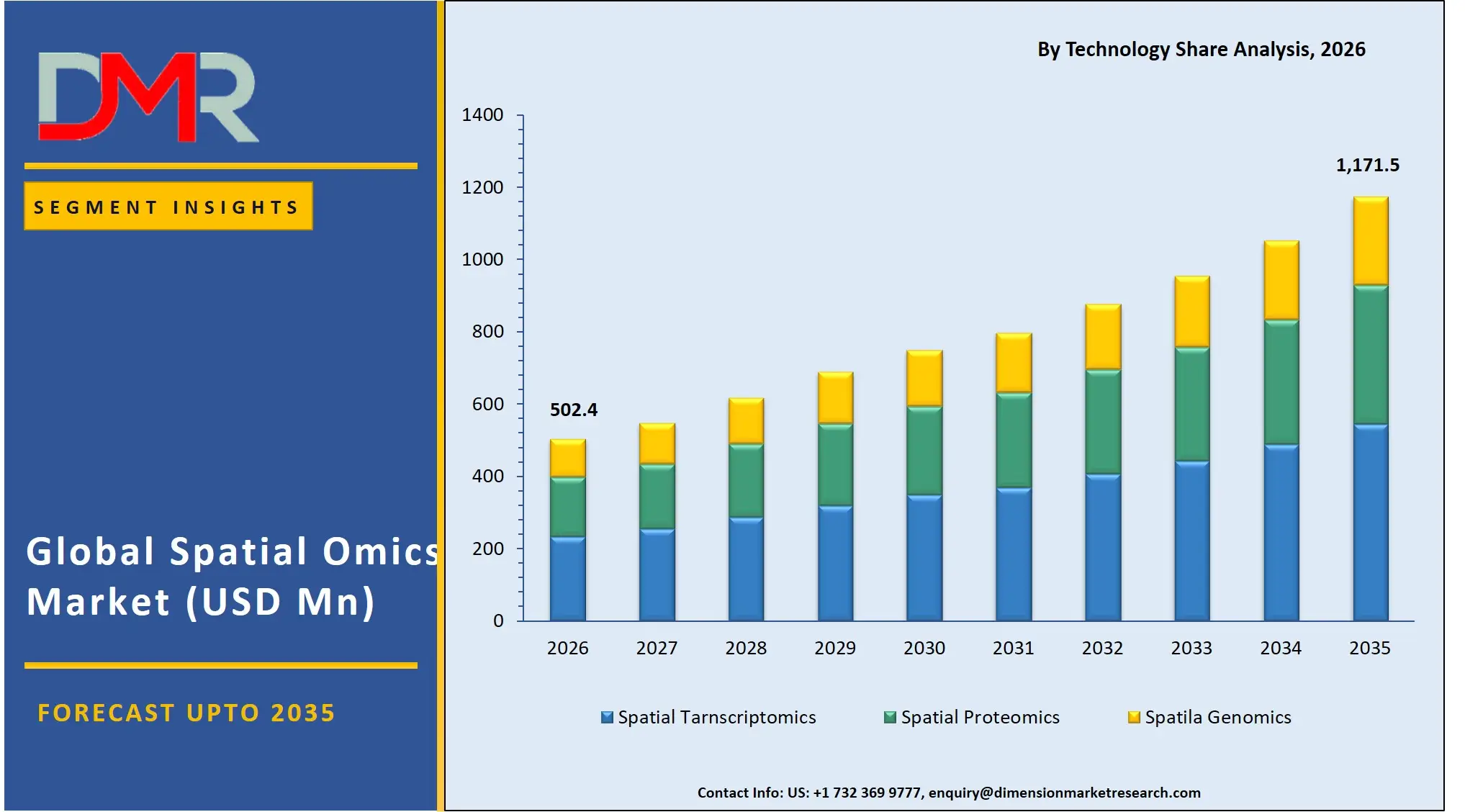
The spatial transcriptomics technology segment is dominating due to widespread usage of the technology in gene expression analysis and oncological research. It holds an estimated market share of 46.3% in 2026. Mapping of RNA within the tissue microarchitecture is a vital process in identifying differences in cell composition, making it an indispensable part of precision medicine and oncology research. Further advancements in sequencing and high spatial resolution are expected to drive growth in this area even further. Spatial proteomics emerges as a leader among the other two in terms of the CAGR, primarily driven by advances in imaging mass cytometry. In addition, multiplexing in protein detection is a key factor behind the growth of this market. Finally, spatial genomics is gaining momentum due to applications in genome, epigenome, and chromatin mapping.
By Offering Analysis
The consumables segment holds a prominent share, accounting for 41.7% in 2026. This is mainly because of their repetitive nature in spatial omics studies that involve reagents, assay kits, probes, and slides that are required for each process. The instruments segment is also growing at a consistent rate owing to advancements in technology. Software is becoming indispensable in the study of complex spatial data using bioinformatics tools and platforms. The services segment is registering the highest growth rate among all other segments in the market. Services include contract research and data analysis services as organizations prefer to outsource such spatial omics processes to save costs and increase efficiency.
By Application Analysis
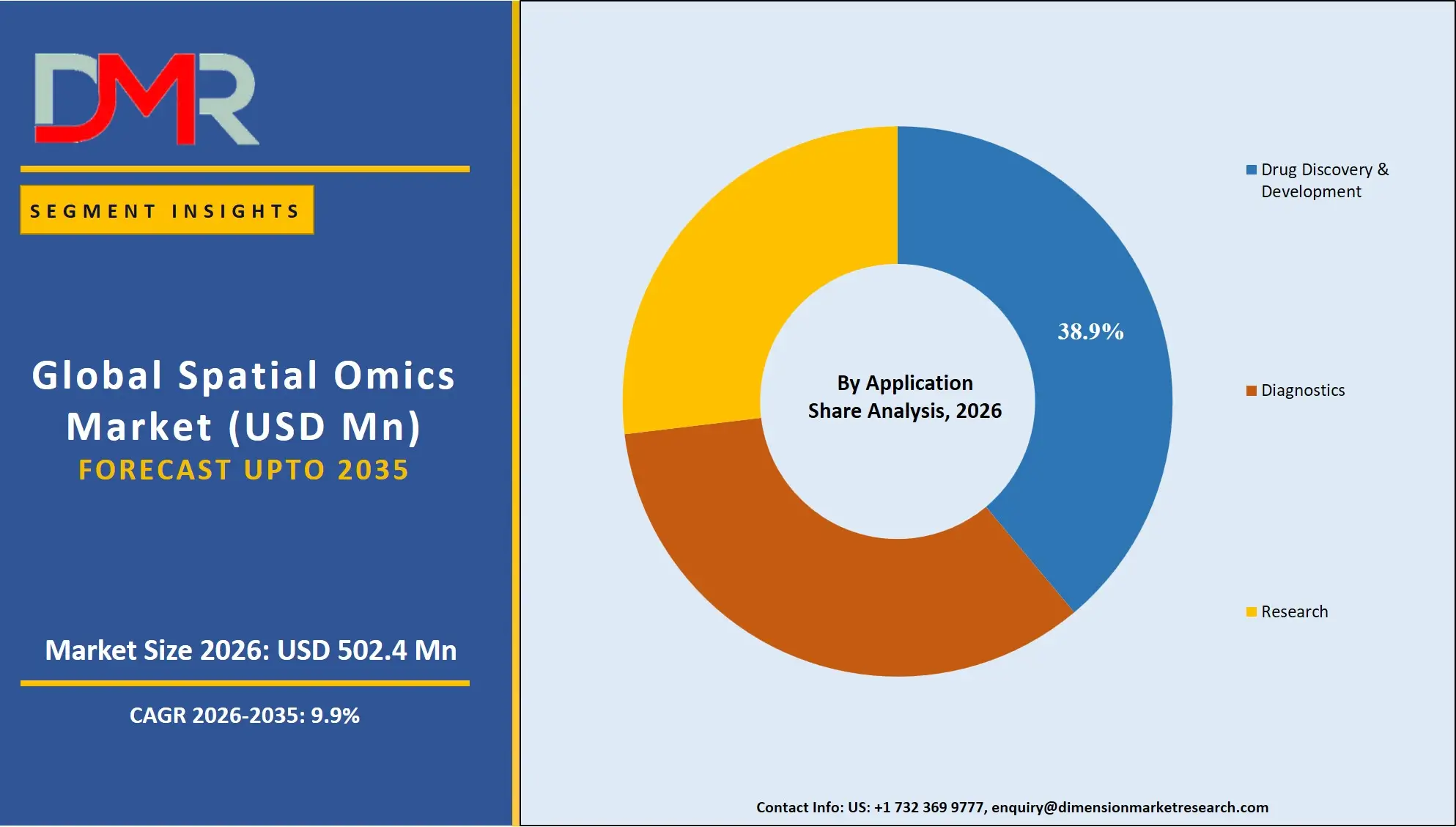
Drug Discovery & Development is the leading end-user, accounting for about 38.9% of the market value in 2026, on account of the rising demand for reliable target identification and biomarker discovery. The spatial omics platform helps scientists study the interaction between drugs in the micro-environmental setting within tissues, thus increasing the efficiency of their development process. Diagnostics is anticipated to be the fastest-growing end-user, especially in cancer and personalized medicines, owing to the significant role that spatial omics plays in diagnosing and managing diseases more effectively. The end-user remains an important component, with research applications having considerable market share in cell biology, immunology, and neuroscience.
By End User Analysis
The pharmaceutical and biotech sector is the largest end-user of the spatial omics market, holding about 44.2% of the market in 2026. Such entities leverage the spatial omics technology heavily for developing medications, conducting clinical trials, and finding biomarkers to improve treatment. The academic/research institutions form another prominent player in the sector, which is backed by massive funding and a keen interest in exploring more about spatial omics. CROs emerge as the fastest-growing end-user category due to their extensive experience in providing tailored services for spatial omics analysis. The healthcare institutes such as hospitals and clinical laboratories are beginning to incorporate spatial omics in diagnostics, especially for oncology.
By Sample Type Analysis
The Formalin-Fixed Paraffin-Embedded (FFPE) sample type segment is expected to account for the largest market share of around 57.5% in 2026, attributed to its extensive use in clinical diagnostics and the benefits offered by its long-term storage capability. The FFPE sample type holds great significance for retrospective studies since it helps maintain the morphological integrity of tissue while making it possible to conduct molecular studies. It can be easily used in spatial omics technologies, giving it an edge over other types. On the other hand, fresh frozen samples have been witnessing the fastest growth in terms of adoption.
The Spatial Omics Market Report is segmented on the basis of the following:
By Technology
- Spatial Transcriptomics
- Sequencing-based
- Imaging-based
- Barcoding-based
- Spatial Proteomics
- Imaging Mass Cytometry (IMC)
- Multiplexed Immunohistochemistry (mIHC)
- Cyclic Immunofluorescence (CyCIF)
- Mass Spectrometry-based
- Spatial Genomics
- DNA spatial sequencing
- Epigenomics
- Copy Number Variation (CNV)
By Offering
- Instruments
- Sequencing platforms
- Imaging systems
- Mass spectrometry systems
- Consumables
- Reagents & assay kits
- Probes & antibodies
- Slides & chips
- Software
- Bioinformatics tools
- Image analysis platforms
- Data visualization tools
- Services
- Contract research services
- Data analysis services
- Custom assay development
By Application
- Drug Discovery & Development
- Target identification
- Biomarker discovery
- Diagnostics
- Oncology diagnostics
- Precision medicine
- Research
- Cell biology
- Immunology
- Neuroscience
- Pathology & histology
By End User
- Academic & research institutes
- Pharmaceutical & biotechnology companies
- Contract research organizations (CROs)
- Clinical laboratories & hospitals
By Sample Type
- Formalin-Fixed Paraffin-Embedded (FFPE)
- Fresh frozen samples
Regional Analysis
Leading Region in the Spatial Omics Market
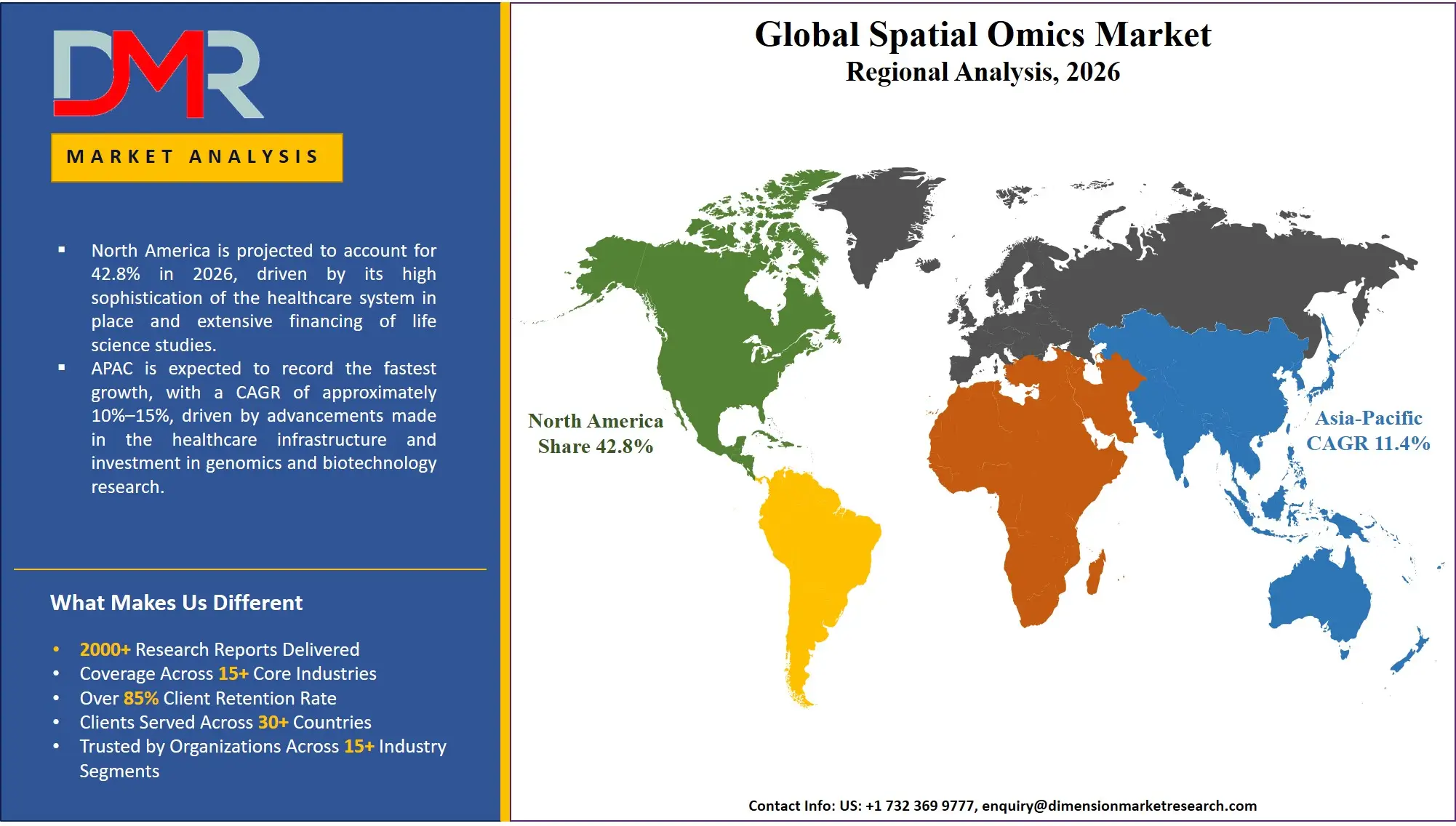
The North American region dominates the spatial omics market, holding an approximated market share of 42.8% in 2026, attributed to the high sophistication of the healthcare system in place and extensive financing of life science studies. The availability of ample government funding, utilization of advanced technology, and a robust infrastructure comprising academic centers and biotechnology companies make the region a leader in the field. The prevalence of chronic illnesses, notably cancer, has led to an increasing need for precision medicine treatment, which can be achieved through the use of spatial omics technology.
ℹ
To learn more about this report –
Download Your Free Sample Report Here
Fastest Growing Region in the Spatial Omics Market
The Asia-Pacific region has seen an increased rate of market growth due to advancements made in the healthcare infrastructure and investment in genomics and biotechnology research. Governments of nations such as China, Japan, and India have attempted to support several projects and create awareness regarding precision medicine. Furthermore, academic institutes and biotech firms have started collaborating in the Asia-Pacific region. Awareness regarding advanced diagnostic methods, increased research capabilities, and availability of a large number of patients have contributed to market growth.
By Region
North America
Europe
- Germany
- The U.K.
- France
- Italy
- Russia
- Spain
- Benelux
- Nordic
- Rest of Europe
Asia-Pacific
- China
- Japan
- South Korea
- India
- ANZ
- ASEAN
- Rest of Asia-Pacific
Latin America
- Brazil
- Mexico
- Argentina
- Colombia
- Rest of Latin America
Middle East & Africa
- Saudi Arabia
- UAE
- South Africa
- Israel
- Egypt
- Rest of MEA
Competitive Landscape
The spatial omics industry is very competitive because of the frequent technological innovation and advancements in sequencing and imaging technologies. The industry players concentrate on improving their product portfolio by developing highly resolved, scalable, and integrated systems. Investments in R&D and integration of AI-based analysis solutions are critical to improve efficiency. Partnerships and mergers are common tactics to develop technological competencies and increase geographic footprint. The heavy investment requirement, complicated processes, and need for specialized knowledge serve as substantial barriers to entry, thus restricting new entrants and increasing rivalry amongst existing firms.
Some of the prominent players in the global Spatial Omics are:
- 10x Genomics
- NanoString Technologies
- Illumina, Inc.
- Thermo Fisher Scientific Inc.
- Danaher Corporation
- Bruker Corporation
- Agilent Technologies, Inc.
- PerkinElmer, Inc.
- Bio-Techne Corporation
- Akoya Biosciences, Inc.
- Standard BioTools Inc.
- Oxford Nanopore Technologies plc
- Becton, Dickinson and Company
- Carl Zeiss AG
- Leica Microsystems
- Merck KGaA
- Shimadzu Corporation
- Waters Corporation
- S2 Genomics, Inc.
- RareCyte, Inc.
- Other Key Players
Recent Developments
- In March 2026, Nikon Corporation developed advanced software to visualize multiple layers of spatial omics data on microscopic images, used in joint research with University of Tokyo. The technology integrates DNA methylation, gene, and protein expression with spatial context, enabling deeper analysis of complex diseases like breast cancer metastasis. This approach helps researchers better understand disease mechanisms by examining how molecular factors interact across different stages and locations.
- In March 2026, MGI Tech Co., Ltd. acquired STOmics and CycloneSEQ, thereby reinforcing its "SEQALL + GLI + Omics" approach. As a result, MGI Tech Co., Ltd. will be considered a one-stop shop for all types of life science tools such as short-read, long-read sequencing, generative lab intelligence, and spatial omics, thus making the company more competitive.
- In February 2026, IRB Barcelona created a unique platform, named the first Spatial Omics Platform in Spain, which allows scientists to examine the interaction of cells in their own tissue environment. Using the technology of spatial transcriptomics and spatial proteomics, it allows us to see how the cells interact within their environment. It is already changing the way cancer, neurological, heart, and immune diseases are studied.
Report Details
| Report Characteristics |
| Market Size (2026) |
USD 502.4 Mn |
| Forecast Value (2035) |
USD 1,171.5 Mn |
| CAGR (2026–2035) |
9.9% |
| Historical Period |
2021 – 2025 |
| Forecast Period |
2027 – 2035 |
| Base Year |
2025 |
| Estimate Year |
2026 |
| Segments Covered |
By Technology, By Offering, By Application, By End User, By Sample Type |
| Regional Coverage |
North America – The US and Canada; Europe – Germany, The UK, France, Russia, Spain, Italy, Benelux, Nordic, & Rest of Europe; Asia-Pacific – China, Japan, South Korea, India, ANZ, ASEAN, Rest of APAC; Latin America – Brazil, Mexico, Argentina, Colombia, Rest of Latin America; Middle East & Africa – Saudi Arabia, UAE, South Africa, Turkey, Egypt, Israel, & Rest of MEA |
Frequently Asked Questions
How big is the Spatial Omics Market?
▾ The Spatial Omics Market size is expected to reach USD 502.4 million by 2026 and is projected to reach USD 1,171.5 million by the end of 2035.
What is the CAGR of the Spatial Omics Market from 2026 to 2035?
▾ The market is growing at a CAGR of 9.9 percent over the forecasted period.
What factors are driving the growth of the Spatial Omics Market?
▾ Increased Demand for Personalized Medicine, and more are the factors driving the growth of the Spatial Omics Market.
What are the major trends in the Spatial Omics Market?
▾ AI & ML Integration in Spatial Omics, and more are some of the major trends in the market.
Who are the key players in the Spatial Omics Market?
▾ Some of the key players in the Spatial Omics Market include 10x, Danaher, Illumina and more
How is the Spatial Omics Market segmented?
▾ The Spatial Omics Market is segmented by technology, offering, application, end user, sample type.
Which region held the largest share of the Spatial Omics Market in 2026?
▾ North America is set to lead the Spatial Omics market with an estimated 42.8% share in 2026.
Which region is expected to grow the fastest in the Spatial Omics Market?
▾ Asia Pacific is the fastest-growing region in the Spatial Omics market during the forecast period