Global Spinal Implants Surgical Device Market Snapshot
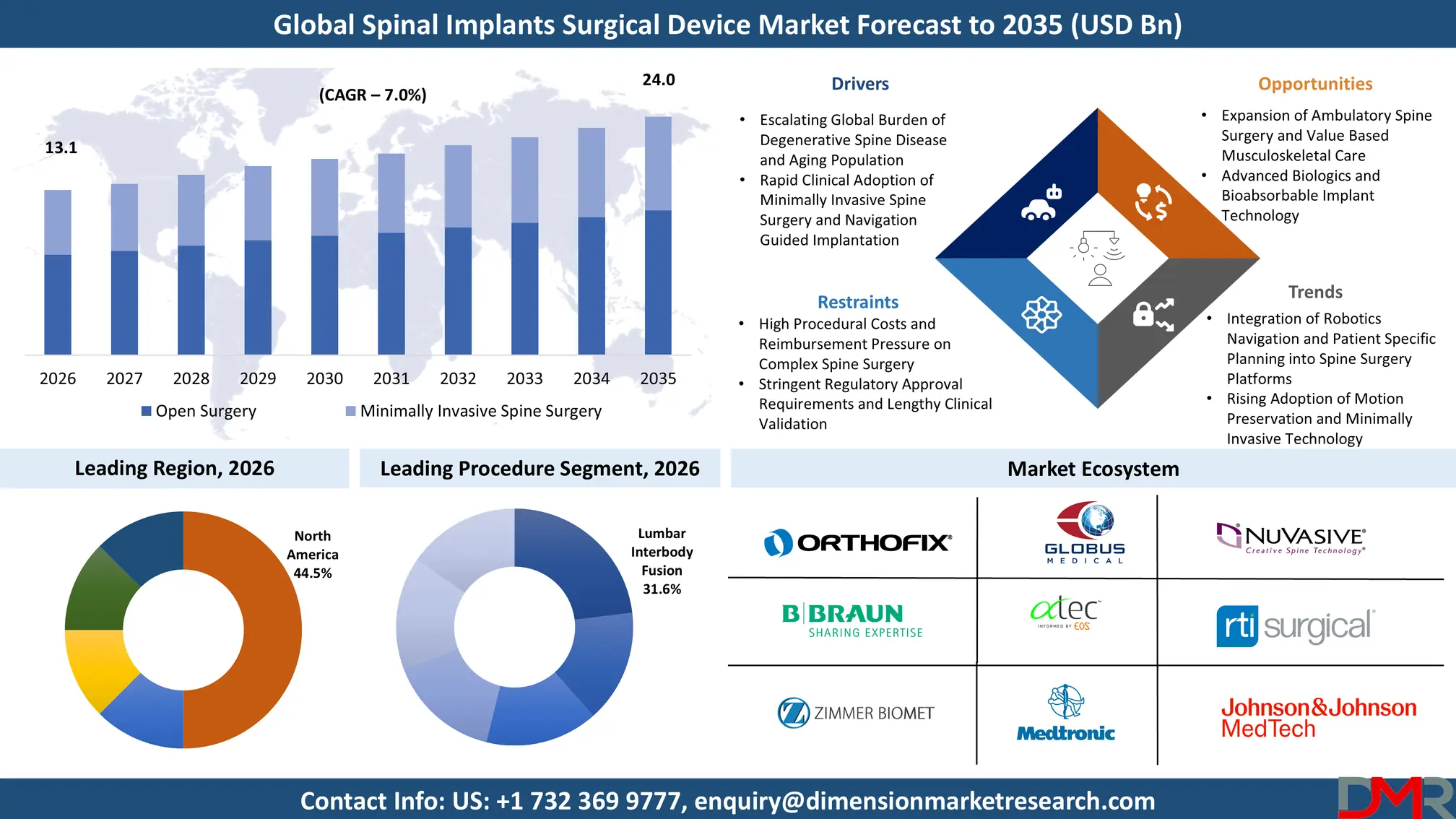
- Global Spinal Implants Surgical Device Market Size in 2026: USD 13.1 Billion
- Global Spinal Implants Surgical Device Market Size in 2035: USD 24.0 Billion
- Global CAGR from 2026 to 2035: 7.0%
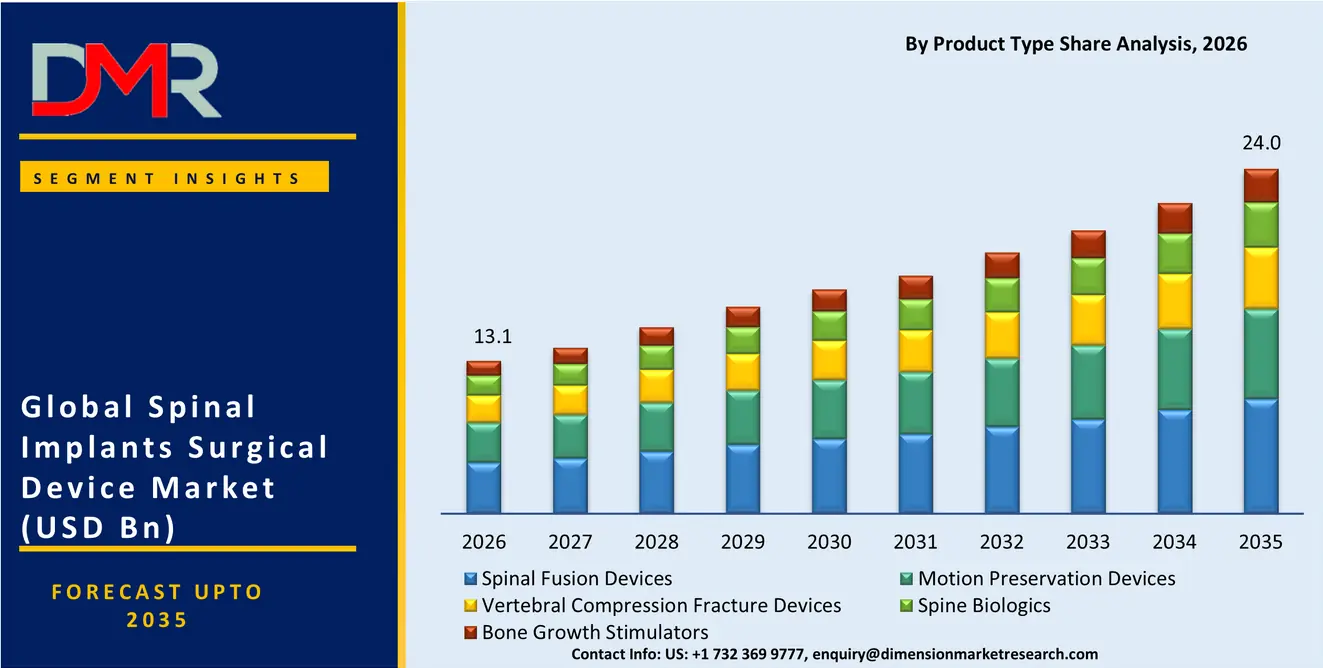
- Spinal Fusion Devices is the leading product type segment in 2026: 58.0%
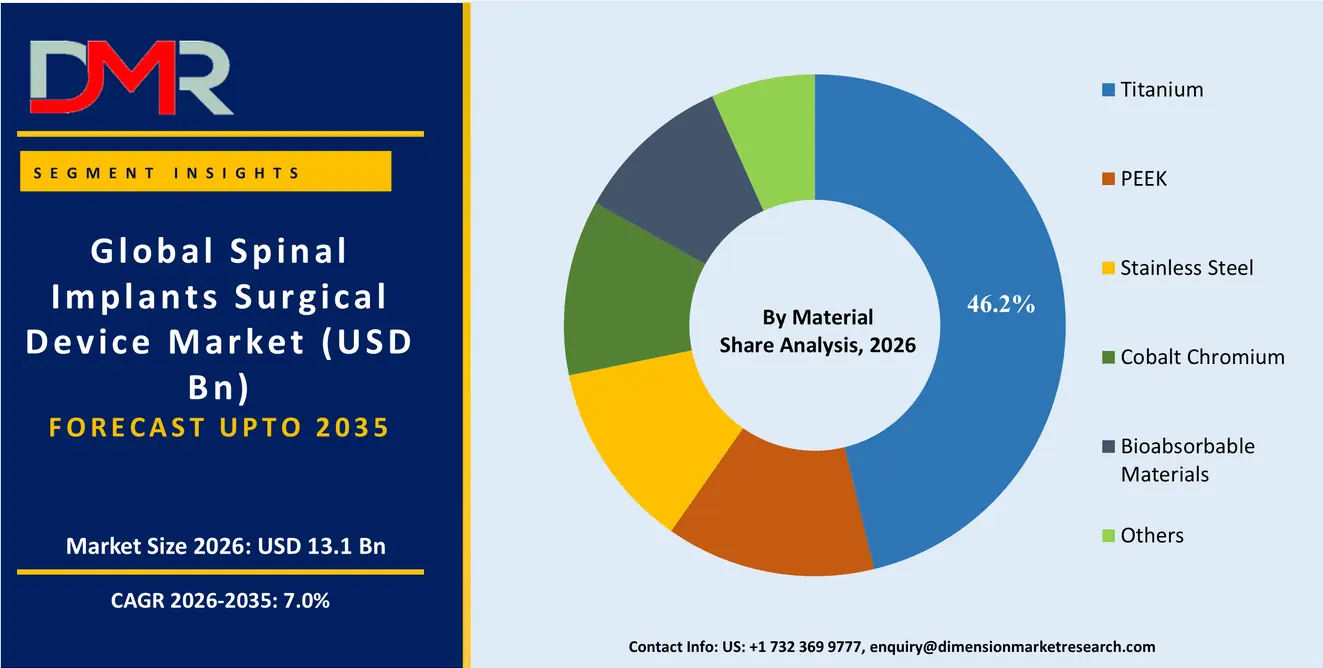
- Titanium is the leading material segment in 2026: 46.2%
- Open Surgery is the leading surgery type segment in 2026: 56.8%
- Lumbar Interbody Fusion is the leading procedure segment in 2026: 31.6%
- Degenerative Disc Disease is the leading indication segment in 2026: 42.0%
- Hospitals is the leading end user segment in 2026: 67.4%
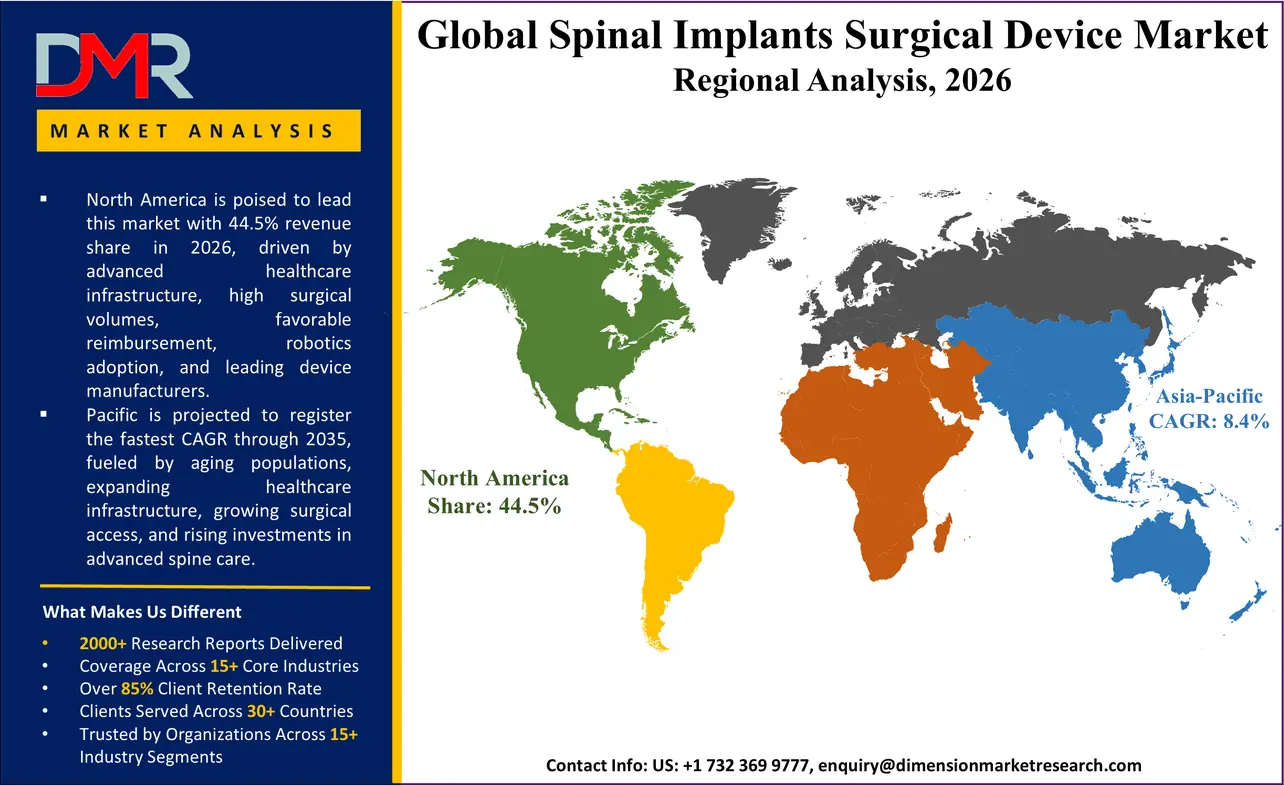
- North America is the leading region in 2026: 44.5%
What is the Global Spinal Implants Surgical Device and its Market Size?
The Global Spinal Implants Surgical Device Market is projected to be valued at USD 13.1 billion in 2026 and is projected to reach USD 24.0 billion by 2035, expanding at a CAGR of 7.0% during the forecast period. Growth is being propelled by the rising global burden of degenerative spine conditions, spinal trauma, and deformity associated with aging populations, sedentary lifestyles, and rising obesity rates, coupled with rapid clinical uptake of minimally invasive spine surgery (MISS) techniques that reduce blood loss, hospital stay, and post-operative recovery time.
ℹ
To learn more about this report –
Download Your Free Sample Report Here
The adoption of advanced titanium and PEEK interbody cages, expanding use of navigation- and robotics-assisted pedicle screw placement, and growing reimbursement support for ambulatory spine procedures are reshaping surgical care pathways. Investment is accelerating as device manufacturers and health systems pivot from conventional open fusion toward motion-preserving, biologics-augmented, and technology-enabled spine surgery platforms designed to improve fusion rates, reduce adjacent segment disease, and lower the total cost of spinal care.
Use Cases
- Degenerative Disc Disease and Chronic Low Back Pain Management: Orthopedic spine surgeons and neurosurgeons utilize interbody fusion devices, pedicle screw and rod systems, and spine biologics to achieve durable segmental stabilization and pain relief in patients with symptomatic disc degeneration unresponsive to conservative care.
- Minimally Invasive Lumbar Interbody Fusion: Hospitals and ambulatory surgical centers deploy percutaneous pedicle screw systems, expandable interbody cages, and tubular retractor technology to perform lumbar fusion through small incisions, reducing muscle disruption and enabling faster patient discharge.
- Motion Preservation for Cervical and Lumbar Disc Pathology: Spine specialty clinics utilize artificial disc replacement and dynamic stabilization systems in eligible patients to maintain segmental range of motion, reduce adjacent segment stress, and offer an alternative to fusion in select degenerative and herniated disc cases.
- Vertebral Compression Fracture Stabilization: Interventional radiologists and spine surgeons employ kyphoplasty and vertebroplasty systems to rapidly stabilize osteoporotic and pathologic vertebral compression fractures, restoring vertebral height and providing immediate pain relief in elderly and oncology patient populations.
Key Takeaways
- Market Size: The Global Spinal Implants Surgical Device Market is anticipated to be valued at USD 13.1 billion in 2026 and is forecast to reach USD 24.0 billion by 2035, expanding at a CAGR of 7.0%.
- Growth Outlook: Market expansion is sustained by the rising global incidence of degenerative disc disease, spinal stenosis, and deformity, the accelerating shift toward minimally invasive spine surgery, expanding biologics-augmented fusion, and increasing adoption of navigation and robotic-assisted implant placement.
- Primary Growth Drivers: An aging population with a mounting burden of degenerative spinal pathology, growing incidence of spinal trauma and osteoporotic fractures, expanding surgeon adoption of motion preservation technology, and favorable reimbursement shifts toward outpatient and ambulatory spine surgery are accelerating investment across the spinal device continuum.
- By Product Type Analysis: Spinal Fusion Devices is projected to lead the product type segment with a dominant 58.0% share in 2026, driven by the enduring surgical preference for interbody cages, pedicle screw and rod constructs, and plating systems as the standard of care for spinal instability, while Vertebral Compression Fracture Devices are projected to exhibit the highest CAGR at 8.8% due to the rising global incidence of osteoporotic fractures in aging populations.
- By Material Analysis: Titanium is anticipated to hold a 46.2% share in 2026, reflecting its established biocompatibility, osseointegration properties, and imaging compatibility, while Bioabsorbable Materials are projected to register the highest CAGR at 9.8% as surgeons increasingly favor resorbable implant technology that eliminates the need for hardware removal.
- By Surgery Type Analysis: Open Surgery is expected to command a 56.8% share in 2026, underpinned by its continued use in complex multi-level fusions, deformity correction, and revision procedures, with Minimally Invasive Spine Surgery achieving the fastest growth at 9.2% CAGR as percutaneous instrumentation and tubular access technology mature.
- By Procedure Analysis: Lumbar Interbody Fusion is projected to account for 31.6% of the market in 2026, fueled by the high prevalence of lumbar degenerative disc disease and spondylolisthesis, while Artificial Disc Replacement is the fastest-expanding procedure category at 9.6% CAGR, driven by growing long-term clinical evidence supporting motion preservation outcomes.
- By Indication Analysis: Degenerative Disc Disease is expected to lead with a 42.0% share in 2026 as the most common underlying pathology driving spinal implant utilization, while Spinal Trauma and Fractures is the fastest-growing indication segment at 8.7% CAGR due to rising road traffic injuries, sports trauma, and osteoporotic fracture incidence.
- By End User Analysis: Hospitals are expected to lead with a 67.4% share in 2026 given their capacity to manage complex, multi-level, and revision spine surgeries, while Ambulatory Surgical Centers are the fastest-growing end-user segment at 10.1% CAGR due to the migration of eligible minimally invasive spine procedures to lower-cost outpatient settings.
How AI/Gen AI is Transforming the Spinal Implants Surgical Device Market?
Artificial intelligence and advanced surgical navigation technologies are fundamentally reshaping spine surgery by enabling greater precision, personalized implant selection, and improved intraoperative decision-making. Machine learning algorithms trained on large-scale imaging and outcomes datasets are increasingly used to generate patient-specific pre-operative surgical plans, predicting optimal rod contouring, screw trajectory, and sagittal alignment targets to reduce revision rates and adjacent segment complications. AI-enabled robotic and navigation platforms are being integrated into pedicle screw placement workflows, improving screw accuracy while reducing fluoroscopic radiation exposure for both surgeons and patients. Computer vision-based intraoperative imaging analysis is also being layered onto navigation systems to provide real-time feedback on implant positioning and spinal alignment, supplementing surgeon judgment with a more comprehensive, data-driven assessment of construct integrity.
Key Drivers in the Global Spinal Implants Surgical Device Market
Escalating Global Burden of Degenerative Spine Disease and an Aging Population
Degenerative disc disease, spinal stenosis, and spondylolisthesis remain the dominant clinical drivers behind spinal implant utilization, with prevalence rising steadily alongside global population aging, sedentary lifestyles, and increasing obesity rates. The unabated rise in musculoskeletal degeneration is expanding the pool of patients eligible for fusion and motion preservation surgery. As the global population aged 60 and above continues to expand, the downstream demand for interbody devices, pedicle screw and rod systems, and spine biologics intensifies commensurately. Rising diagnostic imaging utilization and improved access to spine specialist consultation are increasingly identifying surgical candidates earlier, directly fueling procedure volumes and implant demand, the twin pillars of market growth.
Rapid Clinical Adoption of Minimally Invasive Spine Surgery and Navigation-Guided Implantation
Advances in percutaneous instrumentation, expandable interbody cage technology, and intraoperative navigation and robotics have repositioned minimally invasive spine surgery as a clinically validated alternative to conventional open fusion for an expanding range of indications. The demonstrated benefits of reduced blood loss, shorter hospital stays, and faster return to function have triggered growing surgeon and hospital investment in MISS-compatible implant systems and enabling technology platforms. This evidence-driven shift toward minimally invasive and outpatient-compatible spine surgery is generating sustained, high-volume demand for compatible device systems, propelling above-average growth for the Minimally Invasive Spine Surgery and Ambulatory Surgical Centers segments highlighted in this study.
Restraints in the Global Spinal Implants Surgical Device Market
High Procedural Costs and Reimbursement Pressure on Complex Spine Surgery
Despite improving patient outcomes, complex spinal fusion and deformity correction procedures require substantial capital investment in implant inventory, navigation and robotic platforms, and specialized surgical teams, creating cost pressure for hospitals and payers alike. Bundled payment models and increasing payer scrutiny of multi-level fusion indications are constraining reimbursement in several developed markets, while high implant and procedural costs continue to limit access in price-sensitive and resource-constrained regions. Even in high-income nations, complex multi-level spinal fusion costs frequently exceed tens of thousands of dollars per case, creating sustained pressure on hospital margins and public and private payers.
Growth Opportunities in the Global Spinal Implants Surgical Device Market
Expansion of Ambulatory Spine Surgery and Value-Based Musculoskeletal Care
The global shift toward outpatient-eligible minimally invasive spine procedures represents a high-growth opportunity for device manufacturers, ambulatory surgical center operators, and navigation technology developers. Health systems are increasingly incentivizing lower-cost surgical settings through value-based and bundled payment models that reward reduced length of stay and improved functional outcomes. This creates a fertile market for compact, MISS-compatible implant systems, portable navigation platforms, and streamlined perioperative care pathways. Companies that integrate robotics-assisted precision, patient-specific implant planning, and outpatient-optimized instrumentation into a cohesive ambulatory spine care ecosystem can capture a disproportionate share of the rapidly growing Ambulatory Surgical Centers end-user segment.
Advanced Biologics and Bioabsorbable Implant Technology
Emerging spine biologics, including next-generation bone graft substitutes, recombinant bone morphogenetic proteins, and demineralized bone matrix formulations, are enabling improved fusion rates and reduced reliance on autograft harvesting. This paves the way for a premium biologics-augmented fusion market where implant selection is increasingly paired with osteobiologic adjuncts to optimize outcomes. Device companies that develop and commercialize validated, reimbursable bioabsorbable implant platforms capable of eliminating secondary hardware-removal procedures will unlock a premium-priced niche market, particularly in pediatric and trauma-related spinal applications.
Trends in the Global Spinal Implants Surgical Device Market
Integration of Robotics, Navigation, and Patient-Specific Planning into Spine Surgery Platforms
A defining trend is the convergence of implant hardware with enabling technology platforms, including surgical robotics, intraoperative navigation, and AI-driven pre-operative planning software. Clinical practice is consolidating around technology-integrated workflows that simultaneously address implant placement accuracy, alignment optimization, and radiation exposure reduction. This convergence is expanding the use of navigation-compatible pedicle screw and interbody systems and fostering the development of integrated planning platforms that track alignment, construct integrity, and outcome prediction on a single dashboard. The market implications include broader adoption across community hospitals, increased capital equipment investment, and the rise of technology-bundled implant purchasing agreements.
Rising Adoption of Motion Preservation and Minimally Invasive Technology
Growing long-term clinical evidence supporting artificial disc replacement and dynamic stabilization systems is gradually shifting surgeon preference away from fusion-only approaches for select degenerative and herniated disc indications. This trend is commercializing as device manufacturers expand motion preservation product portfolios and refine minimally invasive delivery instrumentation to broaden the eligible patient population. The increasing use of motion preservation technology alongside minimally invasive fusion techniques is creating a new adjacency market at the intersection of implant hardware and enabling surgical technology.
Research Scope and Analysis
The Global Spinal Implants Surgical Device Market is segmented by component, product type, material, surgery type, procedure, indication, and end user. Component coverage centers on hardware. Product type spans spinal fusion devices, motion preservation devices, vertebral compression fracture devices, spine biologics, and bone growth stimulators. End users include hospitals, ambulatory surgical centers, and specialty orthopedic and spine clinics.
ℹ
To learn more about this report –
Download Your Free Sample Report Here
By Product Type Analysis
Spinal Fusion Devices is projected to dominate the Global Spinal Implants Surgical Device Market, accounting for an estimated 58.0% share in 2026. Interbody fusion devices, pedicle screw and rod systems, plates, and hooks and wires remain central to routine spinal stabilization across degenerative, traumatic, and deformity indications in hospitals and specialty spine clinics.
ℹ
To learn more about this report –
Download Your Free Sample Report Here
Their established clinical track record, broad surgeon familiarity, and applicability across cervical, thoracolumbar, and lumbar levels sustain high procedure volumes globally. Vertebral Compression Fracture Devices are anticipated to register the highest CAGR of 8.8% during 2026-2035.
By Material Analysis
Titanium is anticipated to hold the largest share within the material segment, estimated at 46.2% in 2026. Titanium implants are extensively used across pedicle screw systems, interbody cages, and plating constructs because of their favorable strength-to-weight ratio, biocompatibility, and imaging compatibility with post-operative MRI and CT surveillance. Broad manufacturer availability and long-established surgeon familiarity further support material dominance. Bioabsorbable Materials are expected to achieve the highest CAGR of 9.8% during 2026-2035.
By Surgery Type Analysis
Open Surgery is expected to lead the surgery type segment, holding an estimated 56.8% share in 2026. Open approaches remain the standard for complex multi-level fusions, severe deformity correction, and revision spine surgery where direct visualization and extensive instrumentation are required. Established surgeon training pathways and broad applicability across complex pathology sustain the segment's leadership. Minimally Invasive Spine Surgery is projected to register the highest CAGR of 9.2% during 2026-2035.
By Procedure Analysis
Lumbar Interbody Fusion is the largest procedure segment, is poised to be representing an estimated 31.6% share in 2026. High global prevalence of lumbar degenerative disc disease, spondylolisthesis, and spinal stenosis drives sustained demand for lumbar-level interbody stabilization across open and minimally invasive approaches. These patients typically require comprehensive pre-operative imaging, implant selection, and post-operative rehabilitation. Artificial Disc Replacement is anticipated to record the highest CAGR of 9.6% from 2026 to 2035.
By Indication Analysis
Degenerative Disc Disease is expected to be dominate the indication segment in the spinal implants surgical device market, accounting for an estimated 42.0% share in 2026. It represents the leading underlying pathology prompting surgical referral, spanning cervical and lumbar levels, and drives recurring demand for both fusion and motion preservation technology. Spinal Trauma and Fractures is expected to grow at the highest CAGR of 8.7% during 2026-2035.
By End User Analysis
Hospitals is projected to dominate the end user segment, accounting for an estimated 67.4% share in 2026. They provide integrated spine diagnosis, specialist consultation, imaging, complex multi-level surgery, inpatient recovery care, and management of surgical complications. Their established infrastructure and ability to treat complex trauma, deformity, and revision cases sustain their leading position. Ambulatory Surgical Centers are expected to grow at the highest CAGR of 10.1% during 2026-2035.
The Global Spinal Implants Surgical Device Market Report is segmented based on the following:
By Product Type
- Spinal Fusion Devices
- Interbody Fusion Devices
- Pedicle Screw and Rod Systems
- Plates
- Hooks and Wires
- Motion Preservation Devices
- Artificial Disc Replacement
- Dynamic Stabilization Systems
- Interspinous Process Devices
- Vertebral Compression Fracture Devices
- Kyphoplasty Systems
- Vertebroplasty Systems
- Spine Biologics
- Bone Grafts
- Bone Graft Substitutes
- Bone Morphogenetic Proteins
- Demineralized Bone Matrix
- Bone Growth Stimulators
By Material
- Titanium
- PEEK
- Stainless Steel
- Cobalt Chromium
- Bioabsorbable Materials
- Others
By Surgery Type
- Open Surgery
- Minimally Invasive Spine Surgery
By Procedure
- Cervical Fusion
- Thoracolumbar Fusion
- Lumbar Interbody Fusion
- Artificial Disc Replacement
- Vertebral Compression Fracture Treatment
- Decompression Procedures
By Indication
- Degenerative Disc Disease
- Spinal Stenosis
- Scoliosis
- Spinal Trauma and Fractures
- Herniated Disc
- Spinal Tumors
- Others
By End User
- Hospitals
- Ambulatory Surgical Centers
- Specialty Orthopedic and Spine Clinics
Regional Analysis
North America is the Leading Region in the Global Spinal Implants Surgical Device Market
North America is poised to lead the Global Spinal Implants Surgical Device Market with an estimated 44.5% revenue share in 2026. The region's dominance is anchored by a high prevalence of degenerative spine disease and spinal trauma, a mature and well-reimbursed hospital and ambulatory surgery infrastructure, and the world's highest per-capita expenditure on advanced spinal implants and navigation technology. The United States, in particular, is characterized by early and broad adoption of minimally invasive and robotics-assisted spine surgery, robust commercial and public insurance coverage for outpatient spine procedures, and a dynamic device innovation ecosystem supported by a concentrated base of leading manufacturers.
ℹ
To learn more about this report –
Download Your Free Sample Report Here
Asia Pacific is the Fastest-Growing Region in the Global Spinal Implants Surgical Device Market
Asia Pacific is projected to register the fastest CAGR through 2035, driven by the region's large and rapidly aging population, particularly in China and Japan, rising incidence of degenerative spine disease and road traffic-related spinal trauma, and expanding hospital infrastructure investment. Economic development is enabling substantial investments in advanced surgical capacity, with both public and private providers rapidly expanding spine surgery programs to meet previously unmet demand. Additionally, governments across the region are investing in orthopedic and neurosurgical training capacity that is boosting procedure volumes and implant utilization.
The Europe Spinal Implants Surgical Device Market
Europe represents one of the largest regional markets, characterized by universal healthcare coverage models that provide comprehensive access to spine surgery, though with significant cross-national variation in minimally invasive procedure penetration and technology adoption rates. Germany holds the largest European market share, driven by its large orthopedic and neurosurgical specialist workforce, high surgical capacity, and broad reimbursement for innovative implant technology. Growing regional advocacy for early degenerative disease intervention and rising adoption of standardized surgical guidelines are gradually improving diagnosis and treatment rates.
Latin America Spinal Implants Surgical Device Market
The Latin America Spinal Implants Surgical Device Market is expanding as a dual burden of degenerative spine disease and a high incidence of trauma-related spinal injury drives surgical demand upward. Brazil and Mexico are the primary national markets, with Brazil's public health system funding a substantial share of the region's spine surgery volume. Mexico's growing private hospital investment and expanding orthopedic specialist base fuel market expansion.
Middle East and Africa Spinal Implants Surgical Device Market
The Middle East and Africa Spinal Implants Surgical Device Market is developing against a backdrop of rising road traffic injury-related spinal trauma in Gulf Cooperation Council (GCC) countries and gradually improving orthopedic and neurosurgical infrastructure across parts of sub-Saharan Africa. Saudi Arabia and the United Arab Emirates are the most attractive markets, with high government healthcare spending, expansive hospital infrastructure, and active investment in advanced spine surgery capacity driven by national health transformation initiatives.
Major Countries Analysis
The US Spinal Implants Surgical Device Market
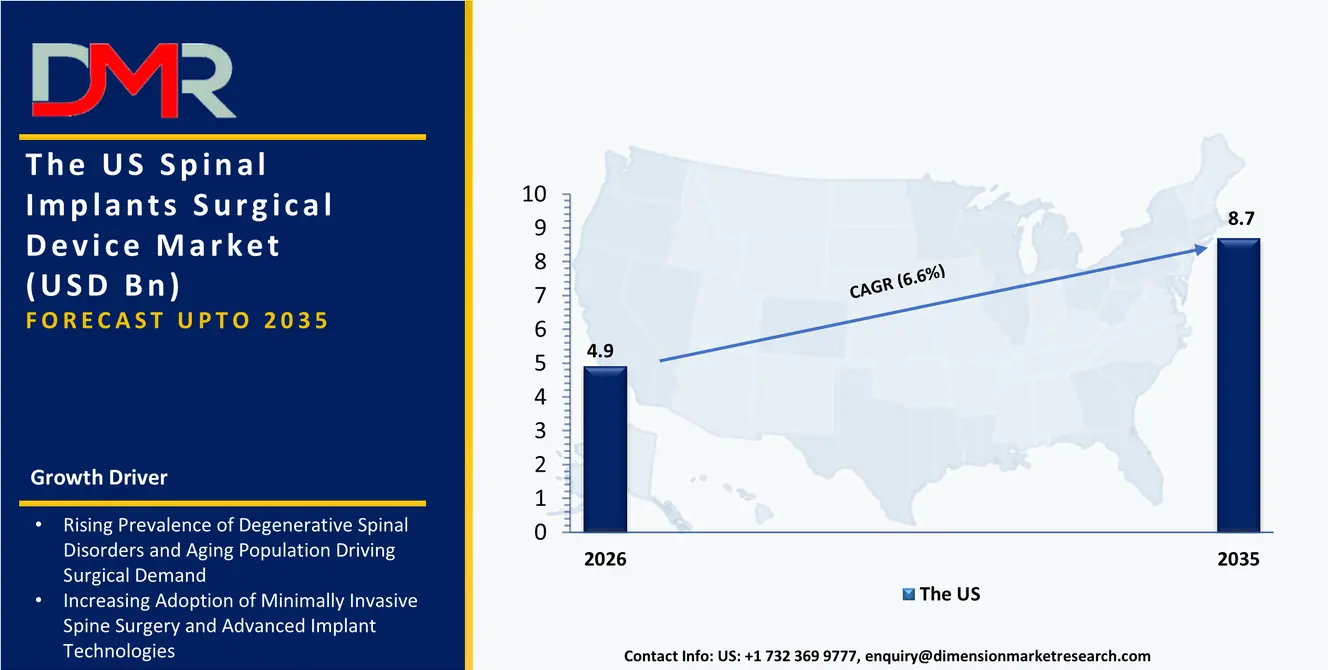
The United States Spinal Implants Surgical Device Market represents the highest-value single-country market globally, underpinned by a large and aging population with a substantial burden of degenerative spine disease and spinal trauma. Growth is fueled by the rapid formulary and hospital adoption of minimally invasive and robotics-assisted spine surgery platforms, the transformative impact of value-based and bundled payment initiatives favoring outpatient-eligible procedures, and continued innovation among a concentrated base of leading device manufacturers.
ℹ
To learn more about this report –
Download Your Free Sample Report Here
Japan Spinal Implants Surgical Device Market
Japan possesses one of the world's highest prevalence rates of degenerative spine disease among elderly patients, a consequence of its super-aged society, sustained by a well-established hospital-based spine surgery infrastructure. The market is distinguished by sophisticated orthopedic and neurosurgical care, high utilization of vertebral compression fracture treatment relative to other Asian nations given elevated osteoporosis prevalence, and early regulatory approval of novel implant technology.
Saudi Arabia Spinal Implants Surgical Device Market
Market expansion is directly tied to the Kingdom's rising incidence of road traffic-related spinal trauma, growing prevalence of degenerative spine disease, and expanding hospital infrastructure investment. The Ministry of Health continues to fund extensive orthopedic and neurosurgical services for citizens, while Vision 2030's healthcare transformation agenda, which emphasizes public-private partnerships and advanced surgical technology adoption, is opening significant opportunities for international spine device manufacturers, navigation and robotics technology vendors, and ambulatory surgery center operators.
Regulatory Landscape
The regulatory landscape for spinal implants and surgical devices is shaped by agencies that balance accelerated access to innovative implant technology with rigorous evidence requirements for safety and long-term durability. In the United States, the FDA's Center for Devices and Radiological Health continues to evaluate novel interbody devices, motion preservation systems, and bioabsorbable implants through both premarket approval and 510(k) clearance pathways, with growing receptivity to real-world evidence supporting minimally invasive and navigation-compatible device designs. Across Europe, evolving medical device regulations continue to raise clinical evidence and post-market surveillance requirements for implantable spinal hardware, while national health authorities across Asia Pacific and the Middle East are increasingly aligning device approval and reimbursement frameworks with international safety and performance standards.
Spine Surgery Procedure Volume and Utilization Landscape
This section assesses historical and forecast spine surgery procedure volume and device utilization patterns across the markets covered in the study, evaluating fusion versus motion preservation utilization, minimally invasive procedure penetration, and site-of-care shifts.
Key Findings from Procedure Utilization Analysis
- Lumbar and thoracolumbar fusion procedures continue to represent the largest share of overall spine surgery volume globally, sustained by the high prevalence of degenerative disc disease and spondylolisthesis in aging populations.
- Minimally invasive spine surgery penetration continues to expand across developed markets as percutaneous instrumentation, expandable interbody technology, and navigation platforms mature, gradually narrowing the gap with conventional open surgery volumes.
- A growing share of eligible lumbar fusion and motion preservation procedures is migrating from inpatient hospital settings to ambulatory surgical centers, supported by improving perioperative protocols and favorable outpatient reimbursement policy.
- Vertebral compression fracture treatment volumes are rising steadily in line with global osteoporosis prevalence, particularly among elderly female populations in North America, Europe, and Japan.
By Region
North America
Europe
- Germany
- France
- The U.K.
- Italy
- Spain
- Rest of Europe
Asia-Pacific
- China
- Japan
- India
- Australia
- South Korea
- Rest of APAC
Latin America
- Mexico
- Brazil
- Rest of LATAM
Middle East & Africa
- Saudi Arabia
- The UAE
- South Africa
- Rest of MEA
Competitive Landscape
The Global Spinal Implants Surgical Device Market features a diverse competitive landscape spanning multinational orthopedic and neurosurgical device conglomerates, specialized spine-focused manufacturers, biologics developers, and emerging robotics and navigation technology innovators. Medtronic and Johnson & Johnson MedTech dominate broad segments of the fusion hardware and enabling technology market through extensive product portfolios spanning pedicle screw systems, interbody devices, and navigation and robotics platforms. Stryker and Zimmer Biomet compete on integrated implant-and-technology ecosystems, while Globus Medical maintains a strong position across both traditional fusion hardware and motio
Some of the prominent players in the Global Spinal Implants Surgical Device Market are:
- Medtronic
- Stryker Corporation
- Johnson & Johnson MedTech (DePuy Synthes)
- Globus Medical
- NuVasive
- Zimmer Biomet
- Orthofix Medical
- Alphatec Spine
- RTI Surgical
- SeaSpine Holdings
- Spine Wave
- Xtant Medical
- ATEC Spine
- Life Spine
- Aurora Spine
- Captiva Spine
- CoreLink Surgical
- Precision Spine
- ChoiceSpine
- Joimax GmbH
- B. Braun (Aesculap)
- Ulrich Medical
- K2M Group
- SIGNUS Medizintechnik
- Osseus Fusion Systems
- Safe Orthopaedics
- Spineart SA
- Medicrea International
- Silony Medical
- NEOS Surgery
- FH Orthopedics
- Premia Spine
- Zavation Medical Products
- Invibio Ltd.
- MicroPort Orthopedics
- Wego Orthopedic Devices
- Double Medical Technology
- Shanghai Kinetic Medical
- BioTek Instruments (Spine Division)
- Surgalign Holdings
- Other Key Players
Recent Developments
- July 2026: DePuy Synthes (Johnson & Johnson MedTech) acquired Expanding Innovations, Inc., adding expandable interbody cage technologies to strengthen its lumbar fusion and spine implant portfolio.
- August 2025: Alphatec Spine received U.S. FDA 510(k) clearance for its Proximity Anterior Cervical Plate System (Segmental Plating System), expanding its cervical spine fixation portfolio.
- April 2025: Stryker Corporation completed the sale of its U.S. spinal implants business to VB Spine, LLC, while establishing a strategic partnership that provides VB Spine access to Stryker's Mako Spine and Copilot technologies.
- February 2026: Medtronic received U.S. FDA PMA approval for INFUSE™ Bone Graft for one and two-level Transforaminal Lumbar Interbody Fusion (TLIF), broadening approved indications for spinal fusion procedures.
Report Details
| Report Characteristics |
| Market Size (2026) |
USD 13.1 Bn |
| Forecast Value (2035) |
USD 24.0 Bn |
| CAGR (2026–2035) |
7.0% |
| The US Market Size (2026) |
USD 4.9 Bn |
| Historical Data |
2021 – 2025 |
| Forecast Data |
2027 – 2035 |
| Base Year |
2025 |
| Estimate Year |
2026 |
| Segments Covered |
By Component, By Product Type, By Material, By Surgery Type, By Procedure, By Indication, By End User |
| Regional Coverage |
North America – The US and Canada; Europe – Germany, France, The UK, Italy, Spain, Rest of Europe; Asia-Pacific – China, Japan, India, Australia, South Korea, Rest of APAC; Latin America – Mexico, Brazil, Colombia, Argentina, Rest of LATAM; Middle East & Africa – Saudi Arabia, The UAE, South Africa, Rest of MEA |
Frequently Asked Questions
How big is the Global Spinal Implants Surgical Device Market?
▾ The Global Spinal Implants Surgical Device Market is valued at USD 13.1 billion in 2026 and is projected to reach USD 24.0 billion by 2035, reflecting strong global demand for spinal fusion devices, motion preservation systems, vertebral compression fracture devices, and spine biologics.
What is the CAGR of the Global Spinal Implants Surgical Device Market from 2026 to 2035?
▾ The market is projected to expand at a compound annual growth rate (CAGR) of 7.0% between 2026 and 2035, supported by sustained investment in minimally invasive spine surgery, expanding ambulatory surgery access, and rising degenerative and trauma-related procedure volumes.
What factors are driving the growth of the Global Spinal Implants Surgical Device Market?
▾ Growth is driven by the escalating prevalence of degenerative disc disease and spinal trauma, rapid clinical adoption of minimally invasive and navigation-guided spine surgery, aging populations, and the migration of eligible procedures toward outpatient and ambulatory surgical settings.
What are the major trends in the Global Spinal Implants Surgical Device Market?
▾ Major trends include the integration of robotics and navigation technology into implant placement workflows, rising adoption of motion preservation and minimally invasive systems, expanding use of advanced biologics and bioabsorbable materials, and growing patient-specific pre-operative surgical planning.
Which region held the largest share of the Global Spinal Implants Surgical Device Market in 2026?
▾ North America is expected to lead the global market with a 44.5% share in 2026, supported by high disease awareness, early adoption of advanced surgical technology, a well-funded hospital and ambulatory care ecosystem, and value-based care policy experimentation.
Which region is expected to grow the fastest in the Global Spinal Implants Surgical Device Market?
▾ Asia Pacific is expected to record the fastest growth through 2035, driven by its large aging population, rising incidence of degenerative spine disease and trauma, and rapid expansion of surgical infrastructure.
Who are the key players in the Global Spinal Implants Surgical Device Market?
▾ Key market participants include Medtronic, Johnson & Johnson MedTech, Stryker, Zimmer Biomet, Globus Medical, Orthofix, Alphatec Holdings, Integra LifeSciences, B. Braun, and Xtant Medical, among other orthopedic, neurosurgical, and spine-focused device firms.
How is the Global Spinal Implants Surgical Device Market segmented?
▾ The market is segmented by component, product type, material, surgery type, procedure, indication, and end user, with regional analysis covering North America, Europe, Asia Pacific, Latin America, and the Middle East and Africa.