Market Snapshot
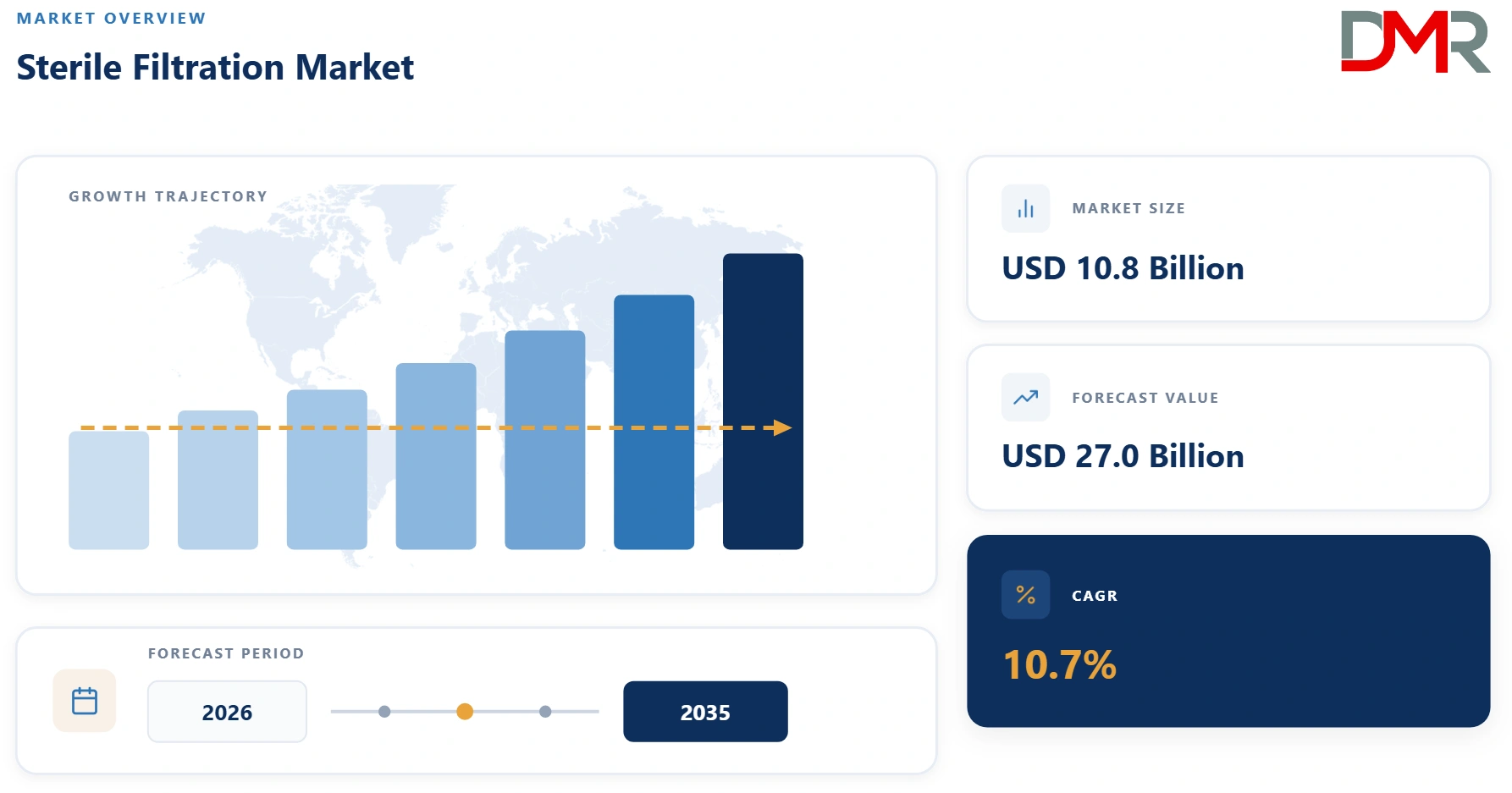
- Market Size (2026): USD 10.8 Billion
- Forecast Value (2035): USD 27.0 Billion
- CAGR (2026-2035): 10.7%
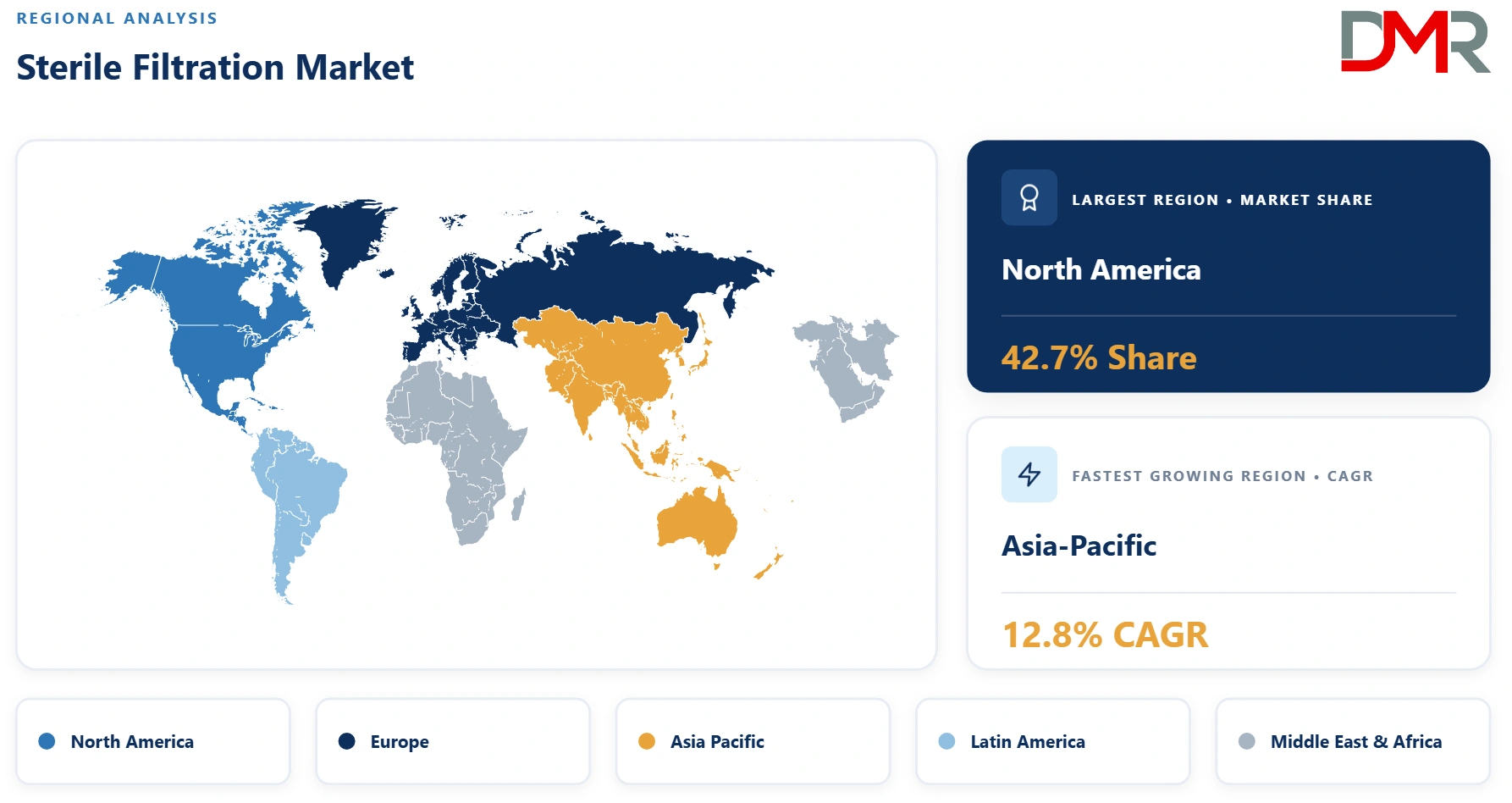
- Largest Region (2026): North America, approximately 42.7%
- Fastest-Growing Region: Asia-Pacific
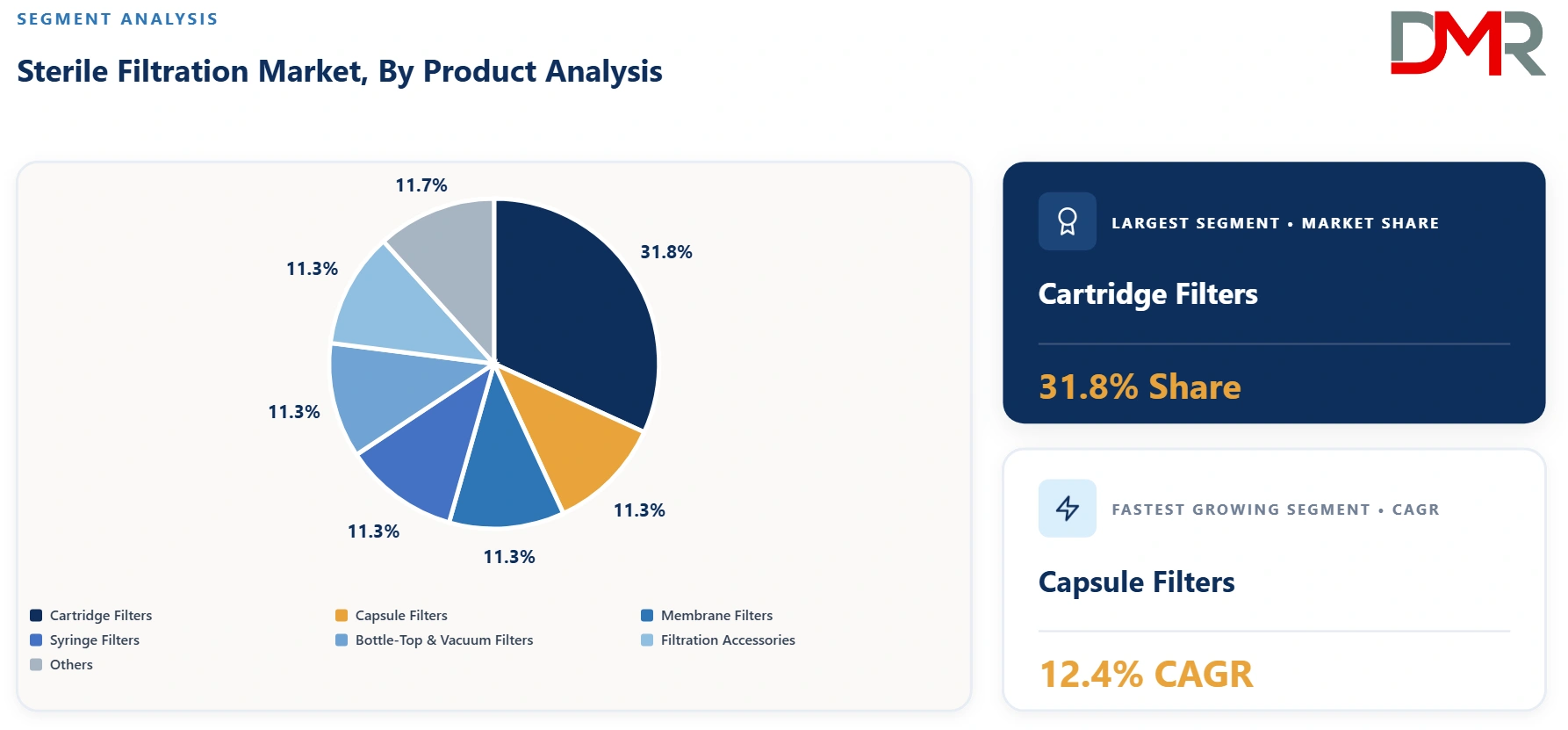
- Leading Product (2026): Cartridge Filters, around 31.8%
- Leading Application (2026): Bioprocessing, close to 38.6%
- Key Players: Merck KGaA, Danaher Corporation, Sartorius AG, Thermo Fisher Scientific Inc., and Others
What is Sterile Filtration Market and its Market Size?
Global Sterile Filtration Market size is estimated to reach USD 10.8 Billion in 2026 and is further anticipated to reach USD 27.0 Billion by 2035, at a CAGR of 10.7%.
ℹ
To learn more about this report –
Download Your Free Sample Report Here
Sterile filtration is a validated physical separation process used to remove viable microorganisms and particulate contaminants from liquids and gases without relying on terminal heat treatment. It is particularly important for heat-sensitive biologics, vaccines, parenteral drugs, cell culture media, buffers, process gases and critical utilities. Commercial demand spans filter membranes, cartridges, capsules, housings, integrity testing accessories and single-use assemblies designed around regulated manufacturing workflows.
Market expansion is supported by rising biologics output, greater use of single-use bioprocessing, growth in injectable therapies and continued outsourcing to contract manufacturers. Buyers increasingly evaluate filters on microbial retention, extractables and leachables, throughput, adsorption behavior, chemical compatibility, integrity testing performance and validation support. These requirements favor suppliers able to combine membrane science with application engineering and global regulatory documentation.
Sterile filtration also sits at a critical quality control point in fill-finish and upstream or downstream bioprocessing. As drug manufacturers pursue smaller batches, multi-product facilities and faster changeovers, disposable capsule and cartridge configurations are gaining relevance. At the same time, capacity additions in Asia-Pacific and the expansion of biosimilar manufacturing are broadening the installed base for filtration consumables.
Use Cases
- Biopharmaceutical Processing: Manufacturers use sterilizing-grade filters for media, buffers, intermediates and final drug solutions to control bioburden while protecting heat-sensitive molecules and maintaining validated aseptic processing conditions.
- Fill-Finish Operations: Injectable drug and vaccine facilities deploy final membrane filtration immediately before filling to reduce microbial risk, support sterility assurance strategies and comply with stringent contamination-control requirements.
- Process Utilities: Sterile air, vent and gas filtration protects bioreactors, tanks and transfer systems from microbial ingress while hydrophobic membrane configurations help maintain clean gas pathways under demanding process conditions.
- Laboratory and R&D Filtration: Research laboratories use syringe, bottle-top and vacuum filters for small-volume sterilization, sample preparation, media filtration and analytical workflows where speed, compatibility and low hold-up volume are important.
Key Takeaways
- Market Size & Share: North America is estimated to account for approximately 42.7% of global revenue in 2026.
- Product Analysis: Capsule Filters are projected to expand at an estimated CAGR of 12.4% from 2026 to 2035.
- Application Analysis: Bioprocessing is expected to lead with approximately 38.6% of 2026 revenue.
- Regional Analysis: Asia-Pacific is projected to record the highest regional CAGR of approximately 12.8% through 2035.
- Commercial Catalyst: Pharmaceutical and biotechnology companies are expected to represent around 57.4% of end-user demand in 2026.
- Competitive Dynamics: Consumable replacement cycles and validation requirements support recurring revenue and relatively sticky supplier relationships.
How AI/Gen AI is Transforming the Sterile Filtration Market?
AI is increasingly being applied around filtration operations rather than replacing the membrane separation mechanism itself. Manufacturers and end users are using machine-learning models to interpret pressure, flow, turbidity and integrity-test data, helping predict filter loading and identify abnormal process behavior. In regulated production, these tools can improve process understanding and reduce unnecessary filter changes when supported by validated data governance.
Generative AI can assist engineering and quality teams with document retrieval, deviation investigation, validation knowledge management and comparison of technical specifications. Digital twins and predictive analytics may also improve scale-up decisions by estimating throughput, fouling behavior and filter-area requirements from historical process data. Adoption remains dependent on traceability, cybersecurity and validation controls because filtration decisions can directly affect product quality.
- Predictive Filter Loading: Models estimate remaining filter capacity from pressure and flow trends.
- Deviation Analytics: AI helps identify recurring process conditions associated with premature fouling or integrity-test failures.
- Technical Knowledge Support: Gen AI can accelerate retrieval of validation, compatibility and application documentation.
- Process Optimization: Digital models support filter sizing, train configuration and scale-up planning.
Key Drivers in the Global Sterile Filtration Market
Expansion of Biologics and Injectable Manufacturing
Growth in monoclonal antibodies, vaccines, recombinant proteins, cell and gene therapies and other temperature-sensitive products is increasing the number of manufacturing steps that require controlled bioburden and sterilizing-grade filtration. Biologic processes often cannot rely on terminal heat sterilization, making membrane filtration an essential component of aseptic manufacturing. Capacity expansion by biopharma companies and CDMOs therefore creates recurring demand for validated cartridges, capsules and single-use filtration assemblies. The trend is reinforced by stricter contamination-control strategies and the need for documented retention performance across development, scale-up and commercial production.
Rising Adoption of Single-Use Bioprocessing
Single-use manufacturing is expanding because it can reduce cleaning requirements, shorten changeover times and support flexible multi-product facilities. Sterile capsule filters, disposable tubing assemblies and pre-sterilized fluid paths fit naturally into these workflows. Demand is particularly strong in facilities handling smaller batches, personalized therapies and multiple biologic products. Suppliers that provide gamma-compatible components, low extractables profiles and integrated assemblies can capture a larger share of filtration spending. This shift also increases recurring consumables revenue because disposable systems are replaced between production campaigns.
Restraints in the Global Sterile Filtration Market
High Validation and Compliance Burden
Sterile filtration products used in regulated drug manufacturing must satisfy demanding qualification, integrity, microbial retention and compatibility requirements. Changing a validated filter can trigger comparability work, documentation updates and process requalification, creating long sales cycles for new suppliers. Manufacturers must also invest in quality systems, traceability and application support. These requirements increase development and operating costs, particularly for smaller vendors, and can slow adoption of new membrane chemistries even when they offer technical advantages.
Filter Fouling and Product Loss Risks
High-protein biologic streams, cell debris and process particulates can rapidly load membranes, reducing throughput and increasing pressure. Adsorption of valuable drug substance to membrane surfaces can also affect yield, especially in low-volume or high-value therapies. Users may need prefiltration stages, larger membrane area or specialized low-binding materials, raising process cost and complexity. Inconsistent feed characteristics can make sizing difficult and create the risk of premature filter blockage during critical manufacturing steps.
Growth Opportunities in the Global Sterile Filtration Market
Biosimilar and Biomanufacturing Capacity Expansion in Asia-Pacific
China, India, South Korea and other Asia-Pacific markets are expanding biologics, vaccines, biosimilars and contract manufacturing capacity. New facilities require validated filtration trains for media preparation, buffers, process intermediates, utilities and fill-finish. Suppliers that combine local technical service, regulatory documentation and scalable single-use formats can benefit from greenfield projects and localization initiatives. Regional manufacturing also creates opportunities for lower-cost membrane and device suppliers that can demonstrate consistent quality and international compliance.
Advanced Low-Binding and High-Throughput Membranes
Next-generation membranes that reduce protein adsorption, improve flow rates and resist fouling can address important productivity constraints in biologics manufacturing. Opportunities exist in engineered PES, PVDF and other surface-modified materials tailored to specific molecules and process conditions. Higher throughput can reduce required filtration area, footprint and consumable usage, while low-binding characteristics can protect recovery of expensive drug substances. Suppliers can differentiate through application-specific membrane design and stronger scale-up data.
Trends in the Global Sterile Filtration Market
Integration of Filtration into Pre-Assembled Single-Use Flow Paths
End users increasingly prefer pre-assembled and pre-sterilized fluid management solutions that combine filters, tubing, connectors, bags and sensors. This reduces on-site assembly, simplifies changeovers and lowers contamination risk. Filtration suppliers are therefore moving beyond standalone membranes toward integrated process solutions. The trend favors vendors with broad single-use portfolios, assembly capabilities and validation support, while also increasing collaboration between filter manufacturers, bioprocess equipment companies and CDMOs.
Greater Focus on Integrity Testing and Digital Traceability
Regulated manufacturers are strengthening contamination-control strategies and documentation around sterilizing-grade filters. Automated integrity testing, electronic batch records and serialized component tracking are becoming more important for demonstrating process control. Digital traceability can help confirm filter identity, lot history and installation status, while connected testing systems reduce manual transcription. This trend creates opportunities for suppliers that combine filtration consumables with instruments, software and data-management capabilities.
Research Scope and Analysis
The report analyzes the market across product, membrane type, pore size, application and end-user categories, with regional and country-level forecasts supporting assessment of demand concentration and emerging growth pockets.
ℹ
To learn more about this report –
Download Your Free Sample Report Here
By Product
Cartridge Filters lead with around 31.8% of 2026 revenue due to their broad use in production-scale liquid and gas filtration, established validation history and compatibility with stainless-steel and single-use systems. Growth, however, is concentrated in Capsule Filters, which are projected to expand at a CAGR of 12.4% between 2026 and 2035 as manufacturers adopt disposable, pre-sterilized formats that reduce assembly and cleaning requirements.
By Membrane Type
Polyethersulfone (PES) is estimated to lead with around 34.7% of 2026 revenue, supported by high flow, low protein binding and broad use in biologic liquid filtration. Growth, however, is concentrated in PVDF membranes, projected at a CAGR of 11.8% between 2026 and 2035, driven by chemical compatibility and expanding use across specialized liquid and gas filtration workflows.
By Pore Size
0.2/0.22 Micron filters are expected to account for around 55.6% of 2026 revenue because they represent the principal sterilizing-grade pore range for bacteria-retentive filtration in pharmaceutical processes. Growth, however, is concentrated in 0.1 Micron formats at a CAGR of 12.1% through 2035 as manufacturers address mycoplasma control and more demanding contamination-risk applications.
By Application
Bioprocessing is projected to lead with around 38.6% of 2026 revenue, reflecting filtration requirements across media, buffers, intermediates and biologic production. Growth, however, is concentrated in Fill-Finish Operations, forecast at a CAGR of 12.6% between 2026 and 2035 due to injectable pipeline expansion and increased aseptic manufacturing capacity.
By End User
Pharmaceutical & Biotechnology Companies are estimated to hold around 57.4% of 2026 revenue because sterile filtration is embedded across development and commercial manufacturing. Growth, however, is concentrated in Contract Manufacturing Organizations at a CAGR of 13.1% through 2035 as biopharma companies outsource process development, biologics production and fill-finish activities.
The Global Sterile Filtration Market Report is Segmented Based on the Following
By Product
- Cartridge Filters
- Capsule Filters
- Membrane Filters
- Syringe Filters
- Bottle-Top & Vacuum Filters
- Filtration Accessories
- Others
By Membrane Type
- Polyethersulfone (PES)
- Polyvinylidene Fluoride (PVDF)
- Polytetrafluoroethylene (PTFE)
- Nylon
- Mixed Cellulose Ester (MCE)
- Cellulose Acetate
- Others
By Pore Size
- 0.1 Micron
- 0.2/0.22 Micron
- 0.45 Micron
- Others
By Application
- Bioprocessing
- Fill-Finish Operations
- Utilities Filtration
- Pre-Filtration
- Laboratory Filtration
- Others
By End User
- Pharmaceutical & Biotechnology Companies
- Contract Manufacturing Organizations
- Academic & Research Institutes
- Food & Beverage Companies
- Others
Regional Analysis
Demand is concentrated in established biopharmaceutical manufacturing hubs, while new biologics and vaccine capacity is shifting incremental filtration consumption toward Asia-Pacific.
ℹ
To learn more about this report –
Download Your Free Sample Report Here
Region with the Largest Revenue Share
North America is estimated to hold approximately 42.7% of global sterile filtration revenue in 2026. The region benefits from a large installed base of biologics manufacturing, strong injectable drug pipelines, extensive CDMO capacity and stringent aseptic-processing requirements. The US remains the primary contributor due to high R&D intensity and frequent adoption of single-use systems. Recurring replacement of filtration consumables, validation-driven supplier relationships and continued investment in advanced therapy manufacturing support sustained demand across cartridge, capsule and membrane formats.
Region with the Highest CAGR
Asia-Pacific is projected to register the highest regional CAGR of approximately 12.8% from 2026 to 2035. Growth is supported by new biopharmaceutical facilities, biosimilar manufacturing, vaccine capacity and expanding contract development and manufacturing operations in China, India, South Korea and Singapore. Local production incentives and rising quality standards are increasing demand for validated sterilizing-grade filtration. International suppliers are expanding technical support and local assembly, while regional manufacturers are improving membrane performance and compliance capabilities.
By Region
- North America: The US, Canada
- Europe: Germany, France, The UK, Italy, Spain, Rest of Europe
- Asia-Pacific: China, Japan, India, Australia, South Korea, Rest of APAC
- Latin America: Mexico, Brazil, Colombia, Argentina, Rest of LATAM
- Middle East & Africa: Saudi Arabia, The UAE, South Africa, Rest of MEA
Regulatory Landscape
Sterile filtration is governed by stringent pharmaceutical quality and aseptic-processing expectations covering microbial retention, integrity testing, process validation, extractables and leachables, compatibility and contamination control. Regulatory scrutiny is particularly high when filtration serves as the final sterilizing step before aseptic filling. Manufacturers therefore require documented validation packages and change-control discipline from suppliers. Updated contamination-control expectations are increasing attention to closed processing, pre-use and post-use integrity strategies, and traceable filter installation. Suppliers with strong regulatory support, standardized documentation and global quality systems are positioned to benefit from customers seeking to reduce validation risk across multiple manufacturing sites.
Technology Analysis
Technology development is centered on higher-throughput membranes, lower protein binding, improved fouling resistance and integration with single-use assemblies. PES remains widely used for liquid sterilization, while PVDF and PTFE serve applications requiring specific chemical or gas-handling properties. Suppliers are refining membrane surface chemistry and device geometry to increase effective filtration area without expanding footprint. Automated integrity testing, pressure and flow sensing, and digital traceability are also becoming more closely connected to filtration operations. Future differentiation will increasingly depend on application-specific membrane performance, scalable device families and data packages that support rapid process development and transfer.
Competitive Landscape
The sterile filtration market combines large life-science platform companies with specialized membrane and filtration suppliers. Competition centers on microbial retention performance, flow rate, protein binding, extractables and leachables, validation documentation, supply reliability and application engineering. Major vendors increasingly bundle filters with single-use assemblies, integrity-testing instruments and broader bioprocess portfolios, strengthening account penetration. Customer qualification requirements create switching costs and support recurring consumables revenue. M&A and portfolio expansion remain important as suppliers seek membrane technologies, regional manufacturing capacity and complementary fluid-management products. Specialists continue to compete through customized devices, rapid technical support and niche membrane expertise.
Some of the Prominent Players in the Global Sterile Filtration Market Are:
- Merck KGaA
- Danaher Corporation
- Sartorius AG
- Thermo Fisher Scientific Inc.
- Parker Hannifin Corporation
- 3M Company
- Alfa Laval AB
- Donaldson Company Inc.
- Meissner Filtration Products Inc.
- Porvair plc
- Repligen Corporation
- Saint-Gobain
- Eaton Corporation plc
- GEA Group AG
- Graver Technologies LLC
- Cobetter Filtration Equipment Co. Ltd.
- Amazon Filters Ltd.
- Sterlitech Corporation
- Advantec MFS Inc.
- Cole-Parmer Instrument Company LLC
- Agilent Technologies Inc.
- Corning Incorporated
- Pall Corporation
- Cytiva
- Asahi Kasei Corporation
- FUJIFILM Corporation
- MANN+HUMMEL
- Entegris Inc.
- Microdyn-Nadir GmbH
- Pentair plc
- SPX FLOW Inc.
- Veolia Water Technologies
- Koch Separation Solutions
- Ahlstrom Oyj
- GVS S.p.A.
- Hangzhou Anow Microfiltration Co. Ltd.
- Membrane Solutions LLC
- Hawach Scientific Co. Ltd.
- Scilogex LLC
- Foxx Life Sciences
- Other Key Players
Recent Developments
- In 2026, leading filtration suppliers continued expanding single-use and bioprocess consumable capacity to address biologics and injectable manufacturing demand.
- In 2025, filtration vendors increased integration of sterilizing-grade filters with pre-assembled single-use fluid paths for faster facility changeovers.
- In 2025, suppliers advanced membrane and device designs focused on higher throughput, low protein binding and reduced hold-up volume.
- In 2024, life-science equipment companies expanded digital integrity-testing and traceability capabilities supporting regulated sterile filtration workflows.
Report Details
| Report Characteristics |
| Market Size (2026) |
USD 10.8 Billion |
| Forecast Value (2035) |
USD 27.0 Billion |
| CAGR (2026–2035) |
10.7% |
| The US Market Size (2026) |
USD 4.0 Billion |
| Historical Data |
2021 – 2025 |
| Forecast Data |
2026 – 2035 |
| Base Year |
2025 |
| Segments Covered |
By Product, By Membrane Type, By Pore Size, By Application, By End User |
| Regional Coverage |
North America, Europe, Asia-Pacific, Latin America, Middle East & Africa |
Frequently Asked Questions
How big is the Global Sterile Filtration Market?
▾ Global Sterile Filtration Market size is estimated to reach USD 10.8 Billion in 2026 and is projected to reach USD 27.0 Billion by 2035, growing at a CAGR of 10.7%.
What is the growth rate of the Global Sterile Filtration Market?
▾ The market is expanding at an estimated CAGR of 10.7% from 2026 to 2035, supported by biologics production, injectable manufacturing and adoption of single-use processing.
Which region holds the largest share in the Global Sterile Filtration Market?
▾ North America leads the market, holding approximately 42.7% of global revenue in 2026, supported by established biopharma manufacturing and strong aseptic-processing demand.
Who are the key players in the Global Sterile Filtration Market?
▾ Prominent operating companies include Merck KGaA, Danaher Corporation, Sartorius AG and Thermo Fisher Scientific Inc., alongside specialized filtration and membrane suppliers.
Which segment is leading the Global Sterile Filtration Market?
▾ Cartridge Filters command the highest product share, accounting for roughly 31.8% in 2026 due to broad production-scale use and established validation.
Which segment is expanding fastest in the Global Sterile Filtration Market?
▾ Capsule Filters are projected to record strong product growth, registering an estimated CAGR of 12.4% through 2035 as disposable bioprocessing expands.
What are the major growth drivers in the Global Sterile Filtration Market?
▾ Market expansion is primarily propelled by rising biologics and injectable manufacturing and increasing adoption of single-use bioprocessing systems.