UK Breast Cancer Drugs Market Snapshot
- Market Size in 2026: USD 2.9 billion
- Market Size in 2035: USD 4.8 billion
- CAGR, 2026–2035: 6.0%
- Leading Drug Class, 2026: Hormonal Therapy, 39%
- Leading Cancer Subtype, 2026: HR+/HER2−, 50%
- Leading Disease Stage, 2026: Early Stage, 47%
- Leading Route, 2026: Oral, 46%
- Fastest-Growing Segment: Antibody-Drug Conjugates (ADCs) , 11.8% CAGR
What is the UK Breast Cancer Drugs and its Market Size?
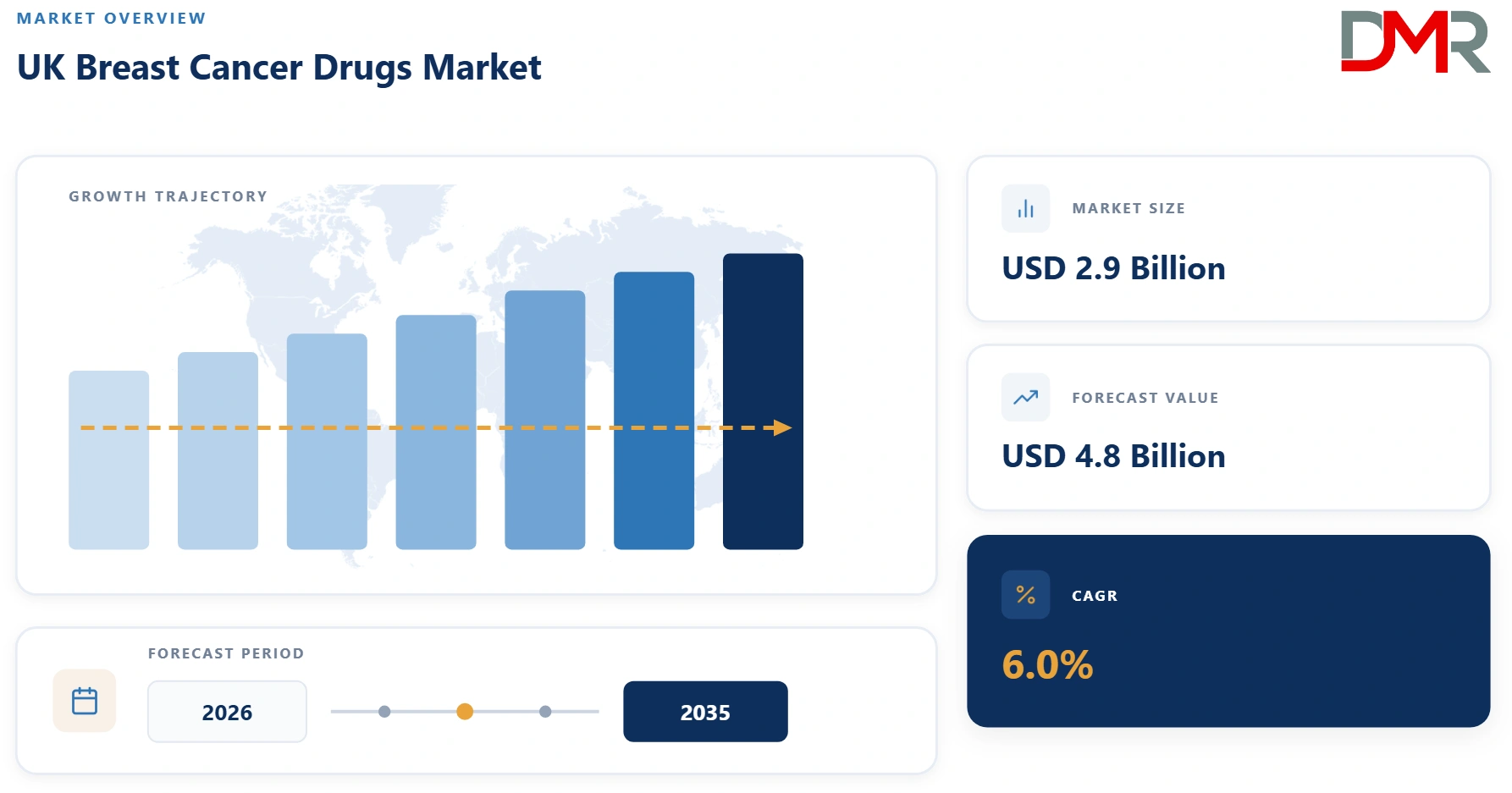
The market is estimated at USD 2.9 billion in 2026 and is projected to reach approximately USD 4.8 billion by 2035, representing a 6.0% CAGR.
ℹ
To learn more about this report –
Download Your Free Sample Report Here
The UK breast cancer drugs market comprises pharmaceutical therapies used to prevent recurrence, control locally advanced disease, treat metastatic breast cancer, and improve survival or quality of life. It encompasses hormonal/endocrine therapies, cytotoxic chemotherapy, targeted therapies, immunotherapies, antibody-drug conjugates (ADCs), and other supportive or disease-specific medicines. Treatment selection is increasingly determined by hormone-receptor status, HER2 expression, genomic biomarkers, disease stage and previous treatment. The market operates predominantly through NHS procurement and reimbursement frameworks, with NICE, NHS England, the Scottish Medicines Consortium and corresponding bodies influencing access and commercial uptake.
Use Cases
- Adjuvant recurrence prevention: Long-term endocrine and targeted therapies reduce recurrence risk after surgery and initial treatment.
- Neoadjuvant disease reduction: Systemic drugs shrink tumours before surgery and improve eligibility for breast-conserving or definitive procedures.
- Metastatic disease control: Targeted, hormonal, chemotherapy and ADC treatments delay progression and extend survival.
- HER2-positive treatment: HER2-directed medicines provide highly specific treatment for HER2-overexpressing breast cancers.
- Triple-negative breast cancer: Chemotherapy, immunotherapy and newer ADCs address an aggressive subtype with fewer traditional targets.
- Biomarker-directed treatment: Molecular testing increasingly identifies patients who may benefit from ESR1, BRCA, HER2 or other targeted approaches.
Key Takeaways
- Market Size: The UK breast cancer drugs market is estimated at USD 2.9 billion in 2026, reaching USD 4.8 billion by 2035.
- Growth: The market is projected to expand at approximately 6.0% CAGR through 2035.
- Growth Drivers: Rising treatment intensity, improved survival, biomarker testing, earlier diagnosis and expansion of targeted/adjuvant therapies are key drivers.
- Segment Dominance: Hormonal therapy remains the largest drug-class segment, while HR+/HER2− disease represents the largest subtype.
- Fastest Growth: ADCs are expected to grow fastest, at approximately 11.8% CAGR, as TROP2- and HER2-directed products move into additional treatment lines.
- NHS Influence: NICE and other UK health-technology-assessment bodies remain critical determinants of commercial access and adoption.
How Precision Oncology, AI and Biomarker Testing Are Transforming the UK Breast Cancer Drugs Market?
Precision oncology is shifting breast cancer treatment from broad tumour categories toward biomarker-defined treatment pathways. HER2 testing, hormone-receptor profiling and emerging genomic tests such as ESR1 mutation testing help physicians select increasingly specific treatments. Oral targeted endocrine therapies, CDK4/6 inhibitors and ADCs are expanding the range of options available beyond conventional chemotherapy.
Technology is improving treatment efficiency by identifying patients most likely to respond, reducing exposure to ineffective treatments and enabling earlier intervention when resistance develops. Circulating tumour DNA is also becoming increasingly important in research and treatment selection; AstraZeneca's SERENA-6 results, for example, demonstrated the potential of detecting emergent ESR1 mutations before radiographic progression.
Key Drivers in the UK Breast Cancer Drugs Market
Growing Adoption of Targeted and Biomarker-Guided Therapies
The UK Breast Cancer Drugs Market is increasingly shifting toward precision treatment based on hormone-receptor status, HER2 expression and emerging molecular biomarkers. Targeted therapies, CDK4/6 inhibitors, HER2-directed medicines, immunotherapies and antibody-drug conjugates are expanding treatment options across different disease subtypes and stages. Biomarker-guided treatment allows clinicians to select therapies according to tumour biology, improving treatment personalization and reducing reliance on conventional one-size-fits-all approaches.
Increasing Cancer Survivorship and Treatment Duration
Improving breast cancer survival is supporting sustained demand for pharmaceutical treatment in the UK. Patients increasingly receive prolonged adjuvant endocrine therapy, targeted medicines and sequential treatments for advanced disease. As patients live longer following diagnosis, the requirement for recurrence prevention and long-term disease management becomes more significant. Treatment strategies are also becoming more intensive, with combinations and sequential therapies increasingly used to delay progression.
Restraints in the UK Breast Cancer Drugs Market
NHS Cost-Effectiveness and Reimbursement Constraints
NHS reimbursement and health-technology assessment remain important constraints for the UK Breast Cancer Drugs Market. Pharmaceutical companies must demonstrate not only clinical effectiveness but also sufficient value within the UK healthcare system. NICE assessments can influence whether innovative medicines receive routine NHS funding, while commercial agreements may be required to improve affordability. This can create differences in access between medicines that have regulatory approval and those that receive broad NHS adoption.
Treatment Complexity, Adverse Effects and Resistance
Increasing therapeutic sophistication also creates clinical and operational challenges. Patients may experience adverse effects associated with chemotherapy, endocrine therapy, targeted medicines, immunotherapy or antibody-drug conjugates, requiring monitoring and treatment adjustments. Resistance remains another major challenge, particularly in advanced hormone-receptor-positive and HER2-positive disease, where cancer can develop mechanisms that reduce sensitivity to previously effective medicines. Multiple treatment lines can make clinical decision-making increasingly complex and increase the importance of molecular testing.
Growth Opportunities in the UK Breast Cancer Drugs Market
Expansion of Antibody-Drug Conjugates
Antibody-drug conjugates represent one of the strongest opportunities in the UK Breast Cancer Drugs Market. These medicines combine targeted antibody recognition with potent cytotoxic payloads, enabling treatment strategies that can selectively deliver chemotherapy to cancer cells. Existing HER2-directed ADCs have established an important role, while newer TROP2-directed medicines are expanding opportunities in triple-negative and other breast cancer populations. The development of ADCs across multiple biomarkers and treatment lines could significantly broaden their clinical application.
Earlier Use of Targeted Therapies
Moving targeted therapies from advanced disease into early-stage breast cancer represents another major opportunity. Medicines that demonstrate meaningful reductions in recurrence risk can potentially be used for larger patient populations and over longer treatment periods. CDK4/6 inhibitors have already demonstrated this transition, while ongoing research is evaluating additional targeted approaches in patients at high risk of recurrence. Earlier intervention also creates opportunities for pharmaceutical companies to develop treatment combinations based on tumour biology and recurrence risk.
Trends in the UK Breast Cancer Drugs Market
Shift Toward Personalized and Biomarker-Driven Treatment
The UK Breast Cancer Drugs Market is moving increasingly toward personalized treatment in which therapy selection is determined by tumour characteristics rather than disease location alone. HR status, HER2 expression and emerging biomarkers are becoming increasingly important in treatment decisions. This trend is encouraging pharmaceutical companies to develop highly targeted medicines and companion diagnostic strategies. It is also increasing the importance of molecular testing and multidisciplinary treatment planning.
Increasing Focus on Treatment Convenience
Treatment convenience is becoming an important consideration alongside efficacy and safety. Oral therapies can reduce the need for frequent hospital visits, while subcutaneous formulations can shorten administration times for selected treatments. These approaches can improve patient convenience while potentially reducing pressure on oncology infusion services. Pharmaceutical companies are therefore increasingly exploring alternative formulations, simplified dosing schedules and delivery methods that can improve the overall treatment experience.
Research Scope and Analysis
The market is segmented by Drug Class, Cancer Subtype, Disease Stage and Route of Administration. Estimates reflect UK treatment patterns, NHS access, expected drug adoption, treatment duration, product launches and anticipated changes in the clinical standard of care.
ℹ
To learn more about this report –
Download Your Free Sample Report Here
By Drug Class Analysis
Hormonal Therapy is estimated to dominate the UK breast cancer drugs market in 2026, accounting for approximately 39% of revenue. Its leadership reflects the large HR-positive population and extensive use of aromatase inhibitors, tamoxifen and other endocrine approaches across adjuvant and metastatic settings. Chemotherapy is estimated to rank second at approximately 21%, retaining importance in triple-negative, HER2-positive and high-risk disease despite competition from targeted agents. Targeted Therapy represents approximately 20%, supported by CDK4/6 inhibitors and HER2-directed medicines. Immunotherapy accounts for around 8%, concentrated primarily in selected TNBC settings. ADCs account for an estimated 9% in 2026 but are projected to be the fastest-growing category at approximately 11.8% CAGR, driven by expanding HER2 and TROP2 applications and increasing treatment-line penetration. Other therapies account for the remaining 3%. ADC growth is supported by the continuing evolution of HER2-directed treatment and emerging TROP2-directed products.
By Cancer Subtype Analysis
HR+/HER2− breast cancer is estimated to represent approximately 50% of 2026 market revenue, making it the dominant subtype because of its large patient population and extensive use of endocrine therapy plus targeted agents. The segment is also benefiting from broader CDK4/6 inhibitor use in early disease. HER2+ disease is the second-largest category at approximately 23%, supported by high-value trastuzumab-, pertuzumab- and ADC-based regimens. Triple-negative breast cancer accounts for around 17%, with rapid innovation in immunotherapy and ADCs. HR+/HER2+ represents approximately 7%, while other subtypes account for roughly 3%. TNBC is expected to be the fastest-growing subtype at approximately 8.5% CAGR, reflecting the introduction of new ADCs and greater treatment personalization. The HER2-low population is also becoming commercially relevant as a distinct treatment concept, although reimbursement remains an important constraint.
By Disease Stage Analysis
Early Stage disease is estimated to account for approximately 47% of 2026 market revenue, making it the largest disease-stage segment. High patient volumes, adjuvant endocrine therapy and increasing adoption of targeted recurrence-prevention strategies support its leadership. Metastatic disease follows at approximately 38%, reflecting long treatment durations, multiple lines of therapy and higher-value targeted medicines. Locally Advanced disease accounts for approximately 15%. Metastatic disease is projected to grow fastest at approximately 7.0% CAGR, as patients receive sequential targeted therapies, ADCs and biomarker-driven treatments over longer survival periods. However, the distinction between early and metastatic treatment economics is evolving as medicines such as ribociclib move into adjuvant treatment. NICE guidance specifically supports multiple systemic options across early, locally advanced and metastatic HER2-positive and HR+/HER2− disease.
By Route of Administration Analysis
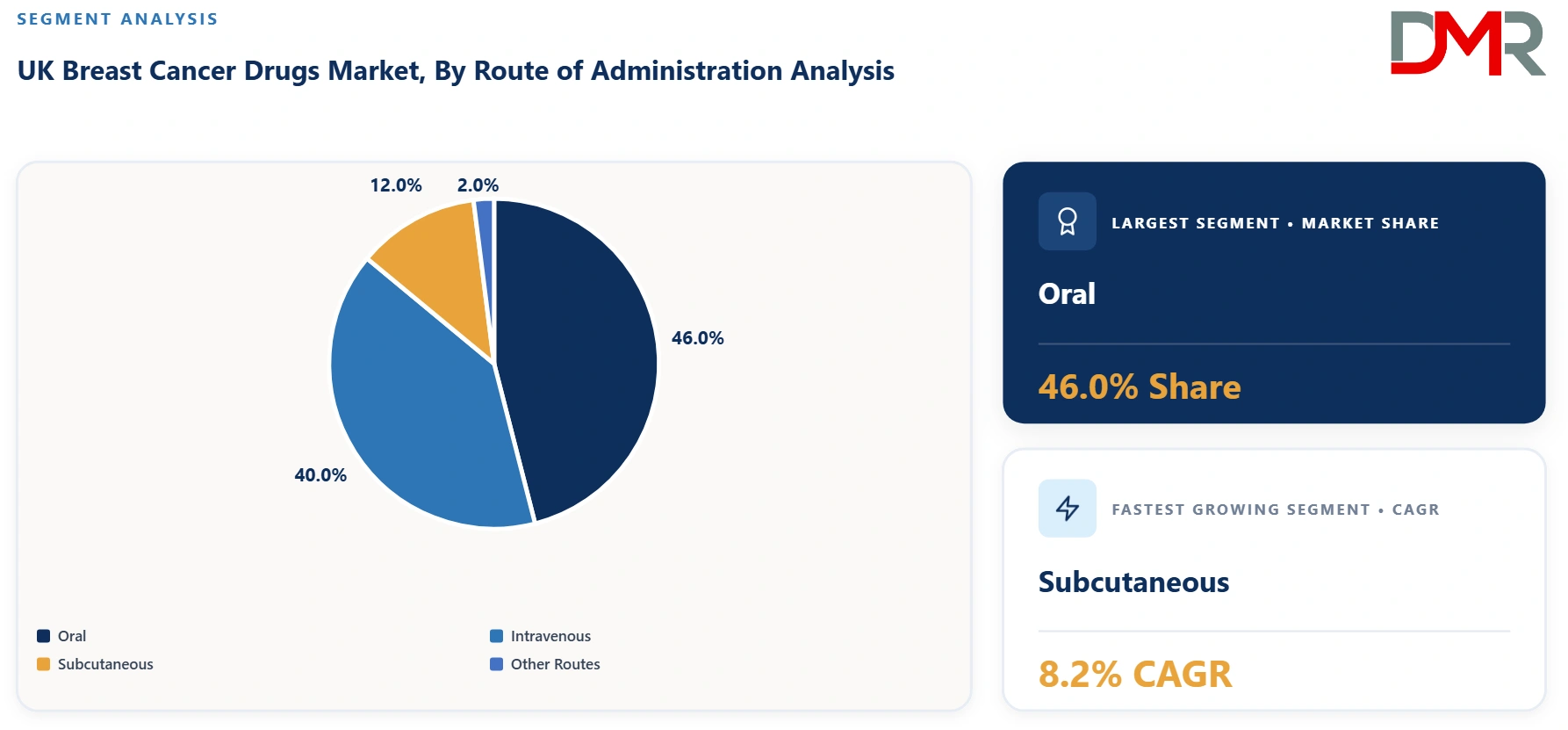
Oral administration is estimated to represent approximately 46% of the market in 2026, making it the leading route because endocrine therapies and several targeted agents can be delivered orally, improving convenience and reducing infusion-resource requirements. Intravenous administration accounts for approximately 40%, reflecting chemotherapy, monoclonal antibodies and many ADCs. Subcutaneous delivery represents around 12% and is expected to be the fastest-growing route at approximately 8.2% CAGR, driven by the shift toward shorter and more convenient administration. Other routes represent roughly 2%. The subcutaneous opportunity is particularly relevant to HER2-positive treatment, where products such as Phesgo are designed to simplify administration. Roche has highlighted evidence that patients often prefer subcutaneous over intravenous administration and that administration outside traditional clinical settings may reduce healthcare-system burden.
The UK Breast Cancer Drugs Market Report is segmented on the basis of the following:
By Drug Class
- Hormonal Therapy
- Chemotherapy
- Targeted Therapy
- Immunotherapy
- Antibody-Drug Conjugates (ADCs)
- Others
By Cancer Subtype
- HR+/HER2-
- HER2+
- Triple Negative Breast Cancer (TNBC)
- HR+/HER2+
- Other Subtypes
By Disease Stage
- Early Stage
- Locally Advanced
- Metastatic
By Route of Administration
- Oral
- Intravenous
- Subcutaneous
- Other Routes
Regulatory Landscape
The UK breast cancer drugs market is heavily shaped by MHRA authorization, NICE health-technology assessments, NHS England commissioning and devolved-nation reimbursement decisions. NICE recommendations can create rapid market access when clinical and economic evidence is favourable, while managed-access arrangements and commercial agreements are frequently used where evidence or cost-effectiveness remains uncertain. Ribociclib illustrates positive expansion into high-risk HR+/HER2− early disease, while trastuzumab deruxtecan demonstrates that promising clinical efficacy may still encounter reimbursement barriers in selected indications. Future regulatory pressure will increasingly focus on companion diagnostics, biomarker-defined populations, real-world evidence and comparative effectiveness. For manufacturers, demonstrating durable survival or recurrence benefits alongside NHS affordability will remain central to successful UK commercialization.
Investment and White Space Analysis
Investment opportunities are strongest in ADCs, oral endocrine-targeting agents, biomarker diagnostics and therapies designed to overcome endocrine resistance. The largest white space exists in HR+/HER2− disease, where ESR1 mutations and other resistance mechanisms create demand for new endocrine strategies. The ADC pipeline also offers substantial potential in TNBC and HER2-low disease, although NICE cost-effectiveness thresholds may constrain pricing. The market remains attractive because breast cancer has a large patient population and long treatment pathways, but investors should differentiate assets by probability of NHS reimbursement rather than clinical novelty alone. Companies combining diagnostics, differentiated delivery and strong comparative data may command greater strategic value than products offering incremental efficacy without health-economic advantages.
Competitive Landscape
The UK market is moderately concentrated but increasingly competitive, with global oncology companies competing across distinct molecular segments rather than through a single homogeneous product market. Major players include AstraZeneca/Daiichi Sankyo, Roche, Novartis, Eli Lilly, Pfizer, Gilead Sciences and Merck & Co. Competitive differentiation is increasingly based on progression-free and overall-survival improvements, biomarker specificity, treatment convenience, line-of-therapy positioning and cost-effectiveness. Companies are pursuing lifecycle expansion, combination therapies, ADC platforms, companion diagnostics and earlier-stage indications. NHS pricing agreements and NICE outcomes can materially influence market shares. The competitive environment is therefore shifting from conventional brand competition toward evidence-driven competition around treatment pathways.
Some of the prominent players in the UK Breast Cancer Drugs Market are:
- Roche
- AstraZeneca
- Pfizer
- Novartis
- Eli Lilly and Company
- Merck & Co.
- Bristol Myers Squibb
- Sanofi
- Eisai
- AbbVie
- Gilead Sciences
- Daiichi Sankyo
- Astellas Pharma
- Amgen
- Johnson & Johnson
- Takeda Pharmaceutical
- Bayer
- GlaxoSmithKline
- Teva Pharmaceuticals
- Viatris
- Biocon
- Accord Healthcare
- Sun Pharmaceutical Industries
- Dr. Reddy's Laboratories
- Natco Pharma
- Fresenius Kabi
- Sandoz
- Hikma Pharmaceuticals
- Cipla
- Alkem Laboratories
- Lupin
- Zydus Lifesciences
- Torrent Pharmaceuticals
- Glenmark Pharmaceuticals
- Intas Pharmaceuticals
- Amneal Pharmaceuticals
- Celltrion
- Samsung Biologics
- MacroGenics
- Puma Biotechnology
- Other Key Players
Recent Developments
- September 2026 , AstraZeneca/Daiichi Sankyo: Enhertu plus pertuzumab received EU approval for first-line HER2-positive metastatic breast cancer after demonstrating a 44% reduction in progression or death versus THP.
- June 2026, AstraZeneca/Daiichi Sankyo: Datroway received an EU recommendation for first-line metastatic TNBC patients unable to receive PD-1/PD-L1 inhibitors, strengthening competition in the TROP2 ADC segment.
- November 2025, Novartis: Scotland's SMC accepted Kisqali (ribociclib) for eligible high-risk HR+/HER2− early breast cancer patients, following NICE's 2025 recommendation in England and implementation across other UK nations.
- October 2025, Novartis: Five-year NATALEE results showed a 28% reduction in invasive disease recurrence risk with Kisqali plus endocrine therapy, supporting broader use of CDK4/6 inhibition in early HR+/HER2− disease.
- April 2025 Roche, Roche reported a positive European recommendation supporting administration of Phesgo outside traditional clinical settings, potentially improving treatment convenience and reducing administration-related healthcare costs.
Report Details
| Report Characteristics |
| Market Size (2026) |
USD 2.9 Bn |
| Forecast Value (2035) |
USD 4.8 Bn |
| CAGR (2026–2035) |
6.0% |
| Historical Data |
2021 – 2025 |
| Forecast Data |
2026 – 2035 |
| Base Year |
2025 |
| Segments Covered |
By Drug Class, By Cancer Subtype, By Disease Stage, By Route Of Administration |
| Country Coverage |
UK |
Frequently Asked Questions
What is the size of the UK Breast Cancer Drugs Market in 2026?
▾ The UK Breast Cancer Drugs Market is estimated at USD 2.9 billion in 2026, covering systemic medicines used across early, locally advanced and metastatic breast cancer.
What will the UK Breast Cancer Drugs Market reach by 2035?
▾ The UK Breast Cancer Drugs Market is projected to reach approximately USD 4.8 billion by 2035, driven by targeted therapies, ADC adoption and increasing treatment intensity.
What is the CAGR of the UK Breast Cancer Drugs Market?
▾ The UK Breast Cancer Drugs Market is expected to grow at approximately 6.0% CAGR from 2026 to 2035, supported by therapeutic innovation and expanding treatment options.
What are the key drivers of the UK Breast Cancer Drugs Market?
▾ The UK Breast Cancer Drugs Market is driven by targeted therapies, biomarker testing, improved survival, earlier intervention and increasing adoption of antibody-drug conjugates.
Which segment dominates the UK Breast Cancer Drugs Market?
▾ Hormonal therapy dominates the UK Breast Cancer Drugs Market by drug class, while HR+/HER2- disease leads by cancer subtype and oral administration leads by route.
Which is the fastest-growing segment in the UK Breast Cancer Drugs Market?
▾ Antibody-drug conjugates are expected to be the fastest-growing segment in the UK Breast Cancer Drugs Market, with an estimated 11.8% CAGR through 2035.
Who are the major players in the UK Breast Cancer Drugs Market?
▾ Major players in the UK Breast Cancer Drugs Market include AstraZeneca, Daiichi Sankyo, Roche, Novartis, Eli Lilly, Pfizer, Gilead Sciences and Merck & Co.
How is the UK Breast Cancer Drugs Market segmented?
▾ The UK Breast Cancer Drugs Market is segmented by drug class, cancer subtype, disease stage and route of administration.