The UK Women’s Healthcare Market Snapshot
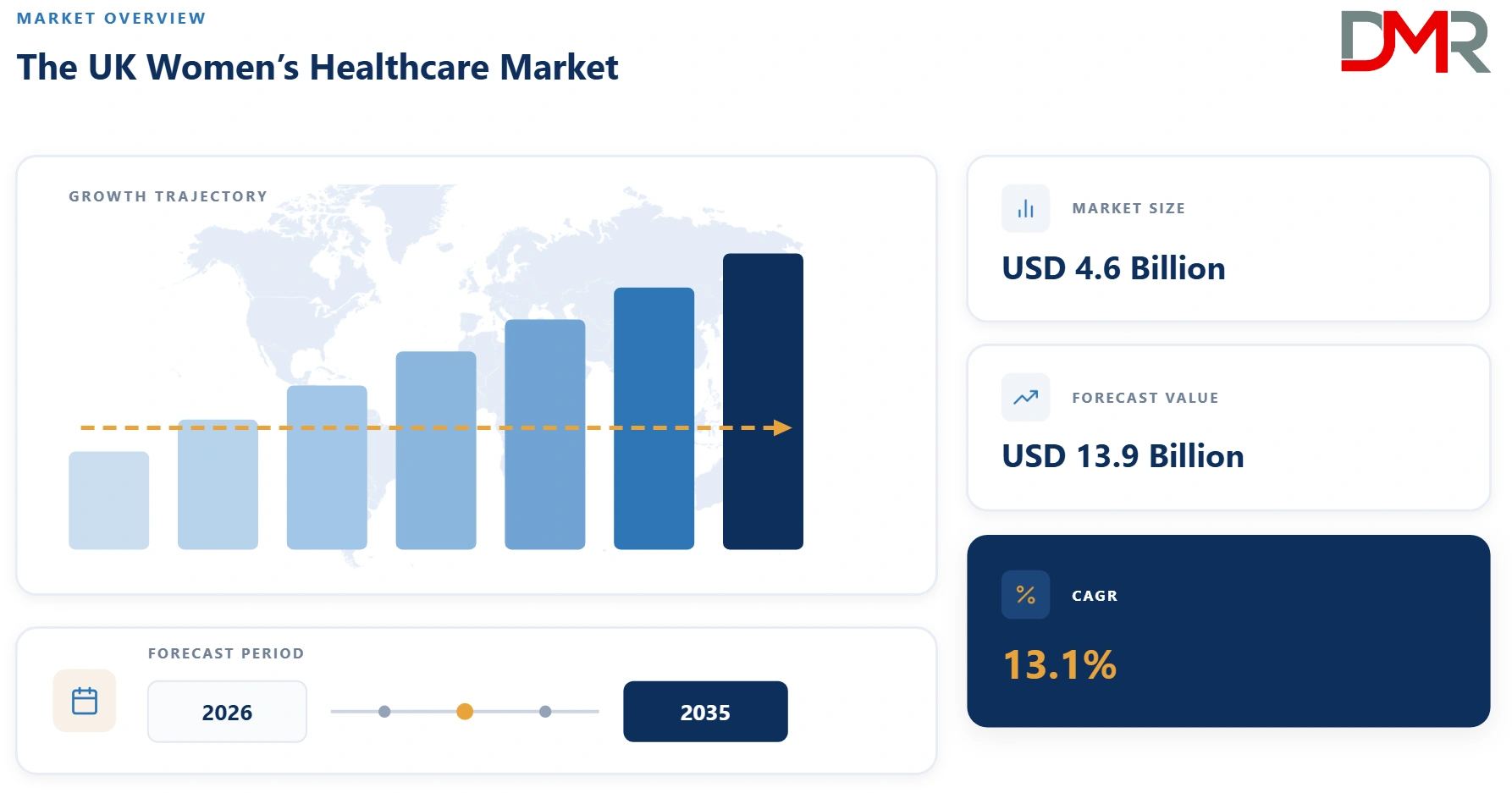
- UK Women's Healthcare Market Size in 2026: USD 4.6 Billion
- UK Women's Healthcare Market Size in 2035: USD 13.9 Billion
- UK CAGR from 2026 to 2035: 13.1%
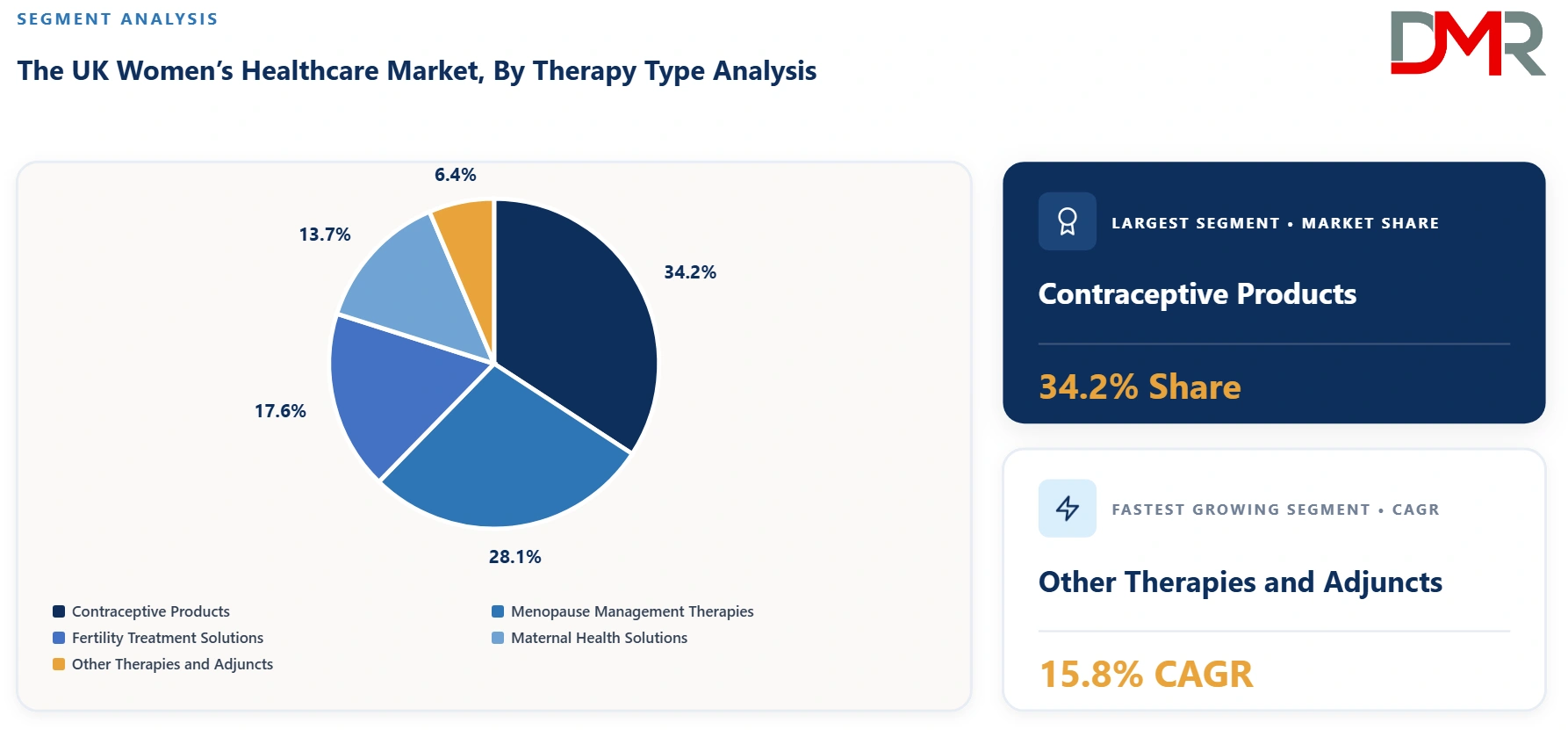
- Contraceptive Products is the leading therapy type segment in 2026: 34.2%
- Digital Health Platforms and Apps is the leading device type segment in 2026: 36.8%
- Retail and Community Pharmacies is the leading distribution channel segment in 2026: 41.7%
- Home Care Settings is the leading end user segment in 2026: 44.9%
What is the UK Women’s Healthcare and its Market Size?
The UK Women's Healthcare Market is projected to be valued at USD 4.6 billion in 2026 and is projected to reach USD 13.9 billion by 2035, expanding at a CAGR of 13.1% during the forecast period. Growth is being propelled by rising public and clinical attention to previously underserved conditions such as menopause, endometriosis, and polycystic ovary syndrome, alongside the rapid commercial expansion of femtech wearables and cycle-tracking platforms.
ℹ
To learn more about this report –
Download Your Free Sample Report Here
The proliferation of NHS Women's Health Hubs, the mainstreaming of hormone replacement therapy following updated national prescribing guidance, and the entry of digitally native fertility and menopause clinics are reshaping care away from fragmented, GP-led referral pathways toward integrated, technology-enabled models. Investment is accelerating as private insurers, employers, and the NHS alike seek to close long-standing diagnostic delay gaps for conditions historically dismissed or under-researched in women's medicine.
Use Cases
- Menopause Symptom Management and HRT Titration: Community pharmacies and NHS Women's Health Hubs increasingly use standardised assessment tools alongside body-identical hormone replacement therapy to manage vasomotor symptoms, supported by digital symptom trackers that feed dosing adjustments back to prescribers.
- At-Home Fertility and Ovulation Monitoring: Reproductive-age users deploy connected basal body temperature sensors and hormone test strips linked to mobile applications that use predictive algorithms to identify fertile windows, reducing time-to-conception and unnecessary specialist referrals.
- Endometriosis and Chronic Pelvic Pain Diagnostic Pathways: Specialist gynaecology centres combine transvaginal ultrasound, MRI, and symptom-scoring digital questionnaires to shorten the historically lengthy diagnostic interval, enabling earlier initiation of hormonal or surgical management.
- Maternal Health Remote Monitoring: NHS maternity services increasingly issue at-home blood pressure and glucose monitoring kits to pregnant patients identified as higher risk, with data streamed to midwifery teams to flag pre-eclampsia or gestational diabetes early.
Key Takeaways
- Market Size: The UK Women's Healthcare Market is anticipated to be valued at USD 4.6 billion in 2026 and is forecast to reach USD 13.9 billion by 2035, expanding at a CAGR of 13.1%.
- Growth Outlook: Market expansion is sustained by rising diagnosis rates for historically overlooked gynaecological conditions, broader NHS commissioning of women's health services, and consumer-driven adoption of femtech and digital symptom-tracking tools.
- Primary Growth Drivers: Expanded national guidance on menopause care, growing private fertility clinic capacity, employer-sponsored women's health benefits, and NHS Long Term Plan commitments to dedicated women's health infrastructure are accelerating investment.
- By Therapy Type Analysis: Contraceptive Products is projected to lead with a 34.2% share in 2026, reflecting sustained baseline demand across the reproductive-age population. Other Therapies and Adjuncts (including endometriosis management, PCOS therapies, and pelvic health treatments) is the fastest-growing segment at 15.8% CAGR.
- By Device Type Analysis: Digital Health Platforms and Apps is expected to lead with a 36.8% share in 2026, driven by consumer adoption of cycle and symptom trackers. Femtech Wearables is projected to post the highest CAGR at 17.4%, as connected hormone and temperature sensors gain clinical validation.
- By Patient Age Analysis: Reproductive Age Adults (18-45) is poised to lead with a 61.4% share in 2026. Perimenopausal and Menopausal Adults (45-65) is the fastest-growing segment at 14.9% CAGR, reflecting expanded diagnosis and treatment of menopause symptoms.
- By Distribution Channel Analysis: Retail and Community Pharmacies is expected to command a 41.7% share in 2026. Online and Direct-to-Consumer Platforms is the fastest-growing channel at 19.6% CAGR, driven by subscription-based HRT, contraception, and fertility test delivery services.
- By End User Analysis: Home Care Settings is projected to lead with a 44.9% share in 2026. Private Healthcare Providers and Clinics is the fastest-growing end user segment at 16.2% CAGR, as demand outpaces NHS specialist capacity for menopause and fertility services.
How AI/Gen AI is Transforming the Women’s Healthcare Market?
Artificial intelligence and connected health platforms are reshaping women's healthcare by enabling personalised cycle prediction, earlier symptom-pattern recognition for conditions such as endometriosis and PCOS, and adaptive HRT dose guidance. Machine learning models embedded in consumer fertility and menopause apps analyse longitudinal symptom, temperature, and hormone-test data to flag anomalies warranting clinical review, helping to compress the diagnostic delays that have historically characterised UK women's gynaecological care.
Key Drivers in the UK Women's Healthcare Market
Expanding National Focus on Menopause and Underdiagnosed Gynaecological Conditions
The UK Women's Healthcare Market is benefiting from stronger national attention to menopause, endometriosis, PCOS, and other historically underdiagnosed gynaecological conditions. Updated clinical guidance, public awareness campaigns, parliamentary discussions, and wider media coverage are encouraging women to seek earlier diagnosis and treatment. Reduced stigma around reproductive and menopausal health is also improving patient engagement with primary and specialist care. Consequently, demand is increasing for hormone replacement therapies, pain management solutions, diagnostic testing, fertility assessments, and specialist consultations. Greater clinical recognition of symptoms is expanding the diagnosed and treated patient population, supporting sustained demand for women's healthcare products and services nationwide.
Growth of NHS Women's Health Hubs and Private Specialist Capacity
Expansion of NHS Women's Health Hubs is improving access to integrated services across contraception, menopause management, menstrual health, pelvic health, and gynaecological conditions. These hubs consolidate previously fragmented care pathways, allowing patients to access multiple services through coordinated referral systems. Integrated care systems are increasingly using this model to strengthen community-based women's healthcare and reduce pressure on hospitals. Simultaneously, private specialist clinics are expanding their menopause, fertility, pelvic health, and gynaecology services to accommodate patients facing NHS waiting times. Growing capacity across public and private settings is increasing consultation volumes, diagnostic procedures, prescriptions, and demand for women's healthcare devices and therapies.
Restraints in the UK Women's Healthcare Market
NHS Capacity Constraints and Regional Access Disparities
NHS capacity limitations remain an important restraint on the UK Women's Healthcare Market, particularly for specialist gynaecology, fertility, menopause, and endometriosis services. Long waiting periods can delay diagnosis, treatment initiation, surgical procedures, and specialist consultations, reducing timely adoption of advanced healthcare solutions. Regional differences in commissioning policies also create uneven access to funded hormone replacement therapy, fertility investigations, pelvic health services, and specialist procedures. Patients in well-resourced urban areas generally have broader treatment options than those in underserved regions. These inequalities can restrict nationwide market penetration, while workforce shortages and pressure on NHS budgets may further constrain service expansion and technology adoption.
Growth Opportunities in the UK Women's Healthcare Market
Employer-Sponsored and Insurance-Backed Women's Health Benefits
Employer-sponsored women's health benefits represent a significant growth opportunity as UK organisations increasingly incorporate menopause assistance, fertility services, reproductive healthcare, and private gynaecology coverage into employee benefit programmes. These offerings create an alternative reimbursement pathway beyond traditional NHS commissioning and enable employees to access specialist services more rapidly. Private insurers are also expanding coverage for fertility assessments, diagnostics, menopause consultations, and related treatments. Digital-first providers can capitalise on this trend through scalable virtual consultations, personalised care programmes, symptom monitoring, and treatment support. Wider corporate adoption could significantly expand the addressable population and generate recurring revenue opportunities for specialised women's healthcare service providers.
Femtech Clinical Validation and NHS Digital Formulary Inclusion
Clinical validation of femtech solutions presents substantial opportunities for technology providers seeking broader adoption within the UK healthcare system. Wearables, fertility monitors, cycle trackers, pelvic health technologies, and symptom-management applications are increasingly generating evidence supporting clinical usefulness. Successful inclusion within NHS digital formularies could transform validated solutions from consumer wellness products into recognised healthcare technologies. Integration with GP systems and electronic health records could enable clinicians to access longitudinal reproductive, hormonal, and symptom data during consultations. This transition would increase institutional credibility, improve reimbursement potential, and support wider adoption across primary care, specialist clinics, and community health services while strengthening evidence-based women's healthcare delivery.
Trends in the UK Women's Healthcare Market
Integration of Women's Health Data into Unified Digital Records
Integration of women's health information into unified digital health records is emerging as an important trend across the UK healthcare ecosystem. Data generated through cycle tracking, fertility monitoring, menopause applications, hormone therapy management, and connected devices can provide clinicians with longitudinal insights into symptoms and treatment responses. Linking these datasets with NHS App records and GP systems could reduce reliance on patient recall during short consultations and improve clinical decision-making. Greater interoperability may also support personalised treatment adjustments, earlier identification of abnormal patterns, and better continuity between primary and specialist care. This trend is encouraging development of secure, interoperable women's digital health platforms.
Rise of Direct-to-Consumer Hormone and Fertility Testing
Direct-to-consumer hormone and fertility testing is gaining momentum as women seek faster and more convenient alternatives to conventional referral pathways. At-home testing services allow users to collect samples and receive assessments for reproductive hormones, ovarian reserve indicators, fertility markers, and menopause-related changes without initially visiting a clinic. Results are increasingly delivered through companion applications that provide explanations, personalised insights, and access to virtual consultations. These services are particularly attractive to perimenopausal and fertility-conscious consumers experiencing delays within traditional healthcare pathways. Growing digital adoption, convenience, privacy, and demand for proactive health management are supporting expansion of this emerging diagnostic channel.
Research Scope and Analysis
The UK Women's Healthcare Market is segmented by therapy type, device type, patient age, distribution channel, and end user, covering contraceptives, menopause and fertility therapies, femtech devices, digital platforms, reproductive age groups, pharmacies, online channels, hospitals, private providers, and homecare settings.
ℹ
To learn more about this report –
Download Your Free Sample Report Here
By Therapy Type Analysis
Contraceptive Products are projected to dominate the UK Women's Healthcare Market with an estimated 34.2% share in 2026, supported by sustained demand for oral contraceptives, long-acting reversible contraception, and barrier methods. Established NHS reproductive health programmes and widespread availability through pharmacies and clinics reinforce segment leadership. Meanwhile, Other Therapies and Adjuncts are expected to register the highest CAGR of 15.8% during 2026–2035. Growth is being supported by increasing diagnosis and treatment of endometriosis, PCOS, pelvic floor disorders, and related conditions. Expanding specialist pathways, improving awareness, and development of targeted treatment solutions are strengthening long-term growth prospects for this category.
By Device Type Analysis
Digital Health Platforms and Apps are anticipated to dominate the device segment of the UK Women's Healthcare Market, accounting for approximately 36.8% of revenue in 2026. Their leadership reflects widespread adoption of applications supporting menstrual cycle tracking, fertility planning, pregnancy management, menopause symptoms, and personalised health monitoring. Smartphone penetration and growing consumer acceptance of digital healthcare further strengthen adoption. Femtech Wearables are projected to achieve the highest CAGR of 17.4% between 2026 and 2035. Connected devices monitoring temperature, fertility indicators, hormonal patterns, and pelvic health are gaining clinical credibility, creating opportunities for integration with healthcare records and formal care pathways.
By Patient Age Analysis
Reproductive Age Adults aged 18–45 are projected to represent the largest patient segment in the UK Women's Healthcare Market, accounting for an estimated 61.4% share in 2026. This dominance reflects extensive demand for contraception, fertility services, pregnancy care, reproductive diagnostics, and management of common gynaecological conditions throughout reproductive years. Perimenopausal and Menopausal Adults aged 45–65 are anticipated to record the fastest CAGR of 14.9% through 2035. Increasing menopause awareness, broader hormone replacement therapy prescribing, improved clinical guidance, workplace menopause programmes, and expansion of specialist clinics are encouraging more women to seek structured treatment, supporting rapid market growth within this demographic.
By Distribution Channel Analysis
Retail and Community Pharmacies are expected to dominate distribution within the UK Women's Healthcare Market, capturing an estimated 41.7% share in 2026. Their extensive geographic reach and established role in dispensing contraceptives, hormone replacement therapies, pain management products, and over-the-counter women's health solutions support market leadership. Online and Direct-to-Consumer Platforms are projected to register the fastest CAGR of 19.6% from 2026 to 2035. Growth is being driven by digital consultations, subscription-based menopause services, online pharmacies, postal fertility tests, and home hormone testing. Increasing consumer preference for convenience, discretion, accessibility, and faster service is accelerating migration toward digitally enabled distribution models.
By End User Analysis
Home Care Settings are projected to dominate the UK Women's Healthcare Market by end user, accounting for an estimated 44.9% share in 2026. Leadership reflects the self-managed nature of contraception, menstrual tracking, fertility monitoring, menopause symptom management, digital health applications, and home diagnostic testing. Increasing availability of connected devices and direct-to-consumer solutions further supports home-based healthcare. Private Healthcare Providers and Clinics are forecast to achieve the highest CAGR of 16.2% through 2035. Rising NHS waiting times are encouraging patients to seek quicker access to fertility, menopause, pelvic health, and gynaecological specialists, strengthening demand across independent clinics and private healthcare networks.
The UK Women’s Healthcare Market Report is segmented based on the following:
By Therapy Type
- Contraceptive Products
- Oral Contraceptives
- Long-Acting Reversible Contraceptives
- Barrier Methods
- Menopause Management Therapies
- Body-Identical HRT
- Non-Hormonal Symptom Therapies
- Fertility Treatment Solutions
- Ovulation Induction Therapies
- Assisted Reproductive Technology Support
- Maternal Health Solutions
- Antenatal Monitoring Therapies
- Postnatal Recovery Support
- Other Therapies and Adjuncts
- Endometriosis Management
- PCOS Treatment
- Pelvic Floor Therapies
By Device Type
- Femtech Wearables
- Temperature Sensors
- Hormone Tracking Wearables
- Diagnostic Devices
- Ultrasound Systems
- Point-of-Care Hormone Testing Kits
- Digital Health Platforms and Apps
- Cycle Tracking Apps
- Symptom Management Platforms
- Fertility Monitoring Devices
- Others
By Patient Age
- Adolescents
- Reproductive Age Adults (18-45)
- Perimenopausal and Menopausal Adults (45-65)
By Distribution Channel
- Hospital and NHS Pharmacies
- Retail and Community Pharmacies
- Online and Direct-to-Consumer Platforms
By End User
- NHS Hospitals and Clinics
- Home Care Settings
- Private Healthcare Providers and Clinics
- Research Institutes and Academic Centres
Regulatory Landscape
The regulatory environment for women's healthcare products and services in the UK is shaped by the Medicines and Healthcare products Regulatory Agency (MHRA), which oversees licensing of hormonal therapies, contraceptive devices, and diagnostic tools, alongside NICE guidance that informs NHS commissioning decisions for menopause care, fertility investigations, and endometriosis management. NHS England's Women's Health Strategy has driven the phased rollout of Women's Health Hubs across integrated care boards, while the Digital Technology Assessment Criteria (DTAC) framework increasingly governs the evaluation of femtech and digital symptom-tracking applications seeking NHS formulary inclusion.
Epidemiology Analysis
- An estimated 13 million people in the UK are currently experiencing perimenopause or menopause, with a significant proportion reporting symptoms severe enough to affect daily functioning.
- Endometriosis is estimated to affect approximately 1.5 million women and those assigned female at birth in the UK, with average diagnostic delay historically estimated at several years from symptom onset.
- Approximately 3.5 million women in the UK are estimated to have polycystic ovary syndrome, a leading cause of anovulatory infertility.
- Fertility treatment demand continues to rise, with tens of thousands of IVF cycles performed annually across NHS and private clinics, though NHS-funded access varies considerably by integrated care board.
Competitive Landscape
The UK Women's Healthcare Market features a mix of multinational pharmaceutical manufacturers, diagnostic device makers, and fast-growing femtech companies. Hormone therapy and contraceptive supply is led by established pharmaceutical manufacturers, while diagnostic imaging and hormone testing are supported by major diagnostics companies. A distinct wave of UK- and Europe-based femtech firms has emerged in cycle tracking, fertility monitoring, and workplace menopause support, increasingly partnering with the NHS and private insurers to expand access.
Some of the prominent players in the UK Women’s Healthcare Market are:
- Bayer
- Organon
- Pfizer
- Gedeon Richter
- Theramex
- Besins Healthcare
- Ferring Pharmaceuticals
- Merck KGaA
- AbbVie
- Amgen
- Novo Nordisk
- Teva Pharmaceutical Industries
- Viatris
- ADVANZ Pharma
- Exeltis Healthcare
- Norgine
- Orion Pharma
- Sandoz
- CooperSurgical
- Hologic
- GE HealthCare
- Reckitt
- Vitrolife Group
- FUJIFILM Irvine Scientific
- IBSA Institut Biochimique
- Hamilton Thorne
- Kitazato
- Flo Health
- Elvie
- Hertility
- Peppy
- SheMed
- Micrima
- Emm
- Pregna International
- Karex
- Okamoto Industries
- Pasante Healthcare
- LTC Healthcare
- KESSEL medintim
- Other Key Players
Recent Developments
- April 2026: UK government renewed the Women’s Health Strategy, prioritising faster gynaecology pathways, reduced waiting times, improved endometriosis care, menstrual health education, menopause support, and stronger patient involvement across England’s healthcare system.
- March 2026: NICE recommended fezolinetant (Veoza) for moderate-to-severe menopause-related vasomotor symptoms when hormone replacement therapy is unsuitable, expanding access to a non-hormonal treatment option for eligible women through NHS services.
- January 2026: NHS England announced menopause among the first conditions prioritised for its new NHS Online service, designed to provide patients with faster digital access to specialist consultations and reduce pressure on conventional pathways.
- April 2025: NICE recommended relugolix–estradiol–norethisterone (Ryeqo) for eligible reproductive-age adults with endometriosis following previous medical or surgical treatment, expanding oral treatment choices and supporting home-based management of chronic endometriosis symptoms.
Report Details
| Report Characteristics |
| Market Size (2026) |
USD 4.6 Bn |
| Forecast Value (2035) |
USD 13.9 Bn |
| CAGR (2026–2035) |
13.1% |
| Historical Data |
2021 – 2025 |
| Forecast Data |
2026 – 2035 |
| Base Year |
2025 |
| Segments Covered |
By Therapy Type, By Device Type, By Patient Age, By Distribution Channel, and By End User |
| Country Coverage |
The UK |
Frequently Asked Questions
How big is the UK Women's Healthcare Market?
▾ The UK Women's Healthcare Market is projected to be valued at USD 4.6 billion in 2026 and is projected to reach USD 13.9 billion by 2035, reflecting strong demand for contraception, menopause therapies, fertility solutions, and digital women's health platforms.
What is the CAGR of the UK Women's Healthcare Market from 2026 to 2035?
▾ The market is projected to expand at a compound annual growth rate (CAGR) of 13.1% between 2026 and 2035, supported by rising diagnosis of underserved gynaecological conditions and expanding NHS and private specialist capacity.
What factors are driving the growth of the UK Women's Healthcare Market?
▾ Growth is driven by expanding menopause and endometriosis diagnosis rates, the rollout of NHS Women's Health Hubs, growing employer-sponsored women's health benefits, and rapid adoption of femtech and digital symptom-tracking tools.
What are the major trends in the UK Women's Healthcare Market?
▾ Major trends include integration of women's health data into unified digital records, growth of direct-to-consumer hormone and fertility testing, expansion of workplace menopause benefits, and increasing clinical validation of femtech wearables.
Who are the key players in the UK Women's Healthcare Market?
▾ Key market participants include Organon, Bayer, Theramex, GSK, AstraZeneca, Hologic, Natural Cycles, Elvie, Flo Health, and Peppy Health, among other pharmaceutical, diagnostics, and digital health firms.
How is the UK Women's Healthcare Market segmented?
▾ The market is segmented by therapy type, device type, patient age, distribution channel, and end user, with regional analysis considering variation across NHS integrated care systems in England, Scotland, Wales, and Northern Ireland.