US Food Allergy Diagnosis and Treatment Market Snapshot
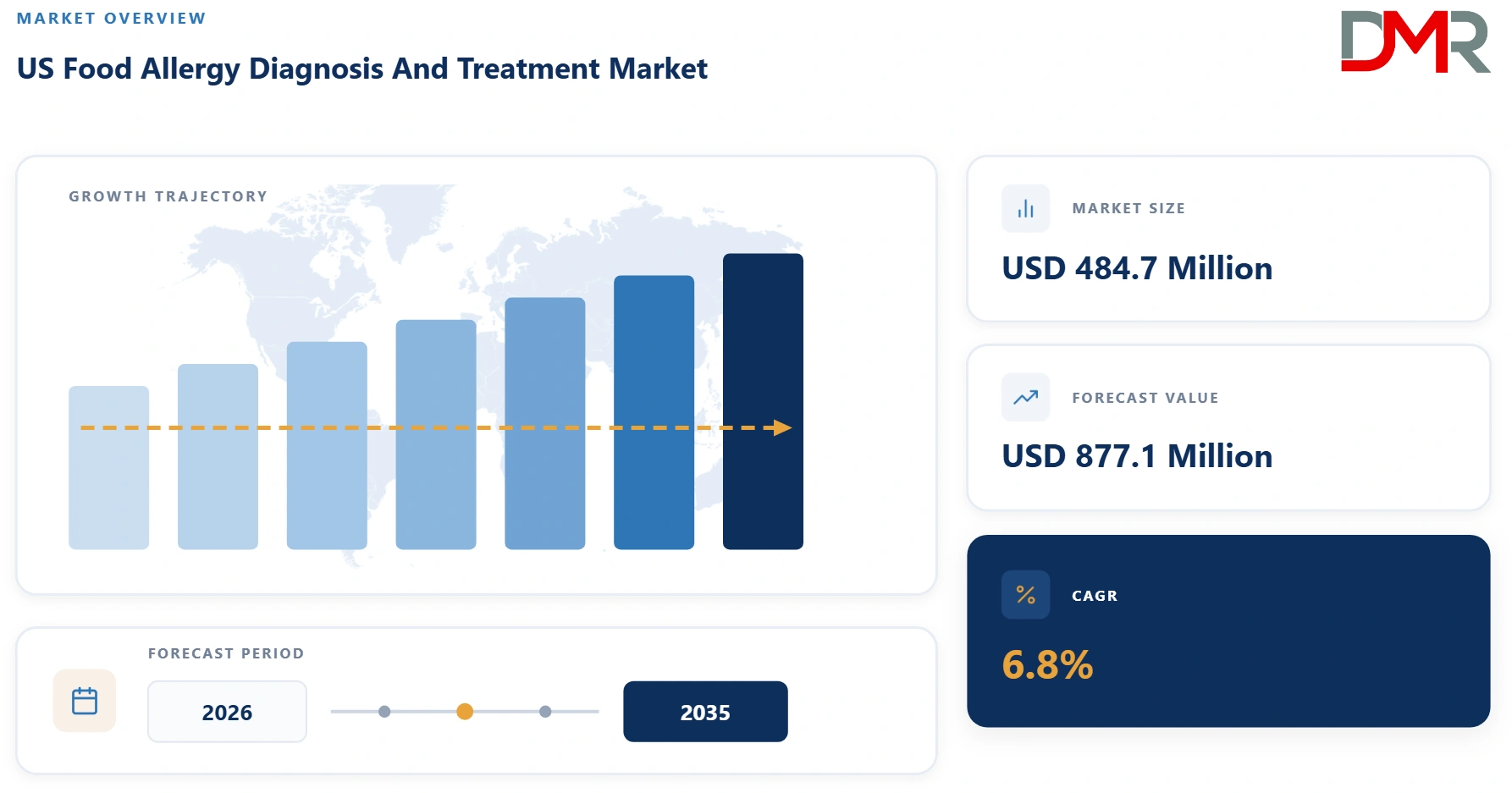
- US Food Allergy Diagnosis and Treatment Market Size in 2026: USD 484.7 Million
- US Food Allergy Diagnosis and Treatment Market Size in 2035: USD 877.1 Million
- US CAGR from 2026 to 2035: 6.81%
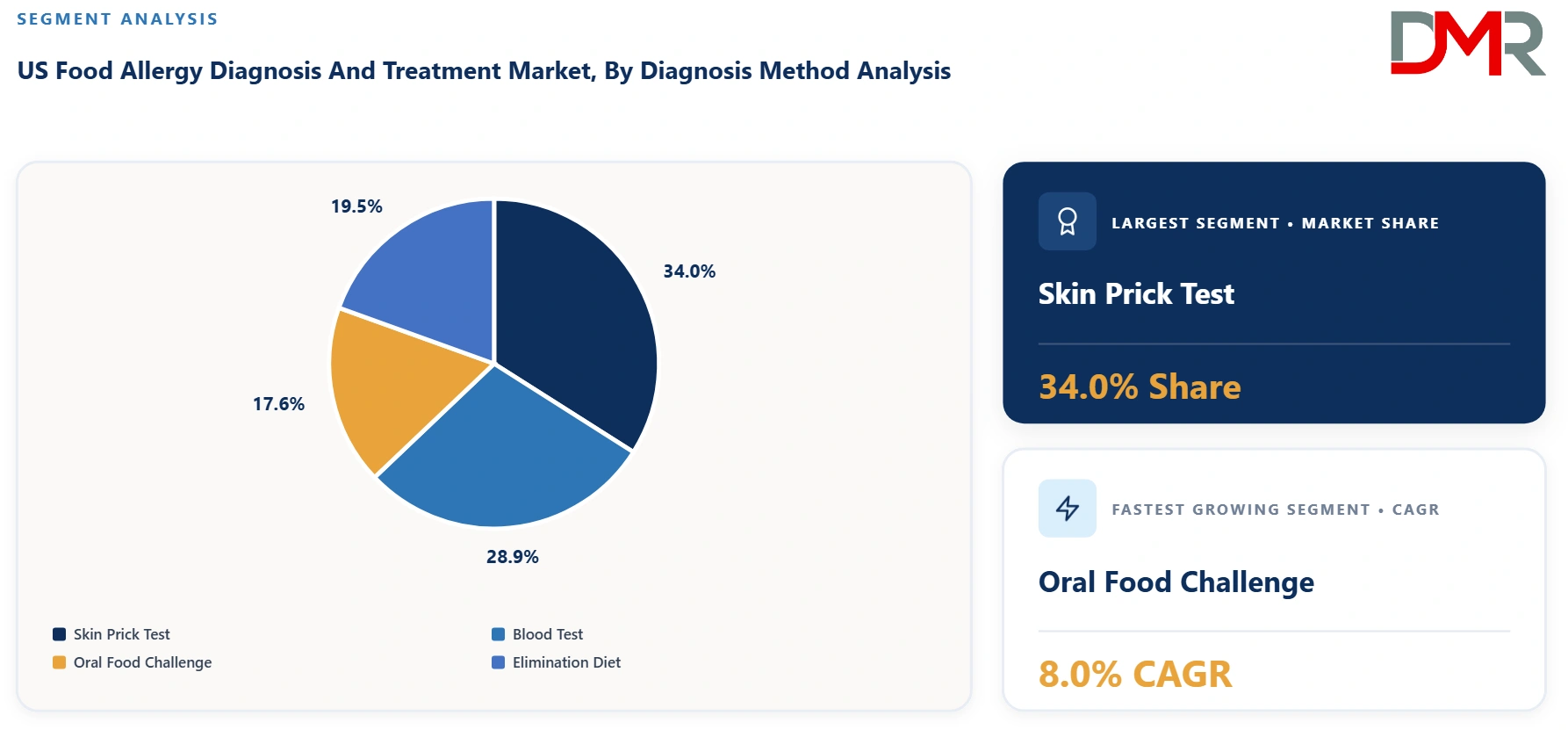
- Skin Prick Test is the leading Diagnosis Method segment in 2026: 34%
- Medication is the leading Treatment Type segment in 2026: 31%
- Hospitals is the leading End User segment in 2026: 38%
What is the US Food Allergy Diagnosis and Treatment Market and its Market Size?
The US Food Allergy Diagnosis and Treatment Market is projected to reach approximately USD 484.7 million in 2026 and expand at an estimated compound annual growth rate of approximately 6.81% from 2026 to 2035, reaching approximately USD 877.1 million by 2035. The market covers diagnostic procedures and treatment approaches used to identify, manage, and reduce risks associated with food allergies across hospitals, clinics, home care settings, and pharmaceutical organizations.
ℹ
To learn more about this report –
Download Your Free Sample Report Here
The underlying market forecast reports a market value of USD 453.5 million in 2025 and USD 877.1 million in 2035, with a reported CAGR of 6.89% for 2025-2035.
Market Overview
The US food allergy diagnosis and treatment market is being shaped by the rising burden of food allergies, greater public awareness, improvements in diagnostic technologies, and the emergence of personalized treatment approaches. Food Allergy Research & Education estimates that more than 33 million people in the United States have convincing food allergies, including approximately 1 in 13 children and 1 in 10 adults.
Diagnosis increasingly combines clinical history with skin prick testing, blood-based IgE testing, elimination approaches, and oral food challenges where appropriate. At the same time, treatment is moving beyond strict avoidance toward pharmacological therapies, immunotherapy, dietary management, and emergency preparedness. The FDA's approval of Xolair for reducing allergic reactions following accidental exposure to one or more foods represents an important expansion of pharmacological treatment options.
Use Cases
- Food Allergy Screening and Confirmation: Skin prick testing and blood-based testing are widely used by allergists to investigate suspected food allergies and identify sensitization to specific allergens. These methods can support clinical decision-making alongside patient history and physical examination. Oral food challenges may subsequently be used when diagnosis remains uncertain because they can provide direct evidence regarding whether a patient reacts to a suspected food. Increasing awareness and demand for accurate diagnosis are supporting utilization of these approaches.
- Personalized Food Allergy Management: Personalized management plans combine allergen avoidance, dietary counseling, medications, emergency preparedness, and immunotherapy where clinically appropriate. Treatment decisions increasingly consider patient age, allergen type, reaction severity, lifestyle, and previous medical history. Personalized approaches can help patients and caregivers understand exposure risks while improving adherence to dietary and therapeutic recommendations. The shift toward individualized care is also encouraging healthcare providers to integrate diagnostic information with long-term treatment planning.
- Immunotherapy and Desensitization: Immunotherapy is becoming an increasingly important approach for selected food allergy patients because it seeks to modify the immune response and increase tolerance to specific allergens. Oral immunotherapy has received regulatory attention in the United States, while biologic therapies are expanding the range of potential treatment strategies. The FDA previously approved Palforzia for peanut allergy and later approved Xolair for reducing reactions associated with accidental exposure to one or more foods.
- Emergency Allergy Management: Patients with severe food allergies require rapid access to emergency treatment following accidental exposure. Emergency management commonly involves epinephrine and other supportive interventions, while long-term management emphasizes allergen avoidance, education, and preparedness. Healthcare providers, schools, caregivers, and patients increasingly emphasize emergency action plans and recognition of anaphylaxis symptoms. Demand for emergency treatment devices therefore remains closely connected to the prevalence of severe food allergy and the need to reduce risks from accidental exposure.
Key Takeaways
- Market Size: The US Food Allergy Diagnosis and Treatment Market is estimated at USD 484.7 million in 2026 and is projected to reach USD 877.1 million by 2035.
- Growth Rate and Outlook: The market is expected to expand at approximately 6.81% CAGR from 2026 to 2035, supported by increasing diagnosis, treatment innovation, awareness, and demand for personalized allergy management.
- Primary Growth Drivers: Rising food allergy prevalence, increasing diagnosis rates, improved diagnostic technologies, greater patient awareness, regulatory support, and the development of immunotherapy and biologic treatments are strengthening market expansion. FARE estimates more than 33 million Americans currently have convincing food allergies.
- By Diagnosis Method Analysis: Skin Prick Test is projected to remain the leading diagnosis method in 2026 because of its rapid results, accessibility, cost-effectiveness, and widespread use among allergy specialists. Oral Food Challenge is expected to register the fastest growth as clinicians increasingly use definitive challenge testing to clarify uncertain diagnoses.
- By Treatment Type Analysis: Medication is expected to remain a major treatment category in 2026, supported by the continuing requirement for symptom management and emergency preparedness. Immunotherapy is expected to record the fastest growth as personalized treatment strategies and novel therapies gain acceptance.
- By End User Analysis: Hospitals are anticipated to account for the largest end-user share in 2026 because they provide specialist allergy diagnosis, treatment, emergency care, and management of severe reactions. Clinics are expected to experience strong demand as outpatient allergy testing and follow-up care expand.
- By Clinical Management Analysis: Severe food allergy management remains a major source of treatment demand because patients with serious reactions require specialized care, emergency preparedness, and ongoing monitoring. Increasing awareness and diagnosis are also bringing previously undiagnosed mild and moderate cases into the healthcare system.
How AI and Gen AI is Transforming the US Food Allergy Diagnosis and Treatment Market?
AI and Gen AI are increasingly supporting food allergy diagnosis, risk assessment, patient monitoring, and personalized treatment planning. Machine learning can analyze clinical histories, allergy test results, laboratory data, and symptom patterns to assist clinicians in identifying potential allergens and distinguishing sensitization from clinically relevant allergy. Gen AI can support patient education, dietary planning, allergen avoidance guidance, and personalized emergency action information. AI-enabled digital health platforms can also improve symptom tracking and adherence monitoring. As component-resolved diagnostics and digital health solutions advance, AI is expected to strengthen decision support while complementing rather than replacing allergist-led diagnosis.
Key Drivers in the US Food Allergy Diagnosis and Treatment Market
Rising Food Allergy Prevalence and Diagnosis
Food allergy prevalence is creating a substantial and sustained need for diagnostic and treatment services across the United States. Food Allergy Research & Education's 2026 National Indicator Report estimates that more than 33 million Americans have convincing food allergies, including approximately 10.8% of adults and 7.6% of children. The scale of the affected population increases demand for allergist consultations, skin testing, blood testing, oral food challenges, dietary management, and emergency preparedness. Growing awareness is also encouraging individuals who previously self-managed suspected allergies to seek professional confirmation, expanding the addressable population for diagnostic services.
Advancements in Treatment and Regulatory Support
Regulatory progress is expanding treatment possibilities for food allergy patients. In February 2024, the FDA approved Xolair for certain adults and children aged one year and older with IgE-mediated food allergy to reduce allergic reactions following accidental exposure to one or more foods. The approval is significant because it expanded pharmacological options beyond avoidance and allergen-specific immunotherapy. Palforzia also provides an established oral immunotherapy option for peanut allergy in eligible patients. Continued regulatory activity, clinical research, and investment in biologics and immunotherapies are supporting the transition toward more proactive and personalized food allergy management.
Restraints in the US Food Allergy Diagnosis and Treatment Market
Diagnostic Complexity and Clinical Limitations
Food allergy diagnosis can be clinically complex because sensitization does not always indicate a clinically relevant allergy. Skin prick and blood tests can identify sensitization, but results must be interpreted alongside medical history and symptoms. Oral food challenges can provide definitive information but require specialized clinical environments, trained personnel, careful patient selection, and appropriate emergency preparedness. These requirements can increase diagnostic costs and limit access in areas with fewer allergy specialists. The need for multiple diagnostic steps can also delay confirmation, particularly for patients who require referral to specialized allergy centers.
Treatment Costs and Access Barriers
Advanced food allergy treatments can create affordability and access challenges for patients, providers, and payers. Biologic therapies, specialized immunotherapy programs, diagnostic testing, specialist consultations, and repeated monitoring can increase overall treatment expenditure. Access can be particularly challenging where allergists and specialized food allergy centers are limited. Treatment adherence can also be affected by dosing schedules, dietary restrictions, insurance coverage, and patient preferences. Although new therapies provide additional options, maintaining affordability and ensuring broad reimbursement will remain important for translating clinical innovation into widespread patient access.
Growth Opportunities in the US Food Allergy Diagnosis and Treatment Market
Expansion of Biologics and Personalized Therapies
The emergence of biologic therapies creates an important opportunity for the US food allergy treatment market. Xolair's FDA approval for IgE-mediated food allergy demonstrates the potential for biologic medicines to complement traditional allergen avoidance and allergen-specific approaches. Future research may broaden the range of patients and allergens addressed by biologics and combination therapies. Personalized treatment models that integrate patient history, biomarkers, allergen profiles, severity, and treatment response could further improve therapeutic selection. Pharmaceutical and biotechnology companies therefore have opportunities to develop targeted treatments for patients with persistent or severe food allergies.
Digital Diagnostics and Remote Allergy Management
Digital health provides opportunities to improve food allergy monitoring and patient engagement. Mobile applications, connected health platforms, electronic symptom diaries, and AI-supported decision tools can help patients document reactions, monitor dietary exposure, organize medical information, and follow treatment plans. Healthcare providers can use digital records to identify recurring symptoms and improve communication with patients. Telehealth can also extend access to allergy specialists for selected consultations and follow-up services. Integration of digital tools with laboratory testing and clinical records could create more coordinated allergy management while supporting earlier diagnosis and improved long-term adherence.
Trends in the US Food Allergy Diagnosis and Treatment Market
Shift Toward Personalized Food Allergy Care
The market is shifting from a predominantly avoidance-focused model toward personalized diagnosis and treatment strategies. Clinicians increasingly combine patient history, skin prick testing, blood testing, component-level information, dietary evaluation, and oral food challenges to improve diagnostic confidence. Treatment decisions are increasingly tailored according to allergen, age, severity, reaction history, and patient preferences. Immunotherapy and biologic therapies are also contributing to this shift. The underlying market analysis identifies personalized treatment as a major trend, with immunotherapy positioned as a particularly fast-growing approach.
Stronger Allergen Awareness and Regulatory Focus
Consumer awareness and regulatory attention surrounding food allergens continue to influence the market. The United States now recognizes nine major food allergens, with sesame becoming the ninth under the FASTER Act effective January 1, 2023. The FDA also issued updated food allergen labeling guidance in 2025 and held a public meeting in February 2026 concerning food allergen thresholds and potential applications. These developments reinforce the importance of allergen identification, labeling, risk management, and consumer education throughout the food allergy ecosystem.
Research Scope and Analysis
The US Food Allergy Diagnosis and Treatment Market covers diagnosis methods including skin prick test blood test oral food challenge and elimination diet, treatment types including medication immunotherapy dietary management and emergency treatment devices, and end users including hospitals clinics home care and pharmaceutical companies.
ℹ
To learn more about this report –
Download Your Free Sample Report Here
By Diagnosis Method Analysis
Skin Prick Test is projected to hold the highest market share in 2026, supported by rapid results, relatively low cost, convenience, and broad adoption among allergists. The method is widely used as an initial diagnostic tool for suspected food allergies. Oral Food Challenge is expected to record the highest CAGR at 8.0%, as clinicians increasingly require definitive confirmation of suspected allergies and tolerance levels. The growing use of specialized allergy centers and improved clinical protocols is supporting adoption.
By Treatment Type Analysis
Medication is expected to represent the leading treatment category in 2026 because pharmacological management remains important for symptom control and emergency preparedness. Increasing awareness of treatment options and the availability of newer therapies are supporting demand. Immunotherapy is anticipated to record the highest CAGR at 7.6%, driven by increasing acceptance of desensitization strategies and continued innovation in allergen-specific and biologic therapies. FDA-approved therapies are helping expand awareness of proactive treatment approaches.
By End User Analysis
Hospitals are expected to account for the highest market share in 2026, supported by their role in specialist diagnosis, severe reaction management, emergency treatment, and multidisciplinary allergy care. Hospitals also provide infrastructure for supervised diagnostic procedures and advanced therapies. Home Care is expected to record the highest CAGR at approximately 7.5%, supported by growing emphasis on patient self-management, home-based monitoring, emergency preparedness, digital health tools, and the increasing need for long-term allergy management outside clinical settings.
The US Food Allergy Diagnosis and Treatment Market Report is segmented based on the following:
By Diagnosis Method
- Skin Prick Test
- Blood Test
- Oral Food Challenge
- Elimination Diet
By Treatment Type
- Medication
- Immunotherapy
- Dietary Management
- Emergency Treatment Devices
By End User
- Hospitals
- Clinics
- Home Care
- Pharmaceutical Companies
Regulatory Landscape Analysis
The US food allergy market operates within a regulatory environment strongly influenced by the FDA, with requirements covering food allergen labeling, medical products, manufacturing, and treatment approvals. Sesame became the ninth major food allergen effective January 1, 2023, under the FASTER Act, expanding mandatory allergen labeling requirements. The FDA's updated allergen guidance and continuing work on food allergen thresholds may influence future product development, labeling practices, diagnostic standards, and risk-management strategies. Regulatory approval of Xolair for IgE-mediated food allergy also demonstrates increasing acceptance of pharmacological interventions. Continued regulatory clarity can support investment, although compliance requirements can increase development costs and time-to-market for emerging diagnostic and therapeutic technologies.
Investment and White Space Analysis
Investment opportunities are expanding across biologics, oral immunotherapy, advanced diagnostics, component-resolved testing, digital allergy management, and emergency treatment solutions. The largest white-space opportunities are likely to emerge in therapies capable of addressing multiple food allergens, personalized treatment selection, and diagnostic approaches that better distinguish true clinical allergy from sensitization. More than 33 million Americans with convincing food allergies represent a substantial patient population requiring ongoing management and monitoring. Pharmaceutical and biotechnology companies can target unmet needs through safer immunotherapies, long-acting biologics, combination approaches, and digital adherence platforms. However, high clinical-development costs, reimbursement uncertainty, and stringent safety requirements remain important investment risks.
Competitive Landscape
The US Food Allergy Diagnosis and Treatment Market is competitive and innovation-driven, with pharmaceutical companies, biotechnology firms, diagnostic manufacturers, nutrition companies, and healthcare technology providers participating across different parts of the value chain. Major companies are investing in allergy diagnostics, immunotherapy, biologic therapies, nutritional solutions, and patient-management technologies. Thermo Fisher Scientific and Abbott participate strongly in diagnostic solutions, while companies such as Nestlé, Aimmune Therapeutics, DBV Technologies, and major pharmaceutical organizations contribute to food allergy treatment and management. The competitive environment is increasingly shaped by personalized medicine, clinical evidence, regulatory approvals, product differentiation, and strategic research and development.
Some of the prominent players in the US Food Allergy Diagnosis and Treatment Market are:
- Thermo Fisher Scientific
- Abbott Laboratories
- Danone
- Nestlé
- Bayer
- Aimmune Therapeutics
- DBV Technologies
- Genentech
- Novartis
- Sanofi
- Regeneron Pharmaceuticals
- AstraZeneca
- Merck & Co.
- Pfizer
- Johnson & Johnson
- Takeda Pharmaceutical Company
- FARE
- ALK-Abelló
- Stallergenes Greer
- HAL Allergy
- AllerGenis
- Allergy Therapeutics
- AnaptysBio
- Aquestive Therapeutics
- Intrommune Therapeutics
- Siolta Therapeutics
- Prota Therapeutics
- Aravax
- Cour Pharmaceuticals
- Alladapt Immunotherapeutics
- Xencor
- Evelo Biosciences
- Immunomic Therapeutics
- Visterra
- Inimmune
- Vedanta Biosciences
- EpiEndo
- Blueprint Medicines
- Kriya Therapeutics
- Alnylam Pharmaceuticals
- Other Key Players
Recent Developments
- February 2024: The FDA approved Xolair for certain adults and children aged one year and older with IgE-mediated food allergy to reduce allergic reactions following accidental exposure to one or more foods. The approval marked an important expansion of pharmacological treatment options for food allergy.
- January 2025: The FDA announced the availability of updated final guidance addressing food allergen labeling requirements, including requirements and questions related to sesame, tree nuts, milk, eggs, incidental additives, highly refined oils, dietary supplements, and specific packaging situations.
- February 2026: The FDA held a virtual public meeting and listening session on food allergen thresholds and their potential applications, indicating continued regulatory and scientific attention toward allergen exposure and risk-management frameworks.
Report Details
| Report Characteristics |
| Market Size (2026) |
USD 484.7 Mn |
| Forecast Value (2035) |
USD 877.1 Mn |
| CAGR (2026–2035) |
6.81% |
| Historical Data |
2021 – 2025 |
| Forecast Data |
2026 – 2035 |
| Base Year |
2025 |
| Segments Covered |
By Diagnosis Method, By Treatment Type, By End User |
Frequently Asked Questions
How big is the US Food Allergy Diagnosis and Treatment Market?
▾ The US Food Allergy Diagnosis and Treatment Market is estimated at approximately USD 484.7 million in 2026 and is projected to reach USD 877.1 million by 2035. The underlying forecast reports USD 453.5 million in 2025 and USD 877.1 million in 2035.
What is the CAGR of the US Food Allergy Diagnosis and Treatment Market from 2026 to 2035?
▾ The market is estimated to expand at approximately 6.81% CAGR from 2026 to 2035, based on the reported 2025 market value of USD 453.5 million, 2035 value of USD 877.1 million, and reported 2025-2035 CAGR of 6.89%.
What factors are driving the growth of the US Food Allergy Diagnosis and Treatment Market?
▾ Key growth factors include the rising prevalence of food allergies, greater awareness and diagnosis, technological advancements in allergy testing, increasing adoption of personalized treatment, regulatory support, and the development of immunotherapy and biologic treatments. FARE estimates that more than 33 million Americans have convincing food allergies.
What are the major trends in the US Food Allergy Diagnosis and Treatment Market?
▾ Major trends include personalized food allergy management, increasing use of oral food challenges, advances in blood-based and component-resolved diagnostics, growth of immunotherapy, adoption of biologic treatments, digital allergy management, and stronger regulatory attention to allergen labeling and thresholds.
Who are the key players in the US Food Allergy Diagnosis and Treatment Market?
▾ Key players include Thermo Fisher Scientific, Abbott Laboratories, Nestlé, Danone, Bayer, Aimmune Therapeutics, DBV Technologies, Genentech, Sanofi, Novartis, Regeneron Pharmaceuticals, AstraZeneca, Merck & Co., Pfizer, and Takeda Pharmaceutical Company, among others. The underlying market source specifically identifies Thermo Fisher Scientific, Abbott Laboratories, Danone, Nestlé, Bayer, Aimmune Therapeutics, DBV Technologies, Allergan, and Merck & Co. among major companies.
How is the US Food Allergy Diagnosis and Treatment Market segmented?
▾ The market is segmented by Diagnosis Method, Treatment Type, and End User. Diagnosis Method includes Skin Prick Test, Blood Test, Oral Food Challenge, and Elimination Diet. Treatment Type includes Medication, Immunotherapy, Dietary Management, and Emergency Treatment Devices. End User includes Hospitals, Clinics, Home Care, and Pharmaceutical Companies.