Market Snapshot
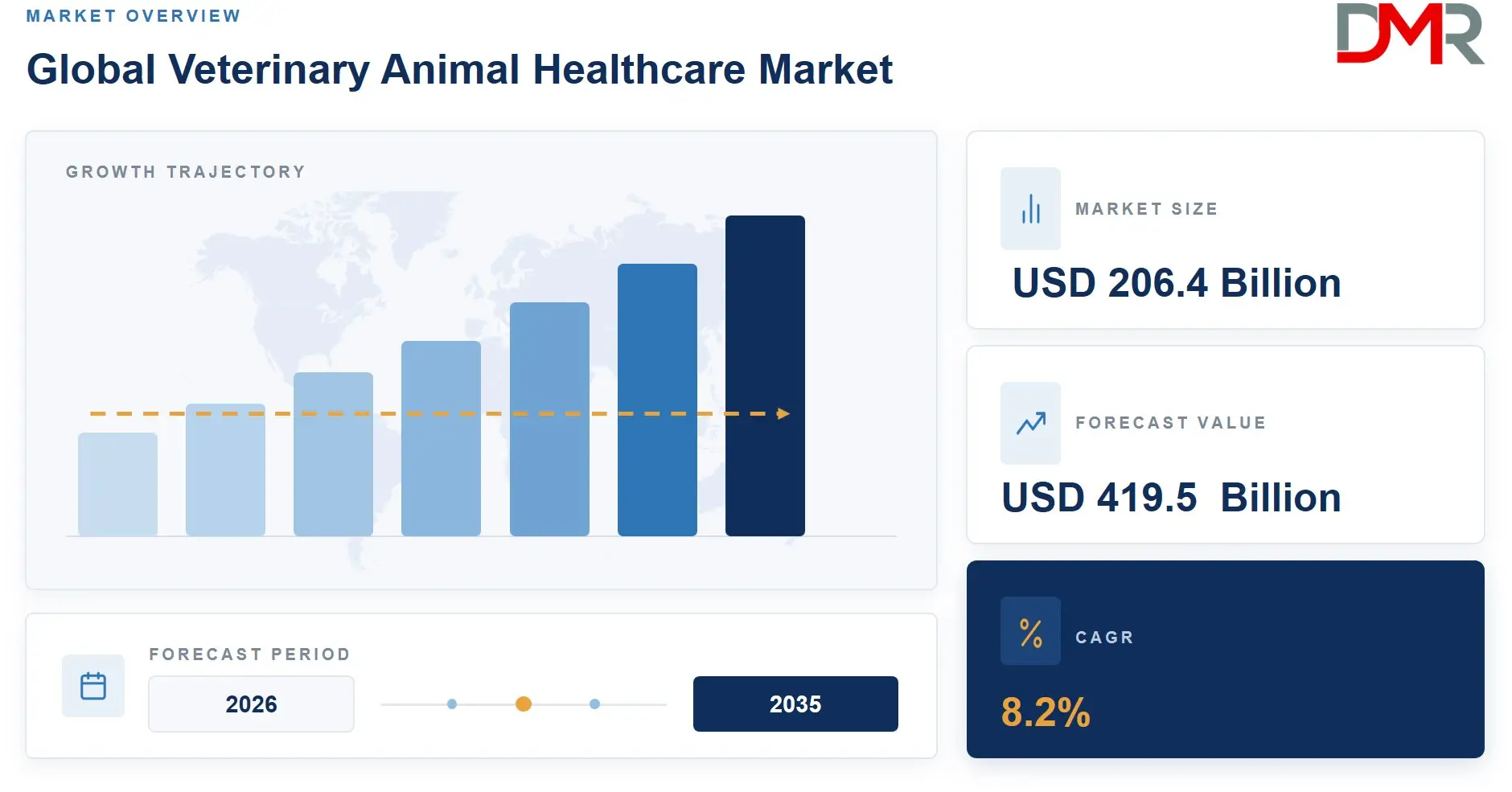
- Market Size (2026): USD 206.4 Bn
- Forecast Value (2035): USD 419.5 Bn
- CAGR (2026-2035): 8.2%
- Largest Region (2026): North America, approximately 35%
- Fastest-Growing Region: Asia-Pacific
- Leading Product (2026): Pharmaceuticals, around 38%
- Leading Animal Type (2026): Companion Animals, close to 46%
- Key Players: Zoetis, Boehringer Ingelheim, Elanco Animal Health and others
What is Veterinary Animal Healthcare Market and its Market Size?
Global Veterinary Animal Healthcare Market size is estimated to reach USD 206.4 Bn in 2026 and is further anticipated to reach USD 419.5 Bn by 2035, at a CAGR of 8.2%.
ℹ
To learn more about this report –
Download Your Free Sample Report Here
This industry covers products and services used to prevent, diagnose, monitor and treat illness in companion, food-producing, working and aquatic animals. Its economic boundary includes prescription and nonprescription medicines, vaccines, diagnostic assays and instruments, therapeutic nutrition, veterinary devices, digital care tools and the professional channels that prescribe or administer them. Pet food sold for routine feeding, livestock feed commodities and human pharmaceuticals used without veterinary positioning sit outside the scope.
Demand originates with pet owners, veterinary practices, animal hospitals, livestock farms, poultry and swine producers, dairy operations, aquaculture facilities, government disease-control programs and laboratories. A clinic purchase often combines a medicine with testing, follow-up monitoring and preventive-care reminders, whereas a farm purchase is judged against mortality, productivity, antimicrobial stewardship and biosecurity. That difference makes animal type, disease burden and route to market more meaningful than a simple consumer versus commercial split.
Care is shifting from episodic treatment toward prevention, earlier detection and protocol-based management of chronic conditions. Higher expectations for pets enlarge the addressable treatment pool, while food-security pressures keep vaccination, parasiticide and herd-health programs essential. The market is therefore expanding through both premium companion-animal care and scale-oriented livestock interventions, although affordability and veterinary capacity remain material constraints.
Use Cases
- Companion-Animal Chronic Care: General veterinary practices deploy diagnostics, prescription therapies, therapeutic nutrition and scheduled reviews for ageing dogs and cats with renal, dermatology or mobility conditions. The approach changes care from an isolated consultation into a monitored plan that can improve adherence and identify deterioration earlier.
- Commercial Poultry Health Programs: Integrated poultry producers combine vaccination schedules, flock diagnostics and biosecurity products to manage disease pressure across hatcheries and grow-out sites. This reduces avoidable mortality and helps farm managers protect feed conversion and supply commitments when health events would otherwise disrupt production.
- Dairy Herd Reproductive Management: Dairy farms use fertility diagnostics, vaccines, parasiticide protocols and veterinarian-led treatment records to address reproductive losses and transition-period disorders. Better visibility of herd-level patterns allows managers to target interventions, limit treatment waste and maintain more predictable milk output.
- Equine Sports Medicine: Equine hospitals and specialist practices apply imaging, pain management, regenerative therapies and rehabilitation products to competition and working horses. More precise diagnosis changes return-to-activity decisions, helping owners and trainers manage performance risk while prioritizing animal welfare.
Key Takeaways
- Market Size & Share: Global revenue is modeled at USD 206.4 Bn in 2026, with North America expected to contribute approximately 35% of demand.
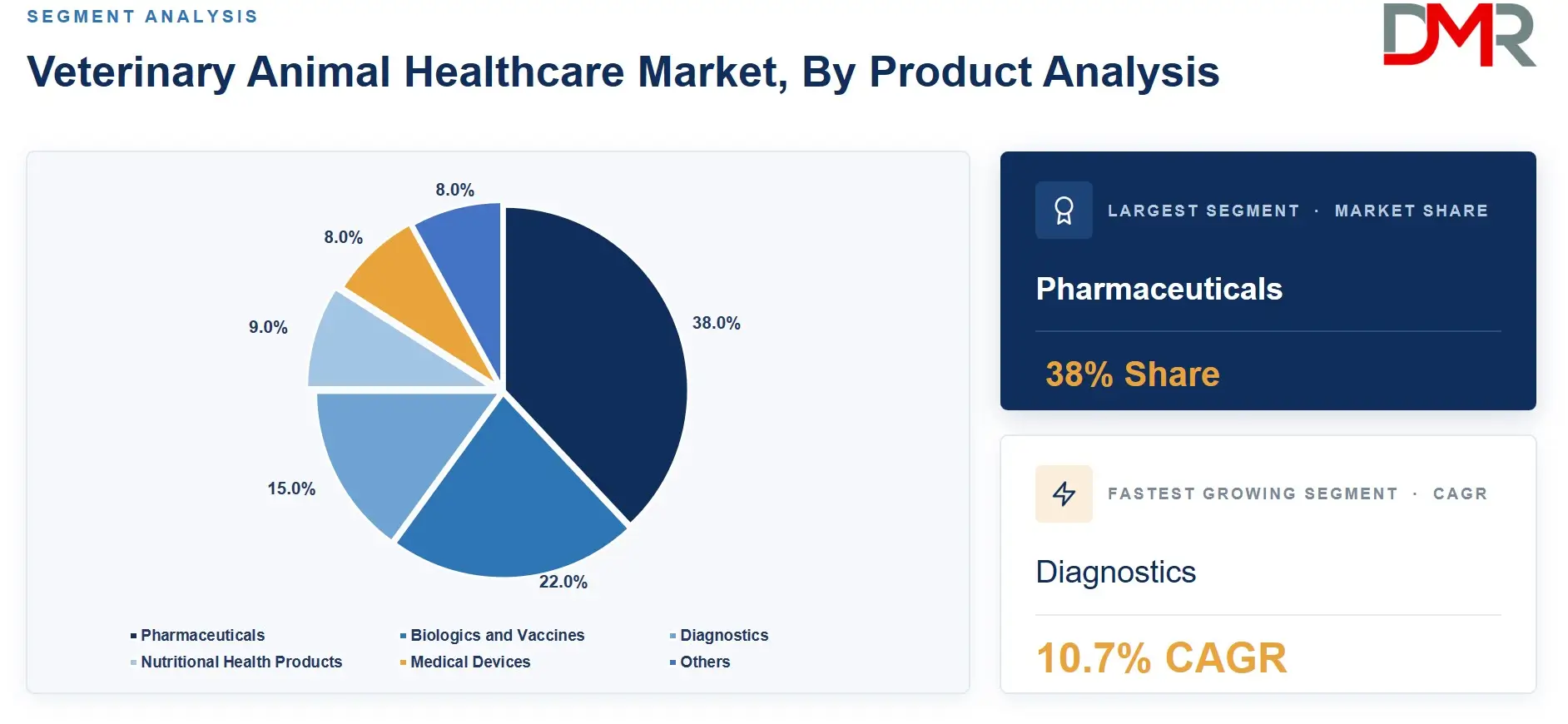
- Product Analysis: Pharmaceuticals are projected to represent around 38% of 2026 revenue, reflecting recurring demand for anti-infectives, dermatology, pain and parasiticide therapies.
- Animal Type Analysis: Companion animals are set to account for close to 46% in 2026 as owners fund longer treatment pathways and preventive consultations.
- Digital Channel Shift: E-commerce is forecast to expand at a CAGR of 12.0% through 2035, led by replenishment products and approved-home-delivery models.
- Diagnostic Momentum: Diagnostics is expected to grow at a CAGR of 10.7%, aided by point-of-care analyzers, molecular tests and remote specialist interpretation.
- US Spending Base: The US market is estimated at USD 57.9 Bn in 2026, supported by high clinic utilization and advanced specialty-care penetration.
How AI/Gen AI is Transforming the Veterinary Animal Healthcare Market?
AI is affecting veterinary healthcare first as a clinical and operational aid, not as a replacement for examination or professional judgment. Computer vision can triage dermatology images, radiographs and dental scans; machine-learning models can flag patterns that merit a radiologist or pathologist review. In production settings, sensor data from collars, cameras, milk systems and environmental monitors supports anomaly detection before an animal visibly declines.
Generative AI is most useful around documentation, education and workflow. LLM document processing can summarize a consultation record, draft owner-friendly discharge instructions and organize adverse-event narratives, subject to veterinarian review and privacy controls. Its value is practical: less time on repetitive notes can increase appointment capacity, while better record structure improves longitudinal care. Evidence generation, diagnosis and prescribing still require validated data and accountable clinical oversight.
- Computer Vision Triage: Image models prioritize radiology, wound and dermatology cases for clinical review.
- LLM Documentation: Structured note drafting converts consultations into clear care plans and follow-up tasks.
- Predictive Herd Health: Time-series models combine behavior, temperature and production data to identify risk clusters.
- Demand Forecasting: Clinic inventory systems anticipate seasonal parasiticide, vaccine and consumable needs.
Key Drivers in the Global Veterinary Animal Healthcare Market
Two separate demand engines support market growth: the medicalization of companion-animal care and the economic need to protect animal productivity at scale.
- Rising Expectations for Companion-Animal Care: Companion animals are expected to represent close to 46% of global revenue in 2026 because owners increasingly view diagnostics, chronic-disease control, dental treatment and specialist referral as normal parts of care. Longer lived pets create repeated demand for osteoarthritis management, dermatology, cardiology, endocrinology and cancer support. Clinics respond by adding in-house analyzers, imaging access and wellness plans, which convert sporadic visits into monitored care pathways. The mechanism is not simply higher willingness to pay: earlier diagnosis expands the period during which an animal can receive treatment, nutrition and follow-up services.
- Food Security and Biosecurity Investment: Livestock animals are projected to contribute roughly 41% of 2026 revenue, making herd and flock protection a major commercial foundation. Disease outbreaks can reduce output, disrupt trade and raise input costs, so producers use vaccination, parasite control, diagnostics and veterinary protocols to defend biological performance. Traceability requirements and antimicrobial-stewardship programs further shift spending toward prevention and targeted treatment. Larger integrated farms can standardize protocols across sites, which supports supplier scale, yet emerging producers also need affordable field diagnostics and heat-stress management as climate pressure changes disease patterns.
Restraints in the Global Veterinary Animal Healthcare Market
Growth is not uniform because clinical capacity, payment ability and regulatory evidence requirements vary sharply by geography and animal category.
- Affordability and Uneven Veterinary Access: The market may reach USD 419.5 Bn by 2035, but owners facing high out-of-pocket bills can defer diagnostics or abandon multi-month treatment. Rural livestock areas also contend with limited veterinarian density, long travel distances and fragmented cold-chain access. Premium medicines, imaging and specialty referrals are therefore concentrated in wealthier urban catchments. Financing plans and pet insurance can smooth payment, but they do not fully solve workforce shortages. Suppliers must balance innovation with pack sizes, dosage formats and service models that fit local purchasing power rather than assuming every clinic can absorb premium protocols.
- Approval Complexity and Antimicrobial Scrutiny: Regulatory review of veterinary drugs, biologics and diagnostics requires species-specific safety, residue and efficacy evidence. Antimicrobial-resistance policy additionally restricts routine use of certain treatments in food animals, reshaping prescriber behavior and product portfolios. These safeguards are necessary, yet they increase development cost and time, especially for smaller species or limited-market indications. Pharmaceuticals still lead with around 38% in 2026, but suppliers must invest in stewardship-compatible alternatives, pharmacovigilance and local registration expertise. A fragmented approval landscape can delay launches and reduce the commercial case for narrow indications.
Growth Opportunities in the Global Veterinary Animal Healthcare Market
White space is strongest where disease risk is high but access to diagnostics, prevention programs or specialist knowledge remains incomplete.
- Asian Production Systems and Aquaculture Health: Asia-Pacific is expected to be the fastest-growing region, advancing at a CAGR of 10.4% through 2035 as protein demand, professional farm management and local manufacturing deepen. Aquaculture is set to grow at a CAGR of 11.2%, faster than the overall sector, because stock losses can spread rapidly in dense production environments and treatment options are limited. Suppliers can build value through hatchery health plans, water-quality testing, vaccination logistics, pathogen surveillance and advisory platforms. Local-language technical support and species-specific formulations are more defensible than merely exporting a companion-animal portfolio into the region.
- Chronic-Care Pathways and Home Monitoring: Chronic and age-related conditions are forecast to expand at a CAGR of 10.6%, creating room for subscription replenishment, therapeutic diets, remote monitoring and protocol-guided follow-up. Mobility, renal, cardiac and dermatology cases often require ongoing adherence rather than a one-time prescription. Clinics can combine digital reminders with validated home-use tests and tele-triage where permitted, while manufacturers can provide condition-specific education and outcome data. This opportunity depends on preserving the veterinarian-client-patient relationship and avoiding unverified direct-to-consumer medical claims.
Trends in the Global Veterinary Animal Healthcare Market
Buyer behavior is moving toward measurable prevention, convenient replenishment and integrated clinical information rather than isolated product purchases.
- Preventive Plans Replace Single-Visit Care: Preventive care is projected to hold roughly 34% of revenue by indication in 2026. Wellness plans bundle vaccinations, parasite prevention, screening and scheduled examinations into predictable monthly payments. For practices, this improves continuity and forecastable workload; for manufacturers, it creates better compliance with dosing schedules. The trend also supports earlier detection, because screening is performed before owners identify a problem. Its limit is price sensitivity, which means plans must demonstrate tangible clinical value rather than operate as a discount vehicle for routine products.
- Authorized Digital Replenishment Expands: E-commerce is expected to account for nearly 15% of 2026 distribution revenue, led by repeat purchases of approved medicines, nutritional products and parasite control. Buyers value delivery and price comparison, while clinics seek to keep the prescription relationship and medication records intact. The winning channel model is increasingly omnichannel: a veterinarian establishes the care plan, then the owner uses a digital fulfillment route with reminders and support. Unauthorized product diversion, counterfeit risk and temperature-sensitive inventory remain genuine challenges, making authentication and controlled distribution commercially important.
Research Scope and Analysis
Segment performance is assessed across product, animal type, distribution channel, indication and care setting. Each cut shows where revenue is concentrated in 2026 and the sub-segment with the strongest forecast trajectory, clarifying how buyer priorities differ between companion and production-animal care.
ℹ
To learn more about this report –
Download Your Free Sample Report Here
By Product
Pharmaceuticals are projected to hold the largest share by product in 2026, accounting for around 38% of revenue, because anti-parasitics, anti-infectives, anti-inflammatory medicines and chronic-care treatments have broad prescribed use across clinics and farms. Replenishment cycles, familiar protocols and species-specific presentations preserve their installed base. Growth, however, is concentrated in diagnostics, expanding at a CAGR of 10.7% between 2026 and 2035 as point-of-care chemistry, molecular assays and connected imaging shorten the route from symptoms to a treatment decision. Reagent-rental models and remote interpretation broaden adoption beyond referral centers, while targeted testing also supports antimicrobial-stewardship goals in production systems.
By Animal Type
Companion animals are expected to account for close to 46% of market revenue in 2026, supported by urban practice density, owner involvement and repeated spending on prevention, pain, allergy, dental disease and age-related disorders. Longer treatment pathways generate demand beyond routine medication alone. The steeper trajectory sits with aquaculture, growing at a CAGR of 11.2% from 2026 to 2035 as intensive fish and shrimp systems seek better pathogen testing, water-quality management, vaccination and biosecurity. Restrictions on indiscriminate antibiotic use reinforce prevention-led protocols, although cold-chain availability and farm-level technical training will determine the speed of adoption.
By Distribution Channel
Veterinary clinics and hospitals are projected to represent around 48% of 2026 distribution revenue because they control diagnosis, prescription authority, vaccine administration and the care relationship that shapes adherence. Their direct role remains strongest for injectables, diagnostics, devices and acute treatment, even as larger hospital groups gain procurement leverage. Growth, however, is concentrated in e-commerce, expanding at a CAGR of 12.0% between 2026 and 2035. Authorized digital fulfillment of repeat parasite prevention, supplements and refills combines convenience with reminders and subscription options, provided traceability, responsible dispensing and clinic authorization are maintained.
By Indication
Preventive care is expected to hold the largest indication share in 2026, at roughly 34%, since vaccination, deworming, ectoparasite control, wellness screening and farm biosecurity can be scheduled and scaled before serious disease occurs. Public-health attention to surveillance and vaccination further supports the segment. The faster path is chronic and age-related conditions, forecast to grow at a CAGR of 10.6% from 2026 to 2035 as longer pet lifespans increase diagnoses of osteoarthritis, renal disease, cardiac disorders, diabetes and recurring dermatology. Monitoring, refills and therapeutic nutrition turn these cases into continuing care pathways, though owner affordability remains decisive.
By Care Setting
General veterinary practices are projected to hold around 44% of care-setting revenue in 2026 because they provide the accessible first contact for prevention, acute illness, prescriptions and routine diagnostics. Their patient records and local owner relationships also make them the natural coordinator of follow-up care. Growth, however, is concentrated in specialty and referral centers, expanding at a CAGR of 10.1% between 2026 and 2035 as demand rises for advanced imaging, oncology, surgery, cardiology and critical care. Specialist workforce supply and affordability constrain expansion, but remote case review and shared imaging networks can extend their reach beyond major urban clusters.
The Global Veterinary Animal Healthcare Market Report is Segmented Based on the Following
By Product
- Pharmaceuticals
- Biologics and Vaccines
- Diagnostics
- Nutritional Health Products
- Medical Devices
- Others
By Animal Type
- Companion Animals
- Livestock Animals
- Aquaculture
- Equine
- Others
By Distribution Channel
- Veterinary Clinics and Hospitals
- Distributors and Retailers
- E-commerce
- Producer Cooperatives
- Others
By Indication
- Preventive Care
- Infectious and Parasitic Diseases
- Chronic and Age-Related Conditions
- Reproductive Health
- Surgical and Trauma Care
- Others
By Care Setting
- General Veterinary Practices
- Specialty and Referral Centers
- Livestock Farms and Production Facilities
- Diagnostic Laboratories
- Home Care and Mobile Services
- Others
Regional Analysis
Region with the Largest Revenue Share
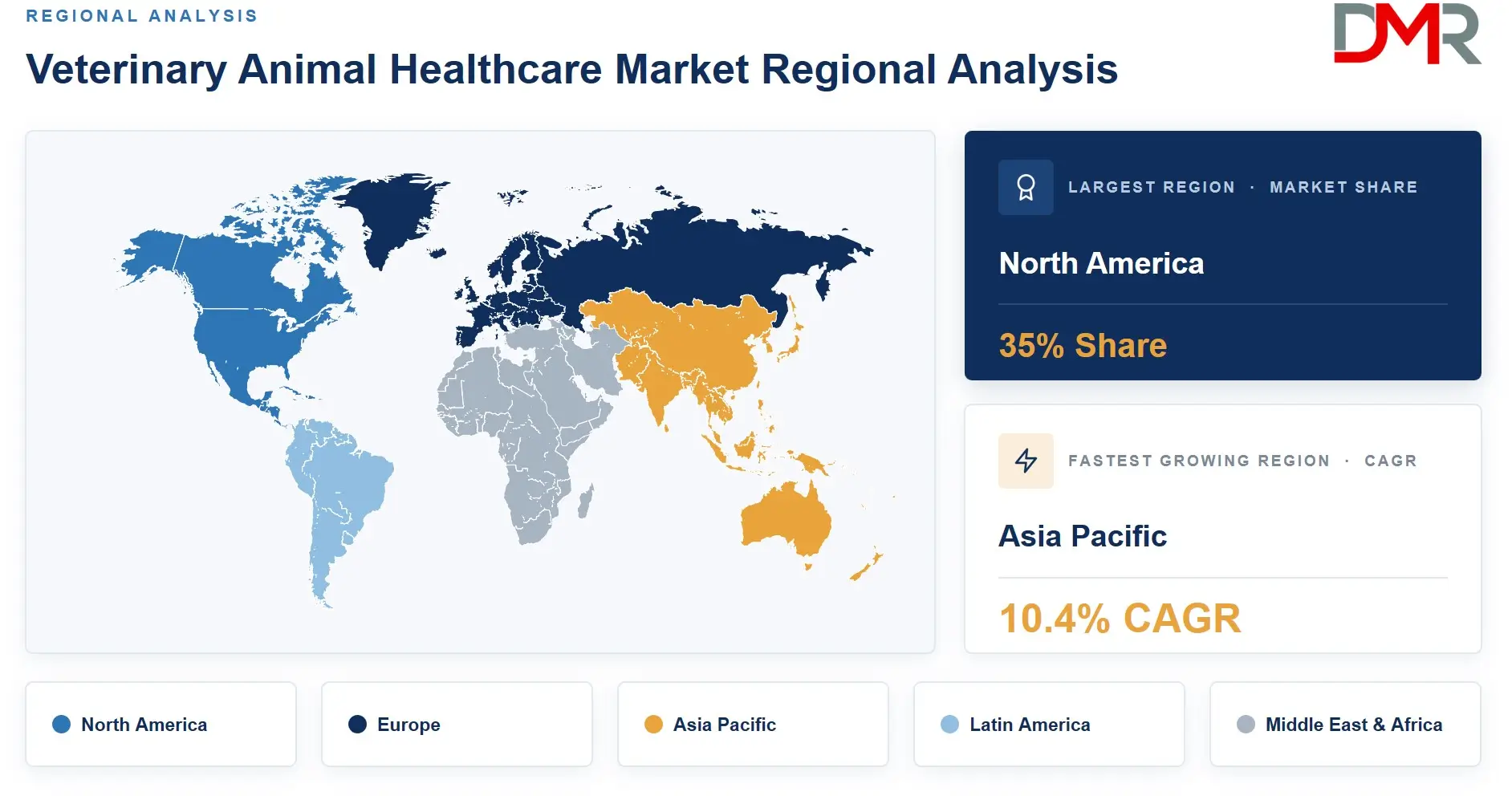
North America is expected to hold the largest share, accounting for approximately 35% of global revenue in 2026. High companion-animal expenditure, dense veterinary networks and a sizable specialty-care base support the position. The region also combines advanced diagnostics and therapeutics with large poultry, dairy, swine and beef systems that purchase health products at scale. Insurance, wellness plans and organized hospital groups improve access to preventive and chronic care. North American leadership is not solely a price effect: clinical utilization, mature distribution and rapid adoption of new modalities create a deeper revenue pool per animal.
ℹ
To learn more about this report –
Download Your Free Sample Report Here
Region with the Highest CAGR
Asia-Pacific is forecast to record the highest regional CAGR of 10.4% from 2026 to 2035. Expanding middle-income pet ownership raises clinic visits and demand for branded prevention, while professionalization of livestock and aquaculture supports vaccines, diagnostics and advisory services. India, China and Southeast Asian production systems offer substantial room for disease surveillance and cold-chain improvement. Regional manufacturers are also broadening access through local formulations and distribution. Market growth will vary by country because registration pathways, veterinarian availability and farm scale differ, but the underlying unmet-care base is much larger than in mature markets.
By Region
North America
Europe
- Germany
- France
- The UK
- Italy
- Spain
- Rest of Europe
Asia-Pacific
- China
- Japan
- India
- Australia
- South Korea
- Rest of APAC
Latin America
- Mexico
- Brazil
- Colombia
- Argentina
- Rest of LATAM
Middle East & Africa
- Saudi Arabia
- The UAE
- South Africa
- Rest of MEA
Competitive Landscape
The competitive structure combines diversified global medicine and biologics suppliers with diagnostic specialists, nutrition providers, device makers and regional distributors. Scale matters in regulatory science, manufacturing quality, field technical support and global launch capability. However, local veterinary relationships, species expertise and route-to-market execution remain decisive. Leading players are investing in lifecycle management, companion-animal chronic care, livestock biosecurity, connected diagnostics and direct support for clinics. Smaller specialists compete through narrow indications, novel biologics, imaging, telehealth infrastructure or regional access. Pricing power is strongest where clinical evidence, brand trust and practice integration are difficult to replicate; genericization and channel transparency create pressure in established drug categories.
Some of the Prominent Players in the Global Veterinary Animal Healthcare Market Are
- Zoetis
- Boehringer Ingelheim
- Elanco Animal Health
- Merck Animal Health
- Ceva Santé Animale
- Vetoquinol
- Virbac
- Dechra Pharmaceuticals
- Huvepharma
- IDEXX Laboratories
- Heska
- Neogen Corporation
- Biogal Galed Labs
- Bimeda
- HIPRA
- Phibro Animal Health
- Norbrook Laboratories
- Chanelle Pharma
- KRKA
- Orion Animal Health
- Covetrus
- MWI Animal Health
- Patterson Veterinary
- Henry Schein Animal Health
- Animalcare Group
- Trupanion
- Pets at Home Vet Group
- National Veterinary Associates
- Mars Veterinary Health
- VCA Animal Hospitals
- Jinyu Bio-Technology
- Yebio Bioengineering
- Hester Biosciences
- Indian Immunologicals
- Venkys
- Kyoritsu Seiyaku
- Meiji Seika Pharma
- Ourofino Saúde Animal
- VetPlus
- Onderstepoort Biological Products
- Other Key Players
Recent Developments
- In June 2026, Elanco reported increased investment behind global product launches and raised its innovation revenue target, signaling continued commercial emphasis on differentiated animal-health offerings despite a cost-conscious care environment.
- In May 2026, Zoetis reported softer premium-product demand alongside fewer veterinary visits in parts of its companion-animal business, highlighting how owner affordability can influence utilization even in an established care market.
- In February 2026, Merck Animal Health received recognition for companion and food-animal products, reinforcing the commercial importance of separate innovation pipelines for pets and production animals.
- In December 2025, Merck Animal Health obtained conditional US clearance for a cattle treatment aimed at New World screwworm prevention and treatment, adding a targeted response to a high-consequence livestock health threat.
- In August 2025, Merck Animal Health presented additional parasite-control data for dogs in Brazil, illustrating continued investment in compliance-sensitive companion-animal parasiticide categories.
- In July 2025, European authorization for a canine atopic-dermatitis tablet expanded an advanced chronic dermatology treatment option, a segment supported by longer pet lifespans and repeated care needs.
Report Details
| Report Characteristics |
| Market Size (2026) |
USD 206.4 Bn |
| Forecast Value (2035) |
USD 419.5 Bn |
| CAGR (2026-2035) |
8.2% |
| The US Market Size (2026) |
USD 57.9 Bn |
| Historical Data |
2021 - 2025 |
| Forecast Data |
2026 - 2035 |
| Base Year |
2025 |
| Segments Covered |
By Product, By Animal Type, By Distribution Channel, By Indication and By Care Setting |
| Regional Coverage |
North America - The US and Canada; Europe - Germany, France, The UK, Italy, Spain, Rest of Europe; Asia-Pacific - China, Japan, India, Australia, South Korea, Rest of APAC; Latin America - Mexico, Brazil, Colombia, Argentina, Rest of LATAM; Middle East & Africa - Saudi Arabia, The UAE, South Africa, Rest of MEA |
Frequently Asked Questions
How big is the Global Veterinary Animal Healthcare Market?
▾ The Global Veterinary Animal Healthcare Market is estimated at USD 206.4 Bn in 2026. The figure covers veterinary medicines, biologics, vaccines, diagnostics, nutritional-health products, devices and related clinical channels across companion, livestock, equine and aquatic animals. It excludes routine feed commodities and nonmedical pet food, keeping the estimate focused on health-related commercial activity.
What is the growth rate of the Global Veterinary Animal Healthcare Market?
▾ The market is forecast to grow at a CAGR of 8.2% from 2026 to 2035. Growth reflects rising companion-animal treatment intensity, preventive programs, chronic-care management, animal-protein biosecurity and broader availability of diagnostics. This rate also recognizes practical constraints, including affordability, veterinarian shortages and the evidence burden required for veterinary medicines and biologics.
Which region holds the largest share in the Global Veterinary Animal Healthcare Market?
▾ North America is projected to be the largest regional market, holding approximately 35% of global revenue in 2026. Its position is supported by high pet-care spending, well-developed clinical infrastructure, specialty hospitals and a large livestock-health spending base. Asia-Pacific is expected to grow faster, driven by expanding professional animal production and more formal companion-animal care.
Who are the key players in the Global Veterinary Animal Healthcare Market?
▾ Key players include Zoetis, Boehringer Ingelheim, Elanco Animal Health, Merck Animal Health, Ceva Santé Animale, Virbac and IDEXX Laboratories. They compete across medicines, vaccines, diagnostics, practice support and production-animal health. Regional companies and channel specialists remain relevant because registration, technical service and veterinarian relationships can vary materially by country and animal species.
Which product segment leads the Global Veterinary Animal Healthcare Market?
▾ Pharmaceuticals are expected to lead the product landscape with around 38% of revenue in 2026. The category serves recurring clinical needs including parasite control, infection management, pain, dermatology and chronic conditions. Biologics, vaccines and diagnostics are important growth complements because prevention and earlier diagnosis can improve outcomes while helping clinics and farms use treatments more selectively.