What is the Active Pharmaceutical Ingredients (API) Market Size?
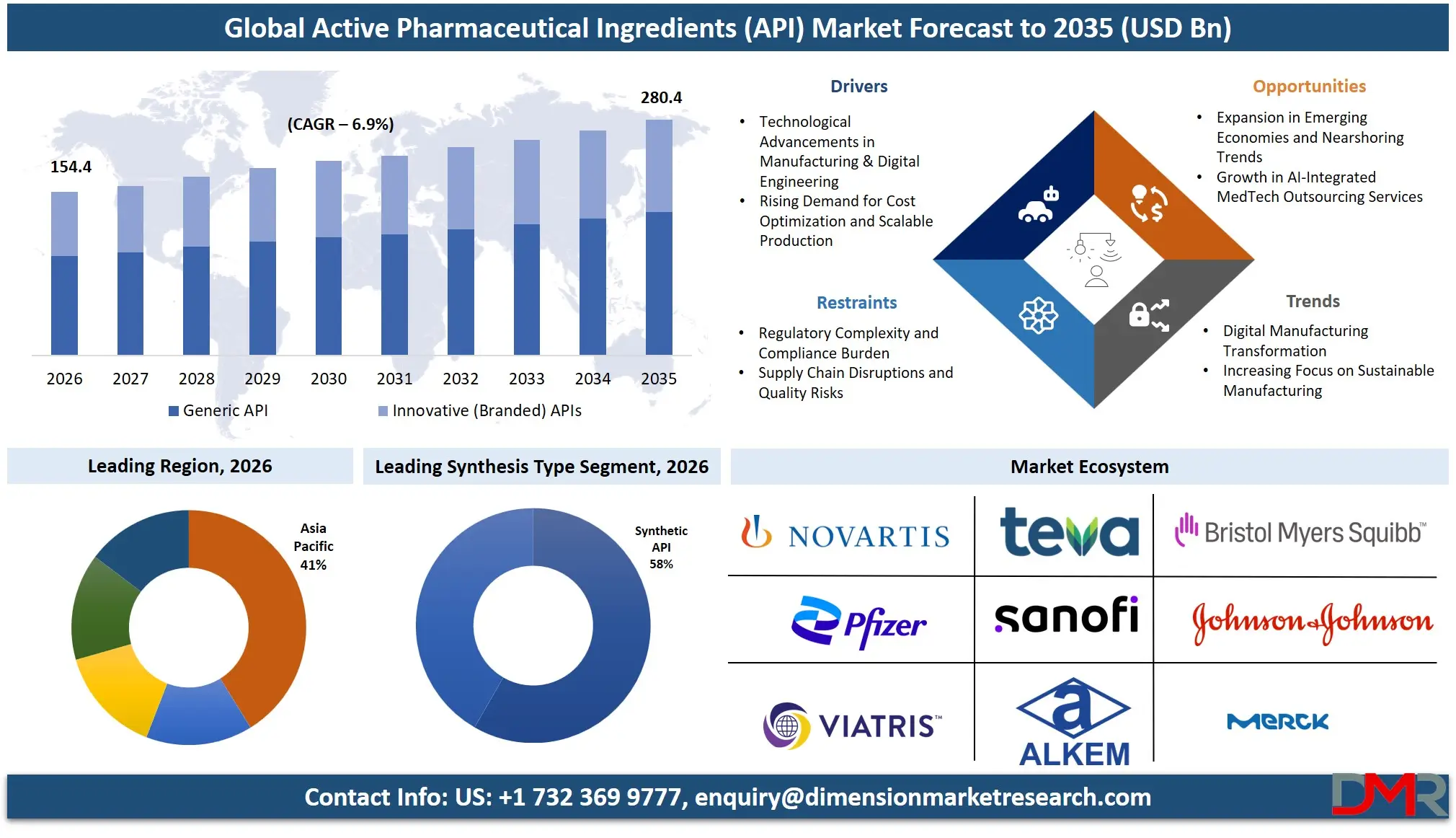
The Active Pharmaceutical Ingredients (API) Market size is expected to be USD 154.4 billion in 2026 and increase at a compound annual growth rate of 6.9% to USD 280.4 billion in 2035 due to rising demand for generic and specialized medicines.
ℹ
To learn more about this report –
Download Your Free Sample Report Here
The API industry can be described as the network of international activities related to the production and delivery of biologically active components used in pharmaceutical products. Active Pharmaceutical Ingredients (APIs) are the primary therapeutic components which are synthesized chemically or by using biotechnological techniques and delivered to manufacturers of medicines. The industry is very important in the process of production of medicine and is very essential in ensuring efficiency and safety of the medicines. Growth is driven by increased prevalence of chronic conditions and generics & biologics.
The US Active Pharmaceutical Ingredients (API) Market
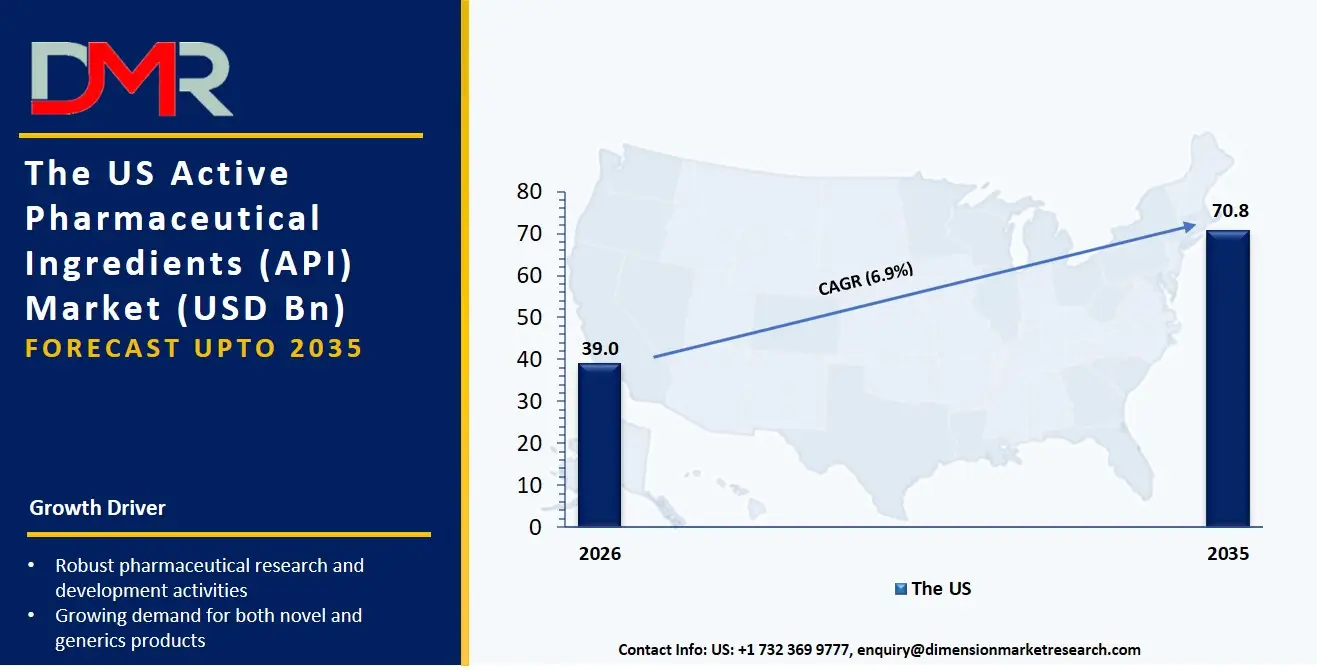
The US Active Pharmaceutical Ingredients (API) Market size is estimated to be USD 39.0 billion in 2026 and is expected to increase at a CAGR of 6.9% over the forecast period.
ℹ
To learn more about this report –
Download Your Free Sample Report Here
The API market in the US can be attributed to robust pharmaceutical research and development activities, growing demand for both novel and generics products, and reshoring activities due to the government's policies. The FDA of the US has been promoting APIs manufactured locally to lessen its reliance on imports, especially from Asia. Most pharmaceutical companies outsource their API manufacturing, but recent policies like tax credits and supply chain initiatives have favored local manufacturing. Oncology and specialty drugs account for most of the demand, while there has been an expansion in biologics manufacturing.
Europe Active Pharmaceutical Ingredients (API) Market
The Europe Active Pharmaceutical Ingredients (API) Market size is estimated to be USD 30.1 billion in 2026 and is expected to increase at a CAGR of 6.0% over the forecast period.
The European API industry operates in a highly regulated environment, with regulatory policies in place through the European Medicines Agency and sustainable policies in place through the European Green Deal. Europe prioritizes eco-friendly manufacturing processes and promotes green chemistry and low emission manufacturing techniques. Countries such as Germany, Switzerland, and France are at the forefront of manufacturing valuable APIs and biosimilar innovations. Nonetheless, Europe continues to rely on imports of generic drugs that are less expensive, mostly from India and China.
Japan Active Pharmaceutical Ingredients (API) Market
The market size of Japan Active Pharmaceutical Ingredients (API) will be USD 10.8 billion in 2026 and at a CAGR of 5.9% in the forecast period.
In Japan, the API manufacturing market relies on modern innovations in pharmaceuticals, good government health care policies, and an aging demographic that demands drugs for treating chronic ailments. The nation emphasizes precision manufacturing with high standards of quality in cancer treatment, cardiovascular disease, and Central Nervous System therapies. The government encourages local manufacturing to decrease dependence on imports, especially essential drugs. Nevertheless, high cost of production and limited availability of raw materials are some of the obstacles. Japan has increased its investments in biopharmaceuticals and regenerative medicine, with good collaboration among academic, industrial, and government sectors.
Key Takeaways
- Market Size & Forecast: The Active Pharmaceutical Ingredients (API) Market size is projected to reach USD 154.4 billion in 2026 and is anticipated to have a value of USD 280.4 billion in 2035.
- Growth Rate & Outlook: The Active Pharmaceutical Ingredients (API) Market size is set to grow at a compound annual growth rate of 6.9% during the forecast period of 2026 to 2035.
- Primary Growth Drivers: Some of the major growth drivers in the market are Rising Demand for Generic and Specialized Medicines and more.
- Key Market Trends: Some of the major trends in the market are Incorporation of Shift Towards Continuous Manufacturing and more.
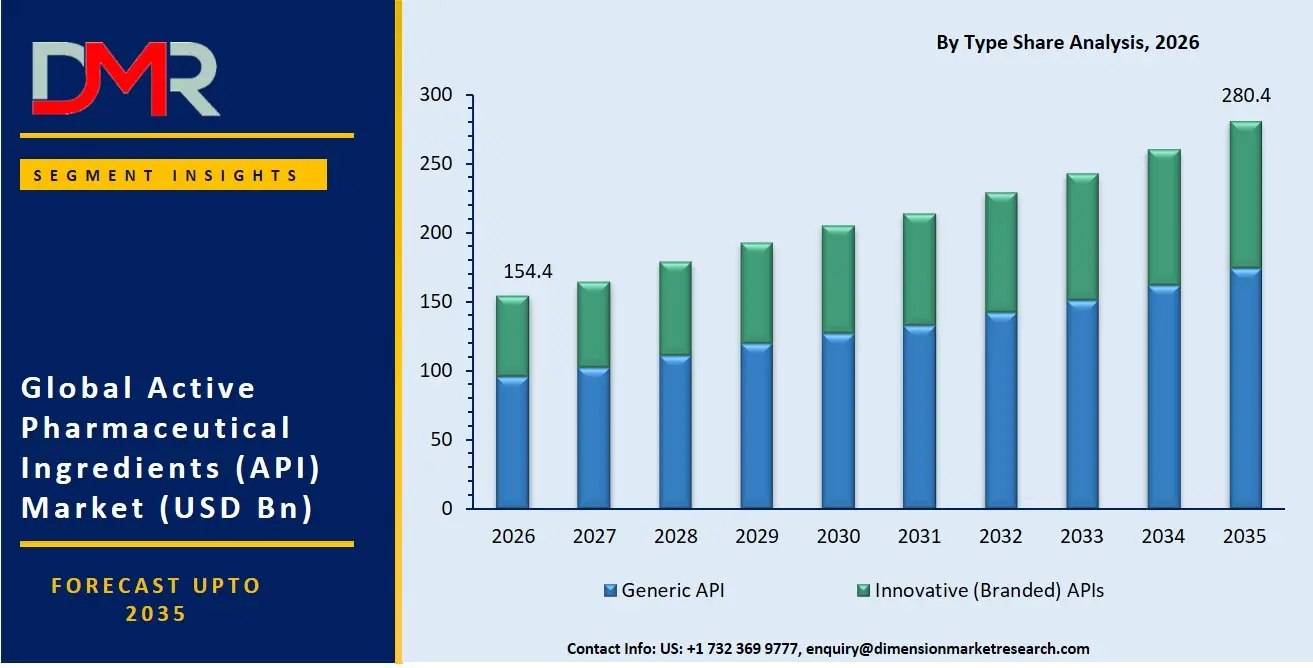
- By Type: Generic API segment is anticipated to get the majority share of the Active Pharmaceutical Ingredients (API) Market in 2026.
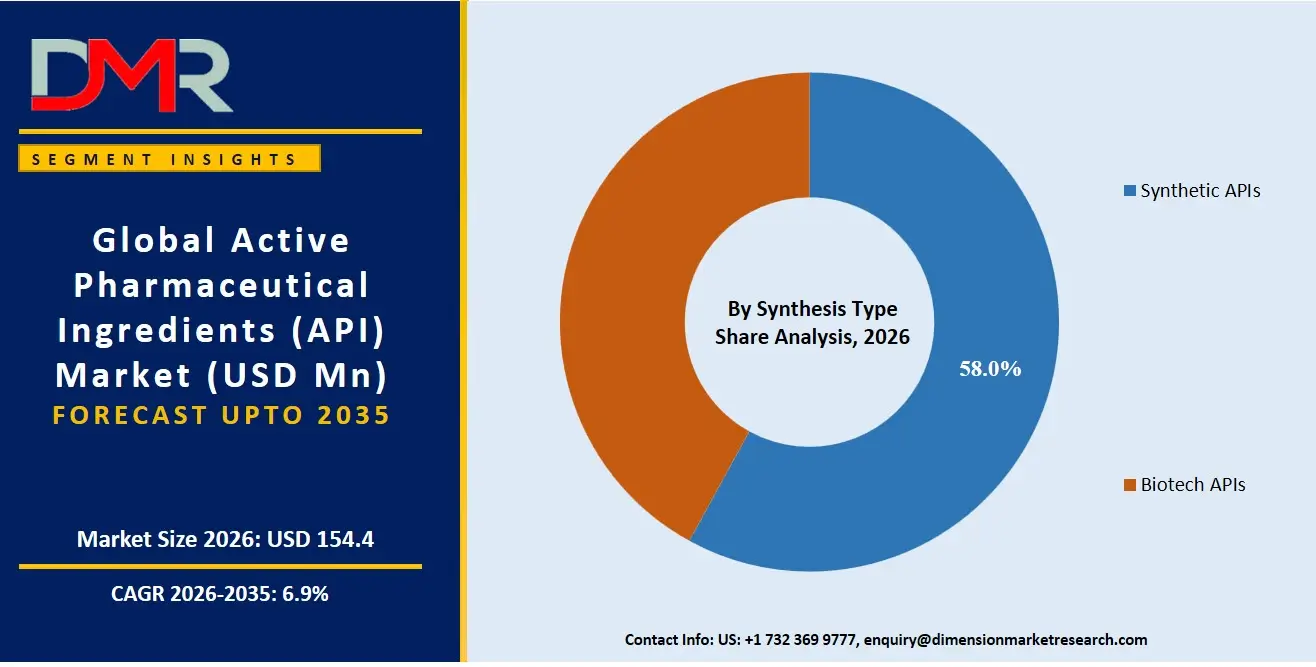
- By Synthesis Type: Synthetic is expected to get the largest revenue share in 2026 in the Active Pharmaceutical Ingredients (API) Market.
- By Potency Type: Conventional API is expected to get the largest revenue share in 2026 in the Active Pharmaceutical Ingredients (API) Market.
- Regional Leadership: Asia Pacific is set to lead the Active Pharmaceutical Ingredients (API) Market with an estimated 41.0% share in 2026.
What is the Active Pharmaceutical Ingredients (API)?
The Active Pharmaceutical Ingredients (APIs) are the biologically active ingredients used in the formulation of pharmaceutical products and responsible for providing the desired therapeutic action. APIs are the basic ingredients that play an important role in treatment, diagnosis, and prevention of diseases. These are formulated into various finished drug forms, including tablets, injections, or capsules, using excipients. API can be produced via synthesis and biotechnology methods.
Use Cases
- Generic Medicines Manufacturing: APIs are widely used in the manufacture of generic medicines, which account for a large proportion of total pharmaceutical consumption in the world because of their affordability. Generic medicines are made using cost-effective synthetic APIs when patents expire. This application ensures availability of healthcare for emerging markets and is a major source of income for API producers.
- Oncology Medicines Manufacture: APIs for cancer medicines must have high potency because exact dosage and targeted mechanism are important here. These APIs need special containment and manufacturing equipment because of toxicity. Growing number of cancer patients around the world is driving demand for API production focused on oncology.
- Biologic and Vaccine Manufacturing: Biotech APIs such as monoclonal antibodies and recombinant proteins are key to modern biologics and vaccines manufacture. These APIs are produced using living cells, making these products very targeted. The COVID-19 pandemic time witnessed a growing interest in the infrastructure for biologic APIs manufacture.
- Chronic Diseases Medication: APIs are used in medicines for diabetes, cardiovascular diseases, and respiratory diseases. Growing number of cases of chronic diseases caused by unhealthy lifestyles is increasing demand for long-term stable and quality supply chain of APIs for medicine manufacturing.
How AI Is Transforming the Active Pharmaceutical Ingredients (API) Market
AI is revolutionizing API research and manufacturing through rapid molecule identification and pathway optimization for synthesis. Through machine learning techniques, AI analyzes the chemical structure of the molecules and finds out ways to produce them in an economical manner. It will help predict the need for APIs and help manage their supply chains.
In manufacturing processes, AI facilitates the process of monitoring the manufacturing processes, maintenance of equipment, and quality control in order to minimize manufacturing errors. This technology also helps in maximizing the yield and minimizing waste during manufacturing. Moreover, AI helps in virtual simulation of chemical reactions for safe development of potent APIs.
Market Dynamic
Driving Factors in the Active Pharmaceutical Ingredients (API) Market
Rising Demand for Generic and Specialized Medicines
The increasing cases of chronic illnesses like cancer, diabetes, and cardiovascular diseases have been contributing to an increased demand for generic and specialized medicines, which in turn increases the use of APIs. The expiry of patents on blockbuster medicines has facilitated the production of generic medicines and has increased the demand for low-cost synthetic APIs. In addition to that, the increasing innovations in specialized treatments like biologics and personalized medications have contributed to increasing demand for complex and high-purity APIs.
Restraints in the Active Pharmaceutical Ingredients (API) Market
Challenges in Regulating and Compliance
The manufacture of API products is regulated by strict guidelines issued by regulatory authorities like the US FDA and the EMA, which make substantial demands in terms of investments in quality control and validation. GMP compliance entails increased expenses and delays in bringing products to market. Small firms find it difficult to comply with the demanding standards, leading to limited access to the market.
Opportunities in the Active Pharmaceutical Ingredients (API) Market
Opportunities within Biopharmaceutical APIs
There is huge potential for APIs used in biologics owing to increased demand for therapies that are highly selective, including monoclonal antibodies and gene therapy treatments. Compared to conventional APIs based on small molecules, such therapies provide higher efficiency and reduced side effects. With greater development in manufacturing facilities and research, there are great opportunities for API manufacturers of biopharmaceutical products.
Trends in the Active Pharmaceutical Ingredients (API) Market
Shift Towards Continuous Manufacturing
Continuous manufacturing technology is slowly overtaking conventional batch processing in the manufacturing of APIs as it is more efficient, reduces waste, and offers consistency in terms of product quality. This technology has been gaining prominence in recent years among top-notch pharmaceutical companies due to its cost-effective and scalable nature.
Research Scope and Analysis
The scope of the Active Pharmaceutical Ingredients (APIs) market research includes segmentation on the basis of type, methodology of synthesis, strength, application, sources of manufacturing, and end users. Changes in the demand for generic and innovative APIs, advances in the biologics segment, and outsourcing practices will be analyzed in the study.
ℹ
To learn more about this report –
Download Your Free Sample Report Here
By Type Analysis
The API market by type includes innovative (branded) APIs and generic APIs. Generic APIs hold major share in the segment accounting for an estimated market share of 62% in 2026 because of the effectiveness of these APIs along with their extensive application in the production of generic drugs.
ℹ
To learn more about this report –
Download Your Free Sample Report Here
Demand is increasing owing to the increased costs involved with healthcare delivery and the encouragement of substitution by governments. Innovative APIs are witnessing higher growth than generic APIs due to higher investment in specialty and biological drugs. There is high focus on developing novel molecules in oncology and rare disease treatments, which increases the demand for APIs with higher value added.
By Synthesis Type Analysis
The synthetic APIs represent the largest market share of 58% in 2026 owing to existing production facilities, cost-effectiveness, and high prevalence in generics. Yet, biotech APIs are showing fast growth, specifically the monoclonal antibodies and recombinant proteins because of the demand for biologics. The vaccine APIs have grown tremendously following the pandemic period and further strengthen the growth of biotech APIs. Although synthetic APIs are dominating volume-wise in production, biotech APIs are growing in terms of value since they are more complex and expensive.
By Potency Analysis
Conventional APIs enjoy a market share of 70% in 2026 owing to the application of these APIs in medicines for chronic diseases. The high potency APIs (HPAPI) represent a small part in terms of volume but have been growing faster than other APIs because of the rise in demand for oncology medicines. These APIs need specialized plants and containment technology, hence fewer suppliers but higher profits.
By Therapeutic Area Analysis
Cardiovascular and diabetes APIs have the largest market share at 45% in 2026 because of high incidences of diseases and aging populations across the globe. The fastest growing APIs are oncology APIs because of high incidences of cancer across the globe and increase in drug discovery pipeline. There are also other disease categories such as CNS and autoimmune diseases that are important contributors to the market.
The Active Pharmaceutical Ingredients (API) Market Report is segmented on the basis of the following:
By Type
- Innovative (Branded) APIs
- Generic APIs
By Synthesis Type
- Synthetic APIs
- Biotech APIs
- Monoclonal Antibodies
- Recombinant Proteins
- Vaccines
- Other Biologic APIs
By Potency
- Conventional APIs
- High-Potency APIs (HPAPIs)
By Therapeutic Area
- Oncology
- Cardiovascular Diseases
- Diabetes
- Infectious Diseases
- Central Nervous System (CNS) Disorders
- Respiratory Diseases
- Immunological & Autoimmune Disorders
- Gastrointestinal Disorders
- Other Therapeutic Areas
Regional Analysis
Leading Region in the Active Pharmaceutical Ingredients (API) Market
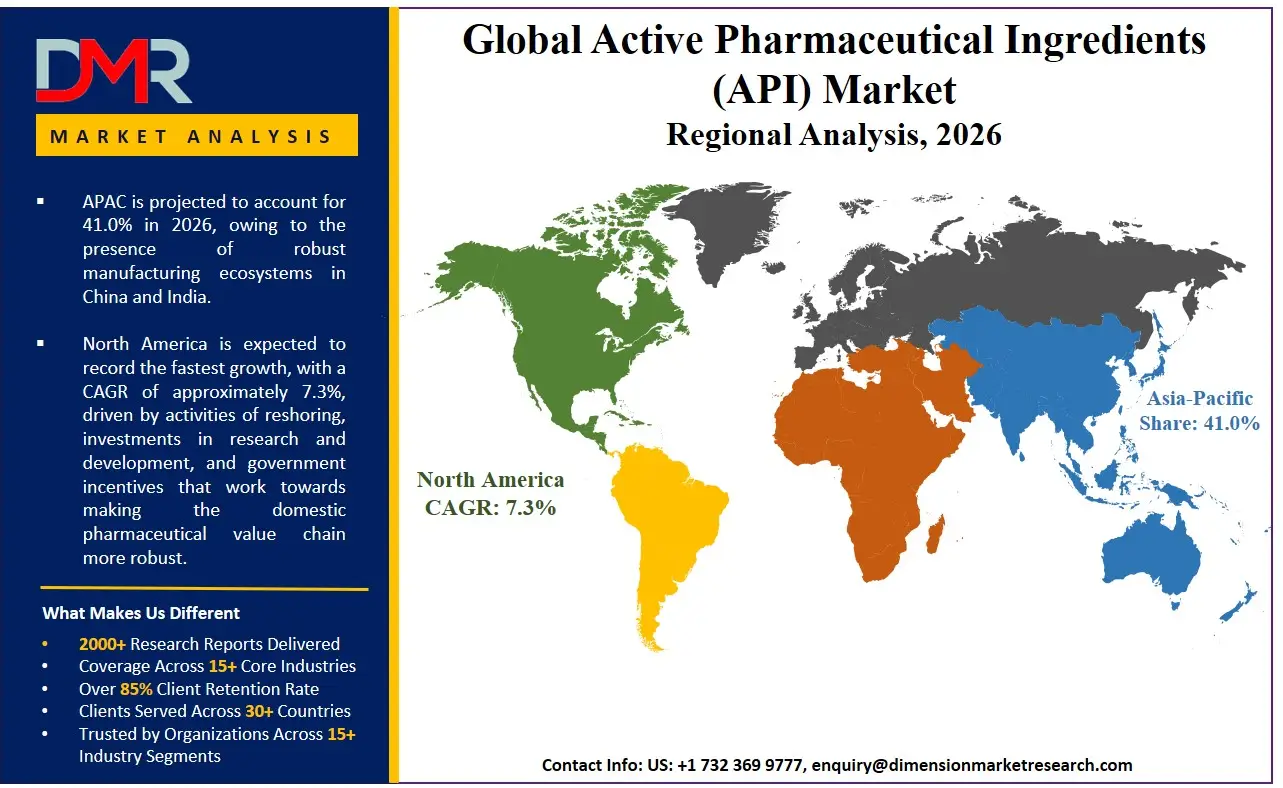
Asia-Pacific region holds the dominant position in the industry with the largest market share of around 41% in 2026 owing to the presence of robust manufacturing ecosystems in China and India. Efficient production processes, availability of skilled workforce, and developed export channels make the region a leading API manufacturer. The government's favorable policies for pharmaceutical manufacturing along with the presence of major CDMOs adds to the dominance of the region. India excels in generic API exports whereas China rules in raw material supply.
ℹ
To learn more about this report –
Download Your Free Sample Report Here
Fastest Growing Region in the Active Pharmaceutical Ingredients (API) Market
North America is the fastest-growing region because of the activities of reshoring, investments in research and development, and government incentives that work towards making the domestic pharmaceutical value chain more robust. The US government is taking measures to support API production locally so that there can be reduced dependence on foreign sources. Increasing demand for biological products, oncology, and advanced therapy is also fueling growth in the region. Technological advancements, the presence of major players in the pharmaceutical industry, and stringent regulations have contributed to accelerated growth.
By Region
North America
Europe
- Germany
- The U.K.
- France
- Italy
- Russia
- Spain
- Benelux
- Nordic
- Rest of Europe
Asia-Pacific
- China
- Japan
- South Korea
- India
- ANZ
- ASEAN
- Rest of Asia-Pacific
Latin America
- Brazil
- Mexico
- Argentina
- Colombia
- Rest of Latin America
Middle East & Africa
- Saudi Arabia
- UAE
- South Africa
- Israel
- Egypt
- Rest of MEA
Competitive Landscape
The API industry is very competitive with high global fragmentation along with existence of both large-scale producers and niche players. Producers concentrate on increasing their capacities for manufacturing, conducting research and development activities, and developing partnerships with pharmaceutical companies to get supply contracts for the future. High regulations result in high entry barriers, thus benefitting only those producers who have modern manufacturing capacity. Cost reduction, geographical diversification of production, and sustainable manufacturing process are factors that define competition.
Some of the prominent players in the global Active Pharmaceutical Ingredients (API) are:
- Pfizer Inc.
- Novartis AG
- Merck & Co., Inc.
- Johnson & Johnson
- Sanofi
- Boehringer Ingelheim
- Bristol Myers Squibb
- Teva Pharmaceutical Industries Ltd.
- Dr. Reddy's Laboratories Ltd.
- Aurobindo Pharma Limited
- Sun Pharmaceutical Industries Ltd.
- Lupin Limited
- Cipla Limited
- Zydus Lifesciences Limited
- Divi's Laboratories Limited
- Macleods Pharmaceuticals Ltd.
- Alkem Laboratories Ltd.
- Viatris Inc.
- Siegfried Holding AG
- Lonza Group AG
- Other Key Players
Recent Developments
- In March 2026, BASF Pharma Solutions has announced a price increase in the range of 20% on its excipient and certain active pharmaceutical ingredient (API) products across the globe from immediately or as per the existing contractual agreements. This increase is to compensate for the increase in costs due to energy and other raw materials.
- In December 2025, Eli Lilly has revealed plans to make an investment of over USD 6 billion into building a state-of-the-art API manufacturing plant in Huntsville, Alabama. The facility will focus on manufacturing small molecule and peptides drugs such as orforglipron, Eli Lilly's GLP-1 therapy. This project will enhance the country's API production capacity and generate 450 permanent jobs by 2032.
- In August 2025, The American company AbbVie has declared an investment of USD 195 million in building up API manufacturing capacity at their North Chicago facility. This project will enable increased capacity for chemical synthesis domestically and will help manufacture existing and future medications in the areas of neuroscience, immunology, and oncology. This project is part of AbbVie's larger investment plan in manufacturing in the United States and will become operational by 2027.
Report Details
| Report Characteristics |
| Market Size (2026) |
USD 154.4 Bn |
| Forecast Value (2035) |
USD 280.4 Bn |
| CAGR (2026–2035) |
6.9% |
| Historical Period |
2021 – 2025 |
| Forecast Period |
2027 – 2035 |
| Base Year |
2025 |
| Estimate Year |
2026 |
| Segments Covered |
By Type, By Synthesis Type, By Potency, By Therapeutic Area |
| Regional Coverage |
North America – The US and Canada; Europe – Germany, The UK, France, Russia, Spain, Italy, Benelux, Nordic, & Rest of Europe; Asia-Pacific – China, Japan, South Korea, India, ANZ, ASEAN, Rest of APAC; Latin America – Brazil, Mexico, Argentina, Colombia, Rest of Latin America; Middle East & Africa – Saudi Arabia, UAE, South Africa, Turkey, Egypt, Israel, & Rest of MEA |
Frequently Asked Questions
How big is the Active Pharmaceutical Ingredients (API) Market?
▾ The Active Pharmaceutical Ingredients (API) Market size is expected to reach USD 154.4 billion by 2026 and is projected to reach USD 280.4 billion by the end of 2035.
What is the CAGR of the Active Pharmaceutical Ingredients (API) Market from 2026 to 2035?
▾ The market is growing at a CAGR of 6.9 percent over the forecasted period.
What factors are driving the growth of the Active Pharmaceutical Ingredients (API) Market?
▾ Clean Energy Decarbonization Policies & Incentives by Governments, and more are the factors driving the growth of the Active Pharmaceutical Ingredients (API) Market.
What are the major trends in the Active Pharmaceutical Ingredients (API) Market?
▾ Shift Towards Continuous Manufacturing, and more are some of the major trends in the market.
Who are the key players in the Active Pharmaceutical Ingredients (API) Market?
▾ Some of the key players in the Active Pharmaceutical Ingredients (API) Market include Sanofi, Pfizer, Merck, and more
How is the Active Pharmaceutical Ingredients (API) Market segmented?
▾ The Active Pharmaceutical Ingredients (API) Market is segmented by type, synthesis type, potency, therapeutic area.
Which region held the largest share of the Active Pharmaceutical Ingredients (API) Market in 2026?
▾ Asia Pacific is set to lead the Active Pharmaceutical Ingredients (API) Market with an estimated 41.0% share in 2026.
Which region is expected to grow the fastest in the Active Pharmaceutical Ingredients (API) Market?
▾ North America is the fastest-growing region in the Active Pharmaceutical Ingredients (API) Market during the forecast period.