What is the Global AI in Precision Medicine Market Size?
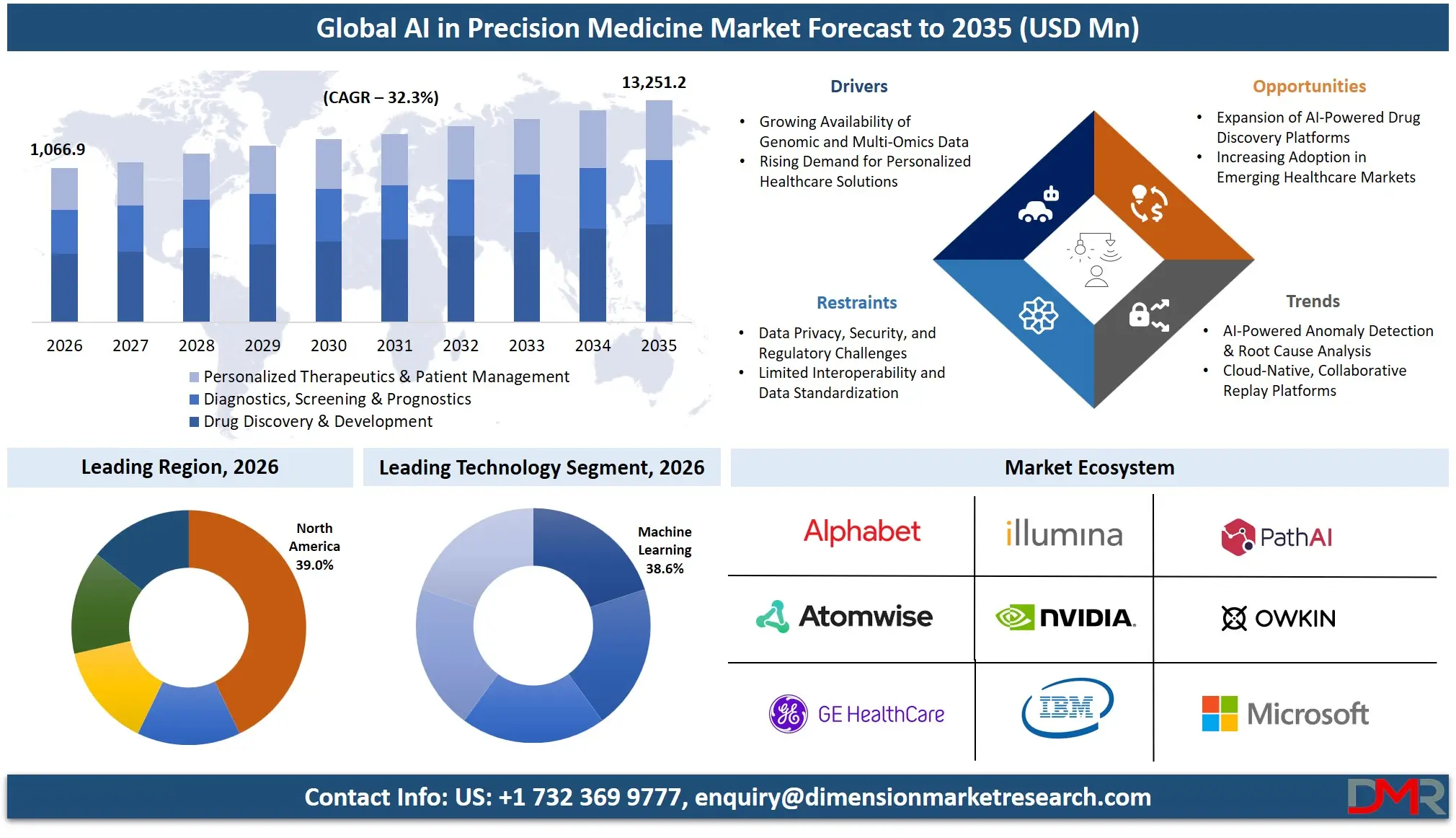
The Global AI in Precision Medicine Market is expected to reach a value of USD 1,066.9 million in 2026, and it is further anticipated to reach to USD 3,251.2 million by 2035, growing at a CAGR of 32.3% during the forecast period.
ℹ
To learn more about this report –
Download Your Free Sample Report Here
The market for AI in precision medicine is witnessing rapid growth in view of the shift from a single standard treatment strategy to customized treatment plans in the life sciences and healthcare industry. It includes advanced software and services that utilize AI techniques to analyze multiple data sets such as genomics, proteomics, and metabolomics to customize the treatment, diagnosis, and prevention for each patient individually. Increasing necessity to decode complex biomedical data and speed up drug development process along with decision-making processes are behind the critical need for AI solutions in the field. Adopters include pharmaceuticals and biotechnology firms as well as advanced healthcare organizations, while cloud deployment appears to be the preferred method since it offers scalable computational capacity for working with large genomics data sets and developing complex neural networks.
The US AI in Precision Medicine Market
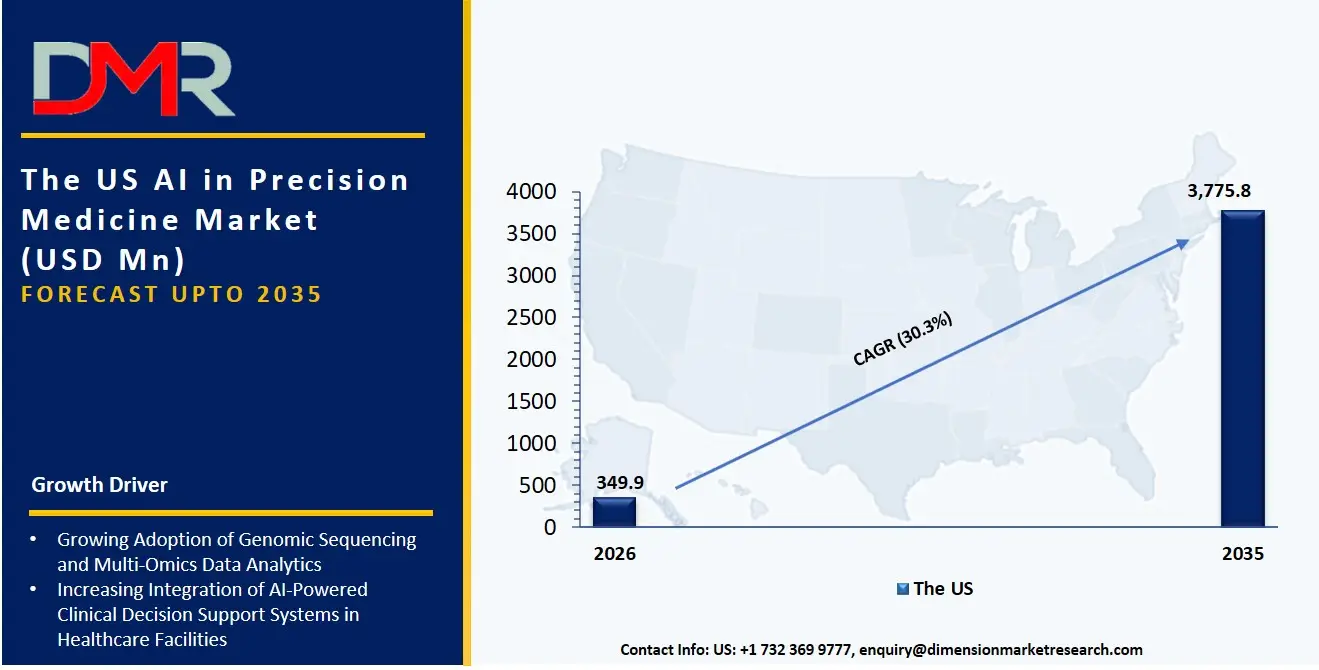
The US AI in Precision Medicine Market is projected to reach USD 349.9 million in 2026 and is further anticipated to expand to USD 3,775.8 million by 2035, growing at a CAGR of 30.3%. The U.S. remains the largest and technologically advanced marketplace for precision medicine AI technology because of its biopharma research and development environment, federal research funding, and regulatory infrastructure for digital health.
ℹ
To learn more about this report –
Download Your Free Sample Report Here
Key features of the market include a robust need for deep learning solutions and clinical decision support platforms wherein businesses are striving to incorporate artificial intelligence algorithms into their workflows in order to provide immediate genomic analysis within clinical settings. Another trend that has led to increased demand for AI technology in healthcare is the use of generative AI technology for the creation of new drug candidates and the discovery of novel biomarkers, which has also resulted in a corresponding increase in the demand for consulting services related to FDA regulations on artificial intelligence in healthcare applications.
The Europe AI in Precision Medicine Market
The Europe AI in Precision Medicine Market is estimated to be valued at USD 320.1 million in 2026 and is further anticipated to reach USD 975.4 million by 2035 at a CAGR of 31.6%. The European market is very much influenced by strict regulatory requirements such as the GDPR and the upcoming European Health Data Space (EHDS), which are having a significant impact on AI-enabled genomics applications and necessitate the implementation of comprehensive data management strategies. Cloud adoption in federated learning for applications such as oncology and rare disease research is growing rapidly, as cross-border consortiums in countries such as Germany, the United Kingdom, and France attempt to develop AI models using confidential patient data while still maintaining privacy. Furthermore, programs like the 1+ Million Genomes initiative are pressuring service providers to provide specific integration and deployment services.
The Japan AI in Precision Medicine Market
The Japan AI in Precision Medicine Market is projected to be valued at USD 111.9 million in 2026 and is expected to witness robust growth by 2035 at a CAGR of 27.1%. The Japan market presents an intriguing dynamics, which is based on the national goal of coping with its aging population, which suffers from high prevalence of various diseases, by means of developing innovative treatments via the latest medical innovations. The application of artificial intelligence solutions for drug discovery and development is a considerable part of investment, due to major pharmaceutical companies and research organizations using machine learning to reposition available medications and identify novel targets for such diseases as Alzheimer's and Parkinson's disease. Additionally, there is a strong demand for artificial intelligence solutions for computer vision and image analysis, since Japan uses advanced diagnostic imaging machines for precision oncology purposes through CT and MRI scans.
Key Takeaways
- Market Size & Forecast: It is estimated that the global AI in Precision Medicine market will grow significantly from USD 1,066.9 million in 2026 to USD 3,251.2 million by 2035, supported by two major drivers like unprecedented increases in multi-omic data production and the necessity for highly improved efficiency in drug discovery processes.
- Growth Rate & Outlook: Global market growth is expected at a CAGR of 32.3%, mainly due to complex target biology, the use of large language models in designing therapeutic proteins, and a dire shortage of computational biologists able to create and implement production-grade AI.
- Primary Growth Drivers: Some important growth factors in this industry are the transition from broad-based medicines to those stratified using biomarkers, the need for AI applications in drug repurposing, and embedding of clinical decision support solutions into EHRs to provide personalized therapy options.
- Key Market Trends: The key market trends include the emergence of digital twins for the purpose of simulating clinical trials, application of graph neural networks to simulate complex biological pathways in discovering targets, and the adoption of context-aware processing to incorporate real-world data from wearables into static genetic data.
- By Deployment Mode Analysis: The deployment mode analysis reveals that cloud deployment will account for the lion's share of the market since the immense computational demands created by GWAS studies and de novo drug discovery processes require the flexibility and scalability provided by cloud computing.
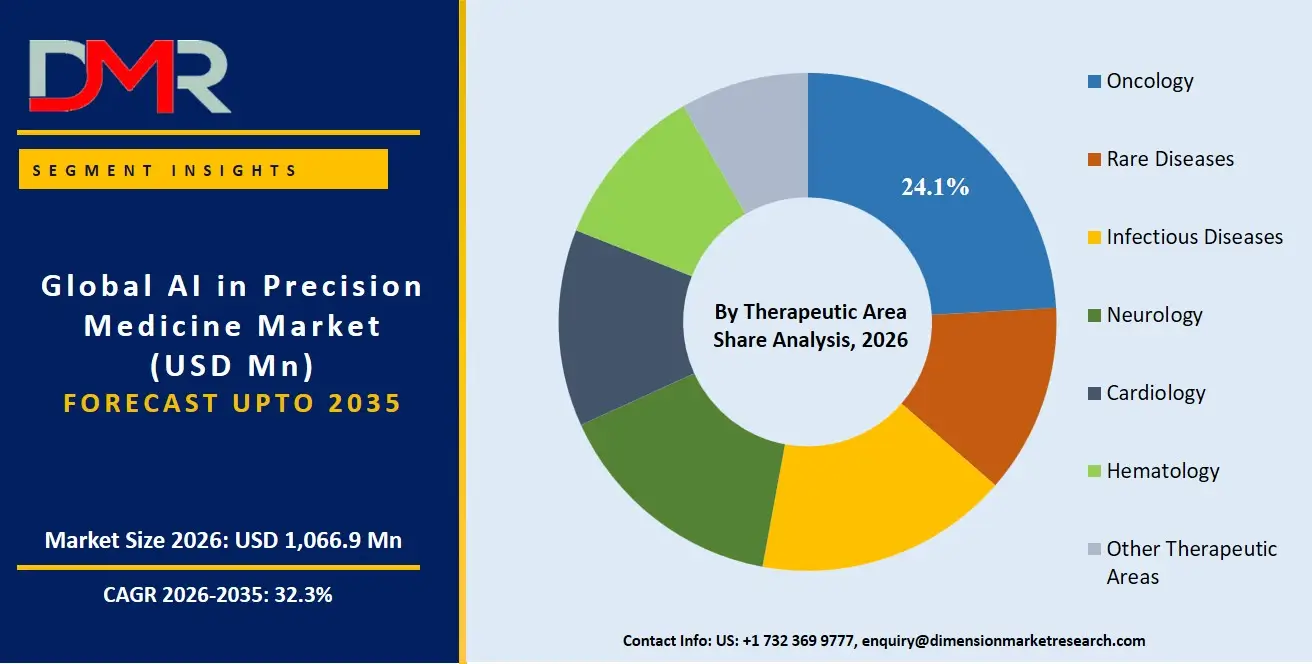
- By Therapeutic Area Analysis: Among the various therapeutic areas, oncology is projected to account for the highest revenues and number of studies since cancer is a genetically diverse and highly heterogeneous disease. Rare diseases will be the fastest-growing category owing to AI's capacity to detect patterns from sparse data.
- Regional Leadership: North America is projected to dominate this market and account for a massive 39.0% of it in 2026, owing to the presence of numerous AI-first companies in the biotech domain, along with prominent research institutes for cancer as well as a developed venture capital ecosystem focused on bio-ML.
What is the AI in Precision Medicine?
It is the utilization of various AI tools such as machine learning, deep learning, and predictive analytics to personalize healthcare interventions according to patients' genomic makeup, medical condition, behavioral habits, and environment. As opposed to using similar treatments to all patients due to their shared conditions in traditional treatment modalities, AI in precision medicine relies on finding what makes a certain patient unique and recommending customized therapy accordingly, predicting their risk of getting sick in the future, and enhancing the overall quality of intervention provided. AI algorithms are able to process extensive and complicated data, which includes DNA sequences, medical imaging, patients' health history, and various biomarkers, significantly quicker than conventional algorithms.
Use Cases
- De Novo Drug Design in Oncology: Pharmaceuticals firms leverage deep learning algorithms and generative adversarial networks (GANs) to generate brand new small-molecule drugs for previously untargeted cancer drug discovery, carrying out experimental synthesis and testing only for selected compounds generated through AI.
- AI-Powered Patient Stratification in Rare Diseases: Academic research institutions implement unsupervised learning algorithms applied to graph neural networks (GNNs) in order to conduct a computational analysis of genomic sequences and electronic health records of patients and discover new patient clusters for a rare disease, thus designing a highly customized clinical trial.
- Treatment Optimization Using Real-Time Data in Neurology: Healthcare facilities implement cloud-based, context-aware clinical decision support systems which utilize data obtained from wearables of patients along with their pharmacogenomic information to make recommendations for dose optimization of prescribed medication in Parkinson's disease.
- Biomarker Discovery in Multi-Omics in Cardiology: Educational organizations use data analytics and visualization methods to conduct an integrated analysis of multi-omics data in heart failure patients and reveal novel panels of biomarkers that can be used for disease screening and prognosis prediction.
Market Dynamics
Key Drivers in the Global AI in Precision Medicine Market
Growing Availability of Genomic and Multi-Omics Data
Advances in genomic sequencing, proteomics, metabolomics, and other areas of omics have resulted in huge amounts of biological data that need sophisticated analysis techniques. Using AI, scientists and health care practitioners can analyze such complex data sets, discover how certain diseases work, find biomarkers, and even create tailored therapies. As the cost of sequencing continues falling, more and more health care organizations are incorporating genomics into their routine practice. The use of AI technology can facilitate the transition of such complex data sets into meaningful knowledge. Consequently, the rise of initiatives promoting precision medicine globally leads to a high demand for AI tools.
Rising Demand for Personalized Healthcare Solutions
Healthcare is transitioning away from general healthcare strategies to personalized therapy options based on specific patient traits. This can be attributed to the use of AI technology to make sense of genetic, clinical, environmental, and personal data. The rising cases of chronic conditions, cancers, and rare diseases are making it more important than ever for medical professionals to develop strategies aimed at delivering better results while reducing unnecessary treatment. Precision medicine platforms powered by AI technology enable healthcare practitioners to make predictions concerning the effectiveness of certain treatments. Patient understanding about the merits of such practices has fueled investment in AI technologies.
Restraints in the Global AI in Precision Medicine Market
Data Privacy, Security, and Regulatory Challenges
AI-powered precision medicine requires access to highly sensitive patient data such as genomic, clinical, and behavioral information. The handling of data, as well as issues related to privacy and compliance with regulations, is a major problem. Organizations need to observe stringent data management policies and cyber security rules, which can complicate the implementation process. Issues around the security of data and misuse can prevent stakeholders from collaborating and sharing data, thereby impeding innovation. Different regulation policies in different countries can pose a problem in implementing technology across borders. Such hurdles can prevent AI adoption and limit access to complete datasets that help train AI models.
Limited Interoperability and Data Standardization
Data in precision medicine is collected through different sources, ranging from hospital systems to laboratories, image-capturing systems, genetic databases, and wearable technology. However, due to differences in data format, data standards, and system architecture, integrating the data may be a daunting task. The use of AI algorithms is contingent upon the use of high-quality datasets. Fragmented infrastructure in healthcare often causes data siloing, thus preventing the use of the technology effectively. Poor data documentation and lack of interoperability in healthcare systems may decrease the reliability of data analysis and make widespread adoption impossible.
Growth Opportunities in the Global AI in Precision Medicine Market
Expansion of AI-Powered Drug Discovery Platforms
As more and more efforts are made by the pharmaceutical industry towards lowering drug development costs and speeding up the process of drug development, there are immense possibilities for precision medicines that incorporate artificial intelligence. Artificial intelligence can help quickly discover the target for the drug, determine interactions at a molecular level, find optimal drug candidates and even plan better clinical trials. With an increase in efficiency and higher success rates being the need of the hour, the use of artificial intelligence in research will be increasingly sought after. Extensive medical data will only enhance the effectiveness of research through artificial intelligence.
Increasing Adoption in Emerging Healthcare Markets
A focus on the digitization of healthcare services, genomics studies, and diagnostic facilities is taking place in emerging markets. The use of AI in improving healthcare performance, despite the limitations that exist, is being realized by more governments and institutions in the sector. Increased availability of cloud computing facilities, digital health data storage, and genomics tools makes AI application in precision medicine attractive in such environments. High costs in healthcare, increased disease burden, and supportive government policies create significant market opportunity. Developing countries have healthcare systems that require improvement, and AI could play a significant role here.
Trends in the Global AI in Precision Medicine Market
Integration of Generative AI in Clinical and Research Workflows
Generative AI represents a rising trend in precision medicine that promises to revolutionize it through the improved analysis of data, clinical decision-making, and medical research. With better models in place, scientists will be able to derive new insights from massive sets of data, help devise treatments, speed up literature reviews, and even contribute to drug development. Scientists have already begun applying generative AI to discover molecular structures, simulate biological processes, and develop potential medicines. Healthcare professionals have started using this tool to document clinical practices and communicate with patients. With continued improvements in accuracy and processing power, generative AI is bound to be integrated into precision medicine systems.
Growing Use of Real-World Data and Digital Health Integration
It is crucial for precision medicine practitioners to utilize real-world data obtained from EHRs, wearables, remote monitoring, and patient outcome data. AI facilitates continuous analysis of various types of data to provide personalized recommendations and boost the efficacy of treatment plans. Practitioners apply real-time data for evaluating disease progression and response to treatment while taking preventive measures. With the growing number of digital health tools, there will be more data available for patients' profiling and further predictions. Therefore, the field of precision medicine is witnessing innovative trends that foster more personalized health care.
Research Scope and Analysis
The Global AI in Precision Medicine Market is segmented by Component into Software and Services, by Technology into Machine Learning, Deep Learning, Natural Language Processing (NLP), Computer Vision, and related tools, by Deployment Mode into Cloud-Based and On-Premise, by Therapeutic Area into Oncology, Neurology, Cardiology, and others, by Application into Drug Discovery, Diagnostics, and Personalized Therapeutics, and by End User into Healthcare Providers, Pharmaceutical & Biotechnology Companies, Research Institutes, Government Organizations, and other end users.
ℹ
To learn more about this report –
Download Your Free Sample Report Here
By Component Analysis
Software is poised to be the driving force behind the market for AI in Precision Medicine since it lays down the groundwork for the analysis of sophisticated data coming from genomics, clinical practices, imaging, and real-world patients. Machine learning software, clinical decision support software, genomic analysis software, and advanced analytical software are indispensable in turning large amounts of healthcare data into valuable information. Increasingly, healthcare organizations, drug manufacturers, and research institutions use AI software to expedite diagnosis, improve treatment decisions, uncover biomarkers, and facilitate drug discovery processes. The scalability, adaptability, and constant updating capabilities of software solutions make their adoption even more relevant. As opposed to services, software is more profitable and provides consistent returns during the entire AI life cycle.
By Technology Analysis
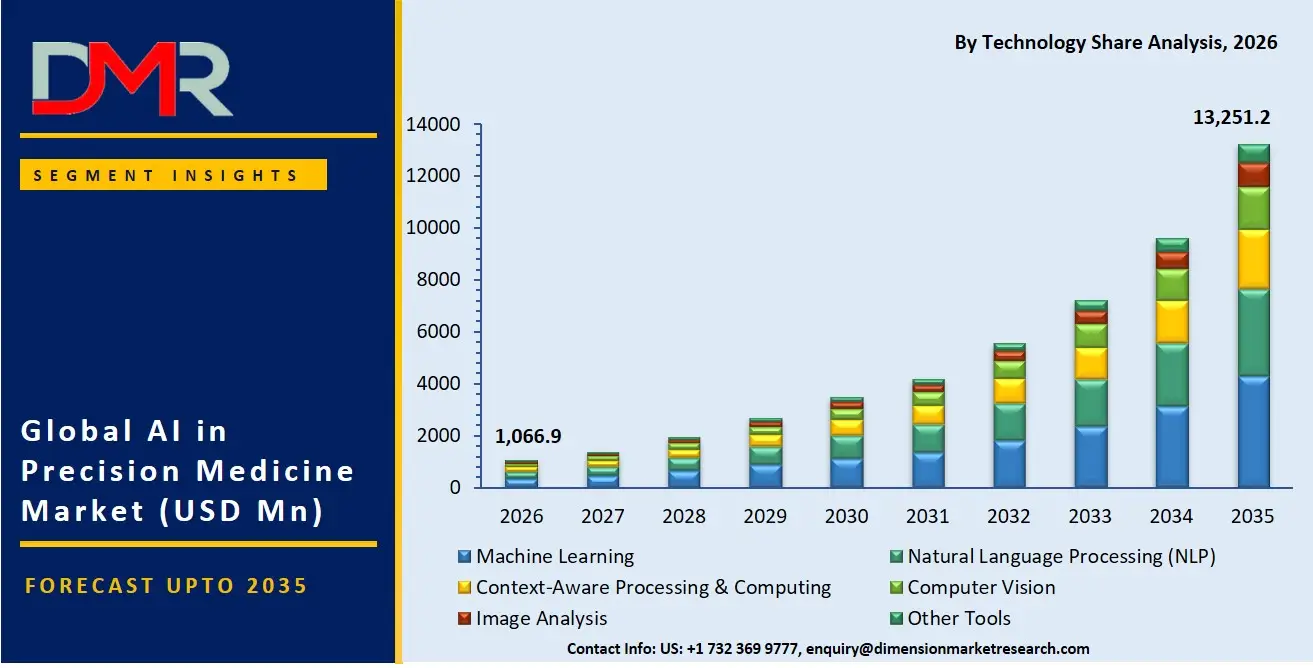
Machine Learning is expected to take precedence over other technologies within the industry owing to its capability of spotting patterns, predicting results, and deriving insights from large datasets in the field of healthcare. Machine learning forms the driving force behind many applications in precision medicine such as disease diagnoses, risk predictions, drug development, patient stratification, and optimization of therapies.
ℹ
To learn more about this report –
Download Your Free Sample Report Here
Deep learning algorithms, supervised learning methods, and graph neural networks have greatly aided in the analysis of genomics data and clinical records. The use of machine learning by pharmaceutical firms and healthcare providers to achieve greater efficiency and cost savings is on the rise. Its wide applicability across almost all stages of the precision medicine value chain guarantees its dominance in terms of usage.
By Deployment Mode Analysis
The dominance of cloud-based deployment is poised to be due to the fact that precision medicine technologies entail high computing and storage demands. Cloud technology provides scalable computing and storage infrastructure for genomics sequencing, imaging, and electronic health record processing. It facilitates swift cooperation between researchers, healthcare professionals, and pharmaceutical companies situated in various locations while keeping infrastructure costs low. In addition, the implementation of artificial intelligence models through clouds can be done efficiently due to the rapid development and deployment of the models in a cloud environment. With increasing adoption of data-driven healthcare and collaborative healthcare initiatives, cloud technologies will maintain their superiority in the deployment segment.
By Therapeutic Area Analysis
Oncology is anticipated to be the leading segment under the therapeutic area due to its highly advanced application in precision medicine use case scenario. The intricacy involved in studying tumors, high incidences of cancer, and increased demand for target-specific therapies have led to substantial investment in AI-based oncological tools. AI technology helps in discovering biomarkers, genetic testing, choosing a treatment modality, conducting trials, and disease surveillance. Huge datasets of genomic data that are obtained through cancer studies offer a perfect environment for training complex AI algorithms. In addition to this, there is considerable adoption of AI by pharmaceutical companies to expedite their oncology drug discovery process.
By Application Analysis
The application segment is primarily projected to dominate by drug discovery & development because pharmaceutical and biotech firms spend considerably on optimizing their research efforts in addition to shortening the development timeframes. Artificial Intelligence technologies are leveraged for various applications like target identification, disease research, molecules design, drug repositioning, toxicity assessment, and optimal clinical trials. These help in lowering expenses and increasing chances of success when developing drugs. Availability of large amounts of biomedical data and genomics databases further improves AI-based discovery. Due to the fact that pharmaceutical R&D contributes to demand for AI solutions in high-end applications within precision medicine, this application segment dominates globally.
By End User Analysis
Pharmaceutical and biotechnology companies is poised to dominate the end-user segment because they are among the largest investors in AI-enabled precision medicine technologies. These organizations leverage AI to accelerate drug discovery, optimize clinical trials, identify biomarkers, develop targeted therapies, and improve research efficiency. The potential for significant cost savings and faster time-to-market has encouraged extensive adoption of advanced AI platforms across research and development operations. Biopharmaceutical firms also possess access to extensive genomic, clinical, and molecular datasets that support sophisticated AI applications. Furthermore, strategic collaborations between AI technology providers and pharmaceutical companies continue to expand innovation opportunities, reinforcing their position as the leading end-user group within the global AI in Precision Medicine market.
The Global AI in Precision Medicine Market Report is segmented on the basis of the following:
By Component
- Software
- Machine Learning Platforms
- Deep Learning Software
- Clinical Decision Support Software
- Data Analytics & Visualization Tools
- Genomic Analysis Software
- Services
- Consulting Services
- Integration & Deployment Services
- Support & Maintenance Services
- Training & Education Services
By Technology
- Machine Learning
- Deep Learning
- Convolutional Neural Networks (CNNs)
- Recurrent Neural Networks (RNNs)
- Generative Adversarial Networks (GANs)
- Graph Neural Networks (GNNs)
- Other Deep Learning Tools
- Supervised Machine Learning
- Reinforcement Machine Learning
- Unsupervised Machine Learning
- Other Machine Learning Tools
- Natural Language Processing (NLP)
- Context-Aware Processing & Computing
- Computer Vision
- Image Analysis
- Other Tools
By Deployment Mode
By Therapeutic Area
- Oncology
- Rare Diseases
- Infectious Diseases
- Neurology
- Cardiology
- Hematology
- Other Therapeutic Areas
By Application
- Drug Discovery & Development
- Target Identification & Drug Discovery
- Disease Understanding & Mechanism Analysis
- Drug Repurposing & Repositioning
- De Novo Drug Design
- Drug Candidate Optimization
- Safety, Toxicity & Adverse Event Prediction
- Clinical Trial Design & Development
- Diagnostics, Screening & Prognostics
- Risk Assessment & Patient Stratification
- Early Disease Screening
- Disease Diagnosis & Biomarker Identification
- Disease Progression Monitoring, Staging & Prognosis Prediction
- Personalized Therapeutics & Patient Management
- Therapy Selection & Treatment Planning
- Precision Dosing & Treatment Optimization
- Therapy Response Monitoring
- Post-Treatment Surveillance & Follow-Up Care
- Real-World Outcome Assessment & Patient Management
By End User
- Healthcare Providers
- Pharmaceutical & Biotechnology Companies
- Medical Device & Equipment Companies
- Research Centers & Academic Institutes
- Government Organizations
- Other End Users
Regional Analysis
Leading Region by Market Share
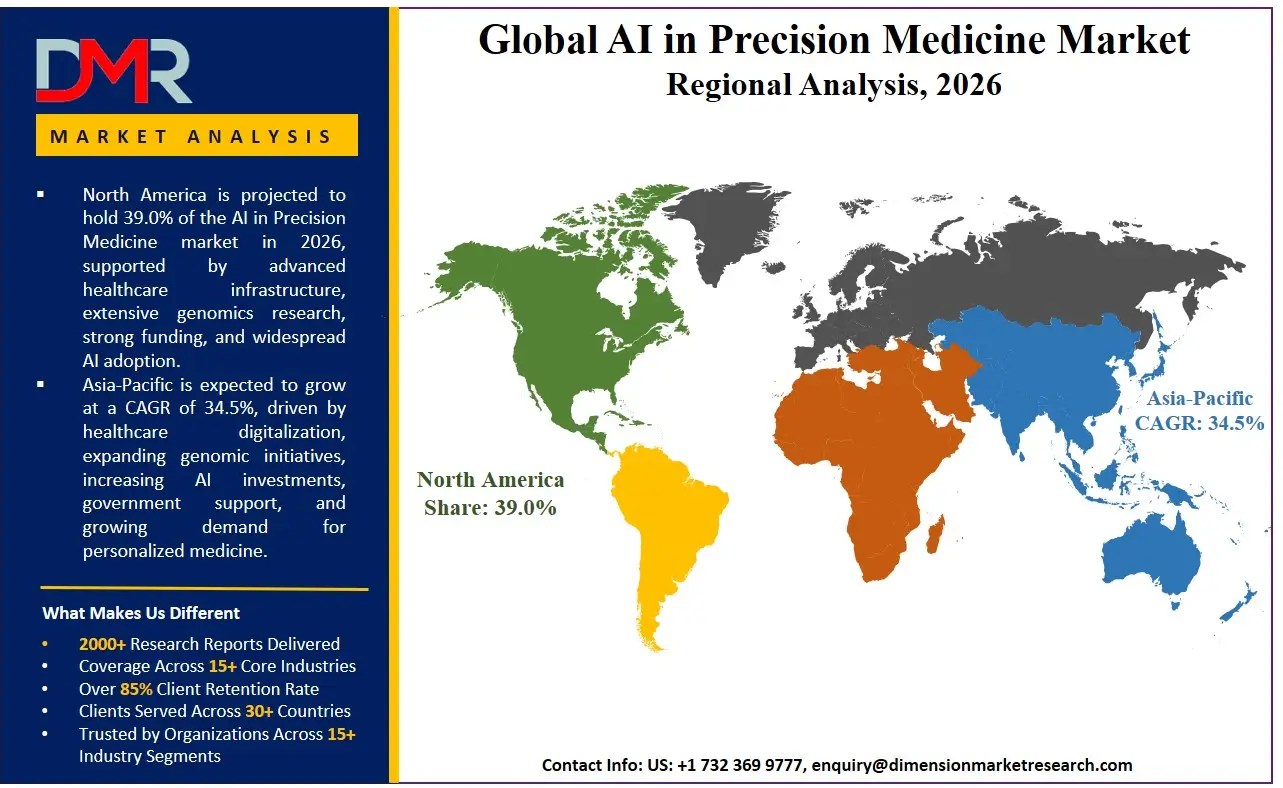
North America is poised to dominate the global AI in precision medicine market, holding a 39.0% share by the end of 2026. The United States, which anchors North America, commands the largest share due to an unrivaled concentration of AI-native drug discovery startups, the world's leading genomic sequencing centers, and a regulatory environment that is progressively establishing frameworks for AI-based diagnostics. The region has a synergistic ecosystem of world-class academic medical centers, massive pharmaceutical R&D headquarters, and a deep pool of venture capital. Aggressive federal initiatives, such as the All of Us Research Program, are generating datasets of unprecedented diversity, which in turn fuel the training of deep learning software. This continuous loop of data generation, AI model development, and therapeutic application creates an enduring demand for specialized services, from genomic analysis software integration to complex multi-omic consulting engagements.
ℹ
To learn more about this report –
Download Your Free Sample Report Here
Fastest-Growing Regional Market
The Asia-Pacific region is expected to be the most rapidly expanding market for AI in precision medicine, driven by proactive government-led precision health initiatives across China, South Korea, Singapore, and Japan. The rapid economic development and soaring public and private investment in biotechnology are compelling established pharmaceutical firms to adopt AI platforms to leapfrog traditional R&D cycles. Drug repurposing and repositioning using machine learning is in high demand to quickly build product pipelines. There is also a severe shortage of bioinformatics and computational biology expertise in the region, necessitating the outsourcing of critical tasks like multi-omic data integration and the development of clinical decision support software to specialized service providers, accelerating the transfer and implementation of advanced AI technologies.
By Region
North America
Europe
- Germany
- The U.K.
- France
- Italy
- Russia
- Spain
- Benelux
- Nordic
- Rest of Europe
Asia-Pacific
- China
- Japan
- South Korea
- India
- ANZ
- ASEAN
- Rest of Asia-Pacific
Latin America
- Brazil
- Mexico
- Argentina
- Colombia
- Rest of Latin America
Middle East & Africa
- Saudi Arabia
- UAE
- South Africa
- Israel
- Egypt
- Rest of MEA
Competitive Landscape
The competitive landscape of the global AI in precision medicine market is a dynamic convergence of AI-centric drug discovery companies, global technology giants, and specialty life-science software vendors. Success hinges on forming profound strategic alliances with leading pharmaceutical partners and academic medical centers, which provide the proprietary clinical data and biological validation necessary to build a competitive moat. The market is witnessing rapid consolidation, as established diagnostics and pharma companies acquire niche AI firms to internalize deep learning and image analysis expertise. Proprietary datasets such as large-scale pharmacogenomic screening results or curated multi-omic patient cohorts are replacing generic algorithms as the primary basis of competitive differentiation, making data partnerships more critical than software licenses.
Some of the prominent players in the Global AI in Precision Medicine Market are:
- NVIDIA Corporation
- Google (Alphabet Inc.)
- Microsoft Corporation
- IBM Corporation
- Illumina, Inc.
- Tempus AI, Inc.
- GE HealthCare
- Atomwise Inc.
- Owkin, Inc.
- PathAI, Inc.
- Paige AI, Inc.
- Guardant Health, Inc.
- Insilico Medicine
- Exscientia
- AstraZeneca
- Novo Nordisk A/S
- BioXcel Therapeutics, Inc.
- iCAD, Inc.
- Eko Health, Inc.
- Proscia Inc.
- Other Key Players
Recent Developments
- March 2026: Insilico Medicine declared a major expansion of its AI-driven drug discovery platform, securing a multi-target partnership with a top-10 global pharmaceutical company. This professional services initiative will utilize their proprietary generative adversarial networks (GANs) to conduct De Novo Drug Design for novel oncology targets identified through their target identification & drug discovery engine.
- December 2025: Tempus AI strengthened its strategic collaboration with a network of community oncology providers, introducing a dedicated AI-powered clinical decision support service. This practice integrates real-world genomic analysis software with patient records to provide personalized therapy selection and treatment planning at the point of care, directly addressing health equity.
- August 2025: PathAI acquired a European digital pathology startup to expand its AI-based diagnostic solutions for neurology. This acquisition is intended to integrate the startup's deep learning-based image analysis technology for brain tissue with PathAI's platform, bolstering its Disease Diagnosis & Biomarker Identification capabilities to support the complex requirements of pharmaceutical clients conducting Alzheimer's disease clinical trials.
Report Details
| Report Characteristics |
| Market Size (2026) |
USD 1,066.9 Mn |
| Forecast Value (2035) |
USD 13,251.2 Mn |
| CAGR (2026–2035) |
32.3% |
| The US Market Size (2026) |
USD 349.9 Mn |
| Historical Data |
2021 – 2025 |
| Forecast Data |
2027 – 2035 |
| Base Year |
2025 |
| Estimate Year |
2026 |
| Segments Covered |
By Component, By Technology, By Deployment Mode, By Therapeutic Area, By Application, and By End User |
| Regional Coverage |
North America – The US and Canada; Europe – Germany, The UK, France, Russia, Spain, Italy, Benelux, Nordic, & Rest of Europe; Asia-Pacific – China, Japan, South Korea, India, ANZ, ASEAN, Rest of APAC; Latin America – Brazil, Mexico, Argentina, Colombia, Rest of Latin America; Middle East & Africa – Saudi Arabia, UAE, South Africa, Turkey, Egypt, Israel, & Rest of MEA |
Frequently Asked Questions
How big is the Global AI in Precision Medicine Market?
▾ The Global AI in Precision Medicine market is poised to be valued at USD 1,066.9 million in 2026 and is projected to reach USD 3,251.2 million by 2035, driven by the universal need to translate complex multi-omic data into actionable therapeutic insights for individualized patient care.
What is the CAGR of the Global AI in Precision Medicine Market from 2026 to 2035?
▾ The market is expected to grow at a CAGR of 32.3% from 2026 to 2035, reflecting the accelerating adoption of deep learning and generative AI to revolutionize drug discovery and diagnostic accuracy.
What factors are driving the growth of the Global AI in Precision Medicine Market?
▾ Key drivers include the exponential surge in multi-omic data complexity, the pharmaceutical industry's R&D productivity crisis, a critical shortage of skilled computational biologists, and the pressing need for AI-powered clinical decision support software to enable personalized therapeutics at scale.
Which region held the largest share of the AI in Precision Medicine Market in 2026?
▾ North America, specifically the United States, is poised to hold a 39.0% market share in 2026, driven by a mature biotech ecosystem, significant federal research funding, and aggressive investment in AI-first drug discovery platforms for oncology and rare diseases.
Which region is expected to grow the fastest in the AI in Precision Medicine Market?
▾ The Asia-Pacific region is expected to grow the fastest, fueled by sweeping government-led precision medicine initiatives in China, Japan, and South Korea, where AI-powered drug repurposing & repositioning is critical for accelerating pharmaceutical development.
What are the major trends in the Global AI in Precision Medicine Market?
▾ Major trends include the development of multimodal foundation models pre-trained on diverse biomedical data, the expansion of generative AI into designing novel mRNA and protein therapeutics, and the integration of context-aware AI into wearable devices for real-time, personalized patient management.
Key players include AI-native drug discovery firms like Insilico Medicine and Recursion Pharmaceuticals, precision diagnostics leaders like Tempus AI and PathAI, as well as the healthcare-focused AI divisions of global technology giants like NVIDIA, Google, and Microsoft.
▾ Key players include AI-native drug discovery firms like Insilico Medicine and Recursion Pharmaceuticals, precision diagnostics leaders like Tempus AI and PathAI, as well as the healthcare-focused AI divisions of global technology giants like NVIDIA, Google, and Microsoft.
How is the Global AI in Precision Medicine Market segmented?
▾ The market is segmented by Component, Technology, Deployment Mode, Therapeutic Area, Application, and End User.