Asia Medical Tourism Market Snapshot
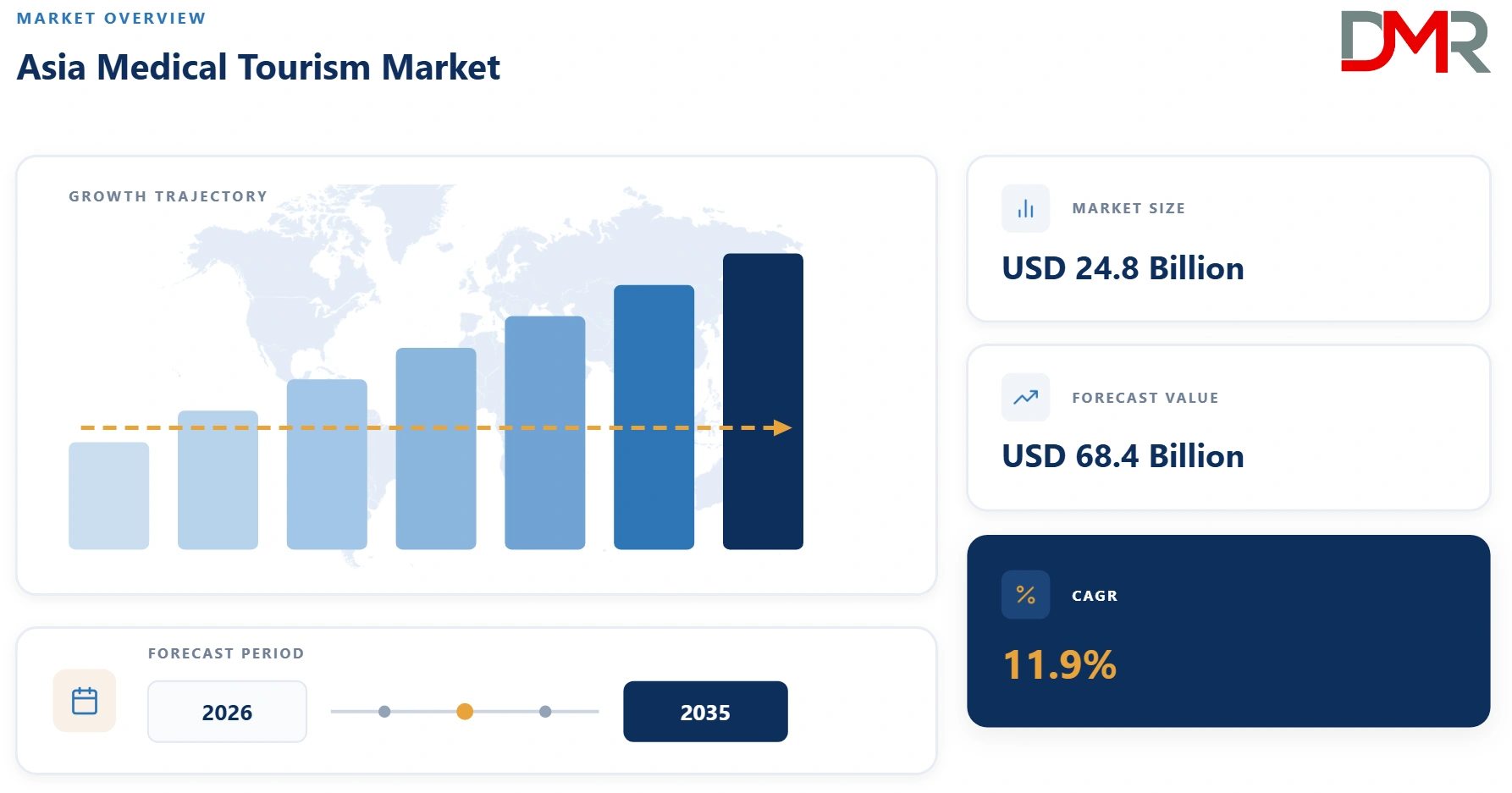
- Asia Medical Tourism Market Size in 2026: USD 24.8 Billion
- Asia Medical Tourism Market Size in 2035: USD 68.4 Billion
- Asia CAGR from 2026 to 2035: 11.9%
- Cosmetic and Aesthetic Treatments is the leading treatment type segment in 2026: 26.4%
- Medical and Surgical Treatment is the leading service nature segment in 2026: 72.6%
- International Patients is the leading patient origin segment in 2026: 68.4%
- Private Hospitals and Clinics is the leading service provider segment in 2026: 74.8%
What is the Asia Medical Tourism Market and its Market Size?
The Asia Medical Tourism Market is projected to be valued at USD 24.8 Billion in 2026 and is anticipated to reach USD 68.4 Billion by 2035, expanding at a CAGR of 11.9% during the forecast period. Market growth is being supported by significant treatment cost advantages across major Asian healthcare destinations, continued investment in advanced private healthcare infrastructure, increasing availability of internationally trained medical specialists, and rising cross-border demand for high-quality medical procedures with shorter waiting periods.
ℹ
To learn more about this report –
Download Your Free Sample Report Here
Asia has developed into one of the world's most competitive medical tourism regions, supported by established healthcare destinations such as Thailand, India, Singapore, South Korea, and Malaysia. These markets offer a broad spectrum of cosmetic and aesthetic, cancer and oncology, orthopedic, dental, cardiovascular, and fertility treatments. The combination of specialized clinical expertise, advanced medical technologies, competitive treatment costs, and hospitality-oriented patient services continues to strengthen Asia's attractiveness to international patients.
Use Cases
- Cosmetic and Aesthetic Treatment Tourism: International patients travel to destinations such as South Korea and Thailand for cosmetic surgery, dermatology, facial procedures, body contouring, and other aesthetic treatments supported by specialized expertise and advanced technologies.
- Complex Medical and Surgical Treatment: Patients travel across borders to access cardiovascular, orthopedic, cancer, and other complex procedures at competitive costs while benefiting from advanced hospital infrastructure and specialist physicians.
- Fertility and Reproductive Treatment Tourism: International patients seek fertility and reproductive treatments across Asian destinations due to competitive treatment costs, specialized fertility centers, advanced reproductive technologies, and differences in treatment availability.
- Wellness and Preventive Healthcare Tourism: Travelers combine health screening, preventive care, rehabilitation, wellness programs, and alternative therapies with leisure and recovery experiences across established Asian healthcare tourism destinations.
Key Takeaways
- Market Size: The Asia Medical Tourism Market is anticipated to reach USD 24.8 Billion in 2026 and is forecast to reach USD 68.4 Billion by 2035, expanding at a CAGR of 11.9%.
- Growth Outlook: Market expansion is supported by cost advantages, advanced healthcare infrastructure, specialized clinical expertise, shorter waiting periods, and increasing international awareness of Asian healthcare destinations.
- Primary Growth Drivers: Competitive treatment pricing, investment in internationally accredited healthcare facilities, expansion of private hospital networks, increasing treatment specialization, and supportive medical tourism policies are driving market growth.
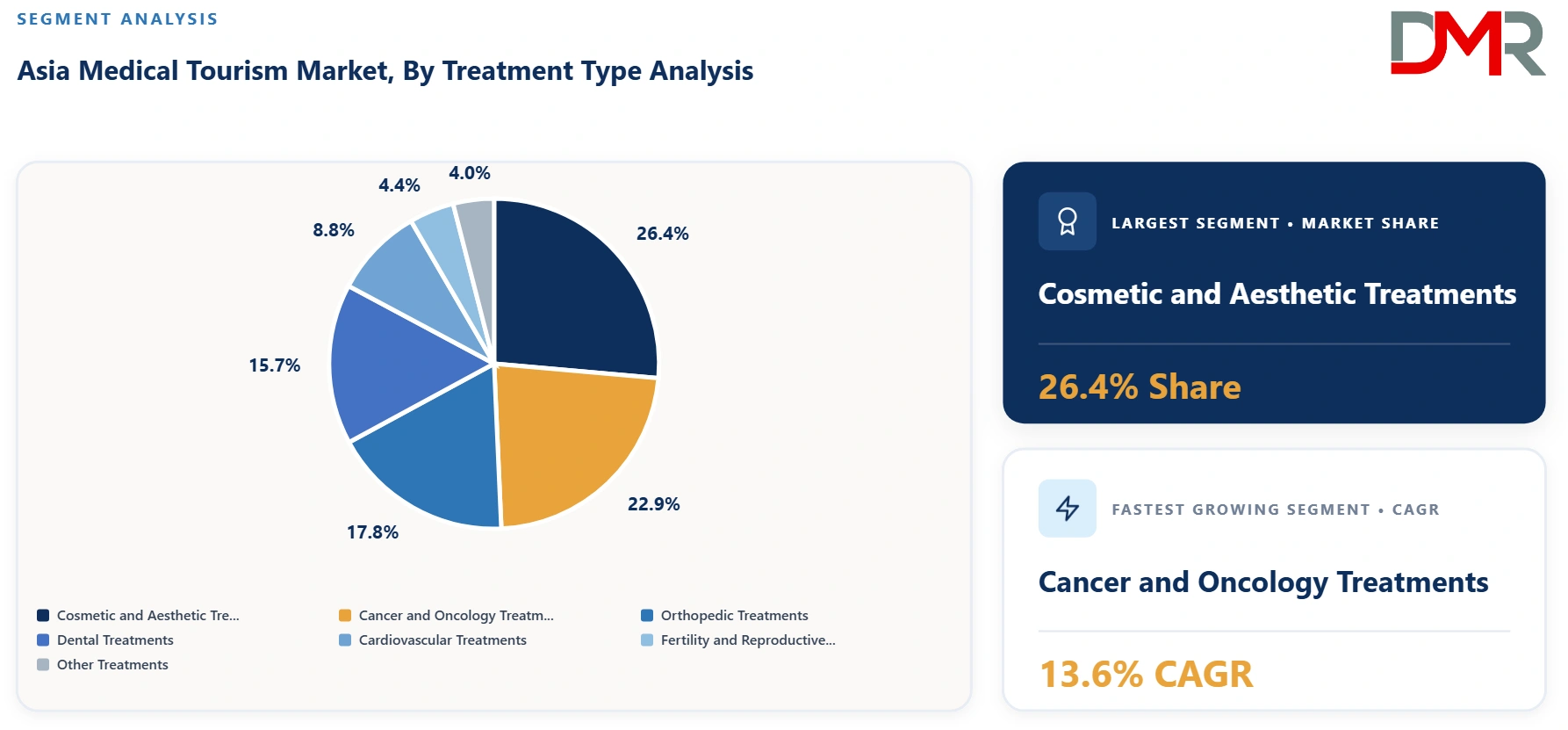
- By Treatment Type Analysis: Cosmetic and Aesthetic Treatments are projected to dominate with a 26.4% share in 2026, supported by strong international demand for aesthetic procedures, particularly across South Korea and Thailand. Cancer and Oncology Treatments are expected to register the highest CAGR of 13.6% during 2026-2035 as international patients increasingly seek advanced cancer diagnosis and treatment at competitive costs.
- By Service Nature Analysis: Medical and Surgical Treatment is expected to dominate with a 72.6% share in 2026 due to substantial cross-border demand for surgical and specialist procedures. Wellness and Preventive Treatments are projected to record the fastest CAGR of 13.1% through 2035 as preventive healthcare becomes increasingly integrated with tourism and hospitality services.
- By Patient Origin Analysis: International Patients are projected to dominate with a 68.4% share in 2026, reflecting strong cross-border healthcare flows toward Asia from the Middle East, neighboring Asian countries, Europe, North America, and other regions. Domestic Patients are expected to account for the remaining market demand.
- By Service Provider Analysis: Private Hospitals and Clinics are expected to dominate with a 74.8% share in 2026, supported by advanced clinical infrastructure, specialist availability, international accreditation, dedicated international patient departments, and premium patient services.
Key Drivers in the Asia Medical Tourism Market
Substantial Cost Advantages for Medical and Surgical Treatments
Significant treatment cost differences between leading Asian medical tourism destinations and developed Western healthcare markets remain one of the strongest drivers of medical tourism. Complex cardiovascular, orthopedic, dental, cosmetic, fertility, and oncology procedures can often be accessed at comparatively lower costs across major Asian destinations. These savings are particularly attractive to international patients facing high out-of-pocket expenses, inadequate insurance coverage, long waiting periods, or limited availability of specialized procedures within their domestic healthcare systems.
Cost competitiveness is increasingly being combined with improvements in clinical quality, specialist expertise, hospital infrastructure, and international accreditation. Consequently, patients are increasingly evaluating Asian destinations not merely as lower-cost alternatives but as specialized healthcare destinations capable of delivering advanced procedures with comprehensive international patient support.
Expansion of Private Hospitals and Specialized Clinical Infrastructure
Private hospitals and clinics across Asia continue to invest in advanced diagnostic systems, minimally invasive surgery, robotic procedures, cancer treatment infrastructure, cardiovascular care, fertility technologies, and specialized aesthetic treatment facilities. This investment is strengthening the clinical capabilities required to attract international patients seeking complex and specialized treatment.
Large private healthcare groups are also developing dedicated international patient departments offering multilingual communication, visa assistance, airport transfers, accommodation coordination, treatment scheduling, and post-procedure follow-up. These integrated services improve patient convenience and strengthen confidence in cross-border healthcare delivery.
Restraints in the Asia Medical Tourism Market
Regulatory, Legal, and Continuity-of-Care Challenges
Differences in healthcare regulations, treatment standards, medical liability frameworks, insurance coverage, and patient protection requirements across countries create challenges for international medical tourism. Patients undergoing procedures outside their home countries may experience difficulties related to legal recourse, medical records transfer, follow-up treatment, and management of complications after returning home.
These concerns can be particularly significant for complex cancer, cardiovascular, orthopedic, and fertility treatments requiring long-term monitoring. Medical tourism providers therefore need stronger cross-border care coordination, transparent clinical information, and structured post-treatment support to reduce patient concerns and strengthen market confidence.
Growth Opportunities in the Asia Medical Tourism Market
Development of Specialized Treatment Destinations
Significant opportunities exist for Asian destinations to strengthen their positioning around specific treatment categories. South Korea has established strong international recognition in cosmetic and aesthetic procedures, while India has developed competitive capabilities in cardiovascular, orthopedic, cancer, and other complex medical treatments. Thailand combines medical procedures with wellness and hospitality services, while Singapore is recognized for advanced specialist care.
Healthcare providers capable of building strong reputations around specific clinical specialties can attract targeted international patient groups and differentiate themselves from competing destinations. Treatment specialization supported by clinical outcomes, specialist expertise, advanced technology, and international marketing can create sustainable competitive advantages.
Integrated Digital Health and Telemedicine Services
Digital health platforms and telemedicine represent an important opportunity for improving the medical tourism patient journey. Virtual consultations can enable international patients to communicate with specialists before traveling, share diagnostic records, receive preliminary treatment assessments, and plan procedures more efficiently.
Following treatment, telemedicine can support remote follow-up consultations, rehabilitation monitoring, medication management, and communication between patients and healthcare providers. Integrated digital care can reduce one of the major concerns associated with medical tourism by improving continuity of care after patients return home.
Trends in the Asia Medical Tourism Market
Integration of Wellness and Preventive Treatments
Medical tourism across Asia is increasingly expanding beyond conventional surgical procedures toward wellness, preventive healthcare, health screening, rehabilitation, and lifestyle-oriented services. Patients are increasingly combining medical treatment with preventive health programs, physical recovery, nutrition, spa services, traditional therapies, and wellness experiences.
This trend is particularly important for destinations with established tourism and hospitality industries. Integrating healthcare with wellness and leisure experiences allows providers to address a broader patient base while increasing the duration and value of medical tourism visits.
Growing Demand for Personalized International Patient Services
Healthcare providers are increasingly differentiating themselves through comprehensive international patient support rather than clinical treatment alone. Dedicated international patient centers, multilingual coordinators, customized treatment packages, accommodation arrangements, airport transfers, digital consultations, and post-treatment follow-up are becoming important competitive factors.
Private hospitals and clinics are particularly active in developing these capabilities as they compete for international patients seeking convenient and seamless healthcare experiences. Personalized services are expected to become increasingly important as competition among Asian medical tourism destinations intensifies.
Research Scope and Analysis
The Asia Medical Tourism Market is segmented by treatment type, service nature, patient origin, and service provider, covering cosmetic aesthetic cancer oncology orthopedic dental cardiovascular fertility reproductive and other treatments medical surgical wellness preventive and alternative therapies international domestic patients private hospitals clinics and public healthcare institutions.
ℹ
To learn more about this report –
Download Your Free Sample Report Here
By Treatment Type Analysis
Cosmetic and Aesthetic Treatments are projected to dominate the Asia Medical Tourism Market with approximately 26.4% share in 2026, supported by substantial international demand for cosmetic surgery, dermatological procedures, facial treatments, body contouring, and other aesthetic services. South Korea and Thailand remain particularly prominent destinations due to established specialist expertise, advanced aesthetic technologies, and strong international recognition.
Cancer and Oncology Treatments are expected to register the highest CAGR of 13.6% during 2026-2035. Growth is being supported by increasing international demand for advanced cancer diagnostics, radiation therapy, surgical oncology, precision treatment, and multidisciplinary cancer care at comparatively accessible costs across leading Asian healthcare destinations.
By Service Nature Analysis
Medical and Surgical Treatment is anticipated to dominate the Asia Medical Tourism Market with approximately 72.6% share in 2026. The segment's leadership reflects the primary motivation of medical travelers seeking specialized surgical procedures, advanced clinical treatment, and complex interventions that may be expensive, unavailable, or associated with long waiting periods in their home countries.
Wellness and Preventive Treatments are projected to register the highest CAGR of 13.1% between 2026 and 2035. Growth is supported by increasing consumer interest in preventive health screening, executive health programs, rehabilitation, wellness retreats, lifestyle management, and integrated medical-wellness experiences.
By Patient Origin Analysis
International Patients are projected to dominate the Asia Medical Tourism Market with approximately 68.4% share in 2026. Strong patient flows originate from the Middle East, neighboring Asian countries, Europe, North America, and other international markets seeking cost-effective treatment, specialized expertise, advanced healthcare technology, and shorter waiting periods.
Domestic Patients represent the remaining segment and contribute to demand for destination-based healthcare services within individual Asian countries. Improved transportation infrastructure, specialized healthcare clusters, and differences in treatment availability between cities and regions encourage patients to travel domestically for specialized care.
By Service Provider Analysis
Private Hospitals and Clinics are projected to dominate the Asia Medical Tourism Market with approximately 74.8% share in 2026. Their leadership is supported by advanced infrastructure, internationally recognized accreditation, specialist physicians, sophisticated medical technologies, shorter scheduling periods, and dedicated international patient services.
Public Healthcare Institutions also participate in medical tourism, particularly in markets with internationally recognized public medical centers and specialized clinical capabilities. However, capacity constraints, domestic patient priorities, and comparatively limited international marketing generally position private healthcare providers as the primary beneficiaries of expanding medical tourism demand.
The Asia Medical Tourism Market Report is segmented based on the following:
By Treatment Type
- Cosmetic and Aesthetic Treatments
- Cancer and Oncology Treatments
- Orthopedic Treatments
- Dental Treatments
- Cardiovascular Treatments
- Fertility and Reproductive Treatments
- Other Treatments
By Service Nature
- Medical and Surgical Treatment
- Wellness and Preventive Treatments
- Alternative Treatments and Therapies
By Patient Origin
- International Patients
- Domestic Patients
By Service Provider
- Private Hospitals and Clinics
- Public Healthcare Institutions
Country Analysis
The Asia Medical Tourism Market is led by major healthcare destinations including Thailand, India, Singapore, South Korea, and Malaysia, each offering distinct treatment capabilities. Thailand maintains a strong position through advanced private hospitals, cosmetic and aesthetic treatments, wellness services, and established tourism infrastructure. India is witnessing rapid growth due to cost-effective cardiovascular, orthopedic, cancer, and complex surgical treatments supported by large private hospital networks. South Korea remains a prominent destination for cosmetic and aesthetic treatments, while Singapore attracts international patients seeking premium, technology-intensive medical care. Malaysia continues to expand through affordable private healthcare, fertility treatments, preventive services, and government-supported medical tourism initiatives. Across Asia, international accreditation, advanced clinical technologies, specialist expertise, competitive treatment costs, and integrated travel and healthcare services continue to strengthen regional medical tourism demand.
By Country
- China
- Japan
- South Korea
- India
- ANZ
- ASEAN
- Rest of Asia-Pacific
Technology Analysis
Technology development is increasingly influencing competitiveness across the Asia Medical Tourism Market as private hospitals and clinics invest in robotic surgery, minimally invasive treatment systems, advanced diagnostic imaging, precision oncology, digital dentistry, assisted reproductive technologies, and sophisticated aesthetic treatment platforms. Advanced medical technologies strengthen the ability of healthcare providers to compete for international patients seeking specialized procedures with improved clinical outcomes and shorter recovery periods.
Digital technologies are also transforming international patient management. Telemedicine platforms facilitate pre-treatment consultations and post-treatment follow-up, while digital patient portals support medical record exchange, scheduling, treatment coordination, and communication. Artificial intelligence is increasingly being incorporated into diagnostics, treatment planning, imaging analysis, and hospital workflows.
Opportunities are expanding for healthcare providers that combine advanced clinical technologies with digital international patient services. However, technology adoption varies significantly between countries and between private and public healthcare institutions, creating differences in medical tourism competitiveness.
Investment and White Space Analysis
Investment opportunities in the Asia Medical Tourism Market are expanding alongside increasing international patient demand, private hospital development, treatment specialization, and growing integration of healthcare with tourism and wellness services. Significant investment potential exists in specialized cancer centers, cardiovascular hospitals, orthopedic facilities, fertility clinics, cosmetic and aesthetic centers, advanced dental facilities, and preventive healthcare centers targeting international patients.
White space is particularly visible in integrated medical-wellness facilities, digital platforms connecting international patients with healthcare providers, telemedicine-supported post-treatment care, and specialized treatment destination branding. Private hospitals and clinics capable of combining international accreditation, advanced technology, clinical specialization, transparent pricing, and comprehensive patient support are positioned to capture substantial opportunities.
Investment challenges include regulatory differences, international patient acquisition costs, specialist recruitment requirements, technology investment, and the need to maintain consistently high clinical quality. Providers must balance competitive treatment pricing with continued investment in infrastructure and patient experience.
Competitive Landscape
The Asia Medical Tourism Market is fragmented and highly competitive, comprising large private hospital groups, specialized clinics, public healthcare institutions, fertility centers, cosmetic treatment providers, dental clinics, cancer centers, and wellness-oriented healthcare facilities.
Private Hospitals and Clinics represent the central competitive group due to their ability to offer specialized treatment, premium facilities, advanced technologies, shorter waiting periods, and dedicated international patient support. Large hospital groups benefit from established brands, extensive specialist networks, international accreditation, and broad treatment portfolios covering cardiovascular, orthopedic, cancer, fertility, dental, and other procedures.
Specialized clinics compete through focused expertise in areas such as cosmetic and aesthetic treatment, fertility and reproductive medicine, dental procedures, and selected surgical specialties. Public Healthcare Institutions compete primarily through specialist clinical expertise and established medical reputations but generally have less emphasis on international patient marketing.
Competition increasingly centers on clinical outcomes, international accreditation, treatment pricing, specialist expertise, technology availability, digital patient engagement, multilingual services, and integrated travel and recovery support.
Some of the prominent players in the Asia Medical Tourism Market are:
- Apollo Hospitals Enterprise Limited
- Bumrungrad International Hospital
- Bangkok Dusit Medical Services
- IHH Healthcare Berhad
- Fortis Healthcare Limited
- KPJ Healthcare Berhad
- Raffles Medical Group
- Bangkok Hospital
- Mount Elizabeth Hospital
- Gleneagles Hospital
- Samitivej Sukhumvit Hospital
- Prince Court Medical Centre
- Sunway Medical Centre
- Aditya Birla Memorial Hospital
- Asian Heart Institute
- LV Prasad Eye Institute
- Penang Adventist Hospital
- Yanhee International Hospital
- Singapore General Hospital
- Asan Medical Center
- Samsung Medical Center
- Seoul National University Hospital
- Severance Hospital
- Gangnam Severance Hospital
- CHA Medical Center
- Manipal Hospitals
- Max Healthcare
- Narayana Health
- Medanta - The Medicity
- BLK-Max Super Speciality Hospital
- Artemis Hospitals
- Wockhardt Hospitals
- Vejthani Hospital
- BNH Hospital
- Phyathai Hospital
- Vinmec International Hospital
- Mahkota Medical Centre
- Island Hospital
- Subang Jaya Medical Centre
- Min-Sheng General Hospital
- Other Key Players
Recent Developments
- August 2026: Tourism Malaysia and the Malaysia Healthcare Travel Council launched their first Medical Tourism Familiarisation Trip for healthcare professionals from Kazakhstan and Uzbekistan. The program included visits to Gleneagles Hospital Kuala Lumpur, Pantai Hospital Kuala Lumpur, Prince Court Medical Centre, and Sunway Medical Centre to strengthen international referrals and Malaysia’s medical tourism presence in Central Asia.
- July 2026: Institut Jantung Negara (IJN), Batik Air Malaysia, and Tourism Malaysia established a strategic collaboration combining air connectivity with specialized cardiovascular and preventive healthcare services, supporting Malaysia’s positioning as a regional medical tourism hub.
- May 2026: Apollo Hospitals Enterprise Limited inaugurated its 76th hospital, a 400-bed smart hospital in Hyderabad’s Financial District. The expansion strengthens capacity for advanced medical and surgical services and supports India’s position as a major Asian destination for international patients.
- April 2026: South Korea’s Ministry of Health and Welfare announced that the country received 2.01 million foreign patients in 2025, the first time annual foreign patient numbers exceeded two million. The milestone highlights South Korea’s rapidly expanding position in Asian medical tourism, particularly across cosmetic, aesthetic, and specialized healthcare services.
Report Details
| Report Characteristics |
| Market Size (2026) |
USD 24.8 Bn |
| Forecast Value (2035) |
USD 68.4 Bn |
| CAGR (2026–2035) |
11.9% |
| Historical Data |
2021 – 2025 |
| Forecast Data |
2026 – 2035 |
| Base Year |
2025 |
| Segments Covered |
By Component, By Size, By Industry |
| Country Coverage |
China, Japan, South Korea, India, Australia, Rest of APAC |
Frequently Asked Questions
How big is the Asia Medical Tourism Market?
▾ The Asia Medical Tourism Market is valued at USD 24.8 Billion in 2026 and is projected to reach USD 68.4 Billion by 2035, supported by growing international patient flows, competitive treatment costs, specialized clinical expertise, and continued healthcare infrastructure investment.
What is the CAGR of the Asia Medical Tourism Market from 2026 to 2035?
▾ The market is projected to expand at a CAGR of 11.9% between 2026 and 2035, driven by rising international demand for medical procedures, wellness services, specialized treatments, and advanced healthcare infrastructure across major Asian destinations.
Which treatment type dominates the Asia Medical Tourism Market?
▾ Cosmetic and Aesthetic Treatments are projected to dominate the treatment type segment with approximately 26.4% share in 2026, supported by strong international demand for cosmetic procedures and established specialist capabilities across leading Asian destinations.
Which service nature segment dominates the Asia Medical Tourism Market?
▾ Medical and Surgical Treatment is expected to dominate with approximately 72.6% share in 2026, reflecting substantial cross-border demand for specialized surgeries, complex clinical procedures, and advanced medical treatments.
Which patient origin segment leads the Asia Medical Tourism Market?
▾ International Patients are projected to lead the market with approximately 68.4% share in 2026, supported by strong patient flows toward Asia from the Middle East, neighboring Asian markets, Europe, North America, and other regions.
Which service provider dominates the Asia Medical Tourism Market?
▾ Private Hospitals and Clinics are expected to dominate with approximately 74.8% share in 2026 due to advanced clinical infrastructure, specialist expertise, international accreditation, dedicated patient services, and strong international marketing capabilities.
What factors are driving growth of the Asia Medical Tourism Market?
▾ Market growth is driven by competitive treatment costs, advanced private healthcare infrastructure, specialized medical expertise, shorter waiting periods, expanding medical technologies, government support, and integrated medical, wellness, and tourism services.
How is the Asia Medical Tourism Market segmented?
▾ The market is segmented by Treatment Type, Service Nature, Patient Origin, and Service Provider, covering major medical procedures, wellness and alternative services, international and domestic patients, and private and public healthcare providers.