China Nanobiosensors in Healthcare Market Snapshot
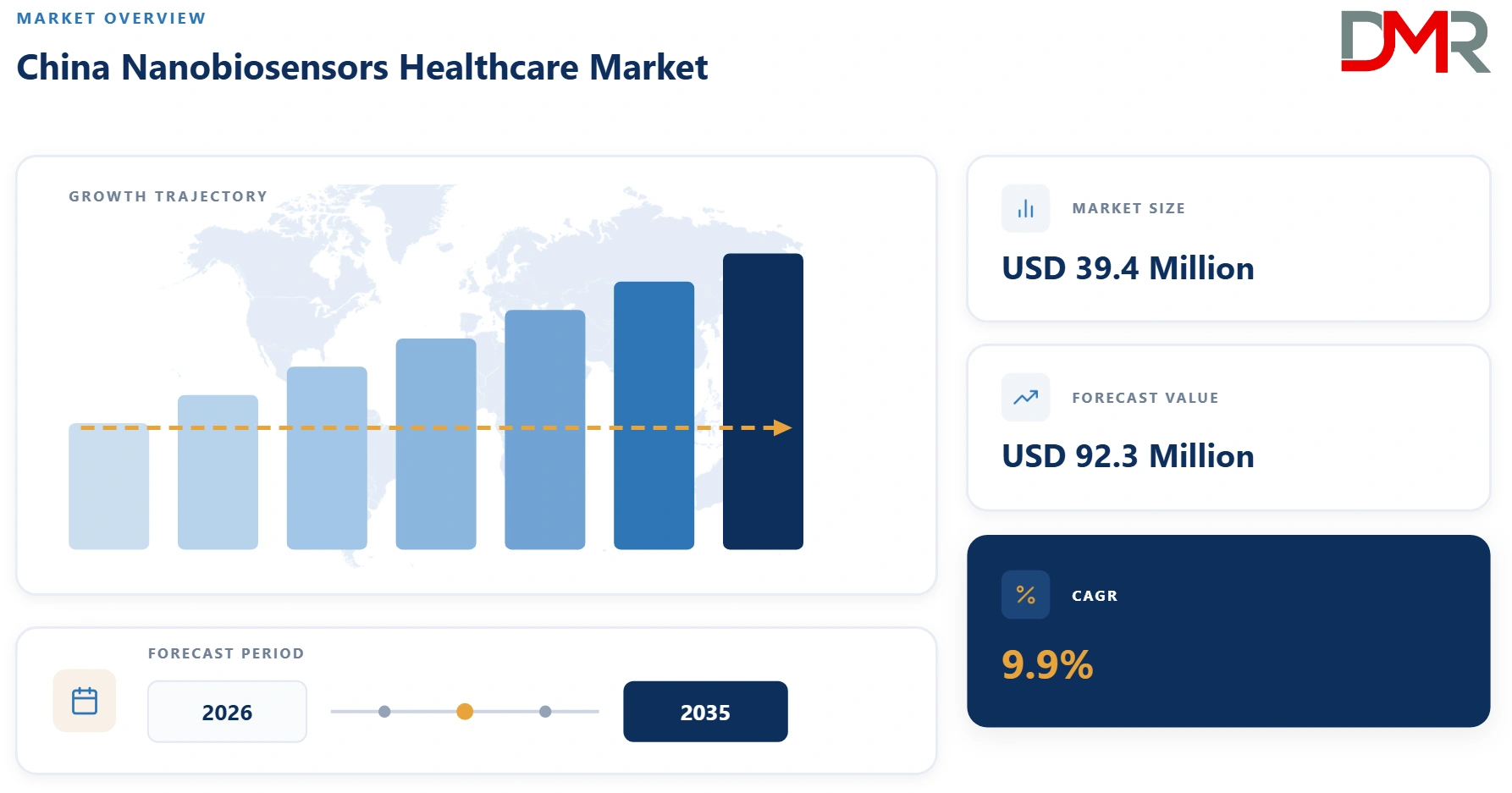
- China Nanobiosensors in Healthcare Market Size in 2026: USD 39.4 Million
- China Nanobiosensors in Healthcare Market Size in 2035: USD 92.3 Million
- China CAGR from 2026 to 2035: 9.9%
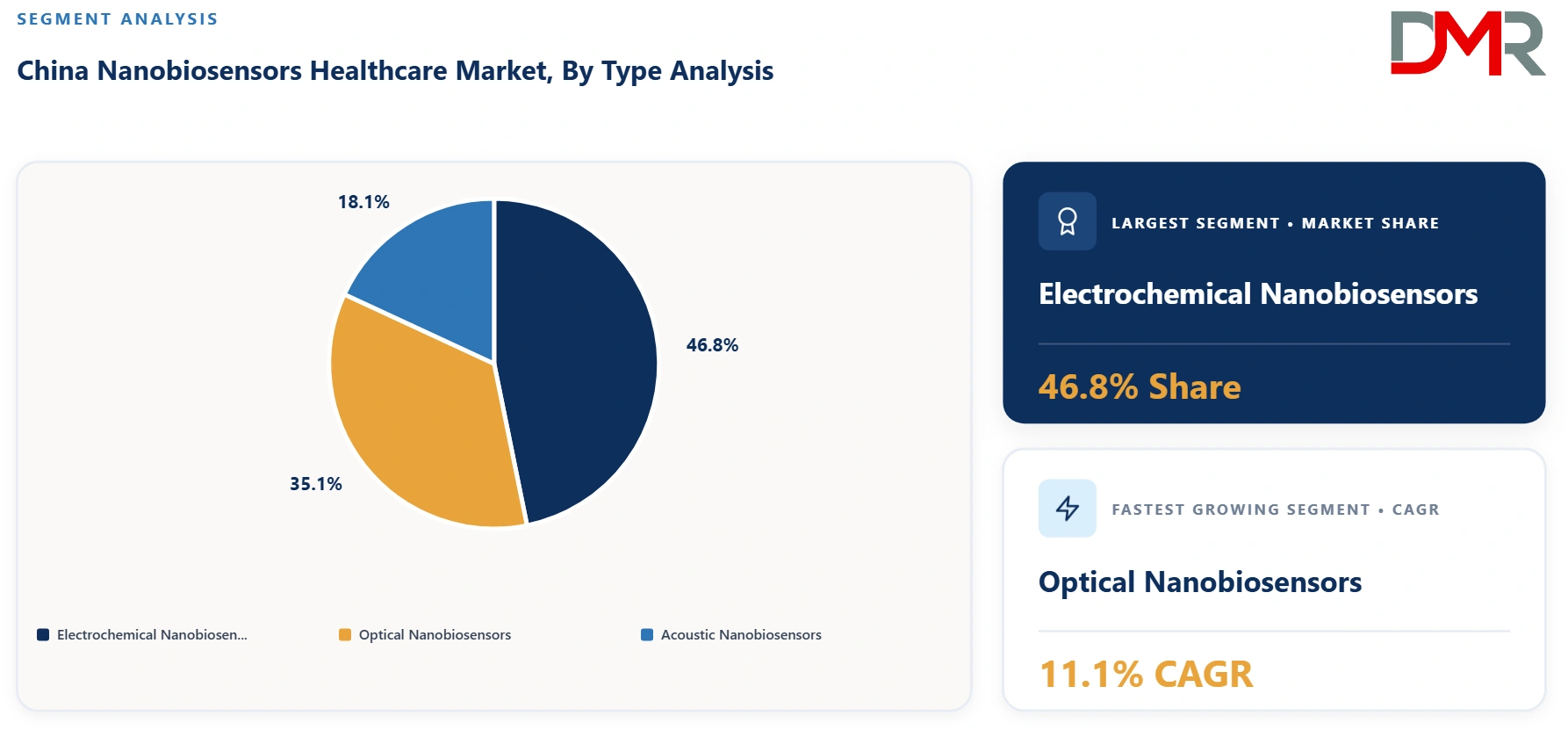
- Electrochemical Nanobiosensors is the leading type segment in 2026: 46.8%
- Hospitals and Clinics is the leading end-user segment in 2026: 42.6%
- Diabetes is the leading application segment in 2026: 38.4%
What is the China Nanobiosensors in Healthcare Market and Its Market Size?
The China Nanobiosensors in Healthcare Market is projected to reach USD 39.4 million in 2026 and grow at a compound annual growth rate of 9.9% from there until 2035 to reach a value of USD 92.3 million.
ℹ
To learn more about this report –
Download Your Free Sample Report Here
Nanobiosensors combine biological recognition components with nanoscale materials to detect biomarkers, pathogens, glucose, proteins, nucleic acids, and other clinically relevant targets. Their high sensitivity, rapid response, low sample requirements, and potential for miniaturization support their use in diagnostics, monitoring, and point-of-care testing. In China, adoption is increasing across hospitals, diagnostic laboratories, diabetes management, cancer screening, infectious disease testing, and academic research. Advances in electrochemical sensing, graphene, gold nanoparticles, microfluidics, wearable devices, and connected healthcare platforms are accelerating product development and commercialization.
Use Cases
- Continuous Glucose Monitoring: Nanobiosensors embedded in wearable glucose monitoring devices continuously measure glucose concentrations in interstitial fluid and transmit readings to smartphones or clinical platforms. These systems help patients identify glucose fluctuations, receive alerts, evaluate treatment responses, and reduce dependence on repeated fingerstick testing. Their adoption supports personalized diabetes management, remote consultations, and more informed insulin or lifestyle decisions across China.
- Early Cancer Detection: Optical and electrochemical nanobiosensors can identify cancer biomarkers at very low concentrations in blood, saliva, urine, or tissue samples. They support earlier detection, treatment selection, recurrence monitoring, and assessment of therapeutic response. Chinese hospitals, oncology centres, research institutions, and diagnostic developers are evaluating nanomaterials, microfluidic platforms, and multiplexed assays to improve accessibility and accuracy across different cancer types.
- Rapid Infectious Disease Testing: Nanobiosensors enable rapid detection of pathogenic bacteria, viruses, antigens, antibodies, and nucleic acids near the patient. Their small sample requirements and short turnaround times make them useful in hospitals, community clinics, emergency settings, and remote locations. Integration with portable readers and digital reporting platforms can strengthen outbreak surveillance, antimicrobial treatment decisions, and decentralized diagnostic capacity throughout China.
- Immunoassay and Biomarker Testing: Nanobiosensors enhance immunoassays by improving sensitivity, reducing reaction time, and enabling simultaneous measurement of several biomarkers. Hospitals and diagnostic centres can use these systems for cardiovascular, inflammatory, hormonal, neurological, and infectious disease assessments. Nanoparticle labels, nanoelectrodes, and lab on chip systems also support compact testing platforms that require less reagent, reduce laboratory workload, and accelerate clinical decisions.
Key Takeaways
- Market Size: The China Nanobiosensors in Healthcare Market is anticipated to be valued at USD 39.4 million in 2026 and is forecast to reach USD 92.3 million by 2035, expanding at a CAGR of 9.9%.
- Growth Outlook: Market expansion is supported by rising chronic disease detection requirements, growing use of wearable health devices, expansion of point of care testing, hospital digitalization, advances in nanomaterials, improving research capabilities, and demand for rapid and minimally invasive diagnostic technologies.
- Primary Growth Drivers: Increasing diabetes and cancer burdens, demand for early disease detection, development of portable diagnostic devices, government support for medical technology, wider availability of connected healthcare platforms, and growing collaboration among universities, biotechnology firms, hospitals, and medical device manufacturers are accelerating nanobiosensor adoption.
- By Type Analysis: Electrochemical Nanobiosensors are projected to lead the type segment with a 46.8% share in 2026, supported by their high sensitivity, relatively low manufacturing cost, compact structure, and suitability for glucose monitoring and portable diagnostics. Optical Nanobiosensors are expected to record the fastest CAGR of approximately 11.1% through 2035.
- By End-User Analysis: Hospitals and Clinics are anticipated to dominate with a 42.6% share in 2026, driven by their substantial diagnostic volumes, established clinical infrastructure, and demand for rapid biomarker testing. Point of Care Testing is expected to record the fastest CAGR of approximately 11.4%, supported by decentralized care and portable testing.
- By Application Analysis: Diabetes is projected to lead with a 38.4% share in 2026, supported by China’s large diabetes population and increasing adoption of continuous glucose monitoring. Cancer is anticipated to register the fastest CAGR of approximately 11.2%, driven by research into liquid biopsy, early detection, and multiplexed biomarker analysis.
How AI and Generative AI Are Transforming the China Nanobiosensors in Healthcare Market?
Artificial intelligence is improving nanobiosensor accuracy by filtering signal noise, identifying biomarker patterns, correcting sensor drift, and converting continuous measurements into clinically useful insights. Machine learning supports glucose prediction, cancer biomarker classification, infectious disease detection, and personalized risk assessment. Generative AI can assist researchers in designing nanomaterials, optimizing sensor configurations, generating synthetic training data, and accelerating assay development. Integration with smartphones, cloud platforms, and hospital systems enables automated alerts and remote monitoring. However, clinical validation, algorithm transparency, data privacy, cybersecurity, and representative training datasets remain important requirements.
Key Drivers in the China Nanobiosensors in Healthcare Market
Rising Burden of Diabetes and Other Chronic Diseases
China’s substantial burden of diabetes, cancer, cardiovascular disorders, and age-related conditions is increasing demand for earlier diagnosis and continuous monitoring. The WHO has previously estimated that around 110 million adults in China live with diabetes, while the Western Pacific region had more than 220 million adults with diabetes in 2022. Nanobiosensors can support frequent glucose measurement, sensitive biomarker detection, and rapid assessment using small biological samples. Their compatibility with wearable devices and digital health platforms makes them valuable for long-term disease management, particularly as healthcare providers seek to reduce complications, hospital visits, and delayed diagnosis.
Expansion of Point of Care and Decentralized Diagnostics
Hospitals, community clinics, pharmacies, emergency facilities, and home healthcare providers increasingly require testing technologies that deliver results without centralized laboratory processing. Nanobiosensors can reduce sample volumes, shorten turnaround time, and support portable or disposable testing formats. China’s large geographic area and differences in access between urban and rural healthcare systems create strong potential for decentralized diagnostics. Smartphone connectivity, cloud reporting, microfluidic cartridges, and compact readers further improve their usability. Increased investment in community healthcare and remote patient monitoring is expected to expand demand for nanobiosensors used in glucose testing, immunoassays, infectious disease screening, and chronic disease surveillance.
Restraints in the China Nanobiosensors in Healthcare Market
Complex Manufacturing and Reproducibility Requirements
Commercial nanobiosensors require consistent nanomaterial properties, stable biological recognition elements, controlled surface functionalization, and reliable signal conversion. Small variations in nanoparticle size, electrode coating, reagent quality, or fabrication conditions can influence sensitivity and reproducibility. Scaling a laboratory prototype into a high-volume medical product can therefore require substantial capital, specialized manufacturing infrastructure, and rigorous quality controls. Biofouling, calibration drift, limited sensor life, and storage stability can also affect real-world performance. These challenges increase development costs and may delay commercialization, particularly for smaller Chinese companies transitioning from academic research toward regulated clinical products.
Regulatory Validation and Clinical Adoption Barriers
Nanobiosensor manufacturers must demonstrate analytical performance, clinical accuracy, safety, biocompatibility, manufacturing consistency, and data security before commercial use. Regulatory classification may become complicated when products combine nanomaterials, software, mobile applications, artificial intelligence, and diagnostic functions. Hospitals may also require extensive evidence showing that a new sensor improves outcomes or reduces costs compared with established tests. Differences between laboratory conditions and diverse patient populations can create additional validation requirements. Limited reimbursement, clinician familiarity, interoperability issues, and concerns regarding false results may restrict adoption until products generate sufficient clinical evidence and fit established diagnostic workflows.
Growth Opportunities in the China Nanobiosensors in Healthcare Market
Wearable and Minimally Invasive Monitoring Platforms
Wearable patches, microneedles, contact lenses, implantable devices, and sweat or saliva sensors represent important opportunities for Chinese nanobiosensor developers. These products can support continuous or frequent measurement while reducing the discomfort associated with repeated blood sampling. Diabetes monitoring provides the most immediate commercial opportunity, but research is expanding toward lactate, electrolytes, cortisol, cardiac biomarkers, therapeutic drug levels, and inflammatory markers. Combining nanosensors with smartphones and remote monitoring platforms can create subscription-based services and recurring sensor revenue. Partnerships with hospitals, insurers, digital health companies, and consumer electronics manufacturers could accelerate commercialization and broaden preventive healthcare applications.
Multiplexed Testing for Cancer and Infectious Diseases
Multiplexed nanobiosensors capable of detecting several biomarkers from one sample can improve disease classification, early detection, and clinical decision-making. China’s significant cancer burden creates opportunities for liquid biopsy platforms that detect proteins, circulating tumour DNA, extracellular vesicles, or other molecular indicators. Similar technologies can simultaneously screen for multiple pathogens or resistance markers. Domestic manufacturing of nanoelectrodes, microfluidic cartridges, reagents, and portable readers could improve affordability and supply security. Opportunities are particularly strong for companies that combine high analytical sensitivity with automated sample preparation, clinically validated algorithms, scalable production, and integration into existing laboratory and hospital information systems.
Trends in the China Nanobiosensors in Healthcare Market
Integration of Nanomaterials with Microfluidics and Lab on Chip Systems
Developers are combining graphene, carbon nanotubes, quantum dots, gold nanoparticles, nanowires, and nanocomposites with microfluidic systems. This integration enables precise sample handling, lower reagent consumption, rapid reactions, and multiple tests within compact cartridges. Lab-on-chip devices can automate sample preparation, biomarker capture, signal generation, and interpretation, making nanobiosensors more suitable for point-of-care environments. Chinese universities and technology companies are increasingly working across materials science, biotechnology, electronics, and clinical research. Continued progress in scalable fabrication and surface chemistry is expected to move more integrated platforms from research laboratories into practical diagnostic applications.
Connected Biosensors and Real-Time Health Data
Nanobiosensors are increasingly being designed as connected components within broader digital health ecosystems. Bluetooth connectivity, smartphone applications, cloud databases, and clinical dashboards allow measurements to be shared with patients, caregivers, and healthcare professionals. Real-time data can support alerts, longitudinal analysis, remote consultations, and personalized treatment decisions. Continuous glucose monitoring is currently the most developed example, while similar models may expand into cardiac, infectious disease, hormonal, and treatment monitoring applications. Growth of connected sensors also increases the importance of interoperability, battery efficiency, cybersecurity, patient consent, data localization, and compliance with Chinese personal information and healthcare data requirements.
Research Scope and Analysis
The China nanobiosensors in healthcare market covers optical nanobiosensors, electrochemical nanobiosensors, acoustic nanobiosensors, other technologies, hospitals and clinics, diagnostic centres, point of care testing, other end users, diabetes, immunoassay, cancer, pathogenic bacteria, other applications, market revenues, adoption patterns, clinical demand, competitive positioning, regulatory requirements, technological development, commercialization opportunities, investment activity, and forecasts from 2026 to 2035.
ℹ
To learn more about this report –
Download Your Free Sample Report Here
By Type Analysis
Electrochemical Nanobiosensors are expected to dominate the type segment with a 46.8% market share in 2026. Their leadership is supported by strong sensitivity, rapid response, low power requirements, compact form factors, and suitability for glucose and biomarker monitoring. Optical Nanobiosensors are projected to record the highest CAGR of approximately 11.1%, c due to growing use in multiplexed assays, cancer detection, and fluorescence-based diagnostics.
By End-User Analysis
Hospitals and Clinics are projected to lead the end-user segment with a 42.6% share in 2026. Their dominance reflects high testing volumes, access to specialized clinical personnel, and growing adoption of advanced diagnostic technologies. Point of Care Testing is anticipated to expand at the highest CAGR of approximately 11.4%, as portable systems gain adoption in community facilities, emergency care, pharmacies, and home monitoring.
By Application Analysis
Diabetes is anticipated to dominate the application segment with a 38.4% market share in 2026, supported by continuous glucose monitoring, recurring sensor demand, and the large population requiring glucose management. Cancer is projected to register the highest CAGR of approximately 11.2%, driven by increasing investment in early detection, liquid biopsy, molecular diagnostics, and highly sensitive multiplexed biomarker testing.
The China Nanobiosensors in Healthcare Market Report Is Segmented Based on the following:
By Type
- Optical Nanobiosensors
- Electrochemical Nanobiosensors
- Acoustic Nanobiosensors
- Others
By End User
- Hospitals and Clinics
- Diagnostic Centres
- Point of Care Testing
- Others
By Application
- Diabetes
- Immunoassay
- Cancer
- Pathogenic Bacteria
- Others
Technology Analysis
The market is progressing through improvements in nanomaterials, bioreceptor engineering, microfluidics, flexible electronics, and wireless data transmission. Electrochemical platforms remain commercially attractive because they provide rapid responses, simple instrumentation, and cost-effective manufacturing. Optical systems offer strong potential for multiplexing and highly sensitive cancer or immunoassay applications. Graphene, gold nanoparticles, carbon nanotubes, quantum dots, and nanowires are improving surface area and signal amplification. Key opportunities include reagent-free detection, wearable patches, microneedle sensors, lab on chip cartridges, and multimarker platforms. Technical risks include biofouling, calibration drift, inconsistent nanomaterial batches, limited shelf life, and difficulty reproducing laboratory performance during commercial production.
Regulatory Landscape
Nanobiosensors marketed for clinical diagnosis or monitoring are regulated as medical devices or in vitro diagnostic products according to their intended use and risk classification. Manufacturers must address product registration, analytical validation, clinical evaluation, biocompatibility, software security, manufacturing quality, and post-market surveillance. China is strengthening support for innovative medical devices while maintaining whole-life-cycle oversight. The NMPA’s revised medical device Good Manufacturing Practice takes effect on November 1, 2026 and incorporates stronger risk management and digital-era quality requirements. Faster review pathways create opportunities for clinically valuable innovations, while complex combination products and limited nano-specific standards may increase documentation, testing, development costs, and approval timelines.
Competitive Landscape
The China Nanobiosensors in Healthcare Market is moderately fragmented, with multinational diagnostics companies, domestic medical device manufacturers, nanotechnology start-ups, and academic spin-offs competing through sensor accuracy, affordability, wear duration, connectivity, and clinical validation. Established companies benefit from hospital relationships, regulatory expertise, manufacturing capacity, and broad diagnostic portfolios. Chinese companies increasingly compete through locally manufactured glucose sensors, portable testing platforms, and lower-cost systems. Partnerships with universities and hospitals support product validation, while international expansion helps domestic manufacturers scale production. Competition is expected to intensify around continuous monitoring, multiplexed assays, connected platforms, and intellectual property.
Some of the Prominent Players in the China Nanobiosensors in Healthcare Market Are:
- Abbott Laboratories
- F. Hoffmann-La Roche Ltd.
- Siemens Healthineers AG
- Thermo Fisher Scientific Inc.
- Danaher Corporation
- Bio-Rad Laboratories Inc.
- Agilent Technologies Inc.
- Medtronic plc
- DexCom Inc.
- Becton Dickinson and Company
- Koninklijke Philips N.V.
- GE HealthCare Technologies Inc.
- PerkinElmer Inc.
- Bruker Corporation
- QIAGEN N.V.
- Illumina Inc.
- Revvity Inc.
- QuidelOrtho Corporation
- Nova Biomedical Corporation
- Universal Biosensors Inc.
- Biosensors International Group Ltd.
- ACON Laboratories Inc.
- LifeScan Inc.
- Ascensia Diabetes Care Holdings AG
- Senseonics Holdings Inc.
- Nanosphere Inc.
- GBS Inc.
- NanoDx Inc.
- GraphWear Technologies Inc.
- Nutromics Pty Ltd.
- Truvian Sciences Inc.
- Cardea Bio Inc.
- Sinocare Inc.
- MicroTech Medical Hangzhou Co. Ltd.
- Medtrum Technologies Inc.
- Zhejiang POCTech Co. Ltd.
- Shenzhen Sibionics Technology Co. Ltd.
- Yuwell Medical Equipment and Supply Co. Ltd.
- Lepu Medical Technology Beijing Co. Ltd.
- Autobio Diagnostics Co. Ltd.
- Other Key Players
Recent Developments
- June 2026: Sinocare presented clinical evidence concerning the performance of its iCan continuous glucose monitoring system at the American Diabetes Association Scientific Sessions, supporting the international clinical positioning of its China-developed glucose biosensor platform.
- May 2026: Medtrum highlighted its TouchCare Nano continuous glucose monitoring technology, including an ultra-slim 2.7-gram wearable sensor, reinforcing development of compact and connected biosensor systems for continuous diabetes management.
- July 2025: Sinocare received CE-MDR certification for the iCan CGM system for people with diabetes aged two years and older, expanding the addressable population and supporting international commercialization of its continuous glucose monitoring technology.
- June 2025: MicroTech Medical presented its latest LinX continuous glucose monitoring system, Equil patch insulin pump, blood glucose meters, and PanCares diabetes management platform at WHX Miami, expanding the international visibility of its integrated diabetes monitoring portfolio.
Report Details
| Report Characteristics |
| Market Size (2026) |
USD 39.4 Mn |
| Forecast Value (2035) |
USD 92.3 Mn |
| CAGR (2026–2035) |
9.9% |
| Historical Data |
2021 – 2025 |
| Forecast Data |
2026 – 2035 |
| Base Year |
2025 |
| Segments Covered |
By Type, By End User, By Application |
Frequently Asked Questions
How big is the China Nanobiosensors in Healthcare Market?
▾ The China Nanobiosensors in Healthcare Market is expected to reach USD 39.4 million in 2026 and USD 92.3 million by 2035.
What is the CAGR of the China Nanobiosensors in Healthcare Market from 2026 to 2035?
▾ The market is projected to expand at a compound annual growth rate of 9.9% during the forecast period from 2026 to 2035.
What factors are driving the growth of the China Nanobiosensors in Healthcare Market?
▾ Growth is driven by rising chronic disease prevalence, demand for early diagnosis, continuous glucose monitoring adoption, point of care testing expansion, nanomaterial innovation, hospital digitalization, and government support for advanced medical devices.
What are the major trends in the China Nanobiosensors in Healthcare Market?
▾ Major trends include wearable biosensors, continuous monitoring, AI-assisted signal analysis, microfluidic integration, lab on chip systems, multiplexed biomarker detection, smartphone connectivity, and development of minimally invasive diagnostic platforms.
Who are the key players in the China Nanobiosensors in Healthcare Market?
▾ Key players include Abbott Laboratories, Roche, Siemens Healthineers, Thermo Fisher Scientific, Danaher, Medtronic, DexCom, Sinocare, MicroTech Medical, Medtrum, Zhejiang POCTech, Sibionics, and Yuwell Medical.
How is the China Nanobiosensors in Healthcare Market segmented?
▾ The market is segmented by type into optical, electrochemical, acoustic, and other nanobiosensors, by end user into hospitals and clinics, diagnostic centres, point of care testing, and others, and by application into diabetes, immunoassay, cancer, pathogenic bacteria, and others.