Crude Oil Transfer Pumps Market Snapshot
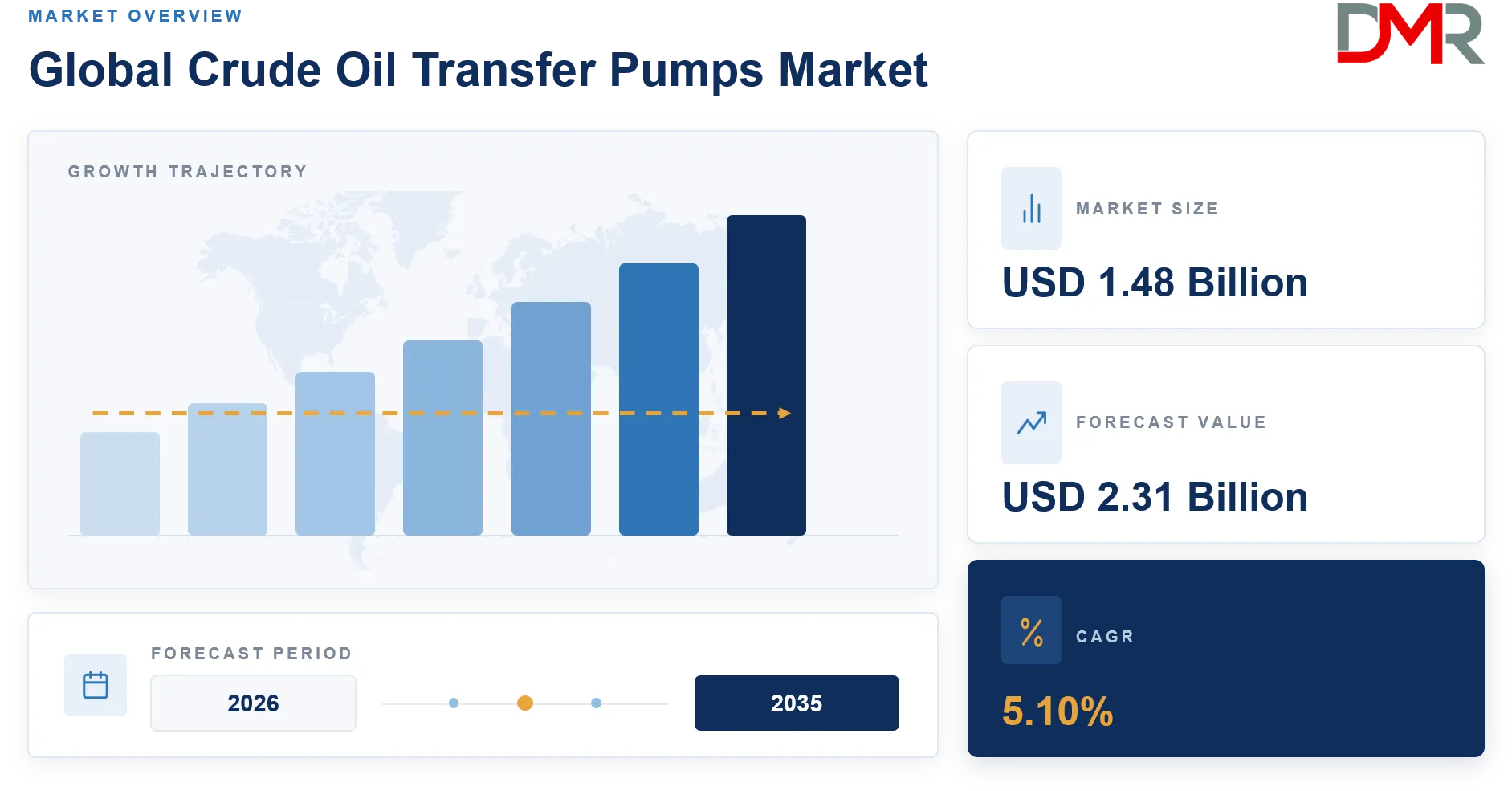
- Market Value: Crude Oil Transfer Pumps Market is valued at USD 1.48 billion in 2026 and is projected to reach USD 2.31 billion by 2035.
- CAGR: Crude Oil Transfer Pumps Market is expected to grow at a CAGR of 5.1% from 2026 to 2035.
- By Pump Type Analysis: Centrifugal Pumps led the market with a 58.3% share in 2026.
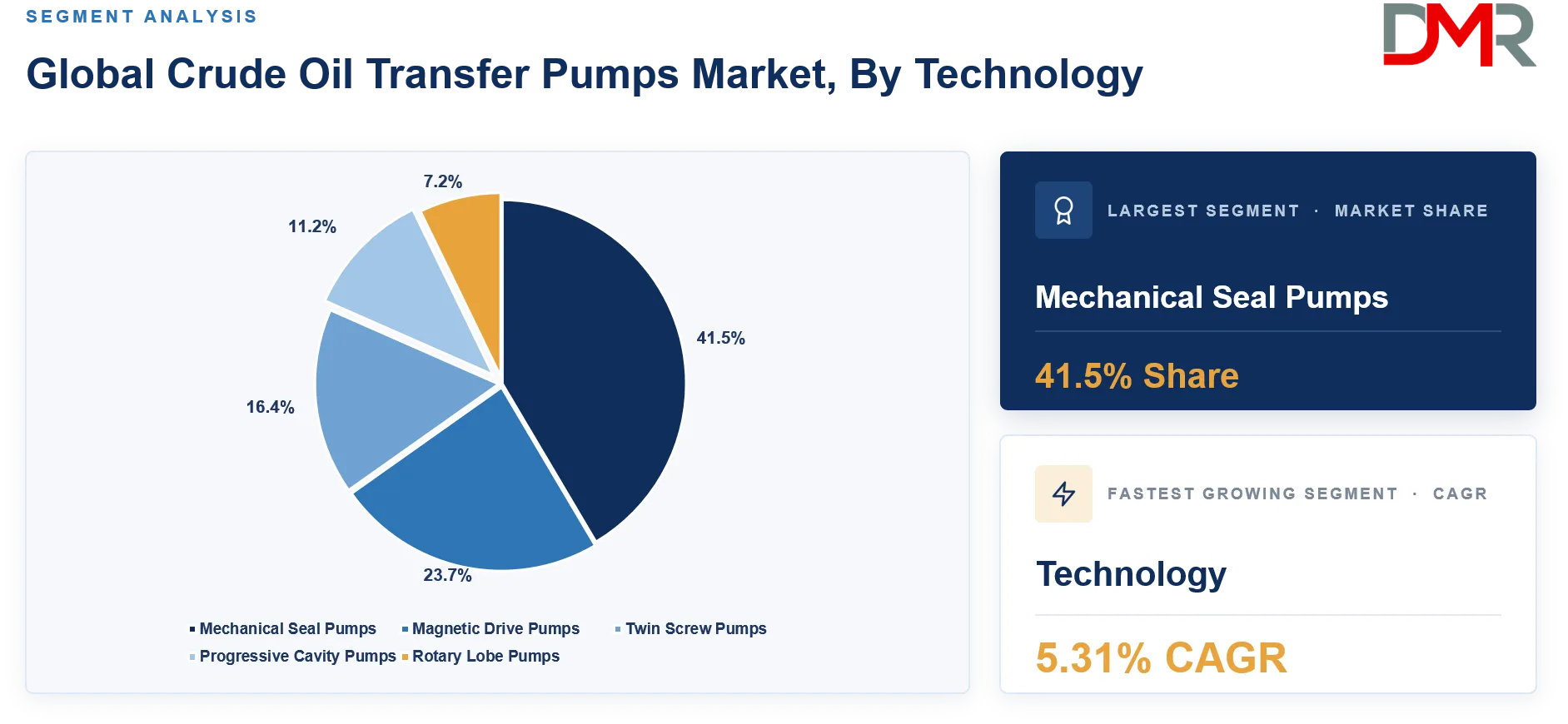
- By Technology Segment Analysis: Mechanical Seal Pumps led technology types with a 41.5% share in 2026.
- By Application Industry Segment Analysis: Crude Oil Transportation held a 31.7% share in 2026.
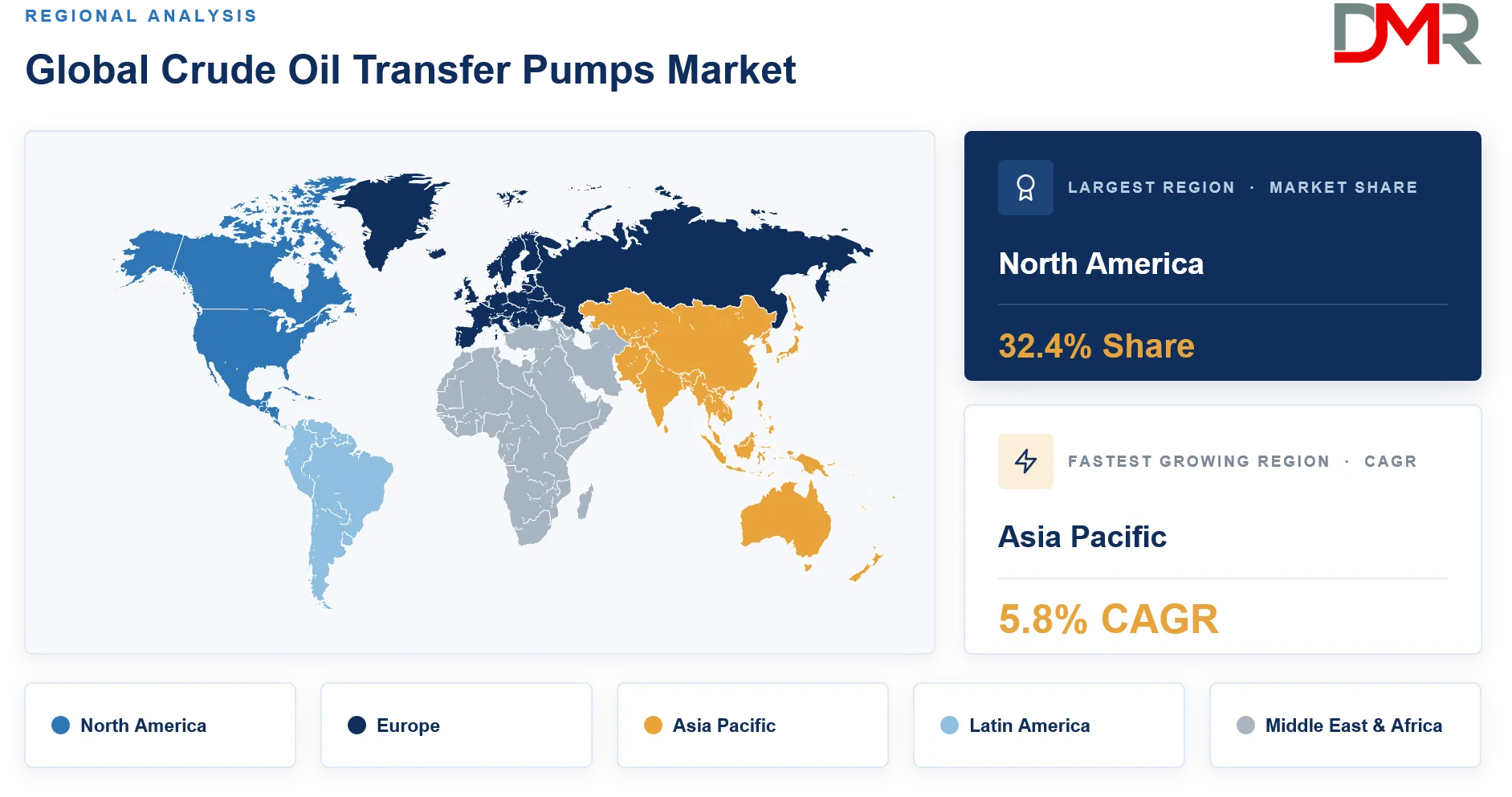
- Regional Analysis: North America led the Crude Oil Transfer Pumps Market with a 32.4% revenue share in 2026.
- US Market Size: The United States market size is expected to reach USD 0.34 billion by 2035 from USD 0.22 billion in 2026, at a CAGR of 5.0%.
- Saudi Arabia Market Size: The Saudi Arabia market size is expected to reach USD 0.11 billion by 2035 from USD 0.07 billion in 2026, at a CAGR of 5.3%.
- India Market Size: The India market size is expected to reach USD 0.13 billion by 2035 from USD 0.08 billion in 2026, at a CAGR of 5.5%.
- Major Players: Flowserve Corporation, Sulzer Ltd., KSB SE & Co. KGaA, Weir Group PLC, and Others.
What is the Crude Oil Transfer Pumps Market and its Market Size?
The Global Crude Oil Transfer Pumps Market size is projected to be valued at USD 1.48 billion in 2026 and reach USD 2.31 billion by 2035, expanding at a CAGR of 5.1% during the forecast period. Crude oil transfer pumps are engineered pumping systems used to move crude between production facilities, gathering systems, pipelines, tank farms, storage terminals, refineries, and marine loading facilities. Market demand is closely linked with crude throughput, pipeline capacity, refinery utilization, terminal investment, equipment replacement cycles, and requirements for reliable handling of crude with different viscosity, temperature, pressure, sulfur, sediment, and gas content.
ℹ
To learn more about this report –
Download Your Free Sample Report Here
Procurement requirements differ substantially by duty. Centrifugal pumps remain important for high volume continuous transfer, while screw, gear, progressive cavity, and other positive displacement designs address viscous crude and specialized transfer conditions. Buyers increasingly evaluate pumps through lifecycle cost, hydraulic efficiency, seal reliability, material compatibility, API related specifications, ease of maintenance, spare part availability, vibration performance, and integration with plant monitoring systems.
Use Cases
- Pipeline Crude Transportation: Mainline and booster pumping stations move large crude volumes through transmission networks. Operators require stable flow, hydraulic efficiency, high availability, and equipment capable of operating under changing suction pressure and pipeline throughput conditions.
- Storage Terminal Transfer: Tank farms use transfer pumps for tank filling, tank to tank movement, blending, custody transfer preparation, and dispatch operations. Variable crude viscosity and changing tank levels make reliable suction performance and flexible flow control important selection factors.
- Refinery Crude Handling: Refineries depend on pumping systems to transfer crude from storage areas into desalting, atmospheric distillation, and associated processing systems. Reliability is critical because pump failure can restrict crude unit throughput and disrupt downstream production schedules.
- Marine Loading and Unloading: Crude terminals require high capacity pumping systems for transferring oil between storage tanks and tankers. Pump selection is influenced by loading rate, terminal piping losses, vapor management, marine operating schedules, corrosion exposure, and emergency shutdown requirements.
- Heavy Crude Transfer: High viscosity crude may require screw pumps, progressive cavity pumps, or other positive displacement technologies where consistent displacement and lower dependence on fluid viscosity support controlled transfer from production facilities to processing and storage infrastructure.
How AI and Gen AI is Transforming the Global Crude Oil Transfer Pumps Market?
Digital analytics are changing how crude oil transfer pumps are operated and maintained. Pump vibration, bearing temperature, motor current, suction pressure, discharge pressure, flow rate, seal condition, and operating speed can be monitored continuously. Analytical models can compare these signals with expected operating behavior to identify cavitation, bearing wear, seal degradation, hydraulic imbalance, abnormal vibration, or efficiency loss before a failure interrupts pipeline, terminal, or refinery operations. This supports condition based maintenance and allows operators to focus maintenance spending on assets showing measurable deterioration.
Advanced software is also improving pump selection and operating optimization. Engineering teams can evaluate hydraulic duty, crude viscosity, operating range, energy consumption, and expected equipment loading across different scenarios. Generative tools can assist maintenance personnel in searching technical manuals, service histories, spare part records, and troubleshooting procedures, while human engineers retain responsibility for operating decisions. For pump manufacturers, connected equipment creates opportunities to expand aftermarket services, remote diagnostics, performance monitoring, and lifecycle support beyond the original equipment sale.
Key Drivers in the Crude Oil Transfer Pumps Market
Expansion of Crude Transportation and Storage Infrastructure
Investment in gathering networks, trunk pipelines, storage terminals, export facilities, and refinery connections directly increases crude oil transfer pump demand. Each new pipeline system requires mainline, booster, terminal, drainage, and auxiliary pumping equipment designed around specific flow and pressure requirements. Existing networks also generate replacement demand as operators upgrade aging pumps to increase throughput, reduce energy consumption, improve mechanical reliability, or accommodate changing crude grades. This creates recurring opportunities for original equipment manufacturers and aftermarket service providers.
Reliability and Efficiency Upgrades Across Existing Pump Fleets
Crude transfer equipment often operates continuously, making unplanned shutdowns commercially costly for pipeline operators, refineries, and terminal owners. Buyers are therefore increasing attention to hydraulic efficiency, bearing life, mechanical seals, vibration control, monitoring equipment, and maintainability. Modernization projects can include new pump hydraulics, variable speed drives, redesigned seals, upgraded materials, instrumentation, and digital monitoring. The resulting replacement cycle supports market growth even where operators are not constructing entirely new crude oil infrastructure.
Restraints in the Crude Oil Transfer Pumps Market
High Lifecycle Cost of Critical Pumping Systems
Large crude oil transfer pumps require more than the initial pump purchase. Project expenditure can include motors or engines, couplings, seals, baseplates, control systems, piping modifications, instrumentation, civil work, installation, testing, spare assemblies, and maintenance contracts. High specification equipment used in critical pipeline or refinery service can involve lengthy engineering and qualification processes. Operators with mature assets may postpone complete pump replacement and instead repair or retrofit existing units, limiting near term demand for new equipment.
Operational Complexity Across Different Crude Properties
Crude oil properties vary by field, blend, temperature, water content, gas fraction, sediment level, and viscosity. A pump selected for light crude may perform differently when the operating system handles heavier or more abrasive feed. Poor suction conditions can also create cavitation and accelerated component wear. These variables require application specific hydraulic design, materials, sealing arrangements, and operating controls. The engineering burden can extend project schedules and raises the cost of specifying equipment for assets handling multiple crude grades.
Growth Opportunities in the Global Crude Oil Transfer Pumps Market
Condition Monitoring and Aftermarket Service Expansion
The installed base of pipeline, refinery, terminal, and production pumps creates a large opportunity beyond new equipment sales. Manufacturers can generate recurring revenue through seals, bearings, impellers, rotors, maintenance kits, field service, performance testing, repair, refurbishment, and remote monitoring. Condition monitoring can identify equipment degradation before failure and provide data for planned maintenance. Suppliers combining pumps with engineering support and lifecycle services can strengthen customer retention while reducing dependence on cyclical greenfield capital expenditure.
High Viscosity and Difficult Crude Applications
Heavy and changing crude grades create opportunities for twin screw, progressive cavity, rotary, and other positive displacement pump technologies. These designs can address transfer duties where viscosity, suction conditions, or controlled flow make standard centrifugal solutions less suitable. Growth opportunities extend to tank farms, production gathering, marine terminals, refinery feed systems, and heated transfer lines. Suppliers that combine suitable hydraulics with abrasion resistant materials, reliable sealing, and variable speed operation can capture specialized high value applications.
Trends in the Global Crude Oil Transfer Pumps Market
Shift Toward Connected Pumping Systems
Crude oil operators are moving from periodic inspection toward continuous equipment visibility. Sensors measuring vibration, temperature, pressure, flow, power consumption, and seal behavior allow maintenance teams to assess pump condition while equipment remains in operation. Integration with control and asset management platforms helps operators compare performance across multiple stations. This trend is increasing the strategic value of instrumentation, analytics, remote service capability, and equipment data alongside traditional pump hydraulic performance.
Greater Focus on Pump Efficiency and Total Cost of Ownership
Purchasing decisions are increasingly based on lifetime economics rather than acquisition price alone. Electricity consumption can represent a substantial operating cost for continuously running pipeline and refinery pumps, so operators evaluate efficiency near the expected duty point and across changing throughput conditions. Variable speed operation, correctly sized hydraulics, optimized impellers, improved seals, and performance monitoring can reduce energy waste. Manufacturers able to quantify operating savings and maintenance benefits gain an advantage in replacement and modernization projects.
Research Scope and Analysis
The Global Crude Oil Transfer Pumps Market is segmented based on Pump Type, Technology, Power Source, Power Rating, Application, Installation, End User, Material, and Region. The study evaluates demand across upstream, midstream, downstream, terminal, pipeline, and marine crude handling environments. Segment analysis considers equipment functionality, crude characteristics, flow requirements, operating pressure, installation conditions, reliability expectations, capital expenditure patterns, maintenance requirements, and technology adoption.
ℹ
To learn more about this report –
Download Your Free Sample Report Here
By Pump Type
Centrifugal Pumps dominated the Crude Oil Transfer Pumps Market with a 58.3% share in 2026. Their position is supported by extensive use in high volume and continuous transfer duties across crude pipelines, refineries, storage terminals, gathering systems, and marine facilities. Centrifugal technology offers broad capacity ranges, relatively smooth flow, established maintenance practices, and access to API 610 based configurations for demanding petroleum applications. Between bearings and other heavy duty designs can handle pipeline and process duties requiring high reliability. Future demand will increasingly favor hydraulically optimized pumps, variable speed operation, enhanced bearing systems, improved mechanical seals, and condition monitoring that reduces lifecycle operating costs.
By Technology
Mechanical Seal Pumps accounted for a 41.5% share in 2026, making them the leading technology segment. Mechanical seals are widely applied because crude transfer systems require controlled leakage, reliable shaft sealing, and compatibility with pressure, temperature, and hydrocarbon service requirements. Seal selection becomes especially important where crude contains abrasive solids, light hydrocarbons, sour components, or changing operating conditions. Operators increasingly assess seal reliability together with flush arrangements, emissions control, maintenance intervals, and spare part availability. Magnetic drive designs offer an alternative for selected leak sensitive services, while twin screw and progressive cavity technologies remain important where fluid viscosity and positive displacement performance are decisive.
By Application
Crude Oil Transportation held a 31.7% market share in 2026. The segment includes movement through gathering systems, trunk pipelines, booster stations, storage connections, export systems, and associated transfer facilities. Large volumes and continuous operation make pump availability central to transportation economics. Pipeline operators generally require equipment that can maintain flow under changing system resistance while limiting vibration, seal failures, and energy losses. Capacity additions, debottlenecking, pipeline interconnections, and modernization of aging pumping stations are expected to support demand through 2035.
The Crude Oil Transfer Pumps Market Report is segmented on the basis of the following:
By Pump Type
- Centrifugal Pumps
- Positive Displacement Pumps
- Screw Pumps
- Gear Pumps
- Reciprocating Pumps
- Diaphragm Pumps
By Technology
- Mechanical Seal Pumps
- Magnetic Drive Pumps
- Twin Screw Pumps
- Progressive Cavity Pumps
- Rotary Lobe Pumps
By Power Source
- Electric Motor Driven
- Diesel Engine Driven
- Gas Engine Driven
- Hydraulic Driven Pumps
By Power Rating
- Low Power Pumps
- Medium Power Pumps
- High Power Pumps
By Application
- Crude Oil Extraction
- Crude Oil Transportation
- Oil Refining
- Storage Transfer
- Marine Transfer
- Pipeline Transfer
By Installation
- Onshore Installations
- Offshore Installations
- Subsea Installations
By End User
- Oil Gas Companies
- Refineries
- Pipeline Operators
- Storage Terminal Operators
- Marine Transport Companies
By Material
- Cast Iron
- Stainless Steel
- Alloy Steel
- Bronze
- Composite Materials
Regional Analysis
North America is the Leading Region in the Crude Oil Transfer Pumps Market
North America accounted for a 32.4% revenue share in 2026. The region combines substantial crude production with an extensive network of gathering lines, long distance pipelines, storage hubs, export terminals, and refineries. The United States remains central to regional demand because large crude volumes must move between producing basins, storage centers, Gulf Coast refining assets, and marine export infrastructure. Pump replacement, station modernization, pipeline debottlenecking, reliability programs, and aftermarket services support recurring spending in addition to demand from new infrastructure.
Asia Pacific is the Fastest Growing Region in the Crude Oil Transfer Pumps Market
Asia Pacific is positioned for strong growth as refinery capacity, crude imports, strategic storage, terminal infrastructure, and pipeline networks expand across major consuming economies. India is particularly important because additions to refining and crude transportation infrastructure increase the number of transfer points between ports, storage terminals, pipelines, and processing sites. Suppliers offering high efficiency centrifugal pumps, heavy crude handling systems, locally available service, and API aligned equipment can benefit from new installations as well as modernization of established refinery and terminal assets.
By Region
North America
Europe
- Germany
- France
- The UK
- Italy
- Spain
- Rest of Europe
Asia-Pacific
- China
- Japan
- India
- Australia
- South Korea
- Rest of APAC
Latin America
- Mexico
- Brazil
- Colombia
- Argentina
- Rest of LATAM
Middle East & Africa
- Saudi Arabia
- The UAE
- South Africa
- Rest of MEA
ℹ
To learn more about this report –
Download Your Free Sample Report Here
Major Countries Analysis
United States Crude Oil Transfer Pumps Market
The United States Crude Oil Transfer Pumps Market is projected to increase from USD 0.22 billion in 2026 to USD 0.34 billion by 2035, registering a CAGR of 5.0%. Demand is supported by large crude production volumes, particularly from major producing regions connected to extensive pipeline and storage infrastructure. Gulf Coast refineries and export terminals add substantial transfer requirements. Replacement of aging pump fleets, pipeline station upgrades, terminal expansion, digital condition monitoring, and demand for API compliant centrifugal pumping systems remain important commercial opportunities for equipment and service providers.
Saudi Arabia Crude Oil Transfer Pumps Market
The Saudi Arabia Crude Oil Transfer Pumps Market is projected to grow from USD 0.07 billion in 2026 to USD 0.11 billion by 2035 at a CAGR of 5.3%. The country operates an integrated system of major producing fields, oil processing facilities, pipelines, storage sites, refineries, and export terminals. Investment in production capacity and large offshore developments supports demand for critical pumping equipment. Opportunities extend from high capacity centrifugal pumps to specialized crude transfer systems, seals, monitoring solutions, spare parts, maintenance services, and equipment required for terminal and pipeline reliability.
India Crude Oil Transfer Pumps Market
The India Crude Oil Transfer Pumps Market is expected to rise from USD 0.08 billion in 2026 to USD 0.13 billion by 2035, recording a CAGR of 5.5%. India's expanding refining system and dependence on seaborne crude create substantial transfer activity between import terminals, storage tanks, crude pipelines, and refineries. Capacity additions and refinery modernization create opportunities for new pumps and replacement equipment. Demand is strongest for energy efficient systems offering dependable local service, spare availability, materials suited to multiple crude grades, and integration with plant monitoring and control infrastructure.
Competitive Landscape
The Crude Oil Transfer Pumps Market has a diversified competitive structure covering global engineered pump manufacturers, oilfield equipment companies, positive displacement pump specialists, and regional suppliers. Flowserve Corporation, Sulzer Ltd., KSB SE & Co. KGaA, ITT Inc., Ebara Corporation, Ruhrpumpen Group, and other engineered pump manufacturers compete through hydraulic performance, API aligned designs, installed base, material engineering, mechanical sealing expertise, and aftermarket support. NETZSCH Pumpen & Systeme, PCM Pumping Solutions, Atlas Copco through VARISCO, and other specialists address applications requiring positive displacement or viscous fluid handling capabilities.
Competition increasingly extends beyond equipment price toward lifecycle economics, energy efficiency, lead time, service coverage, repair capability, monitoring systems, and availability of replacement parts. Large operators can favor suppliers capable of supporting standardized pump fleets across multiple facilities, while regional service capacity remains decisive where downtime directly affects crude throughput. Acquisitions, product localization, digital monitoring, efficiency upgrades, and long term service agreements are expected to remain important competitive strategies through 2035.
Some of the prominent players in the Crude Oil Transfer Pumps Industry are:
- Flowserve Corporation
- Sulzer Ltd.
- KSB SE & Co. KGaA
- Weir Group PLC
- Xylem Inc.
- SPX FLOW
- Atlas Copco (VARISCO)
- Schlumberger
- Halliburton
- Baker Hughes
- Weatherford
- ITT Inc. (Goulds Pumps / Bornemann)
- Netzsch Pumpen & Systeme
- PCM (PCM Pumping Solutions)
- PumpWorks
- Gorman Rupp Company
- Graco Inc.
- Parker Hannifin Corporation
- Ruhrpumpen Group
- Ebara Corporation
- Others
Technology Analysis
Technology development in the Crude Oil Transfer Pumps Market centers on higher hydraulic efficiency, leakage control, condition monitoring, and reliable operation across changing crude properties. Mechanical Seal Pumps led the technology segment with a 41.5% share in 2026, supported by their established use in pipelines, refineries, storage terminals, and crude processing facilities. Magnetic drive pumps address selected services where leakage control is a priority, while twin screw and progressive cavity pumps provide advantages for viscous crude, low inlet pressure, and difficult transfer duties.
Manufacturers are integrating vibration, temperature, pressure, flow, and bearing monitoring to identify performance deterioration before shutdowns occur. Variable speed drives also allow operators to match pump output with changing pipeline throughput. Buyers increasingly compare technologies using energy consumption, seal life, maintenance intervals, material compatibility, reliability, and total lifecycle cost rather than rated capacity alone.
Pricing Analysis
Pricing in the Crude Oil Transfer Pumps Market varies significantly because pumps are engineered around flow rate, discharge pressure, crude viscosity, temperature, installation environment, materials, sealing configuration, driver size, and applicable industry specifications. Standard transfer units generally carry lower acquisition costs, while high power pipeline pumps, offshore systems, twin screw units, corrosion resistant configurations, and API specified packages command higher project values. Stainless steel and alloy steel construction, advanced mechanical seals, variable speed drives, sensors, controls, testing, and customized skids further increase installed cost.
For pipeline operators and refineries, purchase price is only one part of procurement analysis because electricity use, maintenance labor, seal replacement, spare parts, downtime, and overhaul frequency influence lifecycle economics. Suppliers with local service centers and readily available spares can therefore justify premium pricing where equipment availability directly affects crude throughput and operating revenue.
Recent Developments
- August 2026: KSB SE & Co. KGaA announced a ₹40 crore investment to expand its Shirwal, India plant capacity by 20% by 2027, strengthening manufacturing for energy and oil & gas pump projects including crude transfer applications.
- June 2026: Flowserve Corporation secured major orders to supply custom-designed API 610 BB5 multistage crude transfer pumps (HSO volute type) and water injection pumps for Sabah Shell's Malikai tension-leg platform deepwater project offshore Malaysia.
- April 2026: Sulzer Ltd. signed a five-year Corporate Procurement Agreement with Saudi Aramco to supply centrifugal pumps, spare parts, and aftermarket services across Aramco's global upstream, midstream, and downstream crude oil operations.
Report Details
| Report Characteristics |
| Market Size (2026) |
USD 1.48 Bn |
| Forecast Value (2035) |
USD 2.31 Bn |
| CAGR (2026–2035) |
5.1% |
| The Country Market Size (2026) |
United States: USD 0.22 Bn; Saudi Arabia: USD 0.07 Bn; India: USD 0.08 Bn |
| Historical Data |
2021 – 2025 |
| Forecast Data |
2026 – 2035 |
| Base Year |
2025 |
| Segments Covered |
By Pump Type, By Technology, By Power Source, By Power Rating, By Application, By Installation, By End User, and By Material |
| Regional Coverage |
North America – The US and Canada; Europe – Germany, France, The UK, Italy, Spain, Rest of Europe; Asia-Pacific – China, Japan, India, Australia, South Korea, Rest of APAC; Latin America – Mexico, Brazil, Colombia, Argentina, Rest of LATAM; Middle East & Africa – Saudi Arabia, The UAE, South Africa, Rest of MEA |
Frequently Asked Questions
What is the current size of the Crude Oil Transfer Pumps Market?
▾ The Crude Oil Transfer Pumps Market size is valued at USD 1.48 billion in 2026 and may reach USD 2.31 billion by 2035.
What is the growth rate of the Crude Oil Transfer Pumps Market during?
▾ The Crude Oil Transfer Pumps Market is expected to grow at a CAGR of 5.1% during the forecast period 2026-2035.
Which region dominates the global Crude Oil Transfer Pumps Market?
▾ North America leads the global Crude Oil Transfer Pumps Market with a 32.4% revenue share in 2026, ahead of other regions.
What factors are driving the growth of the Crude Oil Transfer Pumps Market?
▾ Pipeline expansion, crude transport, terminal upgrades, and replacement drive Crude Oil Transfer Pumps Market growth.
What are the major challenges restraining the Crude Oil Transfer Pumps Market?
▾ High lifecycle costs, complex crude properties, and maintenance needs restrain Crude Oil Transfer Pumps Market growth.
Which segment holds the largest share of the Crude Oil Transfer Pumps Market?
▾ Centrifugal Pumps hold the largest Crude Oil Transfer Pumps Market share, accounting for 58.3% of revenue in 2026.
Who are the leading companies in the global Crude Oil Transfer Pumps Market?
▾ Flowserve Corporation, Sulzer Ltd., KSB SE & Co. KGaA, Weir Group PLC, Xylem Inc., SPX FLOW, Atlas Copco (VARISCO), Schlumberger, Halliburton, Baker Hughes, Weatherford, ITT Inc. (Goulds Pumps / Bornemann), Netzsch Pumpen & Systeme, PCM (PCM Pumping Solutions), PumpWorks, Gorman-Rupp Company, Graco Inc., Parker Hannifin Corporation, Ruhrpumpen Group, and Ebara Corporation are leading companies in the Crude Oil Transfer Pumps Market.
How is AI influencing the Crude Oil Transfer Pumps Market?
▾ Condition monitoring and predictive maintenance improve efficiency across the Crude Oil Transfer Pumps Market.
What are the future opportunities and trends in the Crude Oil Transfer Pumps Market?
▾ Digital monitoring, efficient pumps, and heavy crude handling create new Crude Oil Transfer Pumps Market opportunities.