Market Snapshot
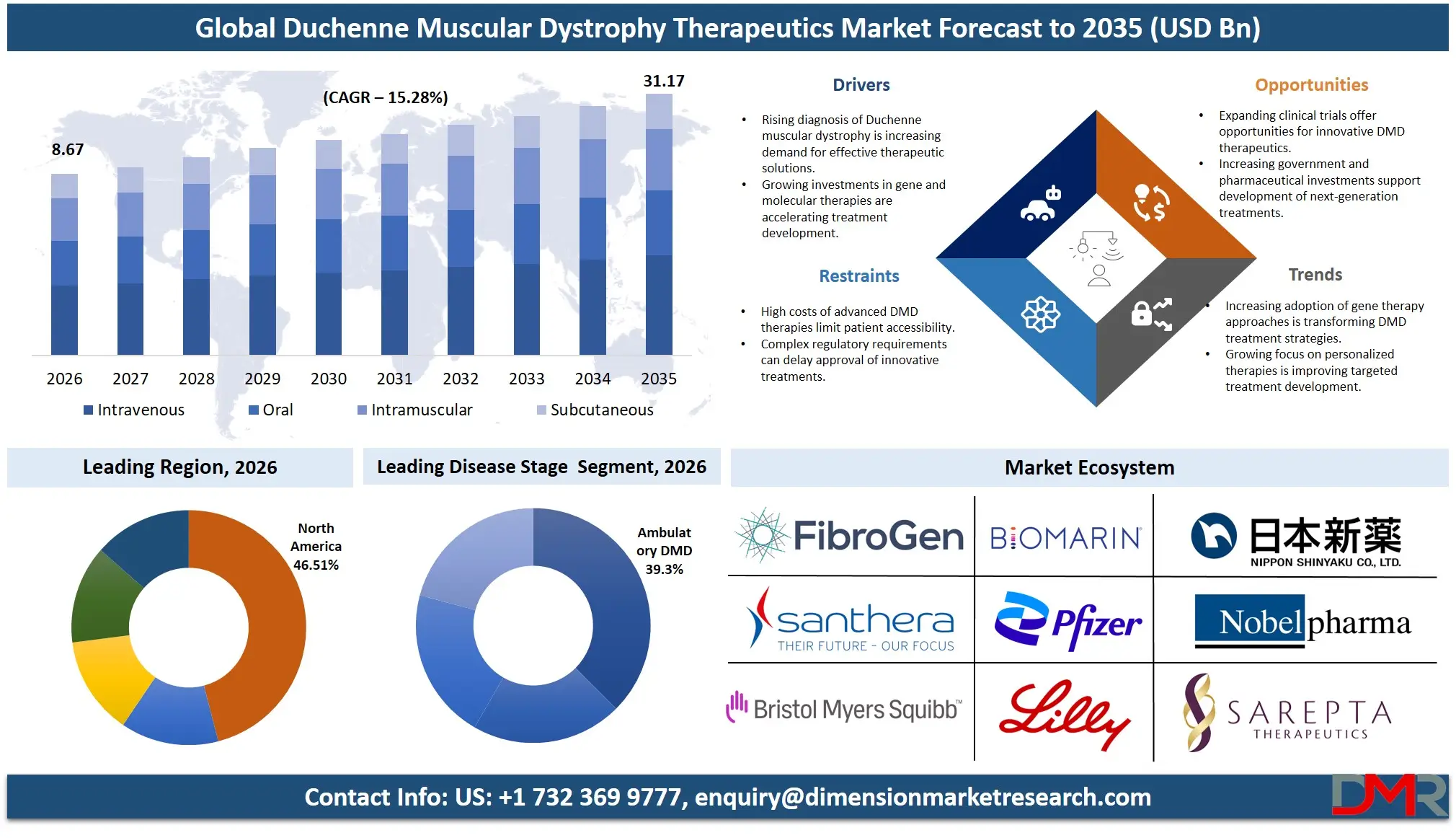
- The Global Duchenne Muscular Dystrophy Therapeutics Market was valued at USD 7.52 Billion in 2025 and is projected to reach USD 31.17 Billion by 2035 at a CAGR of 15.28%.
- By Therapy Type, Exon Skipping Therapies led with a 36.8% revenue share in 2025.
- By Disease Stage, Ambulatory DMD held the largest share at 39.3% in 2025.
- By Route of Administration, Intravenous delivery captured 54.68% revenue share in 2025.
- By End User, Hospitals and Hospital Pharmacies dominated with a 68.18% share in 2025.
- North America led all regions with a 46.51% share, equivalent to approximately USD 3.50 Billion in 2025.
Market Overview
The Duchenne Muscular Dystrophy Therapeutics Market covers pharmaceutical and biological interventions targeting dystrophin restoration, disease progression delay, and supportive management in patients with DMD. The market spans exon-skipping oligonucleotides, AAV-based gene therapies, corticosteroids, stop codon read-through agents, cell-based approaches, and myostatin pathway modulators. Purely diagnostic tools, genetic counseling services, and physiotherapy equipment sit outside its boundaries.
As reported by the CDC, DMD affects approximately 1 in 3,300 male births in U.S. surveillance datasets, sustaining a rare-disease patient pool large enough to attract major biopharmaceutical investment while remaining small enough to qualify for orphan drug incentives. That dual status has shaped how regulators, payers, and developers have approached the market over the past decade.
Gene therapy is now the primary axis of commercial and pipeline activity. AAV micro-dystrophin vectors and next-generation peptide-conjugated PMO platforms have moved the field away from managing symptoms toward attempting single-administration dystrophin restoration. Accelerated approval pathways at the FDA and EMA have compressed development timelines, pulling commercial launches forward and compressing the window for older chronic-dosing products to retain formulary position.
Market Size and Forecast
ℹ
To learn more about this report –
Download Your Free Sample Report Here
The Global Duchenne Muscular Dystrophy Therapeutics Market size is estimated at USD 8.67 Billion in 2026 from USD 7.52 Billion in 2025, and is projected to reach USD 31.17 Billion by 2035, exhibiting a CAGR of 15.28% during the forecast period.
A median patient survival age of 23.7 years defines the commercial logic of Duchenne Muscular Dystrophy Therapeutics Market . Patients require continuous therapeutic support across ambulatory, transitional, and non-ambulatory disease stages, making DMD one of the few rare neuromuscular conditions where a single patient can generate years of uninterrupted treatment revenue. That prolonged chronic window underpins the high lifetime value assumptions embedded in current gene therapy pricing models. In May 2025, Chugai Pharmaceutical received regulatory approval in Japan for ELEVIDYS, the first gene therapy cleared for DMD in that market, expanding the addressable commercial base beyond the U.S. and EU.
Regulatory expansion has been the most direct near-term growth lever. FDA broadened the ELEVIDYS label to ambulatory patients aged 4 and older with a confirmed DMD mutation, increasing the eligible treated population base beyond the narrower initial indication. Long-term follow-up data from the EMBARK program showed 52 patients in extended follow-up achieved up to a 73% reduction in the rate of functional decline compared with an external control group, strengthening the clinical case for continued reimbursement support. These outcomes convert regulatory milestones into commercial revenue events with measurable impact on annual market valuation.
Therapy Type Analysis
Exon Skipping Therapies accounted for 36.8% of Therapy Type demand in 2026, the highest of any category.
Exon-skipping phosphorodiamidate morpholino oligomers have captured the largest revenue share by combining an established clinical track record with mutation-specific applicability across a defined subset of the DMD patient population. As per NIH PubMed Central data, exon-skipping therapies achieved up to approximately 5.9% dystrophin protein restoration in clinical trials, a level sufficient to support accelerated regulatory approval and early commercial traction. That threshold matters because it positions exon skipping as a bridging therapy for patients waiting for or excluded from gene replacement options.
Gene therapy is advancing from clinical programs into a direct commercial challenger role. Corticosteroids retain formulary presence as the lowest-cost disease-modifying backbone in newly diagnosed and resource-constrained settings. Stop codon read-through agents address a genetically distinct subpopulation, limiting their addressable market but protecting them from direct substitution. Cell-based and combination therapies remain pipeline-stage, with vendors positioning them as the next differentiation layer once gene therapy consolidates the ambulatory segment. Combination regimens pairing corticosteroids with myostatin inhibitors such as givinostat are attracting late-stage investment as functional outcome enhancers rather than standalone replacements.
Disease Stage Analysis
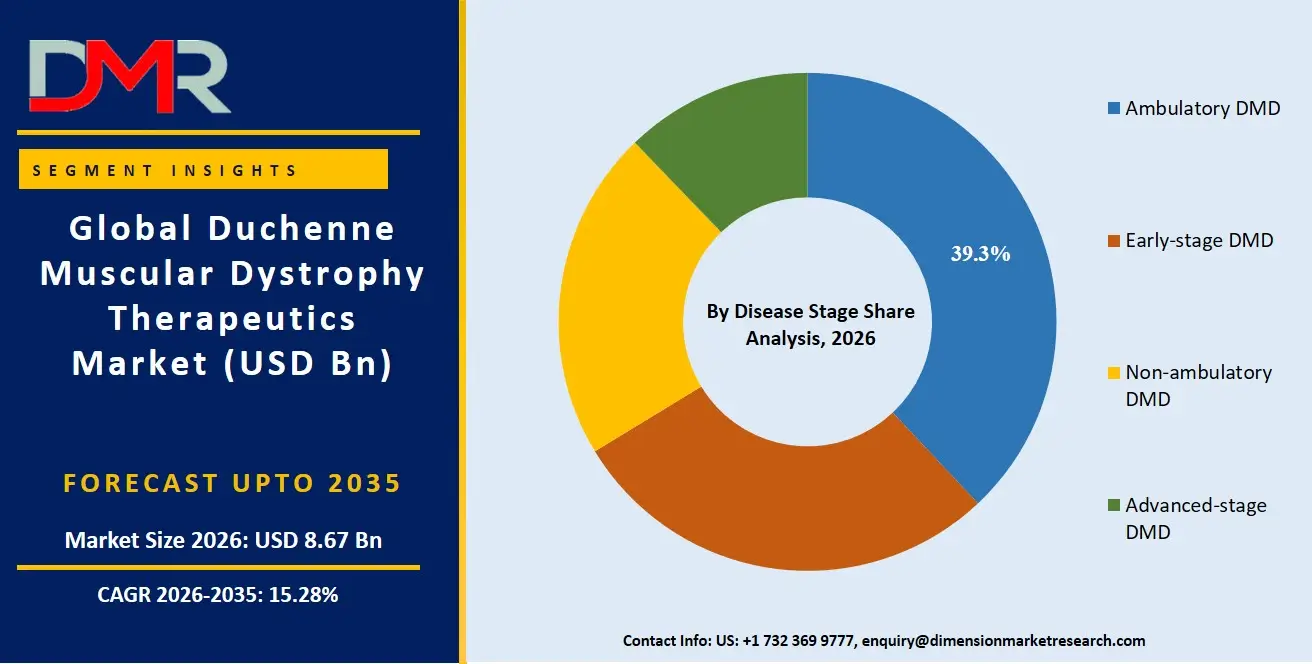
Ambulatory DMD led the Disease Stage segment with a 39.3% share in 2026.
ℹ
To learn more about this report –
Download Your Free Sample Report Here
Ambulatory patients represent the primary commercial target because current approved therapies, including the ELEVIDYS label, are restricted to ambulatory individuals meeting specific age and mutation criteria. EMBARK program data confirm that patients aged 4 to 7 at treatment initiation who remained ambulatory at the start of dosing drove the strongest functional outcomes. Part 2 of EMBARK enrolled patients with an average age of 7.18 years versus 5.98 years in Part 1, yet functional benefit remained statistically significant, widening the eligible commercial window within the ambulatory stage.
Early-stage DMD is gaining traction as newborn screening programs expand in developed healthcare systems, pushing diagnosis earlier and compressing the 2.5-year average delay that historically delayed treatment initiation. Non-ambulatory and advanced-stage DMD remain therapeutically underserved at the commercial level, with available options limited to supportive corticosteroids and emerging cardiomyopathy-focused candidates. That gap represents the next clinical development frontier once ambulatory indications are saturated by current approved products.
Route of Administration Analysis
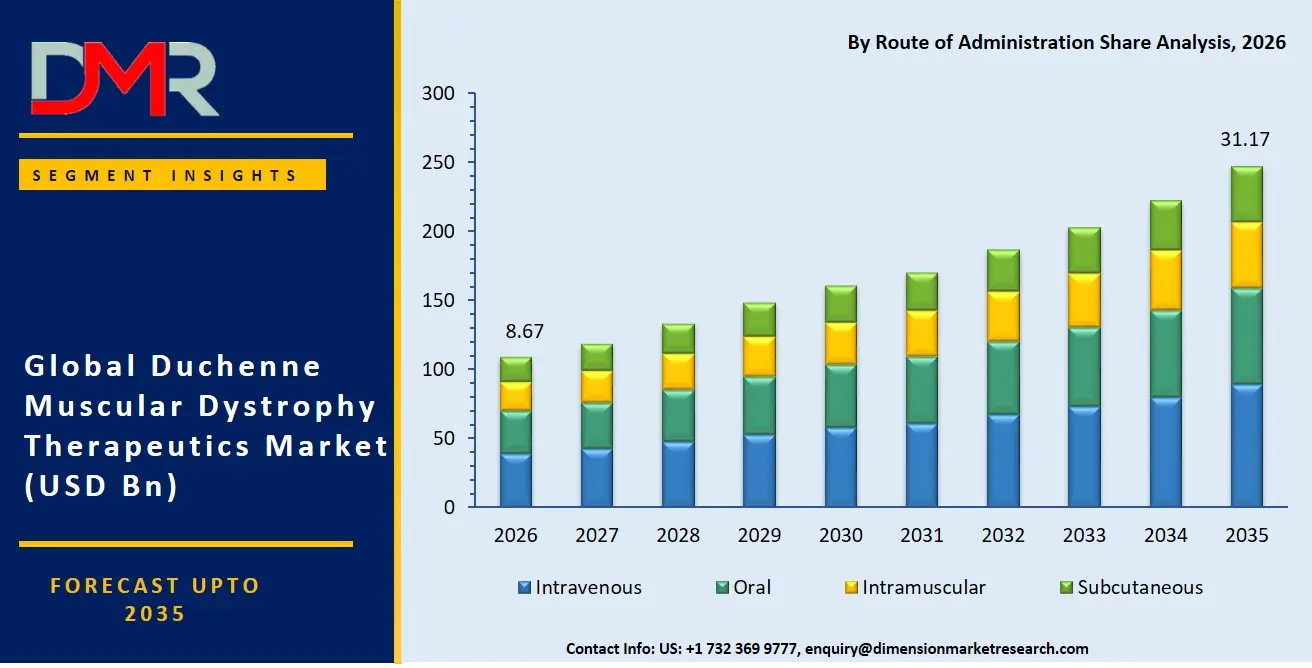
With a 54.68% share in 2026, Intravenous outpaced all other Route of Administration categories.
ℹ
To learn more about this report –
Download Your Free Sample Report Here
Intravenous delivery dominates because AAV-based gene therapies and many exon-skipping PMO formulations require systemic administration to achieve adequate muscle tissue penetration. Single-infusion gene therapy protocols have reinforced IV as the clinical standard, particularly for hospital-based administration at specialized neuromuscular centers. The shift toward one-time dosing has not reduced IV's share. Instead, it has concentrated revenue per procedure, making each IV administration event commercially more significant than the cumulative cost of years of subcutaneous or oral alternatives.
Oral delivery holds formulary position through corticosteroids and stop codon read-through agents, with practical advantages in pediatric home settings. Subcutaneous and intramuscular routes are being explored in next-generation PMO and peptide-conjugated PMO platforms targeting improved skeletal muscle uptake, positioning them as potential outpatient alternatives for future exon-skipping regimens.
End User Analysis
Hospitals and Hospital Pharmacies captured 68.18% of the End User segment in 2026, ahead of all rivals.
Hospital concentration reflects the clinical complexity of DMD gene therapy administration. Single-dose IV infusions of AAV vectors require pre-treatment immune screening, intraoperative monitoring, and post-infusion hepatic surveillance that only specialized hospital environments can support safely. FDA post-marketing guidance now requires patients to remain accessible to appropriate medical facilities for at least two months after treatment, structurally anchoring initial therapy delivery to hospital settings regardless of where follow-up monitoring occurs.
Specialty neuromuscular clinics are capturing a growing share of follow-up management and chronic corticosteroid prescribing as hospitals focus capacity on gene therapy procedures. Homecare settings are expanding for oral and subcutaneous maintenance therapies. Specialty pharmacies serve a distribution role for high-cost biologics that require cold-chain handling, and their share will grow as gene therapy access expands to more countries with pharmacy-based dispensing models.
Key Market Segments
By Therapy Type
- Exon Skipping Therapies
- Gene Therapy
- Corticosteroids
- Stop Codon Read-through Therapies
- Cell-based Therapies
- Combination Therapies
- Supportive Care Therapies
- NSAIDs
By Disease Stage
- Ambulatory DMD
- Early-stage DMD
- Non-ambulatory DMD
- Advanced-stage DMD
By Route of Administration
- Intravenous
- Oral
- Intramuscular
- Subcutaneous
By End User
- Hospitals / Hospital Pharmacies
- Specialty Neuromuscular Clinics
- Homecare Settings
- Rehabilitation Centers
- Research and Academic Institutes
- Retail Pharmacies
- Specialty Pharmacies
- Online Pharmacies
By Mutation Type
- Deletions
- Duplications
- Point Mutations
Regional Analysis
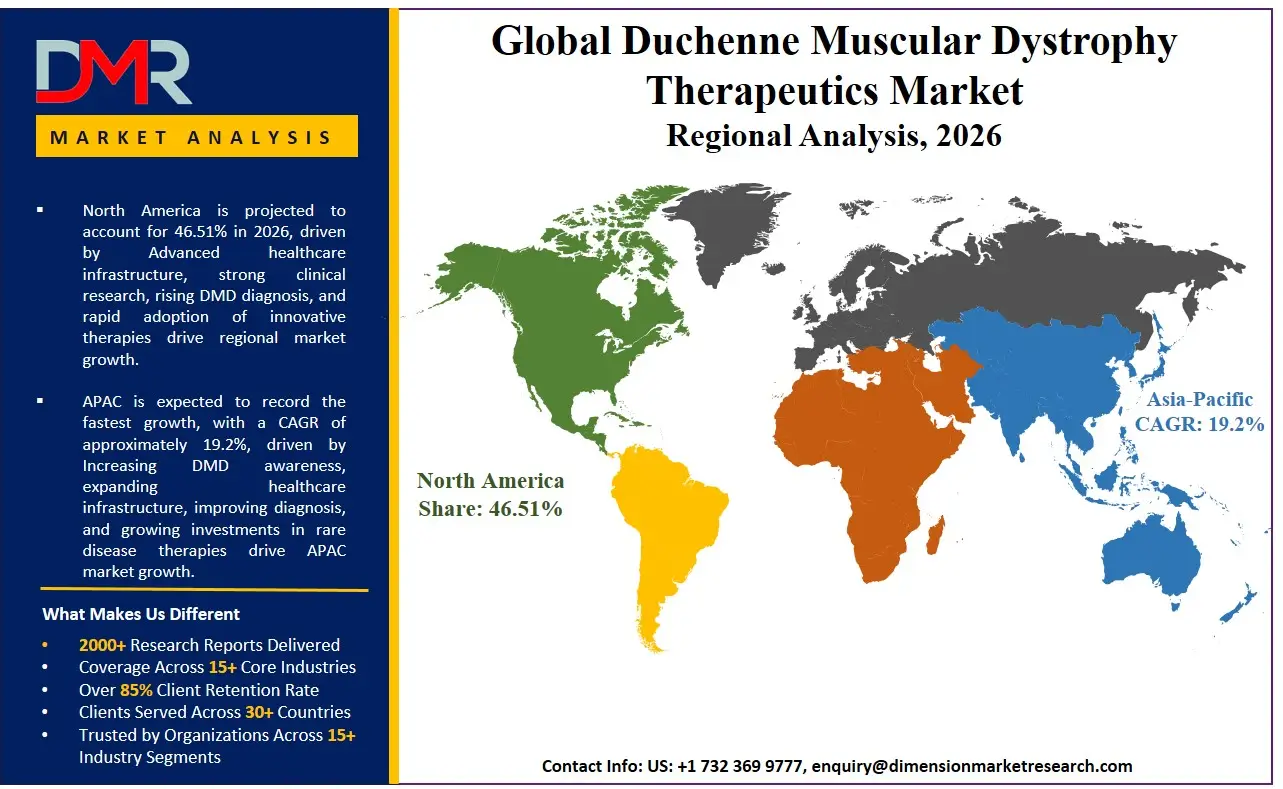
North America led all regions with a 46.51% share, equivalent to approximately USD 3.50 Billion in 2026.
ℹ
To learn more about this report –
Download Your Free Sample Report Here
North America's dominance reflects the convergence of FDA accelerated approval infrastructure, the highest per-capita rare disease drug spending globally, and the geographic concentration of lead DMD therapy developers. Sarepta Therapeutics, Pfizer, and BioMarin all operate primary commercial infrastructure in the U.S., meaning first-launch revenues accrue domestically before any international rollout. Muscle biopsy data from EMBARK at 64 weeks post-dosing confirmed sustained ELEVIDYS micro-dystrophin expression, a finding published and reported primarily through U.S. clinical sites, reinforcing the region's role as the evidentiary anchor for global reimbursement decisions.
Europe holds the second-largest revenue position, with EMA review of ELEVIDYS now receiving direct clinical support following Roche's April 2026 late-stage study initiation. Asia Pacific is the fastest-growing region, anchored by Japan's February 2026 commercial launch of ELEVIDYS as the country's first approved DMD gene therapy, with China and South Korea expanding rare disease reimbursement frameworks that will accelerate near-term uptake. Latin America and Middle East and Africa remain early-stage markets where corticosteroids and supportive care dominate due to pricing barriers for gene therapies, but their newborn screening program expansion creates a diagnostic pipeline that will convert into future therapy demand.
Key Regions and Countries
North America
Europe
- Germany
- France
- The UK
- Spain
- Italy
- Rest of Europe
Asia Pacific
- China
- Japan
- South Korea
- India
- Australia
- Rest of APAC
Latin America
- Brazil
- Mexico
- Rest of Latin America
Middle East & Africa
- GCC
- South Africa
- Rest of MEA
Market Dynamics
Regulatory Acceleration and Pipeline Depth Drive Commercial Expansion
FDA and EMA accelerated approval pathways for exon-skipping oligonucleotides and AAV micro-dystrophin gene therapies have compressed the time between clinical proof-of-concept and commercial revenue generation. Regulators now accept surrogate biomarkers such as micro-dystrophin expression and creatine kinase reduction as primary efficacy endpoints, removing the need for decade-long functional outcome trials before approval. A 2.5-year average diagnostic delay from symptom onset to confirmed DMD diagnosis remains a clinical gap, but expanded newborn genetic screening programs in developed markets are narrowing that window and pulling treatment initiation earlier.
Pipeline depth reinforces the commercial outlook beyond currently approved agents. Late-stage exon-skipping PMO candidates, AAV gene replacement programs, and RNA-based therapeutic platforms create a multi-wave approval sequence that will extend market growth well past initial gene therapy adoption. In May 2025, Sarepta Therapeutics expanded its strategic partnership with Arrowhead Pharmaceuticals through a licensing agreement covering multiple RNA-based therapeutic programs, adding non-viral delivery candidates to a pipeline already anchored by ELEVIDYS.
FDA also mandated an observational safety study enrolling approximately 200 DMD patients treated with ELEVIDYS, with follow-up extending at least 12 months post-administration. That requirement, while primarily a safety measure, generates structured real-world evidence that vendors can use to support label expansions, international submissions, and payer negotiations beyond the current ambulatory-only approved indication.
Gene Therapy Cost and Immune Exclusion Constrain Addressable Patient Access
One-time AAV micro-dystrophin therapies carry multimillion-dollar price tags that exceed what most national payers outside the U.S. and select European markets are currently willing to fund under existing reimbursement frameworks. FDA's post-marketing safety action restricting ELEVIDYS use in non-ambulatory patients following acute liver failure deaths has tightened eligibility criteria further, reducing the near-term commercial population below the level that pre-approval patient counting had suggested.
Pre-existing AAV neutralizing antibodies exclude a measurable proportion of otherwise eligible patients from gene therapy administration. Elevated immune-related adverse events including acute liver injury, myocarditis, and thrombocytopenia have generated a post-approval safety monitoring burden that adds treatment cost, extends hospital resource requirements, and creates hesitancy among families considering enrollment. These combined exclusion mechanisms mean the commercially reachable population is narrower than epidemiological prevalence figures imply.
Next-Generation Platforms and Non-Ambulatory Indications Expand Future Revenue Pools
CRISPR-based dystrophin gene correction, lipid nanoparticle-mediated muscle-targeted RNA therapeutics, and peptide-conjugated PMO platforms each represent a distinct commercial opportunity tier beyond current approved therapies. FDA mandated confirmatory clinical trials for non-ambulatory gene therapy approval, creating a defined regulatory pathway that, once cleared, would more than double the eligible commercial population relative to the current ambulatory-only label.
Capricor Therapeutics reported in December 2025 that its Phase III HOPE-3 trial for deramiocel, a cell-based therapy, showed approximately 83% slowing of disease progression on the Duchenne Video Assessment endpoint with a P-value of 0.018, a result that positions cell-based approaches as a credible commercial entrant in segments currently dominated by gene therapy. An FDA-required observational study tracking approximately 200 treated patients for at least one year will generate a structured real-world evidence base that vendors can use to support future label expansion submissions for non-ambulatory indications.
Market Trends
Single-Dose Gene Therapy and Biomarker-Driven Approvals Reshape the Commercial Model
Micro-dystrophin expression has been validated as a regulatory surrogate endpoint, enabling faster approval pathways for additional gene therapy candidates without requiring years of functional outcome data. This regulatory efficiency creates a compressing approval cycle that will bring multiple new gene therapy entrants to market before 2030. Single-dose AAV administration is replacing chronic weekly injection regimens, concentrating commercial revenue into high-value one-time events rather than recurring prescription volumes. Early movers that secure formulary position before label expansions unlock non-ambulatory patients will hold a structural pricing and access advantage that later entrants will struggle to displace.
Market Competition Overview
The DMD therapeutics market is moderately concentrated at the gene therapy tier and highly fragmented across legacy exon-skipping and corticosteroid segments. A small number of developers control commercially approved gene therapy assets, giving them disproportionate pricing power and reimbursement leverage relative to their market share count. The Nature Medicine publication of Phase 1b mini-dystrophin gene therapy durability data in June 2025 confirmed that at least two independent AAV platform approaches can demonstrate sustained biological expression beyond one year, a finding that signals competitive multi-product entry into the gene therapy tier rather than single-vendor dominance.
Exon-skipping developers face growing substitution pressure as gene therapy labels expand. Companies with broad mutation-type coverage across deletion, duplication, and point mutation categories hold a near-term defensive advantage because no single gene therapy currently addresses all mutation profiles. Cell-based therapy developers are entering late-stage programs and will reshape the competitive map in the non-ambulatory segment once confirmatory trials produce approvable data. Licensing and partnership activity is accelerating as mid-size biotechs seek commercial infrastructure from larger players rather than building independent commercial organizations.
Company Profiles
Sarepta Therapeutics holds the dominant position in the DMD gene therapy segment as the developer and commercializer of ELEVIDYS, the first AAV micro-dystrophin therapy to receive FDA approval. EMBARK program data from January 2025 showed crossover-treated patients improved by 2.34 points on the North Star Ambulatory Assessment versus matched external controls at 52 weeks (P < 0.0001), and improved Time to Rise by 2.70 seconds versus controls (P < 0.0001). Sarepta's risk lies in post-market safety obligations and the ambulatory-only label restriction, both of which cap near-term revenue while simultaneously generating the clinical dataset needed for future label expansion.
Pfizer Inc. approaches the DMD market through AAV gene therapy research and a pipeline spanning multiple neuromuscular indications. Pfizer's commercial infrastructure, regulatory expertise, and manufacturing scale provide strategic advantages that smaller DMD developers cannot replicate internally. The company's positioning in DMD complements its broader rare disease gene therapy portfolio, allowing shared platform investment across programs and reducing per-asset development cost relative to pure-play DMD developers.
Key Players
- BioMarin
- Eli Lilly and Company
- Santhera Pharmaceuticals
- Bristol-Myers Squibb Company
- FibroGen, Inc.
- Nobelpharma Co., Ltd.
- NIPPON SHINYAKU CO. LTD.
- Sarepta Therapeutics
- Pfizer Inc.
- Other players
Regulatory Landscape
FDA has moved DMD gene therapy from accelerated approval to a post-market evidence-generation model. Following liver failure deaths in non-ambulatory patients, the agency added its strongest boxed warning to ELEVIDYS and mandated weekly liver-function testing for at least 3 months after administration. Patients are also required to remain accessible to an appropriate medical facility for at least 2 months post-infusion, structurally limiting outpatient or home-based gene therapy delivery and concentrating administration at specialized hospital centers.
EMA has not yet granted marketing authorization for any DMD gene therapy, but Roche's April 2026 initiation of a late-stage ELEVIDYS study following direct EMA feedback signals that the pathway to European approval is open and active. Japan's regulatory approval and commercial launch of ELEVIDYS in 2025 to 2026 establishes a third major regulatory jurisdiction where gene therapy for DMD is now a commercial reality, creating a cross-jurisdictional evidence base that will inform EMA and other national health authority reviews.
Recent Developments
- February 2026 — Chugai Pharmaceutical commercially launched ELEVIDYS in Japan, making it the country's first approved and commercially available gene therapy for Duchenne muscular dystrophy patients.
- April 2026 — Roche initiated a new late-stage clinical study for ELEVIDYS following feedback from the European Medicines Agency, directly supporting the pathway toward future European regulatory approval.
- June 2026 — SonoThera raised $125 million in venture funding to advance its non-viral gene therapy platform designed to deliver full-length dystrophin for DMD treatment, the largest disclosed early-stage non-viral DMD platform financing of the year.
Report Details
| Report Features |
| Market Value (2025) |
USD 7.52 Billion |
| Market Value (2026) |
USD 8.67 Billion |
| Forecast Revenue (2035) |
USD 31.17 Billion |
| CAGR (2026–2035) |
15.28% |
| Historical Data |
2020 – 2024 |
| Forecast Data |
2026 – 2035 |
| Base Year |
2025 |
| Estimate Year |
2026 |
| Report Coverage |
Revenue Forecast, Market Dynamics, Competitive Landscape, Recent Developments |
| Segments Covered |
By Therapy Type (Exon Skipping Therapies, Gene Therapy, Corticosteroids, Stop Codon Read-through Therapies, Cell-based Therapies, Combination Therapies, Supportive Care Therapies, NSAIDs); By Disease Stage (Ambulatory DMD, Early-stage DMD, Non-ambulatory DMD, Advanced-stage DMD); By Route of Administration (Intravenous, Oral, Intramuscular, Subcutaneous); By End User (Hospitals / Hospital Pharmacies, Specialty Neuromuscular Clinics, Homecare Settings, Rehabilitation Centers, Research and Academic Institutes, Retail Pharmacies, Specialty Pharmacies, Online Pharmacies); By Mutation Type (Deletions, Duplications, Point Mutations) |
| Regional Coverage |
North America – US, Canada; Europe – Germany, France, UK, Spain, Italy, Rest of Europe; Asia-Pacific – China, Japan, South Korea, India, Australia, Rest of APAC; Latin America – Brazil, Mexico, Rest of Latin America; Middle East & Africa – GCC, South Africa, Rest of MEA |
| Prominent Players |
BioMarin, Eli Lilly and Company, Santhera Pharmaceuticals, Bristol-Myers Squibb Company, FibroGen Inc., Nobelpharma Co. Ltd., NIPPON SHINYAKU CO. LTD., Sarepta Therapeutics, Pfizer Inc., Other Key Players |
| Customization Scope |
Customization for segments and region or country level will be provided. Additional customization can be done based on requirements. |
| Purchase Options |
Three license options: Single User License, Multi-User License (Up to 5 Users), and Corporate Use License (Unlimited Users and Printable PDF) |
Frequently Asked Questions
What is the biggest investment opportunity in Duchenne Muscular Dystrophy Therapeutics Market ?
▾ Non-ambulatory DMD represents the largest underserved commercial segment, with no currently approved gene therapy covering that population. FDA has mandated confirmatory trials to unlock that indication, creating a defined regulatory pathway. Investors that back platforms with dual ambulatory and non-ambulatory evidence will capture the next wave of label expansion revenue.
Who are the top companies in Duchenne Muscular Dystrophy Therapeutics Market ?
▾ Sarepta Therapeutics leads through its commercialized ELEVIDYS gene therapy, with Pfizer, BioMarin, and Eli Lilly holding significant pipeline and commercial positions. Capricor Therapeutics has emerged as a cell-based therapy contender following positive Phase III HOPE-3 data. NIPPON SHINYAKU CO. LTD. and Nobelpharma maintain presence in exon-skipping and supportive therapy segments.
Which segment is growing fastest in Duchenne Muscular Dystrophy Therapeutics Market and why?
▾ Gene therapy within the Therapy Type segment is growing fastest, driven by FDA and EMA accelerated approval infrastructure and the commercial success of ELEVIDYS as the first approved AAV micro-dystrophin product. Single-dose administration models concentrate high revenue into individual treatment events, and the pipeline of next-generation AAV and non-viral candidates ensures sustained approval momentum through 2035.
Which region is growing fastest in Duchenne Muscular Dystrophy Therapeutics Market and why?
▾ Asia Pacific is the fastest-growing region, anchored by Japan's February 2026 commercial launch of ELEVIDYS as the country's first DMD gene therapy. China, South Korea, and India are expanding rare disease reimbursement frameworks and newborn screening programs simultaneously, creating both diagnostic and treatment demand pipelines that will accelerate regional market growth through the forecast period.
What is the biggest challenge holding Duchenne Muscular Dystrophy Therapeutics Market back?
▾ Ultra-high gene therapy pricing combined with pre-existing AAV neutralizing antibodies in a measurable share of patients creates a dual access barrier that limits real-world penetration below epidemiological eligibility estimates. FDA post-marketing safety restrictions on ELEVIDYS use in non-ambulatory patients have further narrowed the near-term commercial population. Until payer coverage models evolve and immune-exclusion screening becomes routine and reliable, addressable patient access will remain structurally constrained.