Global Epilepsy Market Snapshot
- Global Epilepsy Market Size in 2026: USD 13.5 Billion
- Global Epilepsy Market Size in 2035: USD 81.1 Billion
- Global CAGR from 2026 to 2035: 22.0%
- Focal Epilepsy is the leading type of epilepsy segment in 2026: 48.8%
- Drug Resistant Epilepsy is the leading condition and severity segment in 2026: 58.7%
- Second Generation Antiepileptic Drugs is the leading drug generation segment in 2026: 42.6%
- Antiepileptic Drugs is the leading treatment type segment in 2026: 62.3%
- Adults is the leading patient age group segment in 2026: 61.7%
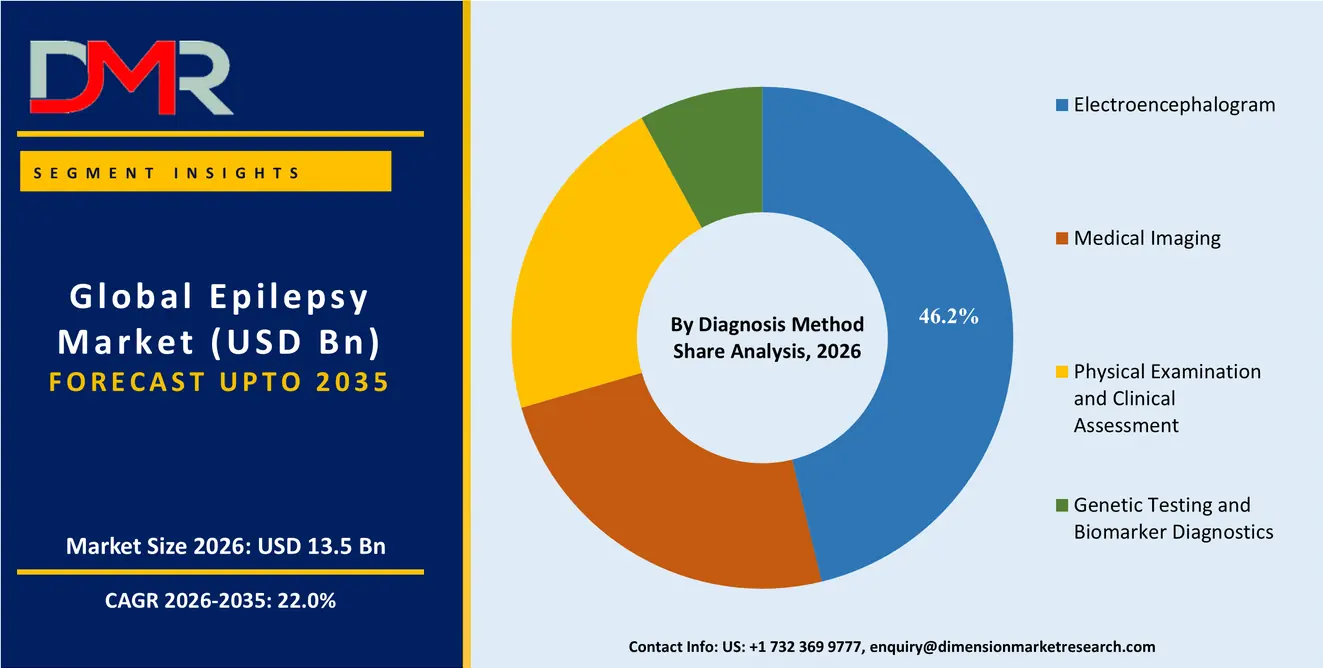
- Electroencephalogram is the leading diagnosis method segment in 2026: 46.2%
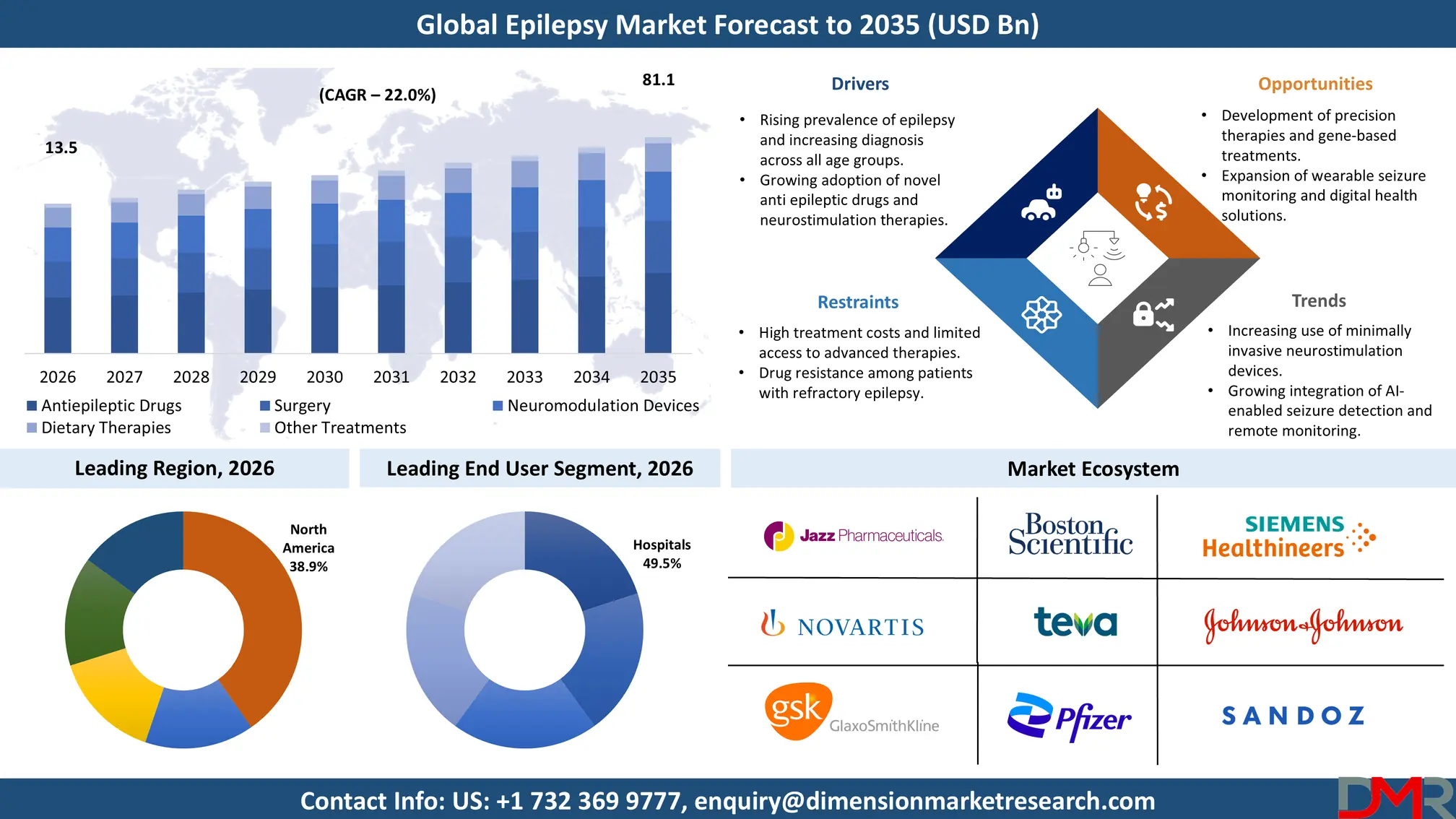
- Hospitals is the leading end user segment in 2026: 49.5%
- North America is the leading region in 2026: 38.9%
What is the Global Epilepsy and its Market Size?
The Global Epilepsy Market is projected to be valued at USD 13.5 billion in 2026 and is projected to reach USD 81.1 billion by 2035, expanding at a robust CAGR of 22.0% during the forecast period.
ℹ
To learn more about this report –
Download Your Free Sample Report Here
Growth is being propelled by the surging global burden of focal and generalized seizure disorders, rising diagnostic capture through expanded electroencephalogram and imaging infrastructure, and an accelerating pipeline of third-generation antiseizure medications targeting drug-resistant epilepsy. The adoption of precision neuromodulation devices with proven seizure-reduction outcomes, rising clinical implementation of genetic and biomarker-based epilepsy diagnostics, and expanding reimbursement frameworks for responsive neurostimulation and laser ablation are reshaping care paradigms.
Use Cases
- Early Focal Epilepsy Detection and Seizure Risk Stratification: Neurology and epileptology practices deploy routine and video electroencephalogram monitoring alongside magnetic resonance imaging to identify patients with focal-onset seizures at high risk of progressing to drug-resistant disease.
- Optimized Drug-Resistant Epilepsy Management with Neuromodulation: Comprehensive epilepsy centers and specialty clinics utilize vagus nerve stimulation, responsive neurostimulation, and deep brain stimulation platforms that continuously track seizure frequency, stimulation parameters, and device battery status for neurology care teams.
- Presurgical Evaluation and Resective Surgery Planning: Epilepsy surgery centers employ high-resolution imaging, positron emission tomography, and intracranial EEG mapping, alongside genetic testing, to localize seizure foci before resective surgery or laser ablation in medically refractory patients.
- Pediatric Syndrome-Specific Seizure Control: Pediatric neurologists co-manage children with Lennox-Gastaut syndrome, Dravet syndrome, and tuberous sclerosis complex-associated epilepsy by initiating guideline-directed therapy that combines targeted antiepileptic drugs with ketogenic and modified Atkins dietary therapies.
Key Takeaways
- Market Size: The Global Epilepsy Market is anticipated to be valued at USD 13.5 billion in 2026 and is forecast to reach USD 81.1 billion by 2035, expanding at a CAGR of 22.0%.
- Growth Outlook: Market expansion is sustained by the inexorable rise in diagnosed focal and generalized epilepsy prevalence, the global acceptance of third-generation antiseizure pharmacotherapy, the push toward device-based neuromodulation for drug-resistant disease, and the integration of digital EEG and remote seizure-monitoring tools for earlier epileptology engagement.
- Primary Growth Drivers: A mounting drug-resistant epilepsy population necessitating surgery and neuromodulation, breakthrough clinical trial evidence for novel antiseizure drug classes, regulatory incentives for innovative epilepsy diagnostics, and shifting payment models toward value-based neurological care are accelerating investment across the epilepsy care continuum.
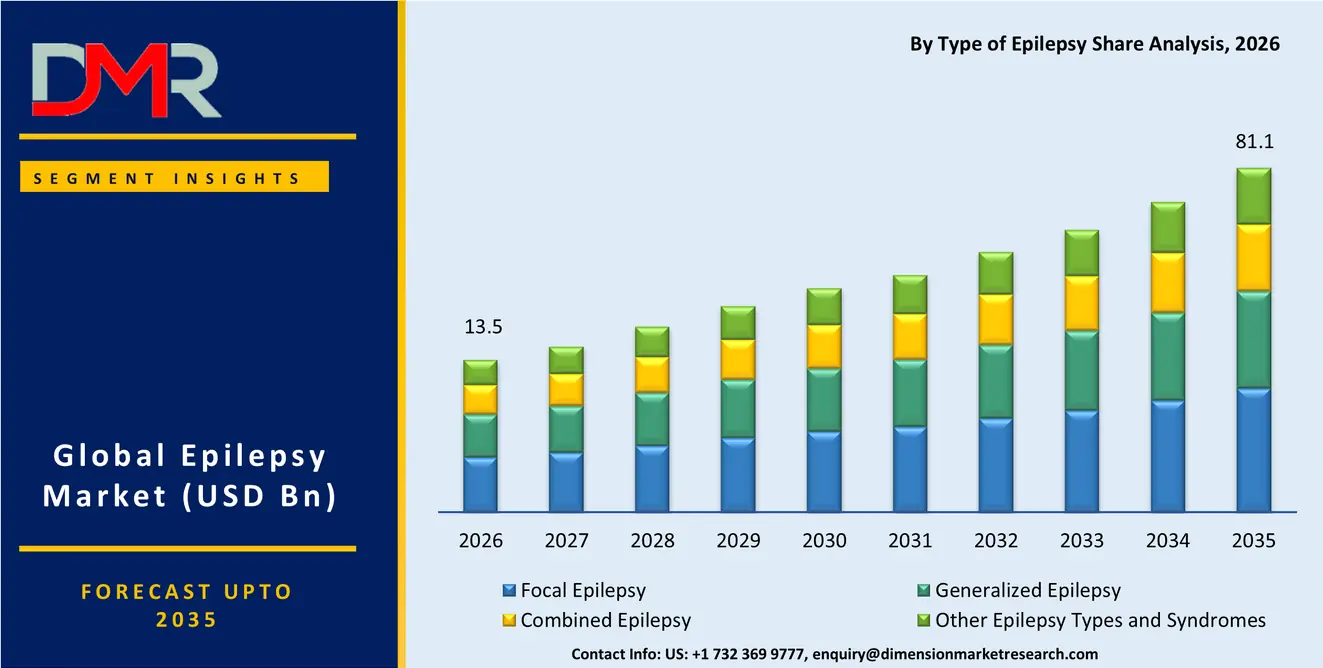
- By Type of Epilepsy Analysis: Focal Epilepsy is projected to lead the segment with a dominant 48.8% share in 2026, driven by its status as the most commonly diagnosed seizure classification globally, while Other Epilepsy Types and Syndromes, including Lennox-Gastaut syndrome, Dravet syndrome, and tuberous sclerosis complex-associated epilepsy, hold a 9.7% share reflecting concentrated but high-value orphan drug development.
- By Condition and Severity Analysis: Drug Resistant Epilepsy is anticipated to hold a 58.7% share in 2026, reflecting the substantial proportion of patients who fail to achieve seizure freedom on standard antiseizure regimens, while Drug Responsive Epilepsy accounts for an 8.6% share of the segment.
- By Drug Generation Analysis: Second Generation Antiepileptic Drugs are poised to lead with a 42.6% share in 2026, representing the current pharmacological backbone of epilepsy care, while Third Generation Antiepileptic Drugs hold a 9.2% share and are exhibiting the fastest adoption curve due to improved tolerability and novel mechanisms of action.
- By Treatment Type Analysis: Antiepileptic Drugs are expected to command a 62.3% share in 2026, underpinned by their role as first-line therapy across nearly all epilepsy types, while Neuromodulation Devices hold a 10.4% share and are gaining rapid traction for medically refractory patients.
- By Patient Age Group Analysis: Adults are expected to account for 61.7% of the market in 2026, given the large adult-diagnosed epilepsy population requiring long-term management, while the Elderly segment holds an 8.4% share amid rising late-onset epilepsy linked to cerebrovascular disease.
- By Diagnosis Method Analysis: Electroencephalogram is projected to lead with a 46.2% share in 2026, as it remains the frontline diagnostic and monitoring modality for seizure classification, while Genetic Testing and Biomarker Diagnostics hold an 11.6% share and are expanding quickly as precision epilepsy medicine matures.
- By End User Analysis: Hospitals are expected to lead with a 49.5% share in 2026 as the central hub for EEG monitoring, epilepsy surgery, and neuromodulation implantation, while Ambulatory Surgical Centers hold a 9.1% share and are growing as select procedures shift to outpatient settings.
How AI/Gen AI is Transforming the Epilepsy Market?
Artificial intelligence and digital health technologies are fundamentally reshaping epilepsy care by enabling earlier seizure detection, personalized treatment selection, and remote ictal monitoring. Machine learning algorithms trained on large-scale electroencephalogram and wearable sensor datasets dynamically identify subtle interictal epileptiform discharges and predict seizure onset windows with high discrimination, enabling timely intervention. These predictive models are being embedded into clinical workflow tools that flag patients with treatment-resistant seizure patterns and prompt guideline-concordant escalation to neuromodulation or surgical evaluation, closing critical gaps in comprehensive epilepsy center referral. AI-powered image analysis of structural MRI and PET scans quantifies subtle cortical malformations and hippocampal sclerosis as surrogates of seizure focus localization, supplementing electrophysiological data for more precise presurgical planning.
Key Drivers in the Global Epilepsy Market
Escalating Global Burden of Focal and Drug-Resistant Epilepsy
Focal-onset seizures and treatment-resistant epilepsy remain the dominant clinical challenges driving market demand, together accounting for a substantial share of diagnosed cases worldwide. The unabated rise in traumatic brain injury, cerebrovascular disease, and genetically identified epileptic encephalopathies is expanding the pool of individuals requiring intensive antiseizure management and neuromodulation. As global epilepsy diagnosis rates climb alongside expanded electroencephalogram and imaging access, the downstream demand for antiepileptic drugs, device-based therapies, and specialized diagnostic testing intensifies commensurately. National epilepsy care programs targeting early referral to comprehensive epilepsy centers are increasingly embedded in clinical guidelines, directly fueling the utilization of EEG-based diagnostics and early third-generation drug initiation, the twin pillars of market growth.
Expanding Clinical Evidence for Third-Generation Antiseizure Pharmacotherapy and Neuromodulation
Landmark clinical trials over the past decade have repositioned third-generation antiepileptic drugs and advanced neuromodulation platforms as cornerstone therapies that improve seizure control in patients who fail first- and second-generation agents. Robust seizure-reduction outcomes demonstrated across recent development programs have triggered significant updates to epilepsy treatment guidelines, expanding the eligible treatment population to include broader drug-resistant and syndrome-specific cohorts. This evidence-driven therapeutic paradigm shift is generating sustained, high-volume demand for these drug classes and device categories, elevating the pharmaceutical segment's market dominance and propelling accelerated growth for third-generation antiepileptic drugs and neuromodulation devices alike.
Restraints in the Global Epilepsy Market
High Cost and Limited Accessibility of Neuromodulation and Surgical Therapy
Despite being highly effective for medically refractory patients, resective surgery, laser ablation, and implantable neuromodulation devices impose substantial financial burdens on patients and health systems, particularly in low- and middle-income countries where out-of-pocket expenditure limits access. Comprehensive epilepsy centers require substantial infrastructure, specialized neurosurgical and neurophysiology expertise, and long-term device follow-up, limiting reach in rural and underserved regions. Even in high-income nations, the cost of responsive neurostimulation and deep brain stimulation systems creates sustained pressure on public and private payers, often resulting in restrictive prior-authorization pathways.
Growth Opportunities in the Global Epilepsy Market
Expansion of Neuromodulation and Remote Seizure Monitoring
The global shift toward device-based epilepsy management vagus nerve stimulation, responsive neurostimulation, and deep brain stimulation represents a high-growth opportunity for device manufacturers and remote monitoring platform developers. Health systems are incentivizing earlier referral to neuromodulation through updated clinical pathways that reward reduced seizure frequency and improved quality-of-life metrics. This creates a fertile market for connected implantable devices, cloud-based seizure-tracking platforms, and patient support services. Companies that integrate AI-driven seizure prediction, closed-loop stimulation algorithms, and telehealth support into a cohesive epilepsy care ecosystem can capture a disproportionate share of the rapidly growing neuromodulation segment.
Precision Medicine and Genetic Biomarker-Guided Epilepsy Subtyping
Emerging genetic and molecular biomarkers are enabling precise diagnosis and treatment matching beyond traditional EEG and imaging-based classification. This paves the way for a precision epileptology market where therapies are matched to specific epilepsy syndromes and genetic etiologies, such as Dravet syndrome and CDKL5 deficiency disorder, rather than generic seizure-type categorization. Diagnostic companies that develop and commercialize validated, reimbursable genetic testing panels capable of guiding targeted therapy selection will unlock a premium-priced testing market. Concurrently, pharmaceutical firms are pursuing label expansions for targeted therapies in genetically defined epilepsy subsets, creating high-value niche markets within Other Epilepsy Types and Syndromes.
Trends in the Global Epilepsy Market
Integration of Epilepsy Care into Comprehensive Neurological Care Platforms
A defining trend is the consolidation of epilepsy management within comprehensive epilepsy centers that integrate neurology, neurosurgery, neuropsychology, and dietary therapy under a single care pathway. Clinical practice is shifting toward holistic management that simultaneously addresses seizure control, cognitive comorbidity, and quality of life. This convergence is expanding the use of combined pharmacological and device-based regimens and fostering the development of integrated platforms that track seizure frequency, medication adherence, and stimulation parameters on a single dashboard. The market implications include broader multidisciplinary prescribing, increased diagnostic monitoring frequency, and the rise of epilepsy-focused digital therapeutic applications.
Emergence of Artificial Intelligence-Enabled EEG Interpretation
Digital EEG analysis augmented by deep learning algorithms is transforming the interpretation of long-term and ambulatory electroencephalogram recordings. AI models trained on annotated EEG datasets can now quantify interictal epileptiform discharges, seizure onset zones, and ictal patterns with expert-level accuracy. This trend is commercializing as cloud-based AI EEG interpretation services that neurophysiology labs adopt to standardize reporting, reduce interobserver variability, and accelerate diagnosis. The increasing use of AI-assisted EEG in epilepsy drug development particularly for trials requiring consistent seizure-frequency endpoints is creating a new adjacency market at the intersection of diagnostics and pharmaceuticals.
Research Scope and Analysis
The Global Epilepsy Market is segmented by type of epilepsy, condition and severity, drug generation, treatment type, patient age group, diagnosis method, and end user. Epilepsy types span focal, generalized, combined, and syndrome-specific classifications. Treatment covers antiepileptic drugs, surgery, neuromodulation, and dietary therapies. End users include hospitals, clinics, ambulatory surgical centers, and diagnostic centers.
ℹ
To learn more about this report –
Download Your Free Sample Report Here
By Type of Epilepsy Analysis
Focal epilepsy is expected to dominate the Global Epilepsy Market, accounting for 48.8% share in 2026. Its leadership reflects its high prevalence and broad treatment requirements, including antiepileptic drugs, electroencephalogram monitoring, neuroimaging, and surgical intervention.
ℹ
To learn more about this report –
Download Your Free Sample Report Here
Focal seizures are also the main indication for resective surgery, laser ablation, and responsive neurostimulation, which increases the segment's value contribution. Other epilepsy types and syndromes are projected to record the highest CAGR of 9.7% during 2026–2035.
By Condition and Severity Analysis
Drug resistant epilepsy is anticipated to dominate the market with a 58.7% share in 2026. These patients require intensive and high-cost treatment after failing to achieve adequate seizure control with standard antiepileptic drug regimens. Combination therapies, specialist consultations, diagnostic procedures, epilepsy surgery, and neuromodulation devices significantly increase their treatment expenditure. Drug resistant epilepsy is also expected to register the highest CAGR of 8.6% from 2026 to 2035.
By Drug Generation Analysis
Second generation antiepileptic drugs are projected to hold the largest market share of 42.6% in 2026. Levetiracetam, lamotrigine, topiramate, and oxcarbazepine remain widely prescribed because they offer broad clinical utility, better tolerability, and fewer interactions than many first generation drugs. Their established use across focal and generalized epilepsy supports continuing demand. Third generation antiepileptic drugs are expected to record the highest CAGR of 9.2% during 2026–2035. Greater uptake of newer therapies, including brivaracetam, perampanel, and cenobamate, will drive this growth.
By Treatment Type Analysis
Antiepileptic drugs are anticipated to dominate the treatment type segment, accounting for 62.3% share in 2026. Drug therapy remains the mainstay of epilepsy management because it is accessible, clinically established, and appropriate for most newly diagnosed and long-term patients. It is used as monotherapy or combination therapy across diverse seizure types and age groups. Neuromodulation devices are projected to register the highest CAGR of 10.4% from 2026 to 2035.
By Patient Age Group Analysis
Adults are expected to dominate the Global Epilepsy Market with a 61.7% share in 2026. This segment includes individuals with childhood-onset epilepsy requiring lifelong treatment, as well as patients diagnosed in adulthood due to stroke, traumatic brain injury, tumors, infections, and metabolic disorders. Adults generate substantial demand for chronic drug therapy, diagnostics, monitoring, and management of seizure-related comorbidities. The elderly segment is projected to record the highest CAGR of 8.4% during 2026–2035.
By Diagnosis Method Analysis
Electroencephalogram is projected to lead the diagnosis method segment with a 46.2% share in 2026. Routine, ambulatory, and video electroencephalogram testing are fundamental for detecting abnormal brain activity, confirming seizure disorders, classifying epilepsy, and selecting appropriate treatment pathways. Its availability in hospitals and specialist epilepsy centers supports its continued market dominance. Genetic testing and biomarker diagnostics are expected to achieve the highest CAGR of 11.6% from 2026 to 2035.
By End User Analysis
Hospitals are expected to dominate the end user segment, accounting for 49.5% share in 2026. Hospitals provide comprehensive epilepsy care, including emergency seizure management, long-term electroencephalogram monitoring, imaging, medication initiation, surgery, and neuromodulation device implantation. Tertiary hospitals and epilepsy centers are particularly important for treating patients with drug resistant epilepsy who require coordinated multidisciplinary care. Ambulatory surgical centers are projected to register the highest CAGR of 9.1% during 2026–2035.
The Global Epilepsy Market Report is segmented on the basis of the following:
By Type of Epilepsy
- Focal Epilepsy
- Generalized Epilepsy
- Combined Epilepsy
- Other Epilepsy Types and Syndromes
- Lennox Gastaut Syndrome
- Dravet Syndrome
- Tuberous Sclerosis Complex Associated Epilepsy
By Condition and Severity
- Drug Resistant Epilepsy
- Drug Responsive Epilepsy
By Drug Generation
- First Generation Antiepileptic Drugs
- Second Generation Antiepileptic Drugs
- Third Generation Antiepileptic Drugs
By Treatment Type
- Antiepileptic Drugs
- Surgery
- Resective Surgery
- Laser Ablation
- Hemispherectomy
- Neuromodulation Devices
- Vagus Nerve Stimulation
- Responsive Neurostimulation
- Deep Brain Stimulation
- Dietary Therapies
- Ketogenic Diet
- Modified Atkins Diet
- Low Glycemic Index Treatment
- Other Treatments
By Patient Age Group
- Children and Pediatrics
- Adults
- Elderly
By Diagnosis Method
- Electroencephalogram
- Routine EEG
- Ambulatory EEG
- Video EEG
- Medical Imaging
- Magnetic Resonance Imaging
- Computed Tomography
- Positron Emission Tomography
- Single Photon Emission Computed Tomography
- Physical Examination and Clinical Assessment
- Genetic Testing and Biomarker Diagnostics
By End User
- Hospitals
- Clinics and Outpatient Centers
- Ambulatory Surgical Centers
- Diagnostic Centers
- Others
Regional Analysis
North America is the Leading Region in the Global Epilepsy Market
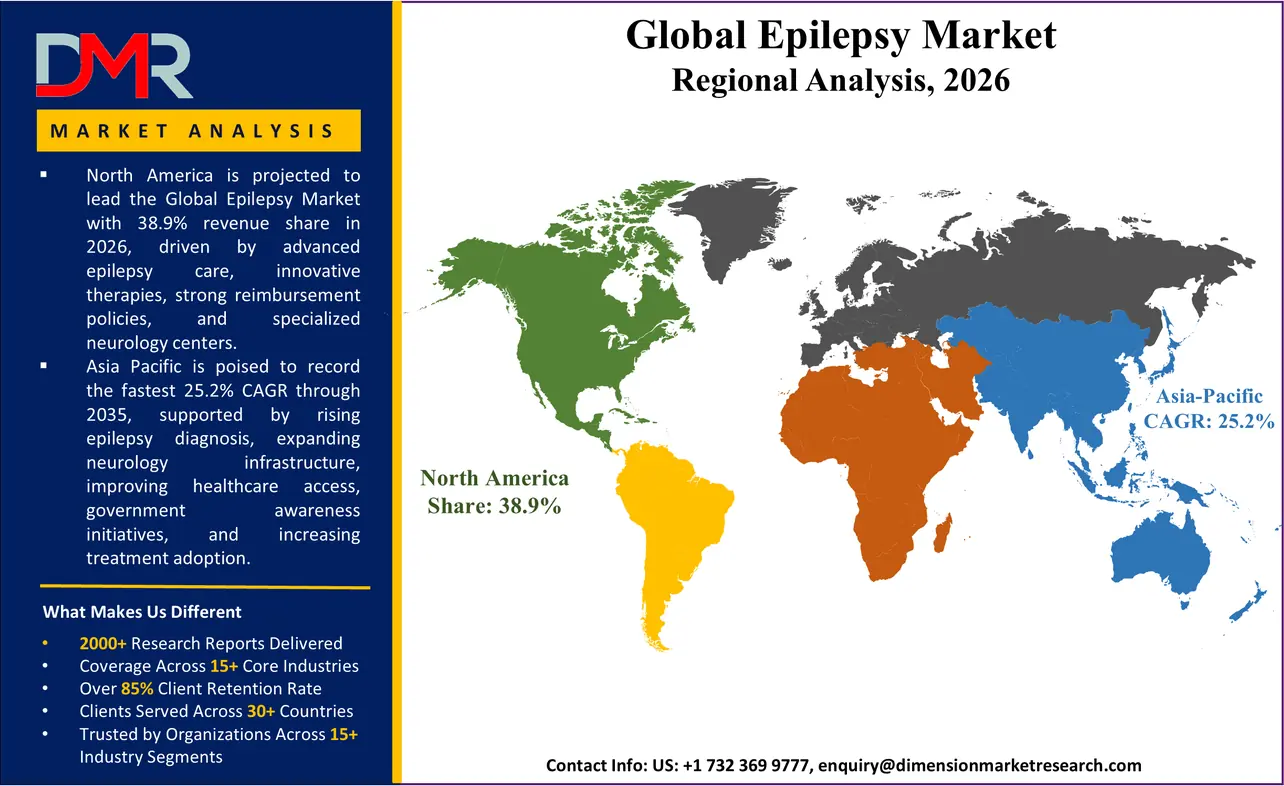
North America is poised to lead the Global Epilepsy Market with an estimated 38.9% revenue share in 2026. The region's dominance is anchored by a high diagnosed prevalence of focal and drug-resistant epilepsy, a mature network of comprehensive epilepsy centers, and the world's highest per-capita expenditure on third-generation antiepileptic drugs and neuromodulation devices. The United States, in particular, is characterized by early and broad adoption of innovative drug generations and advanced neuromodulation platforms, robust commercial and public insurance coverage for epilepsy surgery and device implantation, and a dynamic pipeline of syndrome-specific therapeutics supported by regulatory incentive programs.
ℹ
To learn more about this report –
Download Your Free Sample Report Here
Asia Pacific is the Fastest-Growing Region in the Global Epilepsy Market
Asia Pacific is projected to register the fastest CAGR of 25.2% through 2035, driven by the region's enormous and underdiagnosed epilepsy population, particularly in China and India, alongside rapidly improving access to EEG-based diagnostics. Economic development is enabling substantial investments in neurology infrastructure, with both public and private providers rapidly expanding comprehensive epilepsy center capacity to meet previously unmet treatment demand. Additionally, governments are implementing national neurological disorder screening and awareness programs that are boosting diagnosis rates and antiepileptic drug initiation.
The Europe Epilepsy Market
Europe represents one of the largest regional markets, characterized by universal healthcare coverage models that provide comprehensive access to antiepileptic drugs, surgical evaluation, and neuromodulation, though with significant cross-national variation in device reimbursement and comprehensive epilepsy center density. Germany holds the largest European market share, driven by its large neurology specialist workforce and broad reimbursement for innovative pharmaceuticals and devices. Growing adoption of updated European epilepsy management guidelines is gradually improving awareness and diagnosis rates across the region.
Latin America Epilepsy Market
The Latin America Epilepsy Market is expanding as improving neurological diagnostic access and rising awareness of drug-resistant epilepsy drive incident case identification upward. Brazil and Mexico are the primary national markets, with Brazil's public health system funding a substantial share of antiepileptic drug and EEG diagnostic access. Mexico's growing private neurology infrastructure investment further fuels market expansion.
Middle East and Africa Epilepsy Market
The Middle East and Africa Epilepsy Market is developing against a backdrop of expanding neurology infrastructure investment in Gulf Cooperation Council countries alongside a substantial underdiagnosed epilepsy burden in sub-Saharan Africa. Saudi Arabia and the United Arab Emirates are the most attractive markets, with high government healthcare spending, expanding comprehensive epilepsy center capacity, and active national neurological disorder awareness programs driven by regional health authorities.
Major Countries Analysis
The US Epilepsy Market
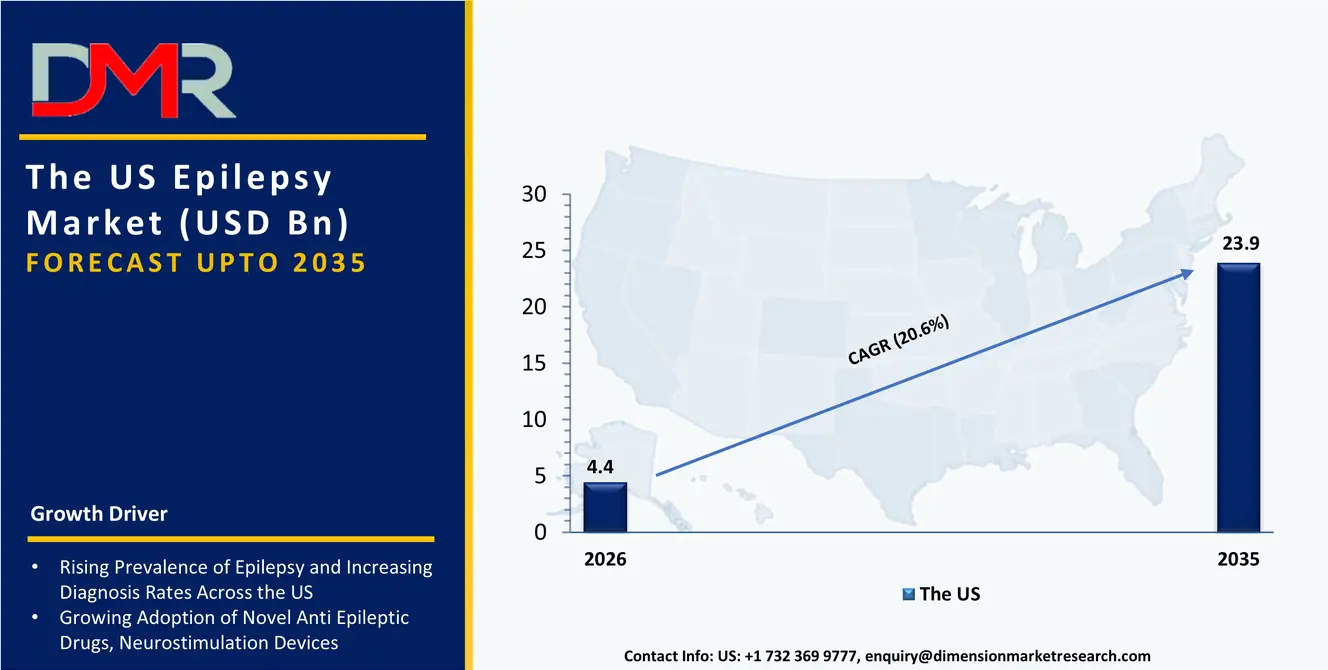
The United States remains the highest-value single-country epilepsy market globally, underpinned by a large diagnosed population living with focal and drug-resistant epilepsy. Growth is fueled by rapid formulary adoption of third-generation antiepileptic drugs, expanding insurance coverage for neuromodulation implantation and epilepsy surgery, and a steady cadence of new drug and device approvals broadening the therapeutic toolkit available to epileptologists and neurosurgeons.
ℹ
To learn more about this report –
Download Your Free Sample Report Here
Japan Epilepsy Market
Japan possesses a substantial diagnosed epilepsy population, sustained by a well-established neurology care infrastructure and high EEG and imaging diagnostic utilization. The market is distinguished by sophisticated epilepsy care protocols, early regulatory approval of novel antiseizure therapeutics, and influential clinical practice guidelines from national neurology societies alongside government-backed neurological health checkup programs.
Saudi Arabia Epilepsy Market
Market expansion is directly tied to the Kingdom's growing neurology infrastructure investment and rising epilepsy diagnosis rates as awareness campaigns expand. The Ministry of Health funds extensive access to antiepileptic drugs and diagnostic services, while Vision 2030's healthcare transformation agenda, emphasizing public-private partnerships and digital health, is opening significant opportunities for neuromodulation device vendors and AI-driven EEG diagnostic platforms.
Regulatory Landscape
The regulatory landscape for epilepsy therapeutics and devices is shaped by agencies that balance accelerated access for serious, treatment-resistant conditions with rigorous evidence requirements. In the United States, the FDA has demonstrated strong receptivity to novel antiseizure endpoints, including recent approvals for rare syndrome-specific indications such as CDKL5 deficiency disorder, alongside expanded pediatric indications for vagus nerve stimulation devices, reflecting sustained regulatory momentum for both pharmacological and device-based epilepsy innovation.
Epidemiology Analysis
The Epilepsy Epidemiology section assesses historical and forecast disease burden across the markets covered in the study. It evaluates prevalent cases, diagnosed patients, and treated populations, including pharmacotherapy, surgery, and neuromodulation.
Key Findings from Epilepsy Epidemiological Analysis
- Focal epilepsy remains the most commonly diagnosed seizure classification globally, sustaining the largest share of ongoing antiepileptic drug and diagnostic testing demand.
- A substantial proportion of diagnosed epilepsy patients continue to experience drug-resistant seizures despite trials of multiple antiepileptic drugs, underscoring sustained demand for neuromodulation and surgical evaluation pathways.
- Pediatric and adolescent syndrome-specific epilepsies, including Dravet syndrome and Lennox-Gastaut syndrome, represent a smaller but clinically intensive patient population driving concentrated orphan drug and genetic testing investment.
- Late-onset epilepsy linked to cerebrovascular disease is contributing to a growing elderly diagnosed population across high-income markets, an epidemiological shift with implications for age-appropriate antiepileptic drug selection.
By Region
North America
Europe
- Germany
- France
- The U.K.
- Italy
- Spain
- Rest of Europe
Asia-Pacific
- China
- Japan
- India
- Australia
- South Korea
- Rest of APAC
Latin America
- Mexico
- Brazil
- Rest of LATAM
Middle East & Africa
- Saudi Arabia
- The UAE
- South Africa
- Rest of MEA
Competitive Landscape
The Global Epilepsy Market features a diverse competitive landscape spanning multinational pharmaceutical giants, neuromodulation device leaders, orphan drug specialists, and emerging digital health innovators. UCB and Eisai dominate the antiepileptic drug market through extensive portfolios spanning first- through third-generation agents. LivaNova and NeuroPace are leading manufacturers of neuromodulation devices, competing on closed-loop stimulation technology and remote patient management platforms.
Some of the prominent players in the Global Epilepsy Market are:
- UCB S.A.
- Eisai Co. Ltd.
- GW Pharmaceuticals (Jazz Pharmaceuticals plc)
- SK Life Science Inc.
- Neurelis Inc.
- Marinus Pharmaceuticals Inc.
- Supernus Pharmaceuticals Inc.
- Sun Pharmaceutical Industries Ltd.
- Teva Pharmaceutical Industries Ltd.
- Sandoz Group AG
- Viatris Inc.
- Novartis AG
- Johnson & Johnson
- Pfizer Inc.
- GlaxoSmithKline plc
- Bausch Health Companies Inc.
- Zogenix Inc.
- LivaNova PLC
- NeuroPace Inc.
- Medtronic plc
- Boston Scientific Corporation
- Nevro Corp.
- Abbott Laboratories
- Siemens Healthineers AG
- GE HealthCare Technologies Inc.
- Natus Medical Incorporated
- Compumedics Limited
- Nihon Kohden Corporation
- Cadwell Industries Inc.
- Praxis Precision Medicines Inc.
- Stoke Therapeutics Inc.
- Xenon Pharmaceuticals Inc.
- Encoded Therapeutics Inc.
- Other Key Players
Recent Developments
- January 2026: The FDA approved an expanded pediatric indication for vagus nerve stimulation therapy in epilepsy, broadening device-based neuromodulation access for younger patients with drug-resistant seizures.
- January 2026: Stoke Therapeutics reported that the FDA did not agree to an expedited submission pathway for zorevunersen, its investigational treatment for Dravet syndrome, with the company continuing its ongoing Phase 3 program.
- December 2025: Praxis Precision Medicines ended its EMBOLD epilepsy study early due to strong efficacy results and announced plans to meet with the FDA to discuss a potential filing.
Report Details
| Report Characteristics |
| Market Size (2026) |
USD 13.5 Bn |
| Forecast Value (2035) |
USD 81.1 Bn |
| CAGR (2026–2035) |
22.0% |
| The US Market Size (2026) |
USD 4.4 Bn |
| Historical Data |
2021 – 2025 |
| Forecast Data |
2027 – 2035 |
| Base Year |
2025 |
| Estimate Year |
2026 |
| Segments Covered |
By Type of Epilepsy, By Condition and Severity, By Drug Generation, By Treatment Type, By Patient Age Group, By Diagnosis Method, and By End User |
| Regional Coverage |
North America – The US and Canada; Europe – Germany, France, The UK, Italy, Spain, Rest of Europe; Asia-Pacific – China, Japan, India, Australia, South Korea, Rest of APAC; Latin America – Mexico, Brazil, Colombia, Argentina, Rest of LATAM; Middle East & Africa – Saudi Arabia, The UAE, South Africa, Rest of MEA |
Frequently Asked Questions
How big is the Global Epilepsy Market?
▾ The Global Epilepsy Market is valued at USD 13.5 billion in 2026 and is projected to reach USD 81.1 billion by 2035, reflecting strong global demand for antiepileptic drugs, neuromodulation devices, and advanced EEG-based diagnostics.
What is the CAGR of the Global Epilepsy Market from 2026 to 2035?
▾ The market is projected to expand at a CAGR of 22.0% between 2026 and 2035, supported by sustained investment in third-generation antiepileptic drug classes, expanding neuromodulation adoption, and increasing diagnosis rates.
What factors are driving the growth of the Global Epilepsy Market?
▾ Growth is driven by the escalating prevalence of focal and drug-resistant epilepsy, landmark clinical trials expanding the eligible population for third-generation antiseizure drugs and neuromodulation devices, aging populations, government initiatives promoting early EEG-based screening, and the integration of AI-enabled seizure prediction and monitoring tools.
What are the major trends in the Global Epilepsy Market?
▾ Major trends include the consolidation of care within comprehensive epilepsy centers, the shift toward device-based neuromodulation for drug-resistant disease, AI-driven EEG interpretation, precision medicine in genetically defined epilepsy syndromes, and the use of seizure-frequency endpoints accelerating drug and device approvals.
Which region held the largest share of the Global Epilepsy Market in 2026?
▾ North America is expected to lead the global market with a 38.9% share in 2026, supported by high disease awareness, early adoption of novel therapeutics and devices, a well-established comprehensive epilepsy center ecosystem, and value-based neurological care policy experimentation.
Which region is expected to grow the fastest in the Global Epilepsy Market?
▾ Asia Pacific is expected to record the fastest growth at a 25.2% CAGR through 2035, driven by its large underdiagnosed epilepsy population, rapid expansion of neurology infrastructure, and government-led screening and awareness programs.
Who are the key players in the Global Epilepsy Market?
▾ Key market participants include UCB, Eisai, Jazz Pharmaceuticals, SK Life Science, Neurelis, Marinus Pharmaceuticals, Supernus Pharmaceuticals, LivaNova, NeuroPace, and Medtronic, among other pharmaceutical and neuromodulation device firms.
How is the Global Epilepsy Market segmented?
▾ The market is segmented by type of epilepsy, condition and severity, drug generation, treatment type, patient age group, diagnosis method, and end user, with regional analysis covering North America, Europe, Asia Pacific, Latin America, and the Middle East and Africa.