Market Overview
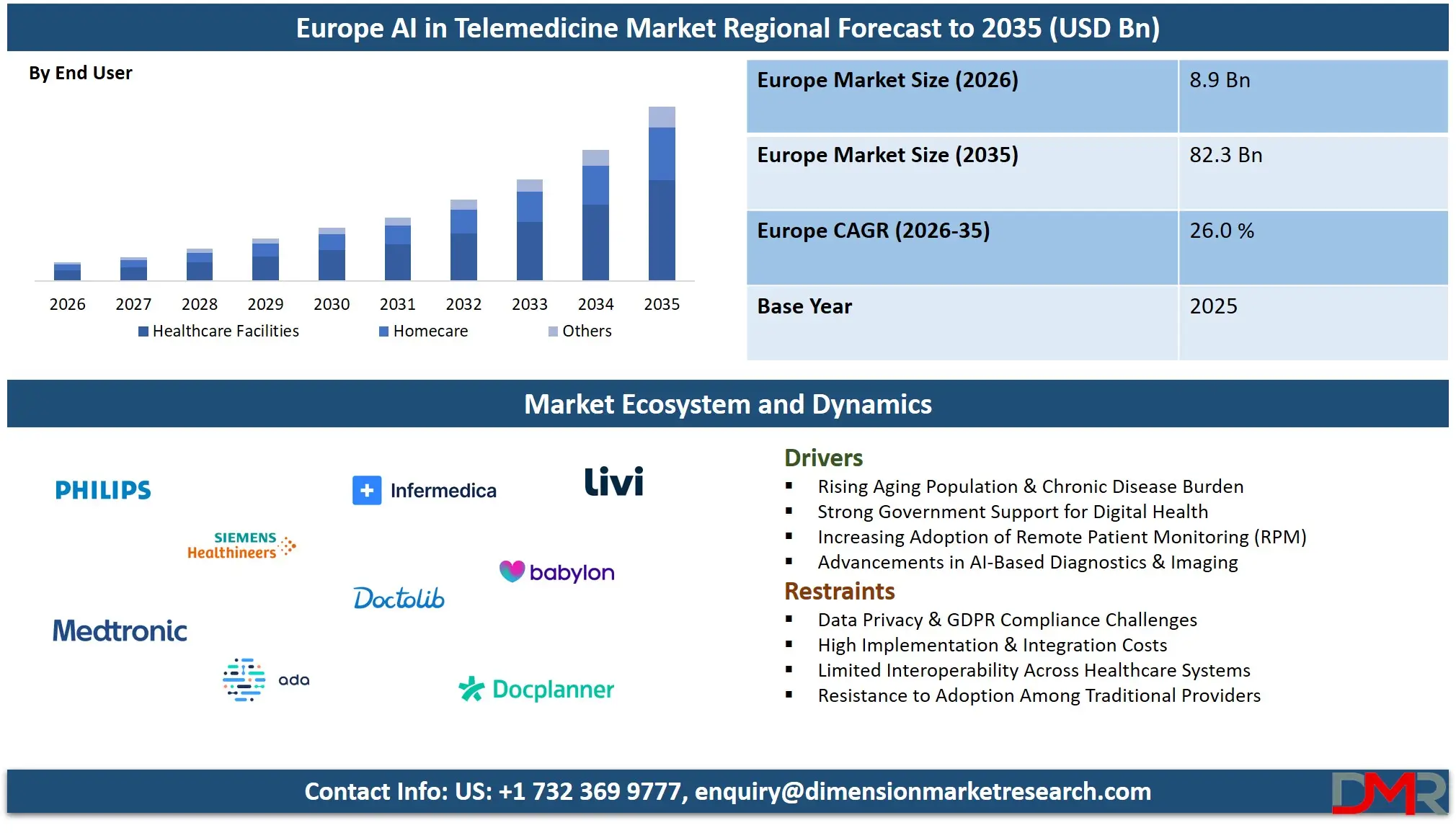
The Europe AI in Telemedicine Market is projected to reach USD 8.9 billion in 2026 and grow at a compound annual growth rate of 26.0%, reaching USD 82.3 billion by 2035.
ℹ
To learn more about this report –
Download Your Free Sample Report Here
Artificial Intelligence in telemedicine implies the usage of modern AI techniques such as machine learning, natural language processing, and predictive analysis in virtual healthcare services for improving the process of decision making, automating patient interaction, diagnosing patients remotely, and improving treatment results with the use of analytics and other data-driven processes.
The Europe Artificial Intelligence in Telemedicine market is characterized by the rapid growth of the digital health market landscape with the implementation of numerous telehealth solutions, intelligent monitoring devices, and AI-based clinical systems within hospitals, at home care sites, and other virtual care networks.
ℹ
To learn more about this report –
Download Your Free Sample Report Here
Europe AI in Telemedicine Market: Key Takeaways and Other Influencing Factors
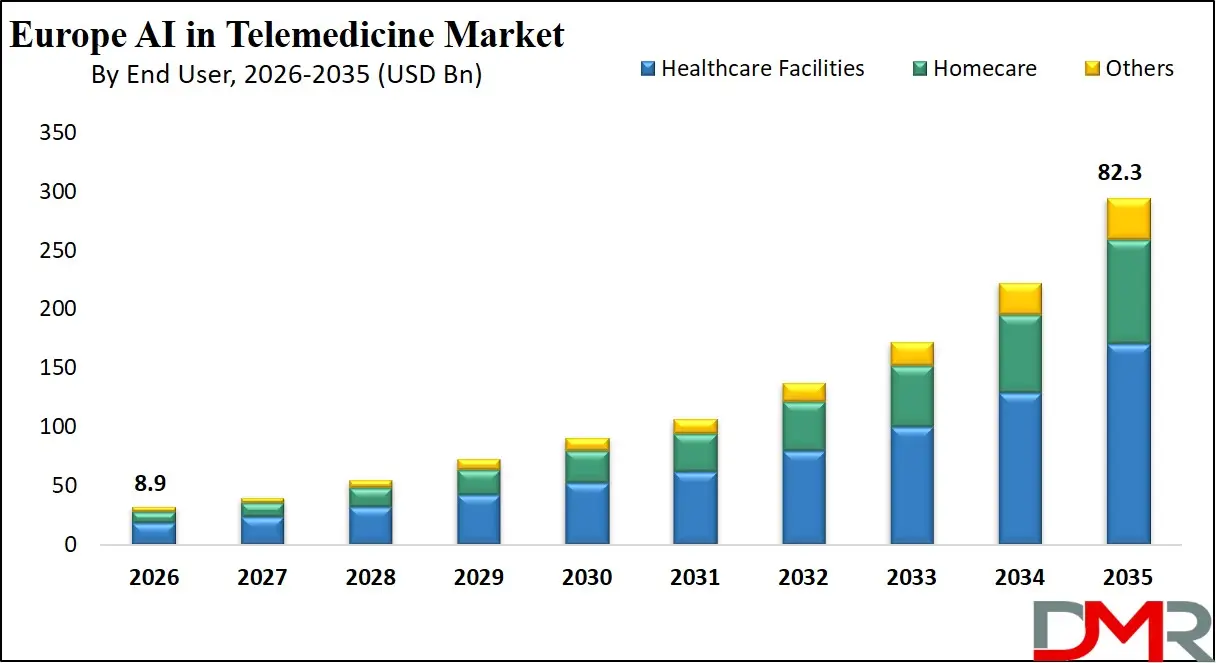
- Strong Market Expansion: The market is projected to grow from USD 8.9 billion in 2026 to USD 82.3 billion by 2035, reflecting rapid adoption of AI driven telemedicine solutions.
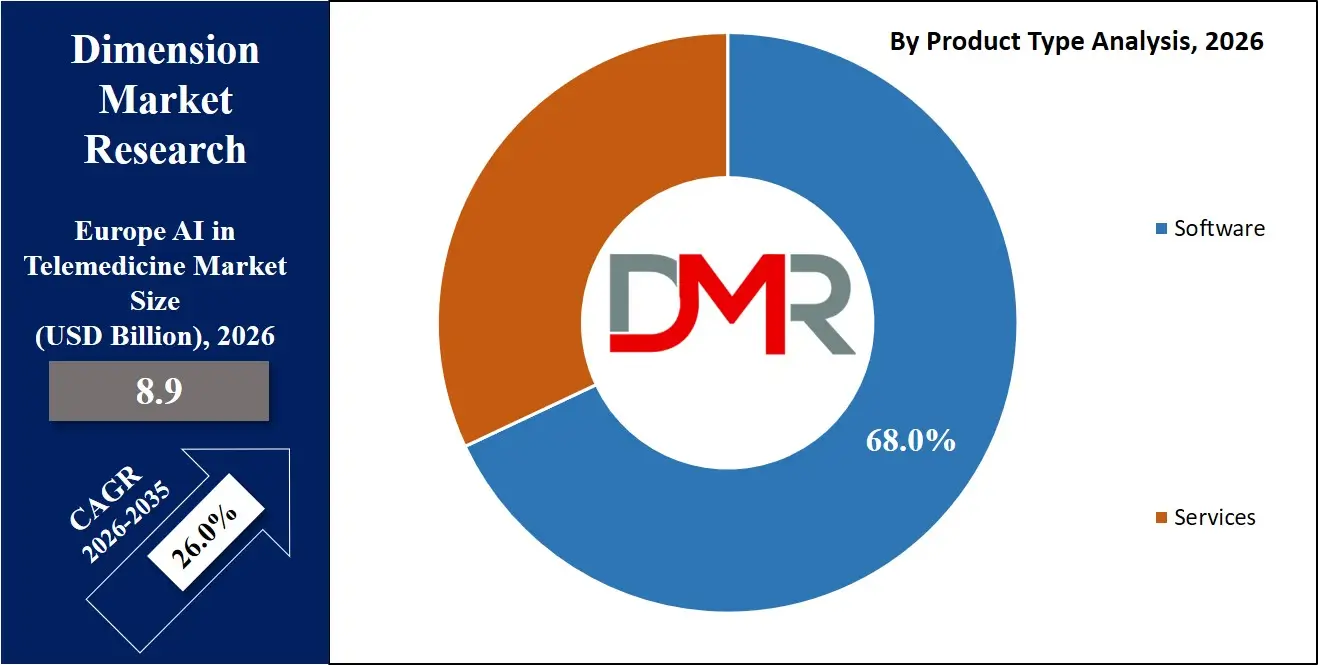
- Software Dominance: Software holds 68.0% share in 2026, driven by widespread use of AI platforms, predictive analytics, and clinical decision support tools.
- Remote Monitoring Leadership: Remote monitoring and predictive analysis lead with 29.0% share, supported by growing demand for continuous patient tracking and chronic care.
- Healthcare Facilities Lead Usage: Healthcare facilities account for 58.0% share in 2026 due to strong adoption of AI based telehealth systems in hospitals and clinics.
- High Internet Penetration (Eurostat): 93% of the EU population used the internet in 2024, enabling digital healthcare access.
- Telehealth Availability (WHO Europe): 77% of countries in the region offer telemedicine or remote monitoring services.
- Positive View on Data Sharing (European Commission): Over 80% of EU citizens support health data sharing to improve care outcomes.
Europe AI in Telemedicine Market: Use Cases
- Remote Patient Monitoring and Chronic Care: AI-powered remote monitoring enables continuous tracking of patient health through connected devices and wearable technology. It supports chronic disease management by detecting early warning signs, improving patient outcomes, and reducing hospital visits across digital healthcare systems in Europe.
- AI Driven Diagnostics and Imaging: Artificial intelligence enhances medical imaging and diagnostics by enabling faster and more accurate analysis of scans such as MRI and CT. It supports clinical decision-making and early disease detection within telehealth platforms and virtual care environments.
- Virtual Assistants and Patient Engagement: AI-based chatbots and virtual health assistants streamline patient interaction, symptom checking, and appointment scheduling. These tools improve patient engagement and reduce administrative workload through natural language processing and personalized healthcare support.
- Teleconsultation and Workflow Optimization: AI improves teleconsultation by enabling real-time insights, automated documentation, and better care coordination. It enhances clinical workflows and supports the efficient delivery of virtual healthcare services across Europe.
Impact of Iran Conflict on the Europe AI in Telemedicine Market
The current Iran crisis is affecting the world's supply chains, resulting in an increase in the cost of implementing AI-based telemedicine technology in Europe, thus leading to a reduction in investment in telemedicine technologies. On the other hand, geopolitical uncertainty is driving the need for remote treatment through increased reliance on telemedicine, given that there needs to be a guarantee of service provision despite the geopolitical uncertainty. The risks of cyber-attacks and interruptions in the network are also making the flaws in the implementation of AI-powered telemedicine evident.
Europe AI in Telemedicine Market: Market Dynamics
Driving Factors in the Europe AI in Telemedicine Market
Growing Demand for Digital Healthcare Access
The increasing need for accessible and efficient healthcare services is driving the adoption of AI powered telemedicine platforms across Europe. Rising patient preference for virtual care, along with expanding telehealth infrastructure, is supporting faster deployment of remote consultation and digital health solutions.
Advancements in AI and Predictive Analytics
Continuous innovation in machine learning, data analytics, and clinical decision support systems is enhancing diagnostic accuracy and treatment planning. These advancements are enabling smarter telemedicine ecosystems with improved patient outcomes and operational efficiency.
Restraints in the Europe AI in Telemedicine Market
Strict Data Privacy and Regulatory Compliance
Stringent data protection regulations such as GDPR create challenges for handling patient data across AI driven telehealth platforms. Compliance requirements can slow down deployment and increase operational complexity for healthcare providers.
High Integration and Implementation Costs
Deploying AI based telemedicine solutions requires significant investment in digital infrastructure, system integration, and staff training. These cost barriers can limit adoption, especially among smaller healthcare facilities.
Opportunities in the Europe AI in Telemedicine Market
Increased Use of Telemedicine Services
As more people become interested in wearable technologies, there will be greater interest in the use of AI to remotely monitor patients. This will facilitate constant monitoring of patients' health conditions and treatment of diseases through personalized care delivery.
Shift towards Individualized and Preventative Healthcare Models
Artificial intelligence analytics is being used to develop customized treatment options and diagnose diseases at an earlier stage. This presents new business opportunities in the healthcare industry through preventative care models.
Trends in the Europe AI in Telemedicine Market
Integration of AI with Telehealth Platforms
Healthcare providers are increasingly integrating artificial intelligence into telemedicine platforms to enhance automation, real-time insights, and patient engagement. This trend is improving clinical workflows and digital care coordination.
Growth of Virtual Care Ecosystems
The emergence of comprehensive virtual healthcare ecosystems combining teleconsultation, e-prescriptions, and digital therapeutics is reshaping care delivery. This trend is driving innovation in AI-based healthcare solutions across Europe.
Europe AI in Telemedicine Market: Research Scope and Analysis
By Product Type Analysis
Software is expected to dominate the product type segment with 68.0% market share in 2026, driven by increasing adoption of AI powered telemedicine platforms, predictive analytics, and clinical decision support systems that enhance virtual care delivery and patient outcomes across Europe.
ℹ
To learn more about this report –
Download Your Free Sample Report Here
Its scalability and integration with digital health infrastructure further support its growth. Meanwhile, services contribute through implementation, integration, and maintenance of telehealth solutions, enabling smooth operation of AI driven systems, though their share remains lower due to their support based and less recurring nature.
By Application Analysis
Remote Monitoring and Predictive Analysis are expected to dominate the application segment with 29.0% market share in 2026, owing to rising requirements for remote patient monitoring, management of chronic ailments, and analysis of health parameters in real-time through devices and artificial intelligence-based solutions in Europe. Remote monitoring solutions help detect health risks in advance and prevent unnecessary hospital admissions with preventive care. On the other hand, diagnostics and imaging solutions are witnessing substantial momentum due to their advanced image analysis capabilities and accurate diagnostics via artificial intelligence and machine learning technologies.
By End User Analysis
It is anticipated that healthcare establishments will lead as the dominant end users with a market share of 58.0% in 2026, owing to high acceptance of AI-based telemedicine technologies, advanced digital health platforms, and effective clinical workflow processes at hospitals and clinics in Europe. This includes the use of decision support systems and virtual consultation services for better health delivery. Conversely, the scope of home care applications is gaining traction as patients become receptive towards remote care enabled by AI-driven remote patient monitoring and customized treatment procedures through wearables.
The Europe AI in Telemedicine Market Report is segmented on the basis of the following:
By Product Type
By Application
- Virtual Nursing Assistant
- Remote Monitoring & Predictive Analysis
- Diagnostics & Medical Imaging
- Medication Adherence & Treatment Plans
- Teleconsultation Enhancement
- Others
By End User
- Homecare
- Healthcare Facilities
- Others
Impact of Artificial Intelligence on the Europe AI in Telemedicine Market
AI plays an important role in Europe AI in telemedicine market by increasing the efficacy of virtual healthcare using sophisticated analysis and machine learning methods. It helps to diagnose patients in a short period of time by analyzing their imaging reports and other health records in real time.
AI-driven predictive analysis helps in early diagnosis and improved management of diseases without frequent hospital visits. Patient communication is increased with the use of virtual assistants in managing appointments and consultations.
Europe AI in Telemedicine Market: Regional Analysis
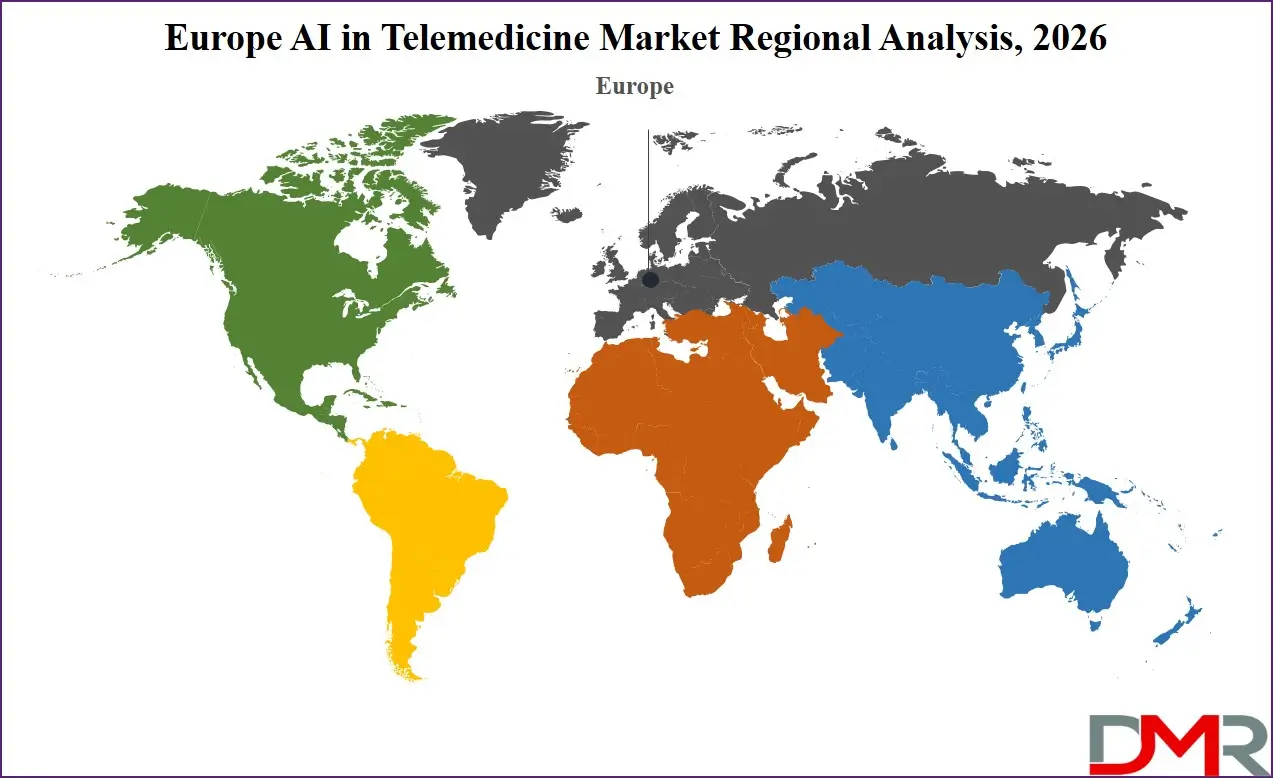
The Europe AI in telemedicine market is experiencing robust growth in Western Europe with leading economies like Germany, the UK, and France taking the lead because of their efficient healthcare system and high levels of technology adoption.
ℹ
To learn more about this report –
Download Your Free Sample Report Here
The North European region is making rapid progress owing to the backing of its governments and extensive use of telemedicine applications. On the other hand, the South and East European regions are steadily advancing with growing investment in the adoption of digital health technologies.
By Region
Europe
- Germany
- The U.K.
- France
- Italy
- Russia
- Spain
- Benelux
- Nordic
- Rest of Europe
Europe AI in Telemedicine Market: Competitive Landscape
The competitive landscape of the Europe AI in telemedicine market is characterized by strong innovation, with companies focusing on advanced analytics, remote patient monitoring, and AI driven clinical decision support solutions. Market players are actively investing in partnerships, platform integration, and regulatory compliance to strengthen their presence and expand digital healthcare capabilities. Increasing competition is driving continuous improvements in telehealth platforms, user experience, and scalable virtual care solutions across the region.
Some of the prominent players in the Europe AI in Telemedicine Market are:
- Koninklijke Philips N.V.
- Siemens Healthineers AG
- Medtronic plc
- Ada Health GmbH
- Infermedica
- Doctolib
- Kry (Livi)
- Babylon Health
- Docplanner
- Huma Therapeutics
- Luscii
- Medgate
- Tunstall Healthcare
- Visionable
- AccuRx
- eConsult Health
- Push Doctor
- Zava
- icometrix
- Doccla
- Other Key Players
Recent Developments in the Europe AI in Telemedicine Market
- February 2026: Talkiatry raised USD 210 million in Series D funding to expand AI powered telepsychiatry services and enhance its virtual care technology infrastructure.
- December 2025: Jutro Medical expanded its AI driven telemedicine platform capabilities by developing advanced medical AI agents to automate clinical workflows and enhance virtual care delivery across Europe.
- October 2025: Axelera AI launched its Europa AI chip designed to support high performance AI inference, enabling faster processing for healthcare analytics and digital health applications.
Report Details
| Report Characteristics |
| Market Size (2026) |
USD 8.9 Bn |
| Forecast Value (2035) |
USD 82.3 Bn |
| CAGR (2026–2035) |
26.0% |
| Historical Data |
2021 – 2025 |
| Forecast Data |
2027 – 2035 |
| Base Year |
2025 |
| Estimate Year |
2026 |
| Report Coverage |
Market Revenue Estimation, Market Dynamics, Competitive Landscape, Growth Factors and etc. |
| Segments Covered |
By Product Type (Software and Services), By Application (Virtual Nursing Assistant, Remote Monitoring & Predictive Analysis, Diagnostics & Medical Imaging, Medication Adherence & Treatment Plans, Teleconsultation Enhancement, and Others), By End User (Homecare, Healthcare Facilities, and Others) |
| Regional Coverage |
Europe – Germany, The UK, France, Russia, Spain, Italy, Benelux, Nordic, & Rest of Europe |
| Prominent Players |
Koninklijke Philips N.V., Siemens Healthineers AG, Medtronic plc, Ada Health GmbH, Infermedica, Doctolib, Kry (Livi), Babylon Health, Docplanner, Huma Therapeutics, Luscii, Medgate, Tunstall Healthcare, Visionable, AccuRx, eConsult Health, Push Doctor, Zava, icometrix, Doccla, and Other Key Players |
| Purchase Options |
We have three licenses to opt for: Single User License (Limited to 1 user), Multi-User License (Up to 5 Users) and Corporate Use License (Unlimited User) along with free report customization equivalent to 0 analyst working days, 3 analysts working days and 5 analysts working days respectively. |