Germany Radiopharmaceuticals Market Snapshot
- Germany Radiopharmaceuticals Market Size in 2026: USD 700 million
- Germany Radiopharmaceuticals Market Size in 2035: USD 1,430 million
- Germany CAGR from 2026 to 2035: 8.2%
- Technetium-99 is the leading radioisotope segment in 2026: 32.8%
- Diagnostic Radiopharmaceuticals is the leading type segment in 2026: 71.5%
- Cyclotrons is the leading source segment in 2026: 44.8%
- Oncology is the leading application segment in 2026: 52.6%
- Hospitals is the leading end-user segment in 2026: 60.4%
What is the Germany Radiopharmaceuticals Market and its Market Size?
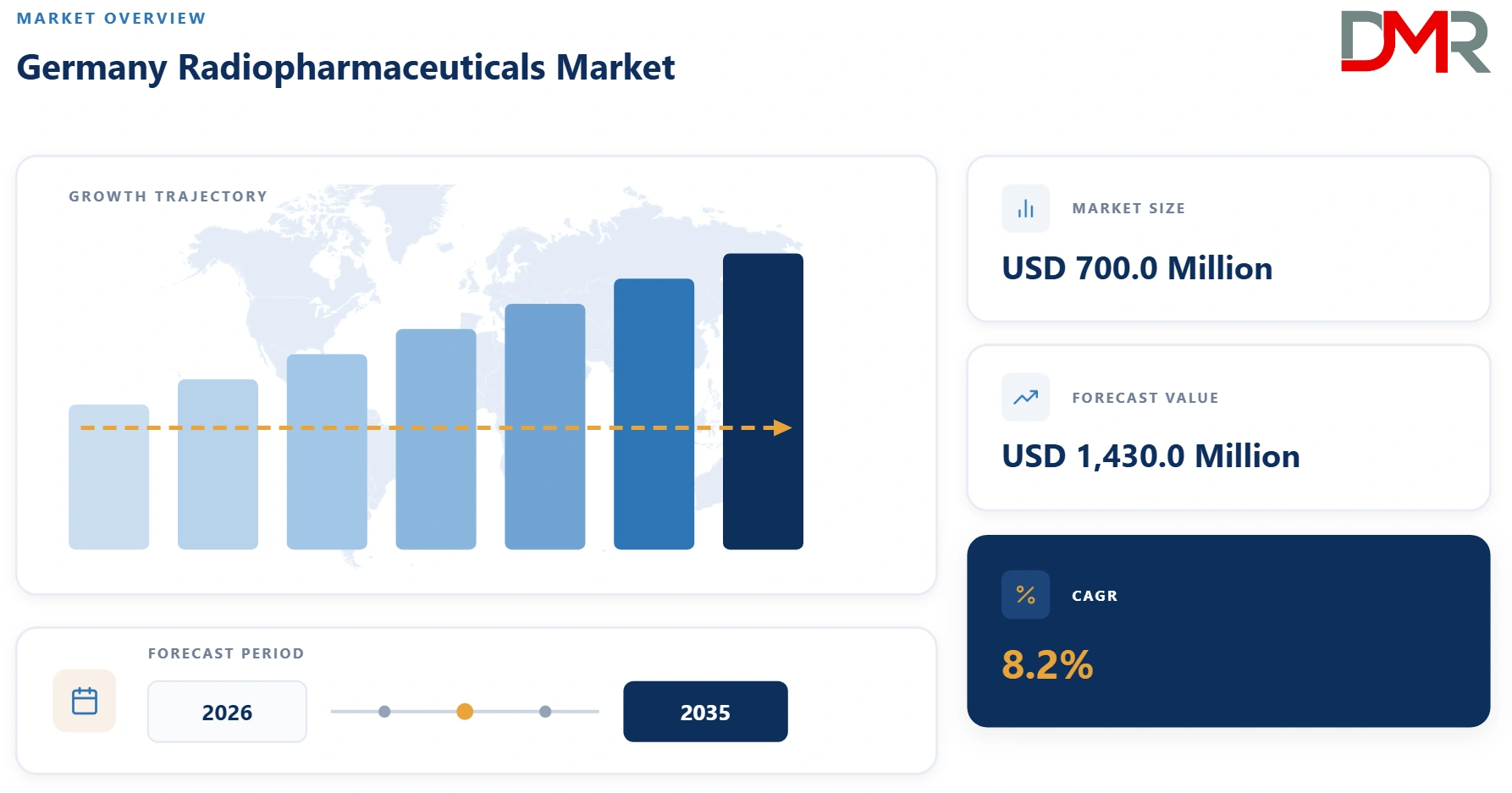
The Germany Radiopharmaceuticals Market is projected to reach USD 700 million in 2026 and grow at a compound annual growth rate of 8.2% until 2035 to reach a value of USD 1,430 million.
ℹ
To learn more about this report –
Download Your Free Sample Report Here
Radiopharmaceuticals are medicinal formulations containing radioactive isotopes used for diagnostic imaging and targeted therapy. Germany represents an important European market because of its established nuclear medicine infrastructure, extensive PET and SPECT imaging capacity, advanced oncology services, and domestic isotope production capabilities. Increasing cancer incidence, rising adoption of theranostics, expanding access to PSMA imaging, and commercialization of lutetium-based therapies are strengthening demand. Germany also benefits from companies specializing in radioisotope manufacturing, radiopharmaceutical development, cyclotron operation, contract manufacturing, and nuclear medicine equipment.
Use Cases
- Cancer Diagnosis and Staging: Radiopharmaceuticals such as fluorine-18 FDG, gallium-68 PSMA, gallium-68 DOTATATE, and technetium-99m compounds enable physicians to detect tumors, determine disease stages, assess metastatic spread, and monitor treatment response. PET and SPECT imaging provide functional information that conventional anatomical imaging may not identify, supporting earlier diagnosis, precise treatment selection, improved disease monitoring, and personalized oncology decisions across German hospitals.
- Targeted Radionuclide Therapy: Lutetium-177-based radiopharmaceuticals deliver therapeutic radiation directly to tumor cells expressing specific biological targets. These products are increasingly used for prostate cancer and neuroendocrine tumors, particularly when conventional treatments provide limited benefits. German nuclear medicine centers combine diagnostic imaging with targeted therapy, allowing clinicians to identify eligible patients, calculate individualized doses, evaluate treatment response, and minimize radiation exposure to healthy tissues.
- Cardiac and Neurological Imaging: Technetium-99m, fluorine-18, and other diagnostic tracers support myocardial perfusion imaging, evaluation of cardiac function, assessment of brain metabolism, and investigation of neurodegenerative disorders. These procedures help identify coronary artery disease, myocardial damage, epilepsy, dementia, and movement disorders. Germany’s aging population and growing clinical interest in biomarker-based neurological diagnosis are supporting broader utilization across specialist imaging departments and medical centers.
- Clinical Research and Drug Development: German universities, cancer institutes, biotechnology companies, and contract development organizations use radiopharmaceuticals to evaluate drug distribution, receptor expression, tumor biology, and therapeutic response. Molecular imaging can generate non-invasive pharmacokinetic and biodistribution data during clinical development. Radioisotope producers and specialized manufacturers also support clinical trials involving novel ligands, alpha emitters, lutetium-177 compounds, and companion diagnostic agents for precision medicine applications.
Key Takeaways
- Market Size: The Germany Radiopharmaceuticals Market is anticipated to be valued at USD 700 million in 2026 and is forecast to reach USD 1,430 million by 2035, expanding at a CAGR of 8.2%.
- Growth Outlook: Market expansion is supported by increasing utilization of PET and SPECT imaging, growing cancer treatment requirements, adoption of radioligand therapies, development of theranostic products, improved isotope production, investment in cyclotron capacity, and expanding clinical research involving targeted radionuclides.
- Primary Growth Drivers: Rising cancer prevalence, Germany’s aging population, established nuclear medicine infrastructure, favorable clinical acceptance of molecular imaging, increasing PSMA testing, growing use of lutetium-177 therapies, and development of shorter-lived diagnostic tracers are accelerating demand.
- By Radioisotope Analysis: Technetium-99 is projected to lead with a 32.8% share in 2026, supported by extensive SPECT use, favorable imaging properties, broad clinical availability, and application across cardiology, oncology, bone imaging, and organ-function assessment. Lutetium-177 is expected to record the highest CAGR because of expanding targeted radionuclide therapy.
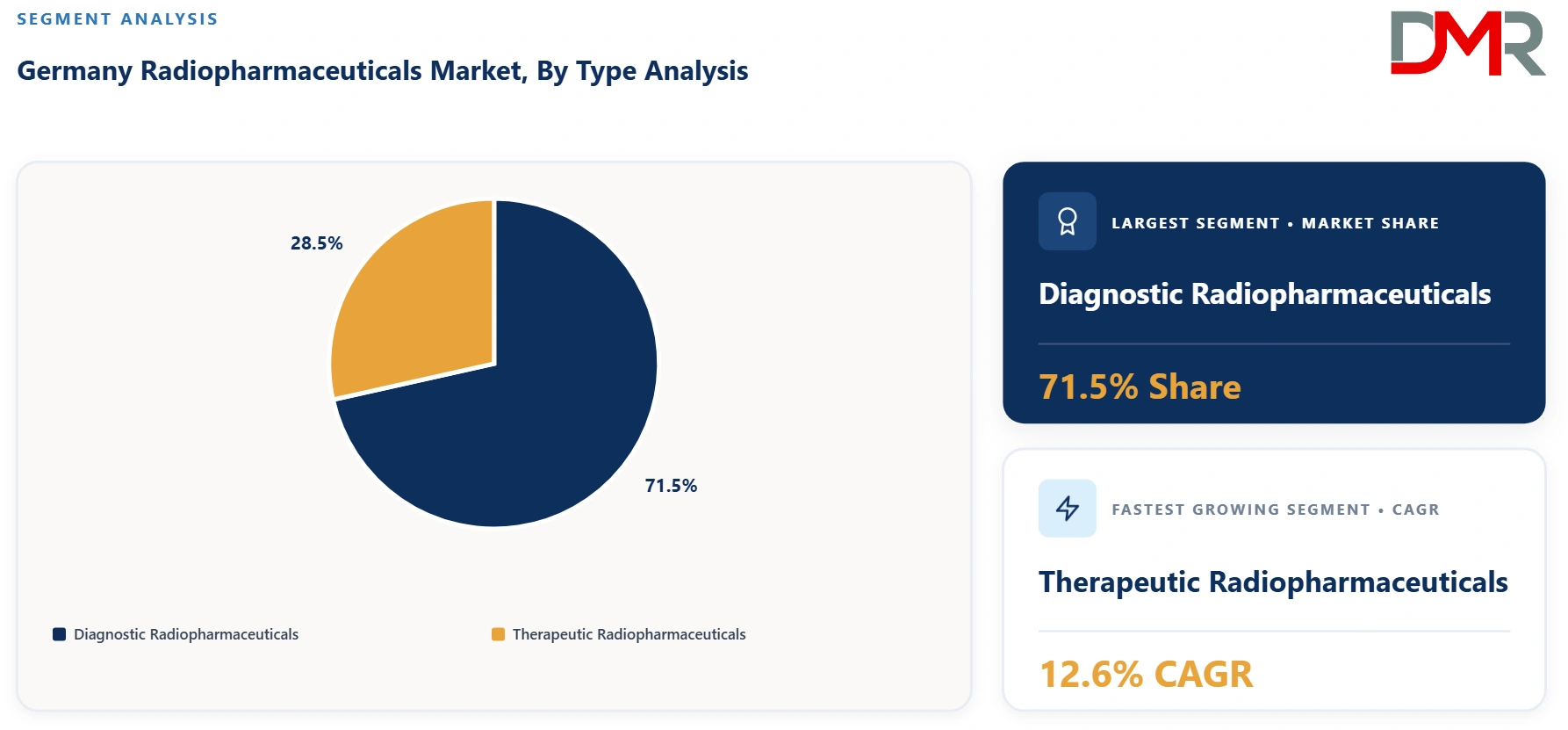
- By Type Analysis: Diagnostic Radiopharmaceuticals is anticipated to dominate with a 71.5% share in 2026, driven by established PET and SPECT procedure volumes. Therapeutic Radiopharmaceuticals is expected to grow faster as targeted treatments for prostate cancer and neuroendocrine tumors gain clinical adoption.
- By Source Analysis: Cyclotrons are projected to lead with a 44.8% share in 2026, supported by demand for fluorine-18 and other short-lived PET isotopes. Generators are expected to record comparatively strong growth because they enable decentralized access to isotopes such as gallium-68 without requiring an on-site cyclotron.
- By Application Analysis: Oncology is anticipated to dominate with a 52.6% share in 2026, reflecting widespread use of radiopharmaceuticals in tumor detection, staging, treatment selection, therapeutic delivery, and response monitoring. Oncology is also expected to remain the fastest-growing application.
- By End-User Analysis: Hospitals are expected to lead with a 60.4% share in 2026, supported by integrated nuclear medicine departments, oncology programs, inpatient facilities, and radiation-safety infrastructure. Medical Imaging Centers are likely to exhibit the highest CAGR as outpatient PET and SPECT capacity expands.
How AI and Generative AI are Transforming the Germany Radiopharmaceuticals Market?
AI is improving radiopharmaceutical discovery, image reconstruction, lesion detection, patient selection, dosimetry, and clinical workflow management across Germany. Machine-learning models can evaluate PET and SPECT images, reduce noise, shorten scan times, quantify tracer uptake, and identify subtle abnormalities. In therapeutic applications, AI supports organ segmentation and personalized radiation-dose calculations. Generative AI can accelerate ligand design, simulate isotope-target interactions, prepare clinical documentation, and identify suitable trial participants. However, adoption requires validated datasets, explainable algorithms, secure health-data management, regulatory compliance, and continued clinical supervision to prevent inaccurate diagnostic or treatment recommendations.
Key Drivers in the Germany Radiopharmaceuticals Market
Rising Cancer Burden and Demand for Precision Oncology
Germany’s substantial cancer burden is increasing demand for accurate tumor detection, staging, treatment selection, and response monitoring. The International Agency for Research on Cancer estimated more than 600,000 new cancer cases in Germany during 2022, highlighting the need for advanced diagnostic and therapeutic options. PET radiopharmaceuticals help identify disease activity at the molecular level, while PSMA-targeted agents support prostate cancer management. Lutetium-177 therapies are expanding treatment possibilities for patients with metastatic prostate cancer and neuroendocrine tumors, strengthening the integration of diagnosis and therapy through theranostic care pathways.
Advanced Nuclear Medicine and Isotope Production Infrastructure
Germany has a strong network of university hospitals, nuclear medicine clinics, cyclotron facilities, research institutes, isotope producers, and specialized radiopharmaceutical manufacturers. Local companies such as ITM, Eckert & Ziegler, ROTOP Pharmaka, ABX, and Siemens Healthineers contribute to isotope production, PET tracer supply, manufacturing services, clinical development, and imaging infrastructure. Siemens Healthineers reports that its global radiopharmaceutical network supplies more than 2.1 million doses annually to over 3,000 imaging centers. Domestic production capabilities improve supply reliability and support clinical trials, commercialization, and timely distribution of short-lived radiopharmaceuticals.
Restraints in the Germany Radiopharmaceuticals Market
Short Half-Lives and Complex Distribution Requirements
Many radiopharmaceuticals have short radioactive half-lives, making manufacturing, quality testing, transportation, scheduling, and administration highly time-sensitive. Fluorine-18 products generally require delivery within hours, creating dependence on regional cyclotron networks and coordinated logistics. Production interruptions, transport delays, equipment failures, or insufficient hospital preparation can result in unusable doses and treatment postponements. Manufacturers must maintain redundant production capacity, validated cold-chain or radiation-controlled transportation, specialized packaging, and continuous communication with nuclear medicine departments. These requirements increase operating costs and can limit access in locations situated far from production facilities.
High Capital Costs and Specialized Workforce Limitations
Establishing cyclotrons, hot cells, cleanrooms, automated synthesis systems, radiation-monitoring infrastructure, and compliant manufacturing facilities requires substantial investment. Operators must also employ nuclear pharmacists, radiochemists, medical physicists, nuclear medicine physicians, radiation-protection specialists, and trained logistics personnel. Germany’s strict pharmaceutical manufacturing and radiation-safety requirements increase validation, documentation, maintenance, and training expenses. Workforce shortages can constrain production schedules and hospital treatment capacity, particularly as radioligand therapy volumes expand. Smaller imaging centers may therefore depend on external suppliers, limiting their flexibility and increasing exposure to delivery disruptions or regional supply shortages.
Growth Opportunities in the Germany Radiopharmaceuticals Market
Expansion of Theranostics and Lutetium-177 Therapies
Theranostics represents a major opportunity by pairing a diagnostic radiopharmaceutical with a therapeutic agent directed toward the same molecular target. Growing use of PSMA-based imaging and therapy in prostate cancer is expanding demand for gallium-68 and fluorine-18 diagnostic products alongside lutetium-177 treatments. Additional opportunities are emerging in neuroendocrine tumors and other solid cancers. Germany’s isotope producers, research institutions, and nuclear medicine centers are well positioned to participate in clinical development, commercial manufacturing, individualized dosimetry, and patient treatment. Expansion will require additional therapy rooms, trained personnel, isotope capacity, and radioactive-waste management systems.
Development of Novel Isotopes and Targeted Compounds
Growing pharmaceutical interest in actinium-225, lead-212, copper-64, copper-67, zirconium-89, and novel lutetium-177 ligands creates opportunities for German research institutions and manufacturing companies. These isotopes may enable more precise imaging, longer-term antibody tracking, or highly targeted cancer therapy. Germany can leverage its expertise in radiochemistry, isotope separation, automated synthesis, clinical trials, and contract manufacturing to support international developers. Opportunities also exist in developing ready-to-use radiopharmaceutical kits, improving generator systems, expanding isotope recycling, and creating production technologies that reduce impurities, improve specific activity, and increase manufacturing reliability.
Trends in the German Radiopharmaceuticals Market
Shift from Diagnostic Imaging Toward Radioligand Therapy
Diagnostic agents continue to generate most market revenue, but therapeutic radiopharmaceuticals are gaining momentum. Pharmaceutical companies are investing in radioligand pipelines targeting prostate cancer, neuroendocrine tumors, and other solid tumors. Lutetium-177 is receiving significant attention because it combines an effective therapeutic radiation range with imaging capabilities and manageable clinical handling. German companies are expanding isotope production and contract manufacturing to serve this demand. The transition is encouraging hospitals to establish multidisciplinary theranostic programs connecting nuclear medicine, oncology, urology, radiology, pharmacy, and medical physics for coordinated patient selection and treatment.
Growing Adoption of PET Tracers Beyond FDG
Fluorine-18 FDG remains widely used, but German imaging centers are increasingly adopting specialized PET tracers for prostate cancer, neuroendocrine tumors, neurological disorders, amyloid imaging, and treatment planning. Gallium-68 and fluorine-18 PSMA products are strengthening prostate cancer diagnosis, while zirconium-89 supports longer-duration tracking of monoclonal antibodies in research. This diversification is encouraging producers to establish flexible manufacturing platforms capable of handling multiple products. It is also increasing demand for automated synthesis, standardized quality controls, digital scheduling, and reliable distribution systems capable of managing different half-lives and clinical requirements.
Research Scope and Analysis
This research analyzes Germany radiopharmaceuticals demand by radioisotope including fluorine derivatives technetium lutetium gallium zirconium carbon tracers and others, by type covering diagnostic and therapeutic products, by source spanning cyclotrons reactors and generators, by application across oncology cardiology neurology endocrinology and others, by end user covering hospitals imaging centers cancer research institutes and others nationwide facilities.
ℹ
To learn more about this report –
Download Your Free Sample Report Here
By Radioisotope Analysis
Technetium-99 is expected to dominate the radioisotope segment with a 32.8% market share in 2026, supported by extensive SPECT imaging applications and established generator availability. Lutetium-177 is projected to achieve the highest CAGR of approximately 10.7%, owing to growing adoption in prostate cancer and neuroendocrine tumor therapies.
By Type Analysis
Diagnostic Radiopharmaceuticals are projected to lead the type segment with a 71.5% share in 2026, supported by high PET and SPECT procedure volumes. Therapeutic Radiopharmaceuticals are expected to record the highest CAGR of approximately 12.6%, driven by targeted radioligand therapies and expanding oncology indications.
By Source Analysis
Cyclotrons are anticipated to dominate the source segment with a 44.8% share in 2026, reflecting strong demand for fluorine-18 and other short-lived PET isotopes. Generators are expected to register the highest CAGR of approximately 9.4%, because they facilitate decentralized isotope availability without requiring an on-site cyclotron.
By Application Analysis
Oncology is projected to lead the application segment with a 52.6% share in 2026, supported by radiopharmaceutical use in cancer diagnosis, staging, treatment, and monitoring. Oncology is also expected to record the highest CAGR of approximately 9.1%, due to growing PSMA imaging and radioligand therapy utilization.
By End-User Analysis
Hospitals are expected to dominate the end-user segment with a 60.4% share in 2026, owing to their integrated imaging, oncology, and radiation-safety infrastructure. Medical Imaging Centers are projected to record the highest CAGR of approximately 8.9%, as specialized outpatient PET and SPECT services expand.
The Germany Radiopharmaceuticals Market Report is Segmented Based on the Following
By Radioisotope
- Fluorine-18 Derivatives
- Technetium-99
- Lutetium-177
- Gallium-68
- Zirconium-89
- 11C-choline
- 14C-urea
- Other Radioisotopes
By Type
- Diagnostic Radiopharmaceuticals
- Therapeutic Radiopharmaceuticals
By Source
- Cyclotrons
- Nuclear Reactors
- Generators
By Application
- Oncology
- Cardiology
- Neurology
- Endocrinology
- Other Applications
By End User
- Hospitals
- Medical Imaging Centers
- Cancer Research Institutes
- Other End Users
Regulatory Landscape
Radiopharmaceuticals in Germany are governed by pharmaceutical, radiation-protection, transport, manufacturing, and clinical-use requirements. Commercial products generally require authorization under German and European pharmaceutical frameworks, while production facilities must follow Good Manufacturing Practice. The German Radiation Protection Act and Radiation Protection Ordinance regulate occupational exposure, patient protection, radioactive-material handling, facility licensing, and waste management. Short-lived, locally prepared products may follow specific exemptions or hospital-production provisions. Regulation strengthens patient safety and product quality but increases development expenses, documentation, validation, and operational complexity. Companies that establish compliant production, reliable pharmacovigilance, qualified personnel, and secure isotope transportation can build substantial competitive advantages.
Technology Analysis
Technology development is improving isotope production, radiochemical purity, automated synthesis, imaging quality, and personalized dosimetry. Digital PET systems offer higher sensitivity and faster image acquisition, while PET and SPECT reconstruction algorithms improve lesion detection and quantitative analysis. Automated synthesis modules and hot-cell systems reduce occupational exposure and support reproducible production. Generator technologies are expanding decentralized access to gallium-68, while reactor and accelerator improvements support lutetium-177 and emerging therapeutic isotopes. Opportunities exist in total-body PET, AI-assisted interpretation, microfluidic synthesis, and individualized dose planning. However, capital requirements, interoperability limitations, cybersecurity risks, and the need for technical validation may slow adoption.
Competitive Landscape
The Germany Radiopharmaceuticals Market includes multinational pharmaceutical companies, domestic isotope manufacturers, imaging technology providers, research-focused biotechnology firms, and specialized contract manufacturers. Competition centers on isotope availability, product portfolios, manufacturing quality, clinical pipelines, regulatory expertise, distribution reach, and supply reliability. German companies hold strong positions in lutetium-177 production, radiochemical manufacturing, PET tracers, and development services. Strategic partnerships are increasing as drug developers secure long-term isotope supply and manufacturing capacity. Companies are also investing in cyclotrons, hot cells, alpha-emitter laboratories, and theranostic pipelines to capture growing oncology demand.
Some of the Prominent Players in the Germany Radiopharmaceuticals Market Are
- ITM Isotope Technologies Munich SE
- Eckert & Ziegler SE
- Siemens Healthineers AG
- ROTOP Pharmaka GmbH
- ABX Advanced Biochemical Compounds GmbH
- Bayer AG
- Novartis AG
- Advanced Accelerator Applications
- Curium Pharma
- GE HealthCare
- Cardinal Health
- Lantheus Holdings Inc.
- Telix Pharmaceuticals Limited
- Jubilant Radiopharma
- NorthStar Medical Radioisotopes LLC
- SHINE Technologies LLC
- Nucleus RadioPharma
- Monrol Nuclear Products Co.
- Bracco S.p.A.
- Blue Earth Diagnostics
- Life Molecular Imaging GmbH
- Alliance Medical
- IBA Radiopharma Solutions
- IRE ELiT
- Isotopia Molecular Imaging
- NTP Radioisotopes
- BWXT Medical Ltd.
- Fusion Pharmaceuticals
- POINT Biopharma
- RayzeBio Inc.
- Perspective Therapeutics Inc.
- Clarity Pharmaceuticals
- Radiopharm Theranostics
- Ariceum Therapeutics
- Bicycle Therapeutics plc
- Molecular Partners AG
- Oncoinvent AS
- AdvanCell
- RadioMedix Inc.
- SOFIE Biosciences
- Other Key Players
Recent Developments
- February 2026: Eckert & Ziegler entered a development agreement with Molecular Partners to support Radio-DARPin candidates using actinium-225 and lutetium-177. The partnership will use Eckert & Ziegler’s specialized laboratories, including its newly established alpha-emitter laboratory in Berlin.
- November 2025: ITM announced FDA acceptance of its New Drug Application for lutetium-177 edotreotide, also known as ITM-11, for gastroenteropancreatic neuroendocrine tumors, representing an important regulatory milestone for the Germany-based radiopharmaceutical developer.
- November 2025: ROTOP Pharmaka announced its largest radiopharmaceutical investment program in Germany, involving a double-digit million-euro commitment to expand its Dresden-Rossendorf operations and strengthen production capacity for diagnostic and therapeutic products.
- May 2025: ITM and Radiopharm Theranostics signed a clinical supply agreement under which ITM will provide non-carrier-added lutetium-177 for Radiopharm’s clinical development activities involving targeted radiopharmaceutical candidates.
Report Details
| Report Characteristics |
| Market Size (2026) |
700.0 Mn |
| Forecast Value (2035) |
USD 1,430.0 Mn |
| CAGR (2026–2035) |
8.2% |
| Historical Data |
2021 – 2025 |
| Forecast Data |
2026 – 2035 |
| Base Year |
2025 |
| Segments Covered |
By Radioisotope, By Type, By Source, By Application, By End User |
Frequently Asked Questions
How big is the Germany Radiopharmaceuticals Market?
▾ The Germany Radiopharmaceuticals Market is estimated at USD 700 million in 2026 and is projected to reach USD 1,430 million by 2035.
What is the CAGR of the Germany Radiopharmaceuticals Market from 2026 to 2035?
▾ The Germany Radiopharmaceuticals Market is expected to expand at a compound annual growth rate of approximately 8.2% from 2026 to 2035.
What factors are driving the growth of the Germany Radiopharmaceuticals Market?
▾ Growth is driven by increasing cancer incidence, expanding PET and SPECT imaging, adoption of theranostics, growing utilization of lutetium-177 therapies, advanced nuclear medicine infrastructure, and investment in isotope production.
What are the major trends in the Germany Radiopharmaceuticals Market?
▾ Major trends include growing radioligand therapy adoption, increasing use of PSMA-targeted agents, development of novel isotopes, expansion of theranostic programs, AI-supported image analysis, and investment in domestic production capacity.
Who are the key players in the Germany Radiopharmaceuticals Market?
▾ Key players include ITM Isotope Technologies Munich, Eckert & Ziegler, Siemens Healthineers, ROTOP Pharmaka, ABX, Bayer, Novartis, Curium Pharma, GE HealthCare, Telix Pharmaceuticals, and Lantheus Holdings.
How is the Germany Radiopharmaceuticals Market segmented?
▾ The market is segmented by radioisotope, type, source, application, and end user. Major categories include technetium-99, fluorine-18, lutetium-177, diagnostic and therapeutic products, cyclotrons, reactors, generators, oncology applications, hospitals, and imaging centers.