Market Snapshot
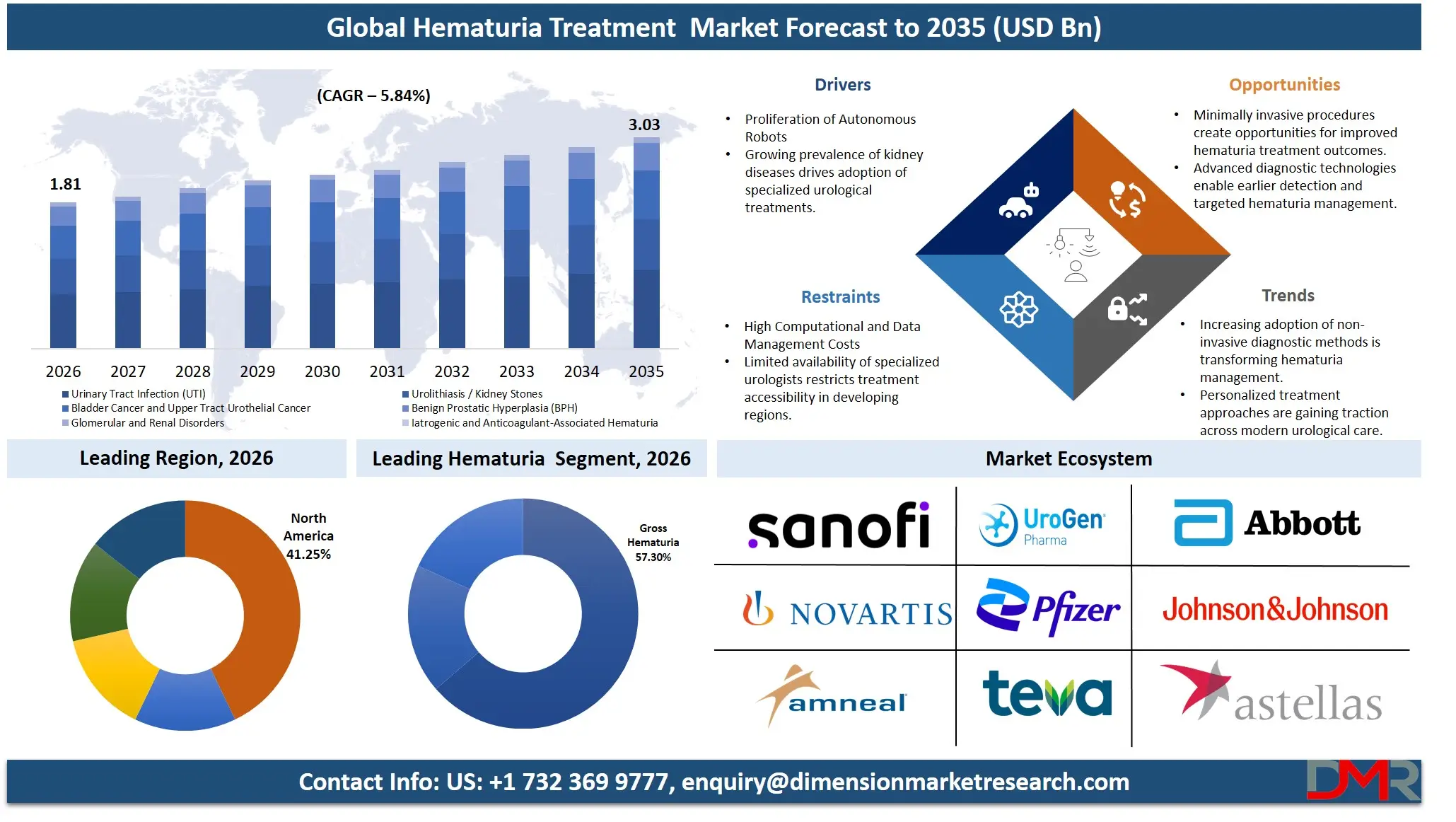
- The Global Hematuria Treatment Market is estimated at USD 1.81 Billion in 2026 and USD 1.71 Billion in 2025.
- The market is projected to reach USD 3.03 Billion by 2035, growing at a CAGR of 5.84%.
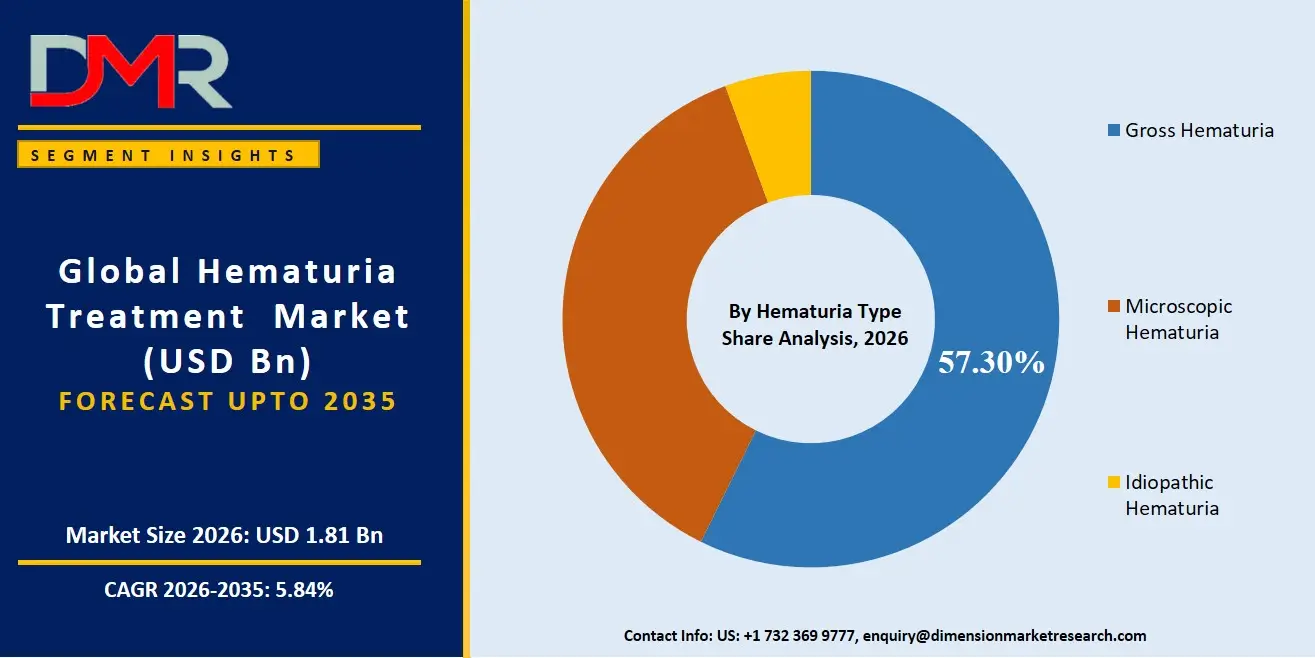
- Gross Hematuria led the Hematuria Type segment with a 57.30% share.
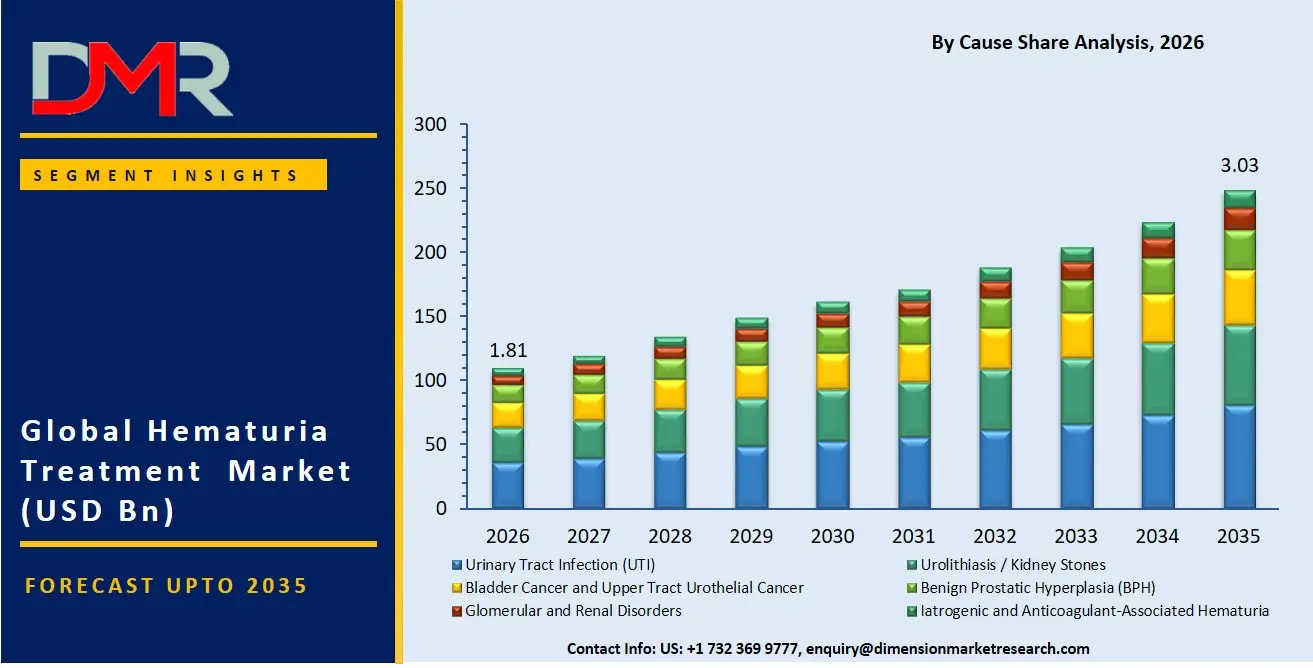
- Urinary Tract Infection led the Cause segment with a 39.21% share.
- Pharmacotherapy led the Treatment Type segment with a 37.17% share.
- Antibiotics led the Drug Type segment with a 37.9% share.
- Oral led the Route of Administration segment with a 65.81% share.
- Hospitals led the End User segment with a 47.56% share.
- Hospital Pharmacies led the Distribution Channel segment with a 47.86% share.
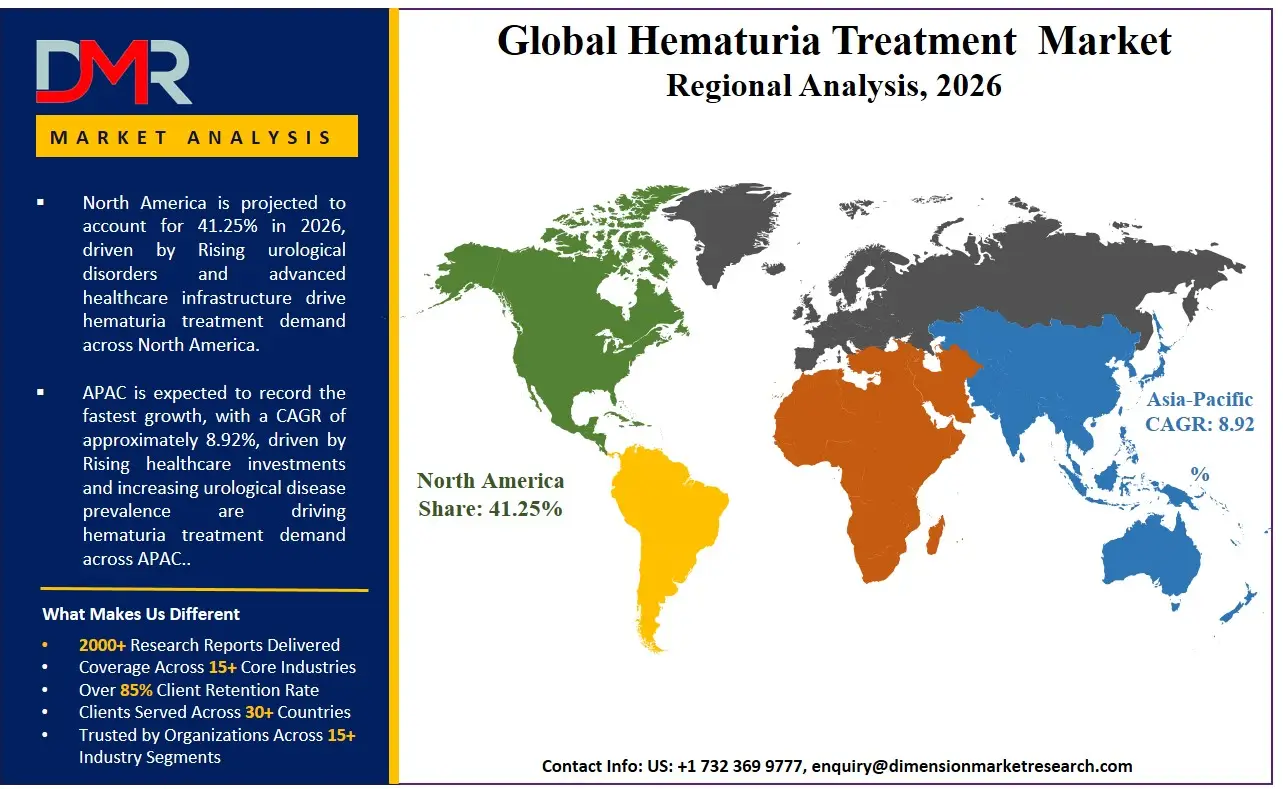
- North America led all regions with a 41.25% revenue share.
Market Overview
The hematuria treatment market covers drugs, procedures, and devices used to diagnose and manage blood in urine across gross, microscopic, and idiopathic presentations. It excludes broader urology equipment unrelated to bleeding control and excludes oncology drugs not tied to hematuria-presenting cancers. Buyers in this market include hospital urology departments, specialty clinics, and ambulatory surgical centers responding to a workup pathway rather than a single disease.
Hematuria sits inside the wider urology and nephrology diagnostics industry, where blood-in-urine findings function as an entry symptom rather than a standalone condition. As per JMIR Formative Research, hematuria accounts for over 20% of all urological evaluations, with prevalence ranging from 1.7% to 31.1% across populations. That spread shows how inconsistent collection and testing protocols are across health systems, which directly shapes how vendors price diagnostic kits and design referral-support tools for primary care.
Technology plays a narrower role here than in most diagnostic markets. Vendors are not yet automating triage at scale, but molecular urine tests are emerging as a layer on top of traditional microscopy, a shift visible in recent acquisition activity among diagnostics specialists.
Market Size and Forecast
The Global Hematuria Treatment Market size is estimated at USD 1.81 Billion in 2026 from USD 1.71 Billion in 2025, and is projected to reach USD 3.03 Billion by 2035, exhibiting a CAGR of 5.84% during the forecast period.
Growth through the decade rests on a widening diagnosed pool rather than on price inflation of existing therapies. Findings from JMIR Formative Research show that patients with ≥3 RBC/HPF received a urologic diagnosis in 23.73% of cases, compared with just 8.52% among patients below that threshold. Risk stratification therefore concentrates spending on a smaller, higher-certainty patient group instead of spreading thin across every positive dipstick result.
ℹ
To learn more about this report –
Download Your Free Sample Report Here
Low-risk classification carries its own ceiling on testing volume. The same cohort showed 100% of low-risk patients with ≥3 RBC/HPF had no urologic diagnosis, against 75.62% in the intermediate or high-risk group, a large effect by Cohen's h measure. Forecast assumptions in this market lean on guideline adherence improving over time, since StatPearls reports that 84% of patients with a positive microscopic urinalysis were never further evaluated. Closing even a fraction of that gap would pull diagnostic and treatment volume forward faster than current CAGR projections assume.
UroGen Pharma's regulatory progress illustrates how new therapeutic options expand the treated population. In June 2025, the company received FDA approval for ZUSDURI, an intravesical mitomycin solution and the first non-surgical option for recurrent low-grade intermediate-risk non-muscle invasive bladder cancer. Bladder cancer is a leading cause of gross hematuria, so approvals tied to it sit close to forecast assumptions for treatment-stage revenue.
Hematuria Type Analysis
Gross Hematuria led the Hematuria Type segment with a 57.30% share.
Visible blood in urine drives most clinical visits because patients cannot ignore it the way they ignore microscopic findings. Gross Hematuria pulls a disproportionate share of urgent referrals, cystoscopy bookings, and imaging orders compared with cases detected only through lab testing.
Microscopic Hematuria remains the larger long-term volume driver even without matching revenue share today. Idiopathic Hematuria, where no cause is ever confirmed, creates a recurring monitoring revenue stream for clinics rather than a one-time treatment event. Vendors building decision-support tools increasingly target the microscopic category, since StatPearls data shows genitourinary malignancy appears in about 3% of microscopic cases versus 10% to 20% of gross cases, a gap that shapes how aggressively each category gets worked up.
ℹ
To learn more about this report –
Download Your Free Sample Report Here
Cause Analysis
With a 39.21% share, Urinary Tract Infection outpaced all other Cause categories.
UTI-driven hematuria converts directly into antibiotic prescriptions, making it the most transactionally simple category for pharmacy revenue. Recurrent UTI patients also generate repeat hematuria testing, compounding volume across a single buyer over time.
Urolithiasis follows closely, since stone-related bleeding often requires both medication and a procedural intervention, lifting average revenue per case. Bladder cancer and upper tract urothelial cancer carry lower volume but far higher per-patient spend, given cystoscopy and surveillance costs. BPH and glomerular disorders round out an aging-population tail, while iatrogenic and anticoagulant-associated cases are growing as anticoagulant prescribing expands across cardiology.
ℹ
To learn more about this report –
Download Your Free Sample Report Here
Treatment Type Analysis
Pharmacotherapy accounted for 37.17% of Treatment Type demand, the highest of any category.
Pharmacotherapy leads because most hematuria cases resolve with antibiotics, alpha-blockers, or anticoagulant adjustment before any procedure is considered. That positions drugs as the default first-line spend across nearly every cause category in this market.
Procedural and interventional therapies capture the cases pharmacotherapy cannot resolve, particularly stones, tumors, and high-grade bleeding. Adjunctive and supportive therapies, including irrigation and hemostatic agents, serve as the fallback layer for refractory bleeding where neither drugs nor a single procedure fully controls symptoms.
Drug Type Analysis
A 37.9% share made Antibiotics the clear leader across Drug Type categories.
Antibiotics dominate because UTI is the single largest cause category, and prescribing for suspected infection happens before lab confirmation in most primary care settings. That prescribing pattern keeps antibiotic volume high even when final diagnosis points elsewhere.
Alpha-blockers serve BPH-related and post-procedural patients, while diuretics play a narrower supportive role in specific renal presentations. Cystoscopy's reported 98% sensitivity for bladder cancer detection means drug therapy increasingly functions as a bridge step rather than a final answer once imaging flags a suspicious finding.
Route of Administration Analysis
Oral led the Route of Administration segment with a 65.81% share.
Oral dosing dominates because the largest cause categories, UTI and BPH, both rely on outpatient pill regimens rather than infusion or injection. Patients can start oral antibiotics or alpha-blockers the same day symptoms appear, without a hospital visit.
Parenteral administration concentrates in hospital settings, covering severe infections, post-surgical care, and intravesical instillation for bladder-targeted therapies. That split keeps oral volume high while parenteral revenue per dose stays disproportionately higher.
End User Analysis
Hospitals captured 47.56% of the End User segment, ahead of all rivals.
Hospitals lead because gross hematuria cases, cystoscopy, and procedural treatment all default to hospital-based urology departments rather than outpatient settings. Complex cases involving cancer risk or heavy bleeding rarely get managed outside a hospital system.
Specialty urology clinics handle the bulk of routine microscopic hematuria workups, while ambulatory surgical centers take on lower-risk procedural volume that hospitals are increasingly willing to outsource. Diagnostic laboratories sit upstream of all three, processing the urinalysis volume that determines which pathway a patient enters.
Distribution Channel Analysis
Hospital Pharmacies led the Distribution Channel segment with a 47.86% share.
Hospital pharmacies dominate dispensing because most procedural and parenteral hematuria treatments happen inside the hospital system where the pharmacy sits. Discharge prescriptions for antibiotics and alpha-blockers also route through the same pharmacy before a patient leaves.
Retail pharmacies fill the larger volume of refill prescriptions for chronic UTI and BPH patients managed outside acute settings. Online pharmacies remain the smallest channel today, though refill-based chronic therapies are the most likely candidates for channel shift in the next five years.
Key Market Segments
By Hematuria Type
- Gross Hematuria
- Visible blood without clots
- Visible blood with clots
- Microscopic Hematuria
- Idiopathic Hematuria
By Cause
- Urinary Tract Infection (UTI)
- Urolithiasis / Kidney Stones
- Bladder Cancer and Upper Tract Urothelial Cancer
- Benign Prostatic Hyperplasia (BPH)
- Glomerular and Renal Disorders
- Iatrogenic and Anticoagulant-Associated Hematuria
By Treatment Type
- Pharmacotherapy
- Antibiotics
- Alpha-blockers
- Diuretics
- Procedural and Interventional Therapies
- Adjunctive and Supportive Therapies
By Route of Administration
By End User
- Hospitals
- Specialty Urology Clinics
- Ambulatory Surgical Centers
- Diagnostic Laboratories
By Distribution Channel
- Hospital Pharmacies
- Drug Stores and Retail Pharmacies
- Online Pharmacies
Regional Analysis
North America led the Hematuria Treatment Market with a 41.25% revenue share.
North America leads on the back of established urology referral networks and guideline-driven workup protocols already embedded in clinical practice. StatPearls puts US microscopic hematuria prevalence at roughly 6.5%, with asymptomatic microhematuria reaching up to 21% in older men, a base large enough to anchor steady diagnostic and treatment volume.
ℹ
To learn more about this report –
Download Your Free Sample Report Here
Europe follows with mature reimbursement systems that support procedural volume similar to North America's. Asia Pacific stands out as the fastest-growing region, driven by expanding urology infrastructure and a large untreated population entering formal care for the first time. Referral behavior also varies by risk profile within regions. JMIR Formative Research found that patients with ≥3 RBC/HPF were referred for follow-up imaging or procedures 40.21% of the time, against 30.38% for patients below that threshold, a gap that shapes procedural demand wherever stricter triage protocols take hold.
Key Regions and Countries
North America
Europe
- Germany
- France
- The UK
- Spain
- Italy
- Rest of Europe
Asia Pacific
- China
- Japan
- South Korea
- India
- Australia
- Rest of APAC
Latin America
- Brazil
- Mexico
- Rest of Latin America
Middle East & Africa
- GCC
- South Africa
- Rest of MEA
Market Dynamics
Tiered Guidelines Channel Patients Into Defined Pathways
The AUA/SUFU microhematuria guideline replaced blanket cystoscopy with risk-tiered workups, sorting patients by RBC count into low, intermediate, and high-risk pathways. That structure concentrates procedural spending on patients most likely to have a true urologic finding rather than spreading resources across every positive dipstick.
Collection technique also shapes which patients enter a pathway at all. A 2025 JMIR study found that switching to midstream urine collection cut positive hematuria findings in males from 28.86% to 17.02%, and in females from 34.6% to 27.33%. Cleaner collection protocols therefore reduce false-positive referrals, which lowers unnecessary procedural volume even as true-positive treatment spending holds steady.
Conservative Risk Bands Limit Diagnostic Spend
Bladder cancer risk under current AUA/SUO bands runs from 0% to 0.4% for low-risk patients up to 1.3% to 6.3% for high-risk patients, per the June 2026 Medscape update. Such a wide low-end range gives clinicians cover to defer imaging and cystoscopy for a large share of patients, which caps near-term procedural revenue.
That deferral pattern is already visible in practice. Guideline language discouraging routine cytology and tumor-marker testing in initial workups compresses diagnostic-adjacent spend further, pushing revenue toward confirmed high-risk cases instead of broad-based screening.
Underworked Risk Pool Creates Procedural Upside
Only 13% of patients with hematuria and bladder cancer risk factors underwent cystoscopy, according to the AUA/SUO guideline cited in the June 2026 Medscape update. StatPearls adds that fewer than 20% of hematuria patients complete both appropriate imaging and cystoscopy, leaving a wide compliance gap between guideline recommendation and actual practice.
Closing that gap represents the single largest volume opportunity in this market without requiring any new therapy. ImmunityBio's April 2025 submission of a supplemental Biologics License Application for ANKTIVA plus BCG in papillary non-muscle invasive bladder cancer points to expanding treatment options for exactly the high-risk patients current screening rates miss.
Market Trends
Refined RBC Thresholds Reset Monitoring Protocols
Current guidelines define significant microhematuria at 3 or more RBC per high-power field, with readings above 25 RBC/HPF placing a patient directly into the high-risk category. Tightened thresholds push more patients into active monitoring rather than one-time testing, creating recurring revenue for labs and clinics. Vendors that build tools aligned to these exact cutoffs gain an edge over generic urinalysis providers as guideline-concordant care becomes a purchasing criterion for health systems.
Market Competition Overview
The hematuria treatment market stays fragmented because no single therapy category, drug, or device covers every cause. Large pharmaceutical companies hold share through broad antibiotic and BPH drug portfolios that treat the underlying conditions rather than hematuria directly, while device and diagnostics specialists compete narrowly around cystoscopy and intravesical delivery.
Diagnostic compliance gaps are reshaping where competitive pressure builds. StatPearls reports that only 41% of primary care patients with dipstick microhematuria received confirmatory microscopy, and just 24% of those tested at or above the 3 RBC/HPF threshold. Companies building simpler, faster confirmatory testing stand to take share from incumbents whose diagnostics depend on multi-step lab workflows.
Company Profiles
UroGen Pharma built its position around non-surgical intravesical therapy for recurrent bladder cancer, a disease that frequently presents through gross hematuria. The company commercially launched ZUSDURI in the United States in July 2025, following its FDA approval, giving it a direct revenue line tied to one of the highest-value cause categories in this market.
Photocure anchors its strategy in optical diagnostics rather than drug therapy, supplying blue light cystoscopy systems that use hexaminolevulinate instilled for one hour to improve tumor visibility, alongside narrow band imaging at 415 and 540 nanometers. Properly collected samples raised the predictive value of referral urinalysis by 22.7%, underscoring why diagnostic precision companies like Photocure compete on protocol accuracy rather than drug efficacy.
Key Players
- UroGen Pharma
- Pfizer Inc.
- Teva Pharmaceutical Industries Ltd.
- Sanofi
- Novartis AG
- Astellas Pharma Inc.
- Johnson and Johnson
- Abbott
- Amneal Pharmaceuticals LLC
- Cipla Limited
- Sun Pharma
- Dr. Reddy's Laboratories Limited
- Lupin Limited
- Boston Scientific Corporation
- Bristol-Myers Squibb Company
- Cook Medical LLC
- F. Hoffmann-La Roche Ltd
- Ferring Pharmaceuticals Inc.
- GSK plc
- Karl Storz SE and Co. KG
- Merck and Co., Inc.
- Olympus Corporation
- Pacific Edge Limited
- Photocure ASA
Recent Developments
- April 2025, ImmunityBio submitted a supplemental Biologics License Application seeking expansion of ANKTIVA plus BCG into papillary non-muscle invasive bladder cancer.
- June 2026, Photocure acquired Vesica Health in a deal valued at up to USD 30.5 Million, adding the AssureMDx urine-based molecular test to its bladder cancer diagnostics portfolio.
Report Details
| Report Characteristics |
| Market Value (2025) |
USD 1.71 Billion |
| Market Value (2026) |
USD 1.81 Billion |
| Forecast Revenue (2035) |
USD 3.03 Billion |
| CAGR (2026–2035) |
5.84% |
| Historical Data |
2020 – 2024 |
| Forecast Data |
2026 – 2035 |
| Base Year |
2025 |
| Estimate Year |
2026 |
| Report Coverage |
Revenue Forecast, Market Dynamics, Competitive Landscape, Recent Developments |
| Segments Covered |
By Hematuria Type (Gross Hematuria, Microscopic Hematuria, Idiopathic Hematuria); By Cause (UTI, Urolithiasis, Bladder Cancer and Upper Tract Urothelial Cancer, BPH, Glomerular and Renal Disorders, Iatrogenic and Anticoagulant-Associated Hematuria); By Treatment Type (Pharmacotherapy, Procedural and Interventional Therapies, Adjunctive and Supportive Therapies); By Drug Type (Antibiotics, Alpha-blockers, Diuretics); By Route of Administration (Oral, Parenteral); By End User (Hospitals, Specialty Urology Clinics, Ambulatory Surgical Centers, Diagnostic Laboratories); By Distribution Channel (Hospital Pharmacies, Drug Stores and Retail Pharmacies, Online Pharmacies) |
| Regional Coverage |
North America – US, Canada; Europe – Germany, France, UK, Spain, Italy, Rest of Europe; Asia-Pacific – China, Japan, South Korea, India, Australia, Rest of APAC; Latin America – Brazil, Mexico, Rest of Latin America; Middle East & Africa – GCC, South Africa, Rest of MEA |
| Prominent Players |
Pfizer Inc., Teva Pharmaceutical Industries Ltd., Sanofi, Novartis AG, Astellas Pharma Inc., Johnson and Johnson, Abbott, Amneal Pharmaceuticals LLC, Cipla Limited, Sun Pharma, Dr. Reddy's Laboratories Limited, Lupin Limited, Boston Scientific Corporation, Bristol-Myers Squibb Company, Cook Medical LLC, F. Hoffmann-La Roche Ltd, Ferring Pharmaceuticals Inc., GSK plc, Karl Storz SE and Co. KG, Merck and Co., Inc., Olympus Corporation, Pacific Edge Limited, Photocure ASA, UroGen Pharma, and Other Key Players |
| Customization Scope |
Customization for segments and region or country level will be provided. Additional customization can be done based on requirements. |
| Purchase Options |
Three license options: Single User License, Multi-User License (Up to 5 Users), and Corporate Use License (Unlimited Users and Printable PDF) |
Frequently Asked Questions
What is the biggest investment opportunity in Hematuria Treatment Market ?
▾ Closing the cystoscopy and imaging compliance gap offers the clearest opening, since only 13% of at-risk hematuria patients currently undergo cystoscopy. Companies that simplify referral pathways or lower procedural cost stand to capture this underworked patient pool fastest.
Who are the top companies in Hematuria Treatment Market ?
▾ UroGen Pharma and Photocure lead on therapeutic and diagnostic innovation respectively, supported by large pharmaceutical players including Pfizer, Novartis, and Roche. Device specialists Boston Scientific and Olympus compete closely on cystoscopy and procedural equipment.
Which segment is growing fastest in Hematuria Treatment Market and why?
▾ Procedural and interventional therapies are positioned to grow fastest as guideline-driven risk stratification pushes more confirmed cases toward intervention. Rising approval activity around intravesical and bladder-sparing treatments supports this shift away from drug-only management.
Which region is growing fastest in Hematuria Treatment Market and why?
▾ Asia Pacific is positioned as the fastest-growing region as urology care systems expand and previously undiagnosed populations enter formal treatment pathways. Lower current penetration leaves more room for volume growth than in saturated markets.
What is the biggest challenge holding Hematuria Treatment Market back?
▾ Under-monitoring of elevated urine RBC counts remains the core barrier, with 84% of positive microscopic urinalysis results never receiving further evaluation. That gap suppresses diagnostic and treatment volume that guideline criteria already justify.