India Radiopharmaceuticals Market Snapshot
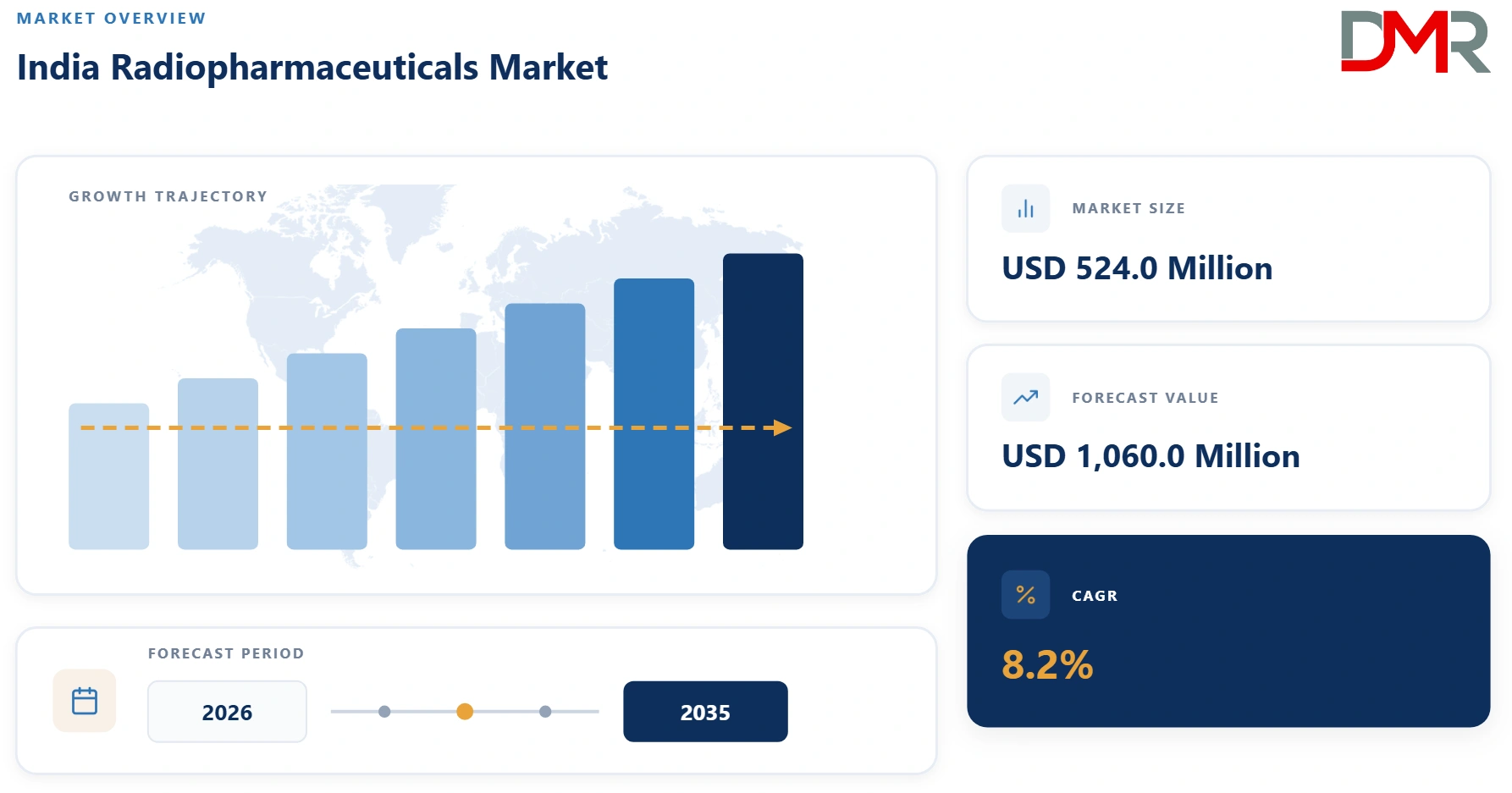
- India Radiopharmaceuticals Market Size in 2026: USD 524.0 million
- India Radiopharmaceuticals Market Size in 2035: USD 1,060.0 million
- India CAGR from 2026 to 2035: 8.2%
- Fluorine-18 Derivatives is the leading radioisotope segment in 2026: 34.7%
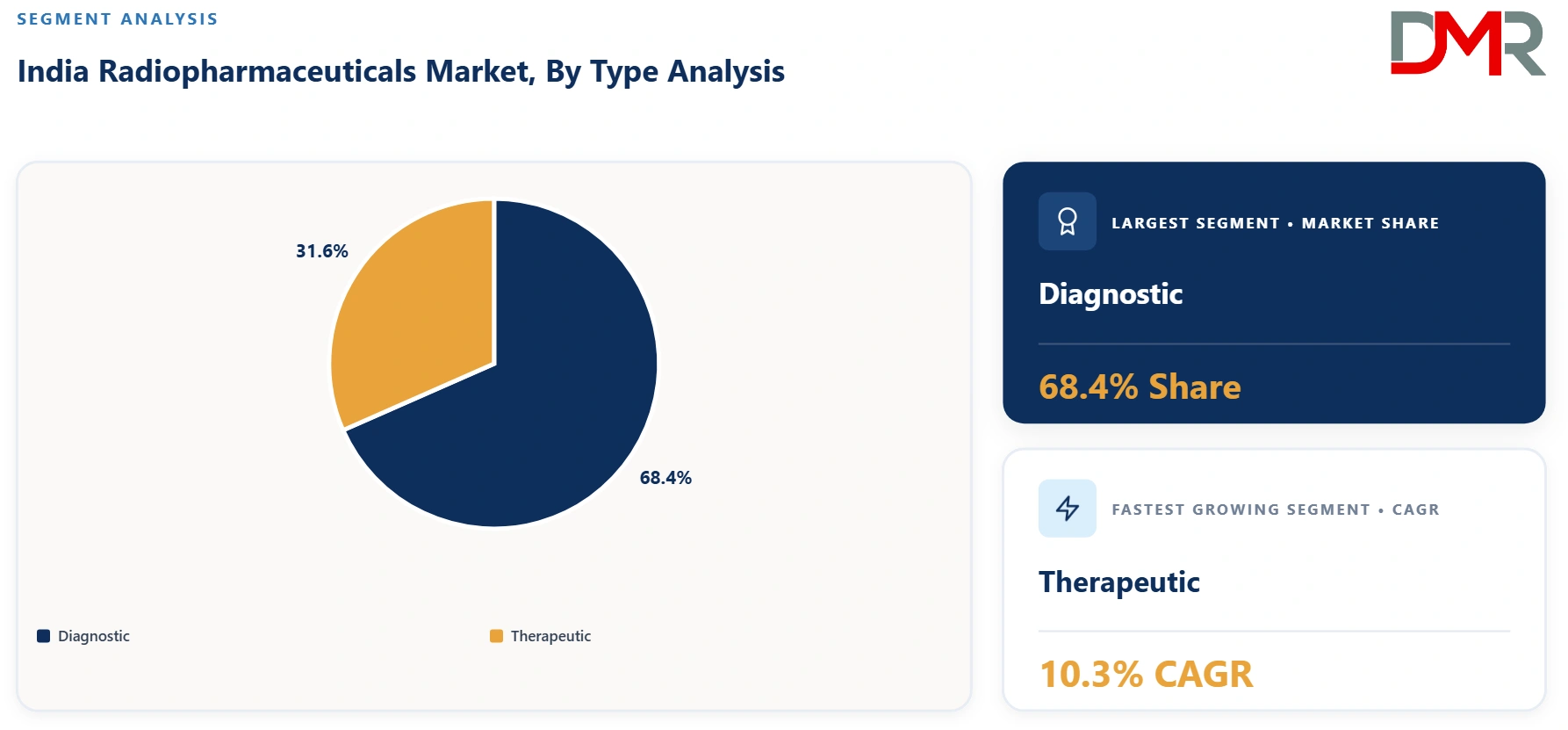
- Diagnostic is the leading type segment in 2026: 68.4%
- Cyclotrons is the leading source segment in 2026: 45.6%
- Oncology is the leading application segment in 2026: 48.3%
- Hospitals is the leading end-user segment in 2026: 62.7%
- West India is the leading region in 2026: 34.8%
What is the India Radiopharmaceuticals Market and its Market Size?
The India Radiopharmaceuticals Market is projected to reach USD 524.0 million in 2026 and grow at a compound annual growth rate of 8.2% from there until 2035 to reach a value of USD 1,060.0 million.
ℹ
To learn more about this report –
Download Your Free Sample Report Here
Radiopharmaceuticals are medicinal formulations containing radioactive isotopes used to diagnose, stage, monitor, and treat diseases. In India, these products support PET, SPECT, targeted radionuclide therapy, and theragnostic procedures across oncology, cardiology, neurology, and endocrinology. Market development is supported by rising cancer incidence, expanding nuclear medicine infrastructure, increasing PET-CT availability, domestic isotope production, and growing adoption of precision oncology. However, short isotope half-lives, specialized logistics, regulatory requirements, and unequal regional access continue to influence market development.
Use Cases
- Cancer Diagnosis and Treatment: Radiopharmaceuticals support PET and SPECT imaging for detecting, staging, and monitoring cancers, including prostate, breast, lung, lymphoma, and neuroendocrine tumors. Fluorine-18 FDG evaluates tumor metabolism, while Gallium-68 tracers identify receptor expression. Lutetium-177 therapies deliver targeted radiation to malignant cells, helping clinicians select treatments, assess response, identify recurrence, and personalize care across specialist oncology centers throughout India.
- Cardiac Function Assessment: Technetium-99 radiopharmaceuticals are used in myocardial perfusion imaging to evaluate blood flow, identify coronary artery disease, determine cardiac viability, and assess treatment effectiveness. These procedures provide functional information that anatomical imaging may not capture. Hospitals use nuclear cardiology examinations to guide revascularization decisions, evaluate chest pain, stratify cardiovascular risk, and monitor patients with established cardiac disorders accurately and efficiently.
- Neurological Disease Evaluation: PET and SPECT radiotracers help evaluate cerebral blood flow, glucose metabolism, dopamine pathways, and abnormal protein accumulation associated with neurological disorders. Clinicians use these products to investigate epilepsy, dementia, Parkinsonian syndromes, brain tumors, and movement disorders. Increasing availability of advanced tracers could improve differential diagnosis, treatment selection, surgical planning, and longitudinal monitoring within specialized neuroscience and nuclear medicine departments nationwide.
- Thyroid Diagnosis and Therapy: Radioiodine products are widely applied in thyroid uptake examinations, functional imaging, hyperthyroidism treatment, and differentiated thyroid cancer management. Nuclear medicine teams use radioisotopes to measure thyroid activity, identify residual tissue, detect metastatic disease, and deliver targeted ablation. These procedures provide clinically effective care while limiting unnecessary radiation exposure to surrounding healthy tissues compared with less selective radiation-based treatment approaches.
Key Takeaways
- Market Size: The India Radiopharmaceuticals Market is anticipated to be valued at USD 524.0 million in 2026 and is forecast to reach USD 1,060.0 million by 2035, expanding at a CAGR of 8.2%.
- Growth Outlook: Market expansion is supported by rising cancer detection requirements, increasing PET and SPECT installations, wider use of nuclear medicine, domestic isotope development, expanding hospital infrastructure, precision oncology adoption, and growing clinical interest in radioligand therapy and theranostics.
- Primary Growth Drivers: Increasing cancer incidence, expanding nuclear medicine infrastructure, growing awareness of molecular imaging, greater availability of PET-CT systems, domestic radiopharmaceutical manufacturing, and rising demand for targeted radionuclide therapy are accelerating market development.
- By Radioisotope Analysis: Fluorine-18 Derivatives are projected to lead the radioisotope segment with a 34.7% share in 2026, supported by widespread use of F-18 FDG in PET oncology. Lutetium-177 is expected to record the highest CAGR of approximately 10.4% through 2035 due to increasing radioligand therapy and theranostic applications.
- By Type Analysis: Diagnostic radiopharmaceuticals are anticipated to dominate the type segment with a 68.4% share in 2026, reflecting substantial PET and SPECT procedure volumes. Therapeutic radiopharmaceuticals are forecast to grow at the highest CAGR of approximately 10.3%, supported by targeted treatments for prostate, thyroid, and neuroendocrine cancers.
- By Source Analysis: Cyclotrons are expected to lead the source segment with a 45.6% share in 2026 because they support local production of short-lived PET isotopes. Generators are projected to grow at the highest CAGR of approximately 9.5% through 2035 as hospitals seek decentralized access to Gallium-68 and Technetium-99.
- By Application Analysis: Oncology is projected to dominate the application segment with a 48.3% share in 2026, driven by PET-based cancer detection, staging, treatment selection, and recurrence assessment. Neurology is expected to register the highest CAGR of approximately 9.2% as molecular imaging adoption expands for dementia, epilepsy, Parkinsonian disorders, and brain tumors.
- By End-User Analysis: Hospitals are expected to lead the end-user segment with a 62.7% share in 2026 because they combine imaging, radiopharmacy, specialist care, and therapeutic infrastructure. Medical imaging centers are projected to register the highest CAGR of approximately 8.9% due to private diagnostic network expansion and increasing outsourced imaging demand.
- Regional Leadership: West India is anticipated to account for 34.8% of the market in 2026, supported by nuclear medicine infrastructure in Maharashtra and Gujarat, the presence of BARC and BRIT, private diagnostic networks, oncology hospitals, radiopharmaceutical suppliers, and established distribution capabilities.
How AI and GenAI are Transforming the India Radiopharmaceuticals Market?
Artificial intelligence is improving radiopharmaceutical discovery, image reconstruction, lesion detection, dosimetry, workflow management, and treatment planning. AI-enabled PET and SPECT systems can enhance low-count images, reduce scanning time, quantify tracer uptake, and support consistent reporting. Predictive models can assist isotope demand planning and time-sensitive distribution. Generative AI can accelerate molecular design, summarize imaging findings, and support clinical documentation. However, adoption requires validated datasets, explainable algorithms, regulatory oversight, cybersecurity controls, and specialist review to prevent diagnostic errors and inappropriate treatment recommendations.
Key Drivers in the India Radiopharmaceuticals Market
Rising Cancer Burden and Demand for Precision Oncology
India’s increasing cancer burden is strengthening demand for accurate disease detection, staging, treatment selection, and recurrence monitoring. According to the Indian Council of Medical Research, India recorded approximately 1.46 million estimated new cancer cases in 2022, while nearly one in nine people may develop cancer during their lifetime. PET radiotracers and targeted radionuclide therapies are increasingly important for prostate, breast, lung, lymphoma, thyroid, and neuroendocrine cancers. Greater clinical acceptance of PSMA PET, DOTA PET, FDG PET, and Lutetium-177 therapy is expanding radiopharmaceutical utilization across tertiary hospitals and specialized cancer centers.
Expansion of Domestic Nuclear Medicine Infrastructure
India is strengthening its radiopharmaceutical supply network through cyclotrons, nuclear reactors, generators, radiopharmacies, PET facilities, and distribution centers. In March 2026, the Indian government reported that BRIT’s indigenously manufactured radiopharmaceuticals were distributed to more than 400 nuclear medicine centers nationwide. Public institutions including BARC, BRIT, and VECC support indigenous research and commercial isotope supply, while private diagnostic companies are investing in regional cyclotron capacity. Expanding local production improves the availability of short-lived isotopes, reduces dependence on imports, shortens delivery distances, and enables more hospitals to provide PET, SPECT, and therapeutic nuclear medicine services.
Restraints in the India Radiopharmaceuticals Market
Short Half-Lives and Complex Distribution Requirements
Many radiopharmaceuticals decay within minutes or hours, requiring synchronized manufacturing, quality testing, transportation, patient scheduling, and administration. Fluorine-18 has a short physical half-life, restricting the practical delivery radius around cyclotron facilities. Delayed transportation, production failures, adverse weather, or patient cancellations can result in unusable doses and financial losses. Healthcare providers outside major metropolitan areas face inconsistent access because specialist manufacturing infrastructure remains concentrated in selected cities. Companies must develop regional production hubs, validated packaging, reliable radioactive-material logistics, real-time dose tracking, and contingency arrangements, increasing operating expenses and creating barriers for smaller participants.
Regulatory Compliance and Specialist Workforce Shortages
Radiopharmaceutical operations require authorization, radiation safety systems, trained nuclear medicine physicians, radiochemists, medical physicists, radiopharmacists, technologists, and qualified radiation safety officers. Facilities must comply with AERB requirements governing site design, equipment, radioactive source handling, storage, waste management, personnel monitoring, transportation, and emergency preparedness. Limited specialist availability can delay the commissioning of new facilities, particularly in smaller cities. Quality failures have serious clinical and regulatory consequences because products must meet sterility, radionuclidic purity, radiochemical purity, and dose accuracy standards. These requirements increase setup costs, extend approval timelines, and constrain rapid geographic expansion.
Growth Opportunities in the India Radiopharmaceuticals Market
Expansion of Theranostics and Radioligand Therapy
Theranostics combines molecular imaging with targeted radionuclide treatment using related diagnostic and therapeutic compounds. India has significant potential for Lutetium-177 PSMA therapy in prostate cancer and Lutetium-177 DOTATATE treatment in neuroendocrine tumors. The commercial launch of Pluvicto in India demonstrates growing interest in standardized radioligand therapy platforms. Opportunities exist for indigenous isotope production, radiolabeling kits, automated synthesis modules, dosimetry software, specialist treatment centers, and patient referral networks. Companies that establish reliable manufacturing near treatment facilities can reduce dose losses, improve therapy scheduling, expand patient access, and capture demand from India’s growing precision oncology ecosystem.
Regional Cyclotron and Radiopharmacy Networks
A substantial opportunity exists to establish cyclotron and radiopharmacy hubs beyond Mumbai, Delhi, Bengaluru, Chennai, Hyderabad, and other major centers. Tier 2 cities are experiencing rising demand for PET imaging, but dependence on distant suppliers restricts procedure availability and increases dose wastage. Hub-and-spoke production networks can supply multiple hospitals within practical delivery radiuses. In February 2026, IBA and Shreeji signed an agreement for four Cyclone KIUBE 300 cyclotrons across India, demonstrating commercial interest in distributed PET radiopharmaceutical production. Similar investments can improve geographic access, increase procedure volumes, and support specialized tracer portfolios.
Trends in the India Radiopharmaceuticals Market
Shift from Conventional Imaging Toward Theranostics
India’s nuclear medicine industry is moving from primarily diagnostic imaging toward integrated diagnostic and therapeutic pathways. Gallium-68 PSMA imaging can identify eligible prostate cancer patients, while Lutetium-177 PSMA delivers targeted treatment against matching biological targets. Similar pathways are being used for neuroendocrine tumors through somatostatin receptor imaging and therapy. This approach enables individualized patient selection, improves treatment precision, and creates recurring demand across imaging, therapy, dosimetry, and follow-up monitoring. Hospitals are consequently investing in isolation wards, automated synthesis systems, multidisciplinary tumor boards, and trained teams capable of managing complete theranostic workflows.
Increasing Indigenous Production and Automation
Domestic production is becoming strategically important because imported radiopharmaceuticals are expensive, time-sensitive, and vulnerable to international logistics disruptions. BARC and BRIT are developing indigenous alternatives, while private providers are expanding cyclotron and automated radiochemistry capacity. Automated synthesis, dispensing, quality control, and dose management systems can reduce occupational radiation exposure and improve production consistency. India’s public isotope infrastructure and private diagnostic network create opportunities for locally produced tracers, generators, therapeutic isotopes, and cold kits. Increased localization is expected to improve affordability, strengthen supply reliability, and broaden access beyond leading metropolitan hospitals.
Research Scope and Analysis
This report examines India radiopharmaceuticals market across radioisotopes, including Fluorine 18 derivatives, Technetium 99, Lutetium 177, Gallium 68, Zirconium 89, Carbon 11 choline, Carbon 14 urea and others, types, sources, applications, end users, regional demand, competitive positioning, technology adoption, regulatory conditions, investment opportunities, pricing dynamics, production infrastructure, distribution challenges, market shares, growth rates and forecasts, outlook.
ℹ
To learn more about this report –
Download Your Free Sample Report Here
By Radioisotope Analysis
Fluorine-18 Derivatives are projected to dominate the radioisotope segment with a 34.7% share in 2026, driven by extensive use of F-18 FDG in PET oncology, cardiology, and neurology. Lutetium-177 is expected to record the highest CAGR of approximately 10.4%, supported by PSMA-targeted treatment, peptide receptor radionuclide therapy, expanding theranostic centers, and increasing precision oncology adoption.
By Type Analysis
Diagnostic radiopharmaceuticals are anticipated to lead the type segment with a 68.4% share in 2026, supported by high PET and SPECT procedure volumes and the use of molecular imaging for disease detection, staging, and monitoring. Therapeutic radiopharmaceuticals are projected to grow at the highest CAGR of approximately 10.3%, due to increasing adoption of Lutetium-177, radioiodine, and targeted radionuclide treatments.
By Source Analysis
Cyclotrons are expected to dominate the source segment with a 45.6% share in 2026, owing to demand for locally manufactured short-lived PET isotopes, particularly Fluorine-18. Generators are anticipated to register the highest CAGR of approximately 9.5%, because they enable decentralized production of Technetium-99 and Gallium-68 without requiring an on-site cyclotron.
By Application Analysis
Oncology is projected to lead the application segment with a 48.3% share in 2026, driven by PET-based cancer detection, staging, therapy selection, recurrence monitoring, and radioligand treatment. Neurology is expected to record the highest CAGR of approximately 9.2%, as molecular imaging becomes increasingly used for epilepsy, dementia, Parkinsonian disorders, brain tumors, and treatment planning.
By End-User Analysis
Hospitals are anticipated to dominate the end-user segment with a 62.7% share in 2026, supported by integrated imaging, radiopharmacy, inpatient care, oncology, and therapeutic infrastructure. Medical imaging centers are projected to register the highest CAGR of approximately 8.9%, due to private diagnostic network expansion, outsourced imaging demand, and increasing PET-CT availability in urban and emerging cities.
The India Radiopharmaceuticals Market Report is Segmented Based on the Following
By Radioisotope
- Fluorine-18 Derivatives
- Technetium-99
- Lutetium Lu 177
- Gallium-68
- Zirconium-89
- 11C-choline
- 14C-urea
- Other Radioisotopes
By Type
By Source
- Cyclotrons
- Nuclear Reactors
- Generators
By Application
- Oncology
- Cardiology
- Neurology
- Endocrinology
- Other Applications
By End User
- Hospitals
- Medical Imaging Centers
- Cancer Research Institutes
- Other End Users
Regional Analysis
West India is the Leading Region in the India Radiopharmaceuticals Market
West India is projected to dominate the India Radiopharmaceuticals Market with a 34.8% share in 2026. Maharashtra’s concentration of nuclear medicine departments, cancer hospitals, PET imaging facilities, research institutions, and radiopharmaceutical organizations supports regional leadership. Mumbai hosts BARC and BRIT, providing an established foundation for isotope research, indigenous production, and national distribution. Private hospital networks and diagnostic centers in Mumbai, Pune, Ahmedabad, and surrounding cities further strengthen procedure volumes, investment, specialized workforce availability, and adoption of theranostic services.
South India is the Fastest-Growing Region in the India Radiopharmaceuticals Market
South India is expected to register the fastest CAGR of approximately 9.1% from 2026 to 2035, exceeding the national market CAGR of 8.2%. Growth is supported by expanding oncology infrastructure, medical tourism, private hospital investment, and nuclear medicine capacity across Bengaluru, Chennai, Hyderabad, Kochi, and other cities. Strong clinical research ecosystems and specialist availability encourage the adoption of PSMA PET, DOTA PET, F-18 FDG imaging, and Lutetium-177 therapies. Regional cyclotron investments are also improving access to short-lived radiopharmaceuticals.
Technology Analysis
Technology development is shifting the market toward advanced PET tracers, automated radiosynthesis, digital dose management, total-body imaging, quantitative reconstruction, and personalized dosimetry. Gallium-68 PSMA and DOTA tracers are strengthening prostate and neuroendocrine tumor imaging, while Lutetium-177 is supporting targeted treatment. Automated systems improve batch consistency and reduce occupational exposure, but capital and maintenance requirements restrict smaller facilities. AI-assisted reconstruction could permit lower administered activity or shorter scans. Opportunities exist in indigenous synthesis modules, quality control equipment, generators, compact cyclotrons, theranostic software, and scalable radiopharmacy platforms adapted to India’s distributed hospital network.
Regulatory Landscape
India’s radiopharmaceutical ecosystem is regulated through requirements governing drug quality, ionizing radiation, facility licensing, radioactive source procurement, transportation, administration, worker protection, and waste disposal. AERB authorization is essential for nuclear medicine facilities and associated radiation practices, while pharmaceutical manufacturing and clinical-use requirements involve relevant drug-control authorities. Strict regulation protects patients and workers but can extend commissioning and approval timelines. Companies have opportunities to provide compliant facility design, documentation, monitoring instruments, shielded equipment, staff training, and quality systems. Clearer pathways for innovative theranostic products could encourage clinical trials, indigenous research, investment, and faster commercialization.
By Region
- North India
- South India
- East India
- West India
Competitive Landscape
The India Radiopharmaceuticals Market includes government isotope producers, research institutions, private cyclotron operators, pharmaceutical companies, imaging technology suppliers, hospitals, and specialized logistics providers. BRIT and BARC play central roles in indigenous isotope development and national supply, while private companies expand PET radiopharmaceutical production near metropolitan demand centers. International pharmaceutical companies are introducing targeted radioligand products and supporting theranostic adoption. Competition centers on isotope availability, production reliability, geographic coverage, product quality, regulatory compliance, hospital partnerships, specialist support, automation, and the ability to deliver short-lived products within restricted timeframes.
Some of the Prominent Players in the India Radiopharmaceuticals Market Are
- Board of Radiation and Isotope Technology
- Bhabha Atomic Research Centre
- Variable Energy Cyclotron Centre
- Medical Cyclotron Private Limited
- Shreeji Imaging and Diagnostic Centre Private Limited
- Jubilant Radiopharma
- Novartis AG
- Advanced Accelerator Applications
- GE HealthCare
- Siemens Healthineers AG
- Curium Pharma
- Cardinal Health Inc.
- Lantheus Holdings Inc.
- Telix Pharmaceuticals Limited
- ITM Isotope Technologies Munich SE
- Eckert & Ziegler SE
- NorthStar Medical Radioisotopes LLC
- IBA RadioPharma Solutions
- Bracco S.p.A.
- Nihon Medi-Physics Co. Ltd.
- SHINE Technologies LLC
- Isotopia Molecular Imaging Ltd.
- NTP Radioisotopes SOC Ltd.
- Bayer AG
- Eli Lilly and Company
- AstraZeneca plc
- Bristol Myers Squibb Company
- Fusion Pharmaceuticals
- POINT Biopharma Global Inc.
- Clarity Pharmaceuticals Ltd.
- RadioMedix Inc.
- PharmaLogic Holdings Corp.
- Global Medical Solutions Ltd.
- Rotem Industries Ltd.
- Institute of Isotopes Co. Ltd.
- Samira Hospital and Research Centre
- Tata Memorial Centre
- Apollo Hospitals Enterprise Ltd.
- HCG Cancer Centre
- Fortis Healthcare Ltd.
- Other Key Players
Recent Developments
- In June 2026, Novartis commercially launched Pluvicto, a Lutetium-177-based radioligand therapy, in India for eligible patients with PSMA-positive metastatic castration-resistant prostate cancer. The treatment is being made available through selected hospitals and nuclear medicine centers.
- In February 2026, IBA and Shreeji Imaging and Diagnostic Centre signed a multisite agreement for four Cyclone KIUBE 300 cyclotrons. The systems are intended to expand PET radiopharmaceutical manufacturing capacity and regional access across India.
- In January 2026, the Department of Atomic Energy reported the continued operation of the 30 MeV medical cyclotron at VECC in Kolkata for commercial production and supply of PET and SPECT radiopharmaceuticals by BRIT to hospitals and nuclear medicine centers.
- In June 2025, AIIMS Raipur installed an automated radiosynthesizer and Gallium generator, enabling in-house production of advanced PET tracers, including PSMA, DOTA, FAPI, and Exendin products for precision imaging and theranostic applications.
Report Details
| Report Characteristics |
| Market Size (2026) |
USD 524.0 Mn |
| Forecast Value (2035) |
USD 1,060.0 Mn |
| CAGR (2026–2035) |
8.2% |
| Historical Data |
2021 – 2025 |
| Forecast Data |
2026 – 2035 |
| Base Year |
2025 |
| Segments Covered |
By Radioisotope, By Type, By Source, By Application, By End User |
| Regional Coverage |
North, South, East, West |
Frequently Asked Questions
How big is the India Radiopharmaceuticals Market?
▾ The India Radiopharmaceuticals Market is estimated at USD 524.0 million in 2026 and is projected to reach USD 1,060.0 million by 2035.
What is the CAGR of the India Radiopharmaceuticals Market from 2026 to 2035?
▾ The India Radiopharmaceuticals Market is expected to grow at a CAGR of approximately 8.2% from 2026 to 2035.
What factors are driving the growth of the India Radiopharmaceuticals Market?
▾ Growth is driven by the rising cancer burden, expanding PET and SPECT infrastructure, increasing radioligand therapy adoption, domestic isotope production, precision medicine, and wider availability of nuclear medicine services.
What are the major trends in the India Radiopharmaceuticals Market?
▾ Major trends include theranostic adoption, increasing Lutetium-177 therapies, expanding PSMA and DOTA imaging, localized cyclotron production, automated radiopharmacies, AI-supported imaging, and indigenous radiopharmaceutical development.
Which region held the largest share of the India Radiopharmaceuticals Market in 2026?
▾ West India is projected to hold the largest market share of approximately 34.8% in 2026, supported by Maharashtra’s strong isotope production, hospital, diagnostic, and nuclear research infrastructure.
Which region is expected to grow the fastest in the India Radiopharmaceuticals Market?
▾ South India is projected to grow at the fastest CAGR of approximately 9.1% during 2026 to 2035 due to expanding oncology hospitals, cyclotron infrastructure, private healthcare investment, and medical tourism.
Who are the key players in the India Radiopharmaceuticals Market?
▾ Key participants include BRIT, BARC, Medical Cyclotron Private Limited, Shreeji Imaging and Diagnostic Centre, Novartis, GE HealthCare, Siemens Healthineers, Curium Pharma, IBA, Jubilant Radiopharma, and Telix Pharmaceuticals.
How is the India Radiopharmaceuticals Market segmented?
▾ The market is segmented by radioisotope, type, source, application, end user, and region. Major categories include Fluorine-18 Derivatives, diagnostic and therapeutic products, cyclotrons, oncology applications, hospitals, and four Indian regions.