India Transformer Fire Protection Equipment Market Snapshot
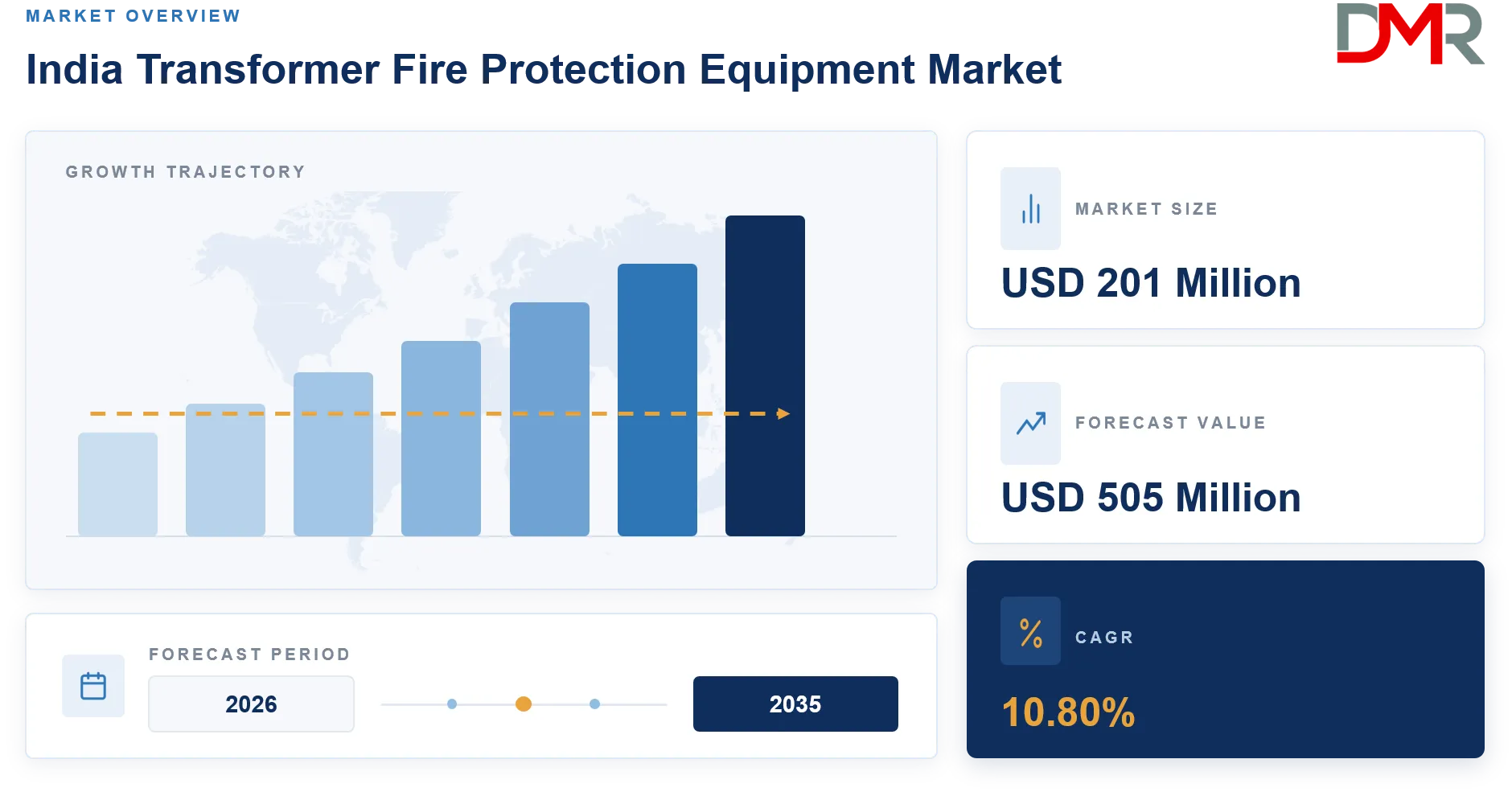
- Market Value: India Transformer Fire Protection Equipment Market is valued at USD 201 million in 2026 and is projected to reach USD 505 million by 2035.
- CAGR: India Transformer Fire Protection Equipment Market is expected to grow at a CAGR of 10.8% from 2026 to 2035.
- By Product Type Analysis: Fire Suppression Systems led the product type segment with a 37.4% share in 2026.
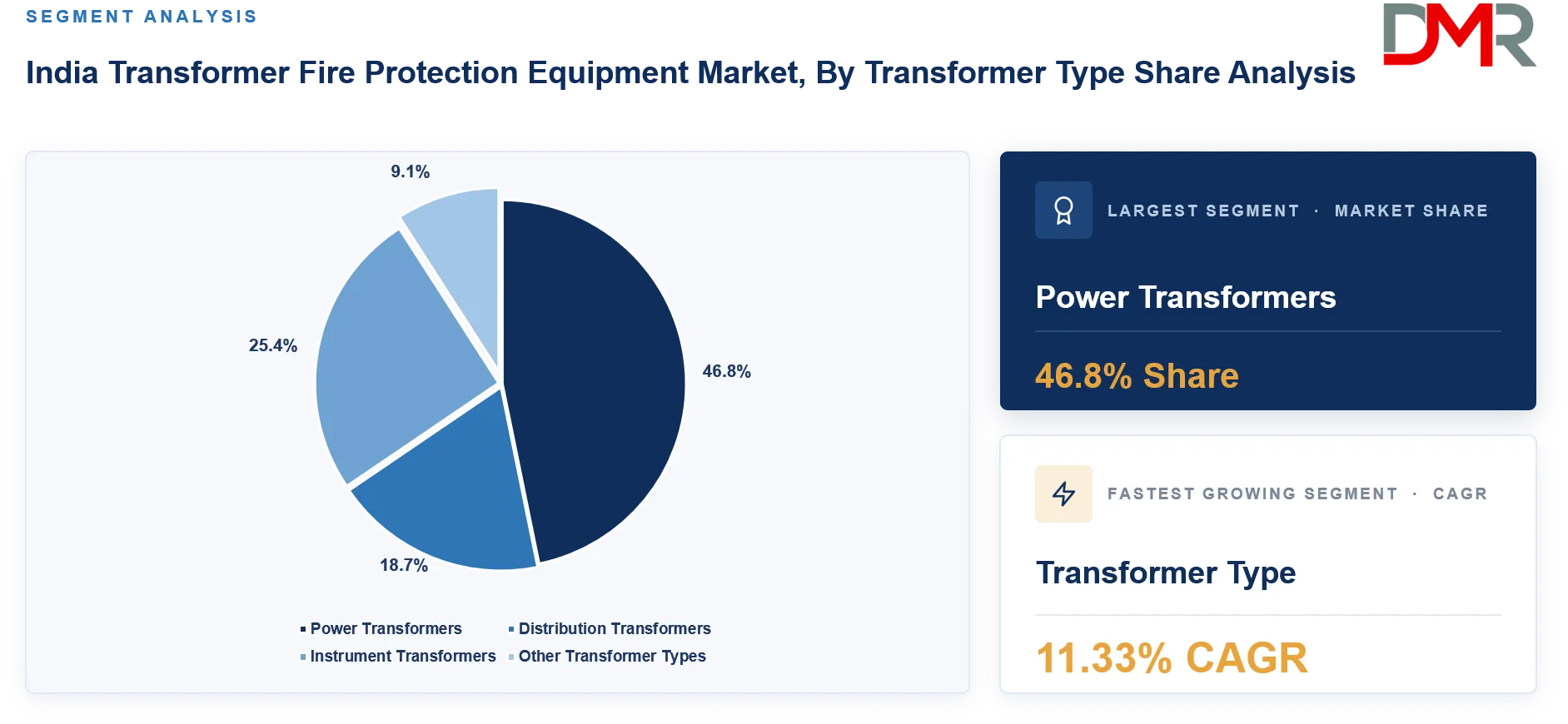
- By Transformer Type Analysis: Power Transformers led transformer types with a 46.8% share in 2026.
- By End-User Industry Analysis: Power Utilities led the end-user industry segment with a 39.2% share in 2026.
- Major Players: LIFEGUARD, Kanex Fire Solutions Limited, HD Fire Protect Limited, De's Technico Limited, and Others.
What is the India Transformer Fire Protection Equipment Market and its Market Size?
The India Transformer Fire Protection Equipment Market size is projected to be valued at USD 201 million in 2026 and is expected to reach USD 505 million by 2035, expanding at a CAGR of 10.8% during the forecast period. The market covers specialized equipment used to detect, contain, suppress, and prevent fires associated with power, distribution, instrument, and industrial transformers. Major solutions include water mist systems, foam systems, clean agent systems, nitrogen-based protection, heat and flame detection, fire barriers, thermal monitoring units, and integrated active and passive protection systems.
ℹ
To learn more about this report –
Download Your Free Sample Report Here
Demand for transformer fire protection equipment in India is increasingly linked with transmission expansion, renewable power evacuation, modernization of substations, data center development, industrial electrification, and replacement of aging grid assets. Oil-filled transformers present a distinct fire and explosion risk because internal electrical faults can rapidly increase pressure and temperature. Utilities and industrial operators are therefore moving toward protection systems that combine early detection, automatic isolation, oil management, fire suppression, physical barriers, and continuous condition monitoring.
Use Cases
- Transmission Substations: Fire suppression, detection, fire walls, and thermal monitoring protect high-value power transformers at transmission substations where transformer failure can interrupt electricity supply across large service areas.
- Power Generation Facilities: Generator step-up transformers use automated protection systems to limit fire escalation near generating units, switchyards, cable networks, and other critical electrical infrastructure.
- Renewable Energy Plants: Solar parks and wind farms require transformer protection at pooling substations, inverter stations, evacuation facilities, and grid interconnection points as renewable capacity expands across India.
- Industrial Facilities: Steel, oil and gas, manufacturing, chemicals, and process industries deploy fire detection and suppression around transformers supporting continuous production and high-load electrical systems.
- Data Centers and Transport: Data centers, railway traction substations, metro systems, airports, and other high-availability facilities use transformer fire protection to improve electrical resilience and reduce downtime risk.
How AI/Gen AI is Transforming the India Transformer Fire Protection Equipment Market?
Artificial intelligence is strengthening transformer fire protection by converting operating data into earlier risk signals. Utilities can combine transformer temperature, dissolved gas patterns, loading conditions, oil parameters, relay events, thermal images, and historical maintenance records to identify abnormal behavior before it develops into a serious fault. Intelligent monitoring platforms can also prioritize alarms by risk level, reducing dependence on isolated sensor thresholds. For fire protection suppliers, this creates demand for systems that connect detection, condition monitoring, alarms, and automated suppression with utility control platforms.
Generative AI can further support inspection, engineering, and maintenance workflows by organizing transformer records, interpreting equipment documentation, summarizing alarm histories, and helping technical teams review recurring failure patterns. Digital maintenance systems can provide operators with asset-specific procedures and inspection recommendations based on recorded conditions. Adoption will remain dependent on verified sensor data, cybersecurity, human supervision, and integration with protection relays. As a result, AI is more likely to enhance existing fire protection architecture than replace established protection, detection, and suppression equipment.
Key Drivers in the India Transformer Fire Protection Equipment Market
Expansion of India's Transmission and Renewable Energy Infrastructure
India's transmission expansion is creating a larger installed base of power transformers, substations, renewable pooling stations, and grid interconnection assets requiring fire protection. The national transmission roadmap supports large additions of solar, wind, hydro, storage, and conventional generating capacity through 2032. New substations and higher-capacity transformer installations increase demand for water spray, mist, nitrogen injection, detection, fire barriers, and monitoring systems. This infrastructure cycle supports equipment sales as well as engineering, installation, commissioning, maintenance, and retrofit revenue.
Greater Focus on Transformer Asset Reliability and Fire Safety
Power transformers are high-value grid assets with long replacement cycles, and a severe transformer fire can affect adjacent equipment, cables, structures, and electricity availability. Utilities and industrial operators are therefore giving greater attention to rapid fault detection and containment. Indian standards and electricity safety requirements address transformer installation, separation, fire walls, testing, and safety practices. These requirements support demand for engineered protection packages instead of standalone extinguishing equipment, particularly at high-voltage substations, power plants, industrial sites, and critical infrastructure facilities.
Restraints in the India Transformer Fire Protection Equipment Market
High Engineering and Retrofit Complexity
Transformer fire protection is not a simple equipment purchase for many existing substations. Retrofit projects may require hydraulic calculations, piping modifications, shutdown planning, detector placement, control panel integration, civil work, fire walls, drainage arrangements, and coordination with transformer protection relays. Older substations can have limited space and incomplete asset documentation. These factors raise project costs and extend approval cycles, particularly where utilities operate large fleets containing transformers of different capacities, manufacturers, ages, and site configurations.
Fragmented Procurement and Lifecycle Maintenance Requirements
The performance of fire protection systems depends on correct design, installation, testing, periodic inspection, and maintenance. Price-focused procurement can create gaps when equipment quality, engineering capability, spares, or long-term service support receive limited weight. Water-based systems require pumps, valves, nozzles, piping, and water supply to remain operational, while detection and automated systems require calibration and electrical maintenance. Buyers are consequently evaluating lifecycle service capability alongside equipment cost, which can lengthen supplier qualification and procurement decisions.
Growth Opportunities in the India Transformer Fire Protection Equipment Market
Retrofit of Aging Transformer and Substation Assets
India's large installed base of operating substations creates a recurring opportunity beyond new construction. Utilities can retrofit older transformer yards with modern flame and heat detection, water mist or spray systems, nitrogen-based protection, thermal monitoring, improved fire barriers, and upgraded control panels. Retrofit demand is particularly attractive because fire protection can be integrated with broader substation modernization and condition-monitoring programs. Vendors that offer site assessment, engineering, installation, testing, and annual maintenance can build recurring revenue while addressing different transformer ratings and layouts.
Renewable Plants, Data Centers, and High-Availability Infrastructure
Renewable energy plants and data centers provide a growing application base for specialized transformer fire protection. Large solar and wind projects contain multiple step-up and evacuation transformers, while data centers depend on highly reliable electrical infrastructure and place strong emphasis on business continuity. Railway electrification, metros, industrial parks, battery storage facilities, and green hydrogen developments can add further demand. Suppliers able to combine compact suppression technology, intelligent detection, remote monitoring, and engineered passive protection are positioned to address these high-value projects.
Trends in the India Transformer Fire Protection Equipment Market
Shift Toward Integrated Detection and Automatic Suppression
Transformer protection design is moving toward coordinated systems rather than independent fire devices. Heat, flame, smoke, gas, thermal, and transformer protection signals can be linked with automated suppression, alarms, isolation logic, and remote monitoring. Nitrogen injection systems are used for oil-filled transformer applications, while water mist and water spray technologies address external fire control and cooling requirements. This integration allows operators to improve response time and create clearer incident records, supporting both operational safety and post-event analysis.
Growing Use of Water Mist, Thermal Monitoring, and Hybrid Protection
Water mist technology is gaining attention where operators require effective heat control with lower water consumption than conventional high-volume approaches. At the same time, thermal sensors and digital monitoring are improving visibility into developing hot spots and abnormal operating conditions. Passive measures such as fire-resistant walls, coatings, doors, and separation remain important because they limit fire propagation. As facilities become more complex, hybrid systems combining active suppression, early detection, monitoring, and passive barriers are becoming a practical approach for high-value transformer installations.
Research Scope and Analysis
The India Transformer Fire Protection Equipment Market study evaluates market size, share, growth, demand, technology trends, competitive conditions, end-user requirements, regional opportunities, and the changing fire safety requirements associated with India's electricity infrastructure. The analysis considers equipment demand from new installations, modernization projects, retrofit programs, maintenance activities, and specialized applications across utility and non-utility transformer assets.
ℹ
To learn more about this report –
Download Your Free Sample Report Here
By Product Type
Fire Suppression Systems dominated the India Transformer Fire Protection Equipment Market with a 37.4% share in 2026. The segment includes water mist systems, foam-based systems, clean agent systems, and powder-based systems. Its leadership reflects the need to control transformer fires rapidly after detection and prevent damage from spreading to nearby electrical equipment. Water-based technologies are important in outdoor substations and transformer yards, while specialized suppression solutions can serve enclosed or application-specific environments. Growth in transmission substations, industrial electrical systems, renewable plants, and utility retrofits is expected to sustain demand for engineered suppression packages through 2035.
By Transformer Type
Power Transformers accounted for 46.8% of the market in 2026, making them the leading transformer type. These units handle large power flows and represent critical assets at generating stations and high-voltage transmission substations. Many power transformers contain substantial volumes of insulating oil, making fire prevention, containment, suppression, drainage, and separation important parts of site protection. Their high replacement value and potential effect on grid availability support investment in nitrogen injection, water spray, mist systems, fire detection, thermal monitoring, and fire barriers. Transmission expansion and renewable power evacuation will continue to create opportunities for protection equipment around high-capacity transformers.
By End-User Industry
Power Utilities held a 39.2% share of the India Transformer Fire Protection Equipment Market in 2026. Utilities operate extensive transformer fleets across generation switchyards, transmission substations, distribution networks, and grid interconnection facilities. Fire protection investments are deeply connected with reliability planning because transformer incidents can cause outages, equipment loss, and prolonged restoration work. Central and state utilities also manage modernization programs that create opportunities for replacement of older detection and suppression systems. The combination of new substations, higher renewable integration, transformer capacity additions, and retrofit requirements supports continued utility leadership.
The India Transformer Fire Protection Equipment Market Report is segmented on the basis of the following:
By Product Type
- Fire Suppression Systems
- Water Mist Systems
- Foam Based Systems
- Clean Agent Systems
- Powder Based Systems
- Fire Detection Systems
- Heat Detection Systems
- Smoke Detection Systems
- Flame Detection Systems
- Gas Detection Systems
- Fire Barriers
- Fire Resistant Walls
- Fire Resistant Doors
- Fire Resistant Coatings
- Other Protection Equipment
- Surge Protection Devices
- Thermal Monitoring Units
By Transformer Type
- Power Transformers
- Distribution Transformers
- Instrument Transformers
- Other Transformer Types
By End-User Industry
- Power Utilities
- Oil and Gas Sector
- Manufacturing Industries
- Commercial Buildings
- Transportation Infrastructure
- Data Center Facilities
- Renewable Energy Plants
By Application Area
- Substation Protection
- Generator Step Up Units
- Industrial Process Transformers
- Railway Traction Systems
- Wind Farm Transformers
- Solar Plant Transformers
By Fire Protection Technology
- Active Fire Protection
- Passive Fire Protection
- Hybrid Protection Systems
By Installation Type
- New Installation Projects
- Retrofit and Upgrades
- Maintenance and Services
Competitive Landscape
The India Transformer Fire Protection Equipment Market includes specialized transformer protection companies, fire suppression manufacturers, engineering contractors, system integrators, and broader fire safety suppliers. Competition is shaped by technical approvals, system reliability, project engineering capability, utility experience, installation support, maintenance coverage, and the ability to customize solutions for different transformer ratings and substation layouts. Vendors compete across nitrogen injection systems, water mist, water spray, foam suppression, clean agents, detection systems, fire barriers, thermal monitoring, and integrated turnkey packages.
Tri Parulex, for example, markets nitrogen injection and evacuation systems for transformers along with water mist and other suppression technologies, while Ceasefire offers a transformer-focused water mist Auto-Quell solution. Suppliers with strong engineering resources can differentiate through surveys, hydraulic and system design, commissioning, retrofit execution, testing, and long-term maintenance. Increasing utility and industrial focus on asset reliability is also encouraging competition around integrated monitoring and automatic response rather than isolated fire equipment.
Some of the prominent players in the India Transformer Fire Protection Equipment Industry are:
- LIFEGUARD
- Kanex Fire Solutions Limited
- HD Fire Protect Limited
- De's Technico Limited
- Reactra Engineering Private Limited
- Tri Parulex
- CbS Technologies Pvt. Ltd.
- Fire Engineering Technology
- SRS Enterprises
- 3D Fire & Safety Pvt. Ltd.
- Pyroguard Engineers Pvt. Ltd.
- JSNM Engineers
- Milestone Aquatech LLP
- Fire Engineering Company
- Pro Delta Fire Safety Systems Pvt. Ltd.
- Usha Fire Safety Equipments Pvt. Ltd.
- Ceasefire Industries Limited
- SafePro Firefighting Supplies
- Ansul Fire Suppression Systems
- System Tek Fire Suppression Systems
- Others
Regulatory Landscape
The regulatory landscape of the India Transformer Fire Protection Equipment Market is shaped by electrical safety rules, fire protection standards, transformer installation requirements, and utility procurement specifications. The Central Electricity Authority's safety regulations require appropriate precautions for transformers and other oil-filled electrical equipment, including separation and fire barriers where applicable. BIS standards, including IS 10028 for selection, installation, and maintenance of transformers, influence engineering practices, while IS 3034 addresses fire protection requirements for electrical generating and distribution stations.
Utilities also incorporate technical specifications for nitrogen injection, water spray, detection, alarms, and associated control systems in project tenders. As substations move to higher voltage levels and renewable evacuation networks expand, compliance is encouraging suppliers to provide tested, documented, and integrated solutions supported by commissioning and lifecycle maintenance services.
Technology Analysis
Technology development in the India Transformer Fire Protection Equipment Market is moving from standalone firefighting equipment toward integrated detection, prevention, suppression, and condition-monitoring architectures. Water mist systems use fine droplets to absorb heat and control fire while reducing water consumption, whereas nitrogen injection systems are designed to address fire and explosion risks associated with oil-filled transformers. Heat, flame, smoke, and gas detection technologies provide earlier warning, while thermal monitoring units help operators identify abnormal temperature conditions before escalation.
Hybrid protection combines these active technologies with fire-resistant walls, coatings, separation, and containment measures. Digital sensors, remote alarms, SCADA integration, and condition-based monitoring are further improving asset visibility. For utilities, renewable plants, industries, and data centers, technology selection increasingly depends on transformer rating, oil volume, site layout, response time, water availability, automation requirements, and maintenance capability.
Recent Developments
- March 2026: Ceasefire Industries Limited launched a new line of pre-engineered compressed air foam systems for transformer oil pit fires, targeting substations in high-risk seismic zones.
- November 2025: HD Fire Protect Limited secured a major contract to supply nitrogen injection fire suppression systems for 40+ power transformer installations across Uttar Pradesh and Bihar.
- September 2025: Kanex Fire Solutions Limited completed a strategic partnership with a European firm to localize manufacturing of water mist fire suppression panels for indoor transformer rooms.
Report Details
| Report Characteristics |
| Market Size (2026) |
USD 201 Mn |
| Forecast Value (2035) |
USD 505 Mn |
| CAGR (2026-2035) |
10.8% |
| Historical Data |
2021 - 2025 |
| Forecast Data |
2027 - 2035 |
| Base Year |
2025 |
| Estimate Year |
2026 |
| Segments Covered |
By Product Type (Fire Suppression Systems {Water Mist Systems, Foam Based Systems, Clean Agent Systems, and Powder Based Systems}, Fire Detection Systems {Heat Detection Systems, Smoke Detection Systems, Flame Detection Systems, and Gas Detection Systems}, Fire Barriers {Fire Resistant Walls, Fire Resistant Doors, and Fire Resistant Coatings}, and Other Protection Equipment {Surge Protection Devices and Thermal Monitoring Units}), By Transformer Type (Power Transformers, Distribution Transformers, Instrument Transformers, and Other Transformer Types), By End-User Industry (Power Utilities, Oil and Gas Sector, Manufacturing Industries, Commercial Buildings, Transportation Infrastructure, Data Center Facilities, and Renewable Energy Plants), By Application Area (Substation Protection, Generator Step Up Units, Industrial Process Transformers, Railway Traction Systems, Wind Farm Transformers, and Solar Plant Transformers), By Fire Protection Technology (Active Fire Protection, Passive Fire Protection, and Hybrid Protection Systems), By Installation Type (New Installation Projects, Retrofit and Upgrades, and Maintenance and Services) |
| Regional Coverage |
India |
Frequently Asked Questions
What is the current size of the India Transformer Fire Protection Equipment Market?
▾ India Transformer Fire Protection Equipment Market is USD 0.201 Bn in 2026 and may reach USD 0.505 Bn by 2035.
What is the growth rate of the India Transformer Fire Protection Equipment Market during?
▾ The India Transformer Fire Protection Equipment Market size is forecast to grow at a CAGR of 10.8% during 2026-2035.
What factors are driving the growth of the India Transformer Fire Protection Equipment Market?
▾ Grid expansion and substation upgrades drive India Transformer Fire Protection Equipment Market demand and adoption.
What are the major challenges restraining the India Transformer Fire Protection Equipment Market?
▾ Retrofit costs and installation complexity restrain India Transformer Fire Protection Equipment Market growth.
Which segment holds the largest share of the India Transformer Fire Protection Equipment Market?
▾ Fire Suppression Systems lead the India Transformer Fire Protection Equipment Market with a 37.4% share in 2026.
Who are the leading companies in the India Transformer Fire Protection Equipment Market?
▾ LIFEGUARD, Kanex Fire Solutions Limited, HD Fire Protect Limited, De's Technico Limited, Reactra Engineering Private Limited, Tri Parulex, CbS Technologies Pvt. Ltd., Fire Engineering Technology, SRS Enterprises, 3D Fire & Safety Pvt. Ltd., Pyroguard Engineers Pvt. Ltd., JSNM Engineers, Milestone Aquatech LLP, Fire Engineering Company, Pro Delta Fire Safety Systems Pvt. Ltd., Usha Fire Safety Equipments Pvt. Ltd., Ceasefire Industries Limited, SafePro Firefighting Supplies, Ansul Fire Suppression Systems, and System Tek Fire Suppression Systems are prominent companies in the India Transformer Fire Protection Equipment Market.
How is AI influencing the India Transformer Fire Protection Equipment Market?
▾ AI predictive monitoring improves fire-risk detection in the India Transformer Fire Protection Equipment Market.
What are the future opportunities and trends in the India Transformer Fire Protection Equipment Market?
▾ Renewables, retrofits, and smart substations offer opportunities in India Transformer Fire Protection Equipment Market.