What is the Contract Research Organization Market Size?
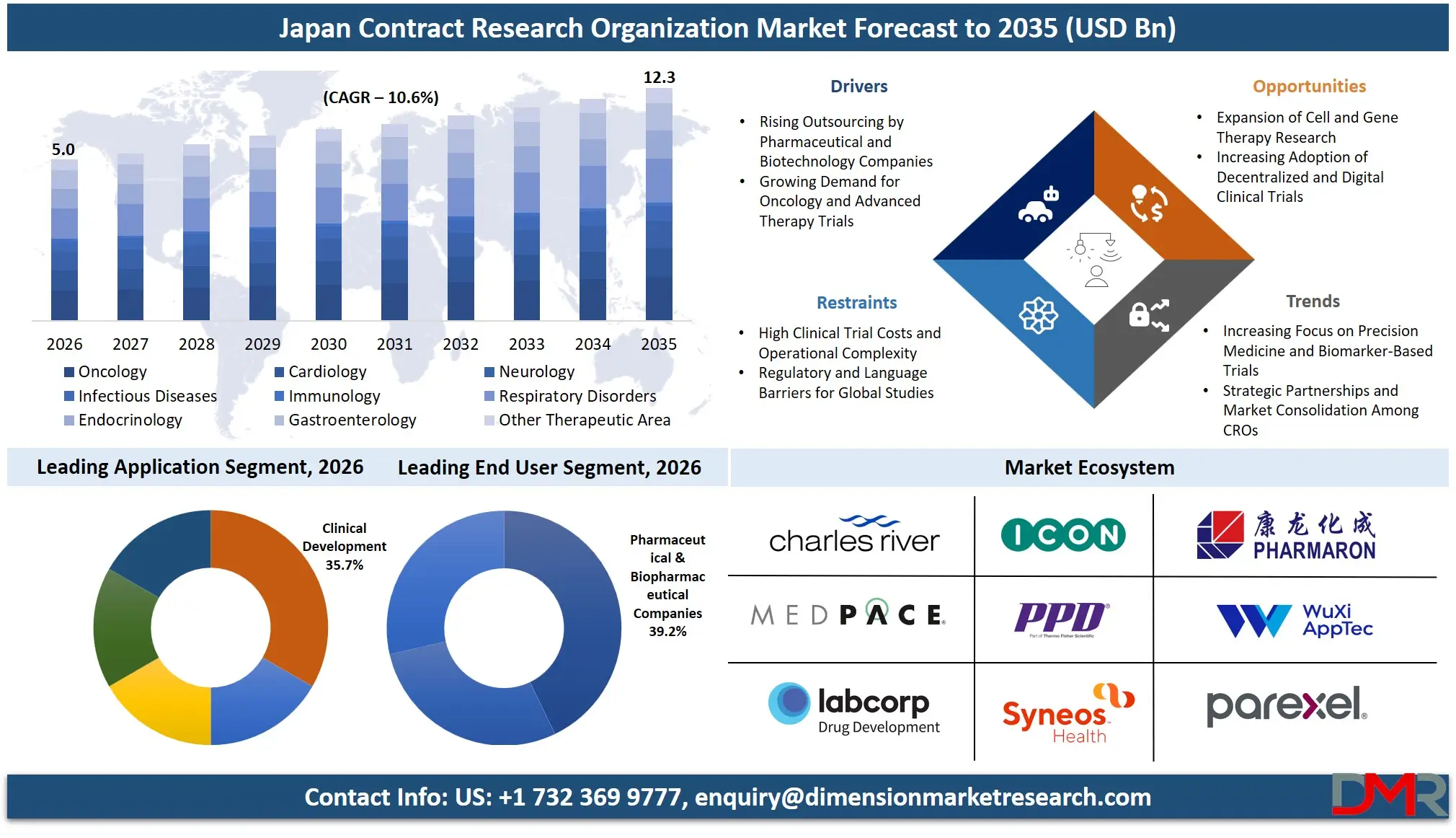
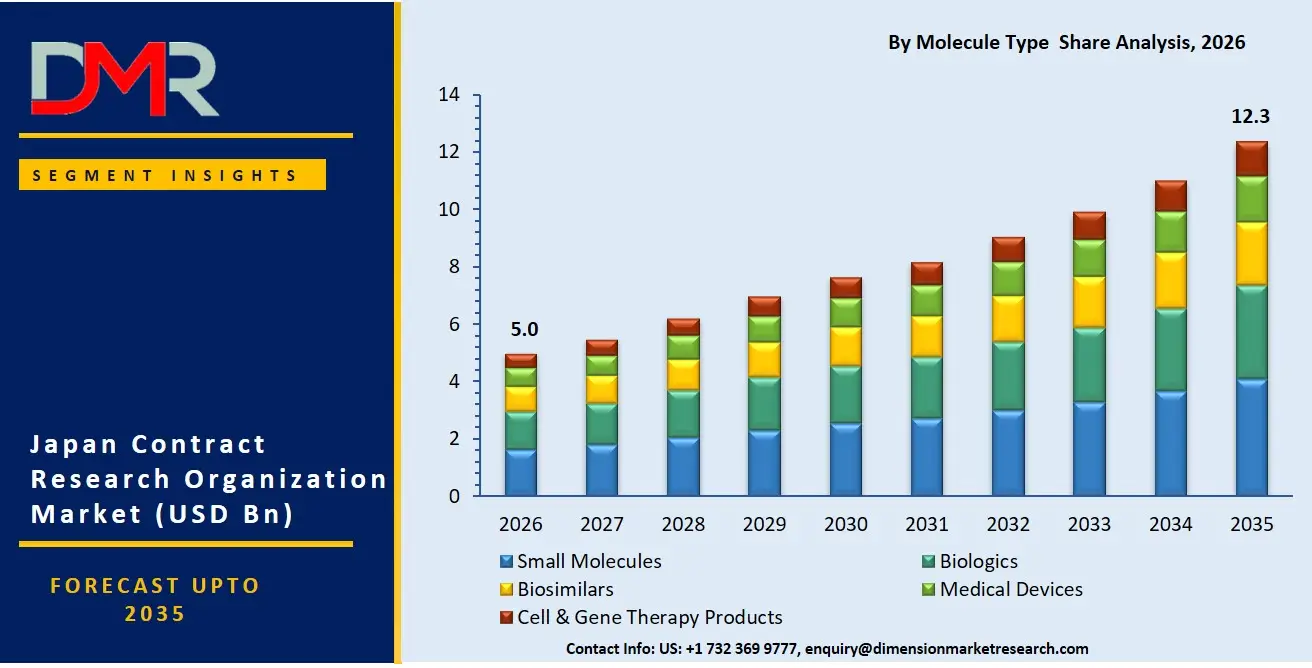
The Japan Contract Research Organization Market is expected to reach a value of USD 5.0 billion in 2026, and it is further anticipated to reach USD 12.3 billion by 2035, growing at a CAGR of 10.6% during the forecast period.
ℹ
To learn more about this report –
Download Your Free Sample Report Here
The Japan Contract Research Organization Market has been growing at a high rate due to an increase in the speed of development and production of complex molecules by pharma companies as well as switching from standard development models to outsource development models that require less financial capital investment.
The services offered by the Japanese CRO market include early-phase development, clinical research, laboratory services, and consulting services that will help sponsors navigate the unique regulatory and elderly population environment in Japan. The increase in the need for conducting regenerative medicine trials, oncology basket trials, and real-world evidence generation makes a specialised CRO partnership necessary. Local major pharmaceutical companies are the ones who have utilized the service frequently, with full service outsourcing model and functional service provider model dominating due to their ability to scale and use specialized patient registries.
ℹ
To learn more about this report –
Download Your Free Sample Report Here
Key Takeaways
- Market Size & Forecast: The Japan Contract Research Organization Market is projected to reach USD 5.0 billion in 2026 and USD 12.3 billion by 2035, due to the combined push of super-aged society innovation needs and mandatory globalization of domestic drug pipelines.
- Growth Rate & Outlook: It is forecasted that Japan's market growth will be steady at a 10.6% CAGR owing to the lack of clinical investigators and increasing complications in handling logistics for cell/gene therapy clinical trials due to hospital limitations.
- Primary Growth Drivers: Major factors include the shift from internal functions to Functional Service Providers (FSPs), the need for specialized Regulatory Submission Support to cater to PMDA, and the need for specialized Site Management Services for decentralized trial technology integration.
- Key Market Trends: Some notable trends in this market include the emergence of real-world evidence studies using the comprehensive health insurance data of Japan, AI-powered patient matching against inclusion criteria in the data management services, and risk-based monitoring of full-service outsourcing projects.
- By Clinical Trial Phase Analysis: Phase III clinical trial service is projected to be in high demand since there are strict local requirements for clinical trial data. The need to harmonize multi-regional studies is compelling CROs to establish harmonized layers that connect Japanese investigative sites with sponsors' data systems.
- By Therapeutic Area Analysis: Oncology is projected to hold the most profitable therapeutic vertical owing to the PMDA Sakigake Designation of Japan. Neurology has been observed as the most rapidly growing area due to the prevalence of diseases such as dementia and Parkinson's in Japan.
What is the Contract Research Organization?
A Contract Research Organization (CRO) refers to a particular type of organization whose main activity involves providing outsourced research and development activities for pharmaceutical companies. The role of such a CRO ranges from conducting research to clinical trials of drugs as well as carrying out laboratory tests. The main aim of the CROs in such a case is to ensure cost-efficiency and save time in the process of researching and testing new products. They also provide clients with advanced technology as well as specific scientific skills that may be necessary to conduct various types of tests on new drugs and medical devices.
Use Cases
- Faster Regenerative Medicine Development: Local biopharmaceuticals enlist the help of contract research organizations (CROs) for Cell & Gene Therapy Product to handle the complexities of autologous cells collection from Japanese GTP-compliant hospitals and arrange for production from dedicated laboratories.
- Global Cancer Trial Integration: International pharma companies leverage Phase II/III Clinical Research Services and Site Management Services to incorporate Japanese trial patients within global trials, addressing the special case of Japanese informed consent procedures and imaging schedules for the PMDA bridging strategy.
- Generic Medicines Development: Local Japanese pharma companies make use of CMC Services and Stability Testing Services to develop a repurposed drug from an existing molecule for the purpose of geriatric drug delivery, with a focus on obtaining faster stability data.
- Real-World Evidence Surveillance: Global sponsors can benefit from the Data Management Services and Real-World Evidence Studies services that can extract data from Japan's rich national health insurance database for comparative effectiveness studies for price reassessment.
How AI is Transforming the Contract Research Organization Market?
AI technology is transforming the Japan CRO industry through the fast clinical data management process, as well as increasing accuracy in the site selection process. In Data Management Services, the use of AI natural language processors can help to translate Japanese physician notes on patients' medical records into CDISC standard format data sets, reducing the time taken for manual input and queries. On the other hand, Site Management services can leverage the use of AI to estimate patient enrollment speeds based on past patient volumes from the hospital and demographics, thereby recommending investigator engagement that could address enrollment delays.
Preclinical studies and development processes are being centered on the application of AI. With respect to Pharmacokinetics/Pharmacodynamics (PK/PD) Services, simulation agents are utilized to estimate dose range in human beings from animal data and identify any metabolic dissimilarities between species at an early stage. Lastly, generative AI assistants assist Regulatory Submission Support consultants by preparing Japanese Common Technical Document modules by mapping out different MHLW notices.
Market Dynamics
Key Drivers in the Japan Contract Research Organization Market
Rising Outsourcing by Pharmaceutical and Biotechnology Companies
Japanese pharmaceutical and biotechnology firms have become progressively inclined towards outsourcing research and clinical development processes to CROs in an effort to cut down costs, boost efficiency, and speed up the time required for product development. Due to increased competition in the pharmaceutical sector and complexities involved in drug development, there is a growing trend of engaging CROs to conduct clinical trials, handle regulations, perform lab tests, and conduct data analysis. Moreover, outsourcing helps sponsors take advantage of sophisticated technologies and skilled researchers without any hefty investment within their organization. Furthermore, multinational pharmaceutical companies carrying out trials in Japan are forming strategic alliances with CROs.
Growing Demand for Oncology and Advanced Therapy Trials
The rising incidence of cancers and other chronic conditions in Japan is creating significant demand for clinical trials and cutting-edge therapeutics in the field of oncology. The pharmaceutical industry has been making substantial investments in the areas of immunotherapy, personalized medicine, regenerative medicine, and cell and gene therapies, which necessitate highly specialized R&D capabilities. CROs provide vital assistance in the design and conduct of such trials, as well as in the analysis of biomarkers and regulatory compliance. An enabling regulatory framework in Japan also boosts the number of clinical trials taking place within the country. There is likely to be considerable growth in demand for specialized CRO services in Japan going forward.
Restraints in the Japan Contract Research Organization Market
High Clinical Trial Costs and Operational Complexity
Japanese clinical trials are generally characterized by high expenses related to the regulation, documentation, and treatment of patients during the process. In addition to this, it may become difficult to identify eligible subjects because of Japan's aging society and the limited availability of rare diseases patients. Such conditions contribute to an increase in the overall cost burden placed on drug sponsors and contract research organizations. In turn, it takes significant investment efforts to ensure full compliance with both national and international clinical guidelines. Smaller biotechnological companies may find it difficult to afford comprehensive collaborations for outsourced services.
Regulatory and Language Barriers for Global Studies
While Japan has made strides towards regulatory harmony in line with clinical practices internationally, there are certain challenges that foreign sponsors and international CROs face due to regulations, languages, and other administrative considerations. Clinical documents and regulatory filings need adaptation to Japanese language and careful review for compliance, which takes more time and makes clinical trial work more complex than usual. There is also the problem of cultural differences and language barriers that may hinder coordination between sponsors operating internationally and Japanese-based research institutions. Approval of specific advanced therapy and medical devices may take quite long compared to the West.
Growth Opportunities in the Japan Contract Research Organization Market
Expansion of Cell and Gene Therapy Research
The increased emphasis on regenerative medicines and advanced biologics in Japan creates numerous business opportunities for contract research organizations. The country has established regulatory approaches to expedite the process of approving novel therapies, which drives investment in research into the development of cell and gene therapies by pharma and biotech companies. Such treatments call for unique clinical study management, bioanalytical studies, and long-term follow-up of patients, all of which require the skills of a CRO. Moreover, due to the increased prevalence of chronic diseases among Japan's aging population, there is considerable interest in developing regenerative treatments for oncological, neurological conditions, and rare diseases.
Increasing Adoption of Decentralized and Digital Clinical Trials
The introduction of decentralized clinical trial models and the emergence of digital health technology represent significant avenues for growth within the Japan CRO industry. Remote patient monitoring, telehealth, wearables, and electronic data capture software have been employed by sponsors to increase the efficiency and efficacy of clinical trials. The use of such technologies decreases the likelihood of patient attrition, improves patient recruitment, and helps gather information promptly. Companies are implementing advanced technologies, such as AI, cloud-based services, and virtual trial management software, to increase research efficiency and adherence to regulations. As digital transformation becomes more prevalent in the healthcare industry, companies providing technology-driven clinical trial services will see significant market growth in Japan.
Trends in the Japan Contract Research Organization Market
Increasing Focus on Precision Medicine and Biomarker-Based Trials
Precision medicine and biomarker-based trials are emerging as key trends in the Japan contract research organization industry. Increasingly, the pharmaceutical sector is creating medicines that target patients' unique genetic profiles, especially in oncology and rare diseases. Such a trend demands advanced genomic tests, biomarker tests, and patient recruitment from CROs. Japan has been investing significantly in advanced research in the past years, and its efforts have paid off well in this regard. Japan has some of the most advanced research facilities in the world, which has facilitated its growth in precision medicine and companion diagnostics.
Strategic Partnerships and Market Consolidation Among CROs
Collaborations, mergers, and acquisitions are becoming very popular in the Japan Contract Research Organization Market, with organizations trying to extend their range of services and increase competitiveness through these strategies. International CROs are forming strategic alliances with national Japanese companies to gain greater regulatory knowledge and better patient recruitment abilities. Simultaneously, domestic CROs are focusing on developing their expertise in specific therapy areas and digital research technology to participate in multinational studies. The consolidation processes allow for the creation of CROs capable of providing integrated services from drug discovery and development to post-launch safety monitoring.
Research Scope and Analysis
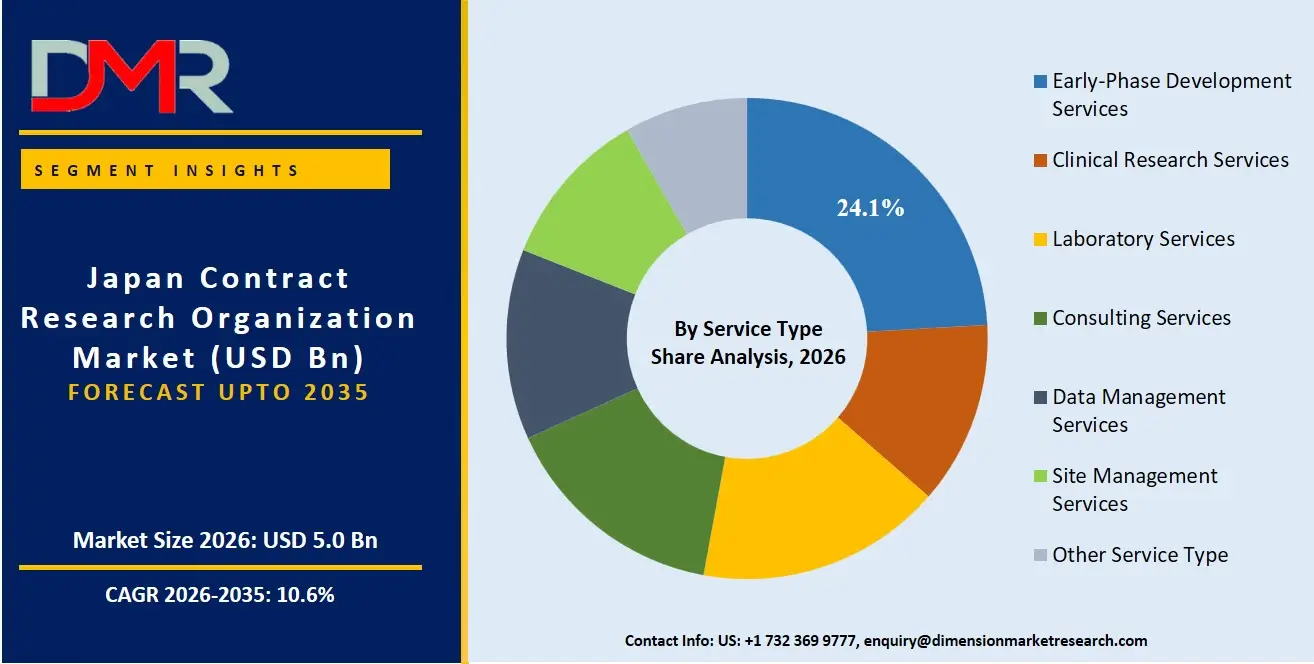
The Japan Contract Research Organization Market Report is segmented by service type into early-phase development, clinical research, laboratory, consulting, data management, and site management services; by therapeutic area, molecule type, clinical trial phase, delivery model, application, and end user, including pharmaceutical companies, medical device firms, and academic research institutes.
ℹ
To learn more about this report –
Download Your Free Sample Report Here
By Service Type Analysis
The Japan contract research organization market is projected to dominate by clinical research services due to its heavy emphasis on late-stage clinical testing, oncology, and international drug testing. The country's elderly population, widespread occurrence of chronic conditions, and robust healthcare system enable greater interest in Phase II and Phase III trials. International pharma companies regularly entrust CROs with the operation, recruitment, monitoring, and management of clinical trials in an attempt to optimize the development process. Moreover, Japanese regulations aligning with international norms for clinical research and a growing trend toward remote clinical research make this particular service more sought-after than other types of services offered by CROs.
By Therapeutic Area Analysis
Oncology is poised to be the most predominant therapeutic area within the Japan Contract Research Organization Market due to the fact that cancer is still one of the major causes of deaths in Japan, which necessitates innovations in oncology drugs and clinical trials. Drug manufacturers and biotech firms have been aggressively investing in immunooncology treatments, targeted therapy, precision medicine, and cellular treatment options, leading to a high number of outsourced oncology projects. There are also well-established cancer research centers in Japan and supportive regulation in oncology drug development. Additionally, complexities in oncology clinical trials and need for biomarker analysis, along with an increase in multinational cancer clinical trials, have further promoted the outsourcing of such studies to specialized CROs.
By Molecule Type Analysis
Small molecule drugs is expected to take the lead when considering the type of molecule in the Japan CRO industry because of the already established chemical drug industry in the country. Several pharmaceutical firms in Japan have been concentrating on conventional medicines meant to treat cardiovascular, metabolic, neurological, and infections diseases, which boosts the production and testing needs of small molecule drugs. Small molecule drugs are also preferred for their simpler production process, regulatory process, and greater use than biologics and advanced therapy medicines. The existing CRO companies in Japan have an advanced system for chemistry testing and analysis, toxicology study, and bioequivalence tests for small molecule drugs.
By Clinical Trial Phase Analysis
The Japan Contract Research Organization Market is poised to dominate by Phase III clinical trials due to their larger sample sizes, prolonged period of time, and greater demands from a practical point of view, making them the most expensive phase of clinical trials to outsource. The pharmaceutical industry relies heavily on CROs in the process of recruiting participants, managing sites, coordinating regulation, and overseeing data for their Phase III clinical trials. Japan has seen an increase in its involvement in international multicenter Phase III trials in recent years because of changes to its regulations and increased alignment with international drug trials.
By Delivery Model Analysis
It is due to the prevalence of full service outsourcing (FSO) model in the Japan Contract Research Organization Market since many pharmaceutical companies are showing their preference towards integrated services related to preclinical studies, clinical trial, regulatory services, testing and post market research. It enables sponsor organizations to manage their operations better, make cost savings and expedite the development process with the help of a single strategic outsourcing company. The increasing number of international clinical trials and biologics development in Japan has further enhanced this demand for outsourcing services. The market dominance of FSO model has been witnessed due to the presence of leading CROs having therapeutic expertise, digital prowess, and extensive regional network.
By Application Analysis
The application of clinical development services is likely to be the dominant one in the Japan CRO industry on account of the rise in outsourcing clinical trial services, including management, monitoring, regulation, and patient enrollment among pharmaceutical and biotech organizations. The increase in the number of oncology drugs, biopharmaceuticals, and regenerative medicines in Japan has led to an increased demand for professional clinical development services. In addition, due to the importance of rapid approval of innovative drugs and involvement in international clinical trials, clinical development outsourcing has received greater attention compared to discovery and post-marketing outsourcing in Japan.
By End User Analysis
Pharmaceuticals and biopharmaceuticals are projected to play an important role in the Japanese CRO market since they represent the dominant segment with respect to the outsourcing of drug discovery, clinical development, lab testing, and regulatory services. The reason is that Japan has many pharmaceutical companies with rich portfolios of projects dedicated to the development of drugs for treating diseases related to oncology, neurology, immunology, and regenerative medicine. The growing costs of clinical trials, the need for faster time-to-market, and increased complexity of clinical trials will further contribute to their outsourcing to CROs. In addition, biotech companies specializing in the development of biologic drugs require professional assistance from CROs.
The Japan Contract Research Organization Market Report is segmented on the basis of the following:
By Service Type
- Early-Phase Development Services
- Chemistry, Manufacturing, and Controls (CMC) Services
- Preclinical Services
- Pharmacokinetics/Pharmacodynamics (PK/PD) Services
- Toxicology Testing Services
- Other Preclinical Services
- Discovery Studies
- Clinical Research Services
- Phase I Clinical Research Services
- Phase II Clinical Research Services
- Phase III Clinical Research Services
- Phase IV Clinical Research Services
- Laboratory Services
- Analytical Testing Services
- Physical Characterization Services
- Raw Material Testing Services
- Batch Release Testing Services
- Stability Testing Services
- Other Analytical Testing Services
- Bioanalytical Testing Services
- Consulting Services
- Data Management Services
- Site Management Services
- Other Service Type
By Therapeutic Area
- Oncology
- Cardiology
- Neurology
- Infectious Diseases
- Immunology
- Respiratory Disorders
- Endocrinology
- Gastroenterology
- Other Therapeutic Area
By Molecule Type
- Small Molecules
- Biologics
- Monoclonal Antibodies
- Cell & Gene Therapy
- Other Biologics
- Biosimilars
- Monoclonal Antibodies
- Insulin
- CSF
- Erythropoietin
- Other Biosimilars
- Medical Devices
- Cell & Gene Therapy Products
By Clinical Trial Phase
- Phase I
- Phase II
- Phase III
- Phase IV
By Delivery Model
- Full-Service Outsourcing (FSO)
- Functional Service Provider (FSP)
- Hybrid and Other Models
By Application
- Drug Discovery
- Clinical Development
- Post-Marketing Surveillance
- Regulatory Submission Support
- Real-World Evidence Studies
By End User
- Pharmaceutical & Biopharmaceutical Companies
- Medical Devices Companies
- Academic Institutes
Competitive Landscape
There has been increased dynamism in the Japan CRO industry's competitive landscape due to the presence of a diverse range of global clinical research organizations that have expanded their Japanese business footprints, leading players within the industry with strong ties within the local hospital industry, and focused site management organizations. It would be essential for any organization to secure strategic partnerships with Japan's National Center hospitals and university clinical trial sites as it would facilitate easier access to patients and protocol feasibility assessment. There is increasing consolidation within the market by means of acquisitions of specialized domestic oncology and cell therapy CROs by leading global CROs to get access to local monitoring expertise and regulatory intelligence. Intellectual property in terms of automating PMDA submission processes and real-world evidence registries would serve as a competitive advantage over labor arbitrage and monitoring-based differentiation.
Some of the prominent players in the Japan Contract Research Organization Market are:
- IQVIA
- Labcorp Drug Development
- Syneos Health
- ICON plc
- Parexel
- Charles River Laboratories
- PPD
- Medpace
- WuXi AppTec
- Pharmaron
- Evotec
- PSI CRO
- KCR
- Novotech
- Worldwide Clinical Trials
- Frontage Laboratories
- ClinChoice
- SGS
- NAMSA
- CTI Clinical Trial and Consulting Services
- Other Key Players
Recent Developments
- March 2026: IQVIA Japan expanded its clinical trial operations and AI-driven patient recruitment services in Japan, supporting growing oncology and rare disease research demand while improving decentralized trial efficiency, patient enrollment speed, and data-driven clinical development capabilities across pharmaceutical and biotechnology sectors.
- January 2026: CMIC Holdings enhanced collaborations with Japanese biopharmaceutical companies to strengthen decentralized clinical trial services and real-world evidence research, helping drug developers accelerate regulatory submissions, improve patient monitoring, and optimize clinical study management throughout Japan's expanding pharmaceutical research market.
- September 2025: Labcorp Drug Development expanded its bioanalytical and central laboratory operations in Japan to support increasing clinical research activities in precision medicine, cell therapy, and advanced biologics, improving testing capacity, biomarker analysis, and clinical trial support services for pharmaceutical companies.
Report Details
| Report Characteristics |
| Market Size (2026) |
USD 5.0 Bn |
| Forecast Value (2035) |
USD 12.3 Bn |
| CAGR (2026–2035) |
10.6% |
| Historical Data |
2021 – 2025 |
| Forecast Data |
2027 – 2035 |
| Base Year |
2025 |
| Estimate Year |
2026 |
| Segments Covered |
By Service Type, By Therapeutic Area, By Molecule Type, By Clinical Trial Phase, By Delivery Model, By Application, and By End User |
| Country Coverage |
Japan |
Frequently Asked Questions
How big is the Japan Contract Research Organization Market?
▾ The Japan Contract Research Organization Market is poised to be valued at USD 5.0 billion in 2026 and is projected to reach USD 12.3 billion by 2035, driven by the universal need for specialized local clinical operations, regulatory support, and aging-population-specific clinical trial execution.
What is the CAGR of the Japan Contract Research Organization Market from 2026 to 2035?
▾ The market is expected to grow at a CAGR of 10.6% from 2026 to 2035, reflecting the accelerating complexity of oncology and regenerative medicine trials and the persistent shortage of internal clinical development talent within Japanese pharma.
What factors are driving the growth of the Japan Contract Research Organization Market?
▾ Key drivers include Japan’s super-aging demographic profile, the PMDA’s requirement for robust local clinical data, the management complexity of global multi-regional trials, and the surge in demand for Real-World Evidence Studies amid ongoing NHI pricing reforms.
Which service type held the largest share of the Japan Contract Research Organization Market in 2026?
▾ Clinical Research Services, particularly Phase II and Phase III operations, held the largest market share in 2026, driven by aggressive sponsor investment in bridging studies and large-scale oncology registries needed for PMDA review.
What are the major trends in the Japan Contract Research Organization Market?
▾ Major trends include the integration of AI into Data Management Services, the rise of Site Management Organization (SMO) consolidation, the adoption of decentralized clinical trial elements tailored to an elderly population, and the focus on cell & gene therapy logistics.
Who are the key players in the Japan Contract Research Organization Market?
▾ Key players include domestic powerhouses like CMIC Group and EPS Corporation, as well as the extensive Japanese operations of global CROs like IQVIA, Parexel, and ICON, alongside specialized oncology and SMO providers.
How is the Japan Contract Research Organization Market segmented?
▾ The market is segmented by Service Type, Therapeutic Area, Molecule Type, Clinical Trial Phase, Delivery Model (), Application, and End User.