What is the Japan Gene Therapy Market Size?
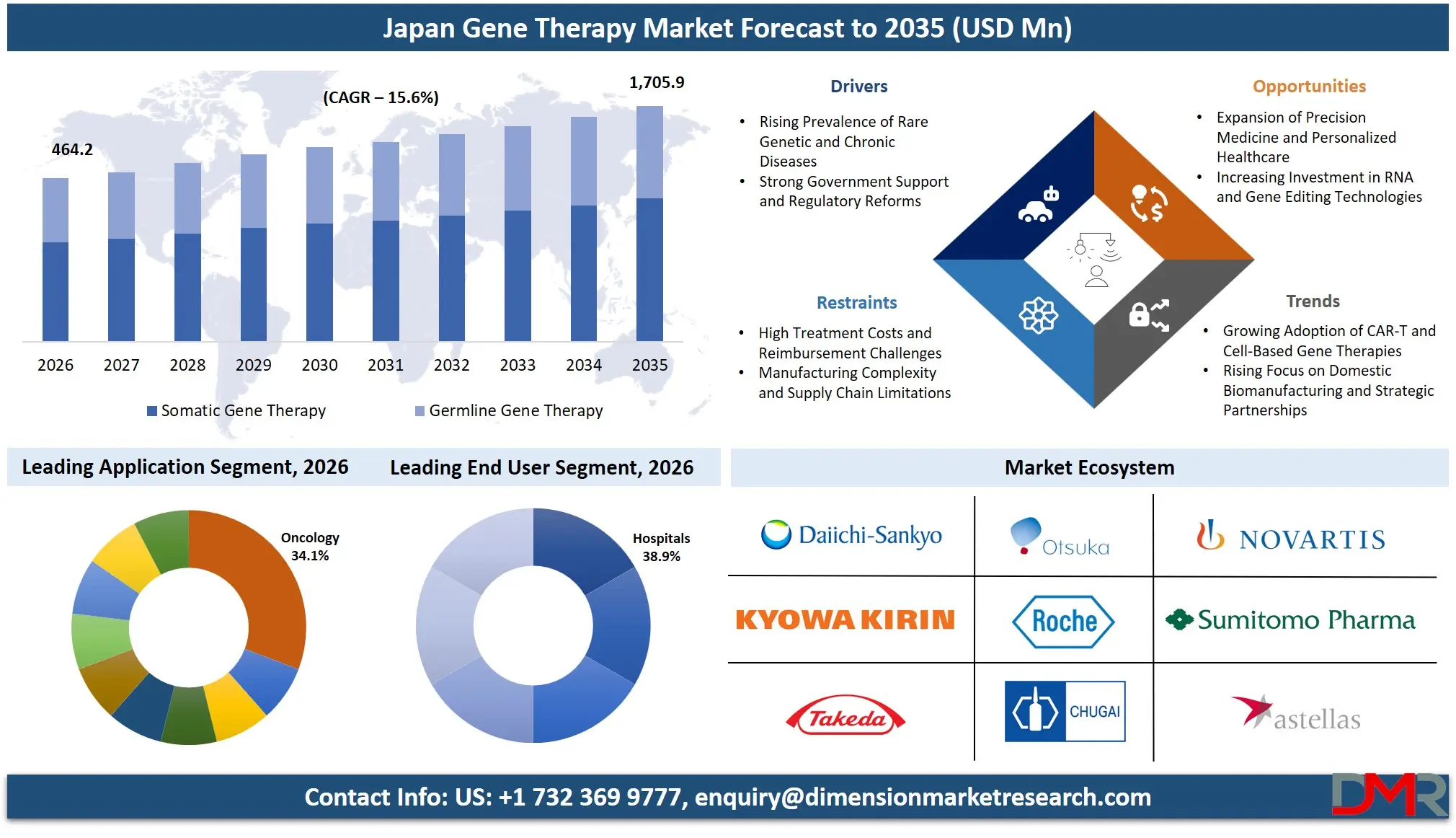
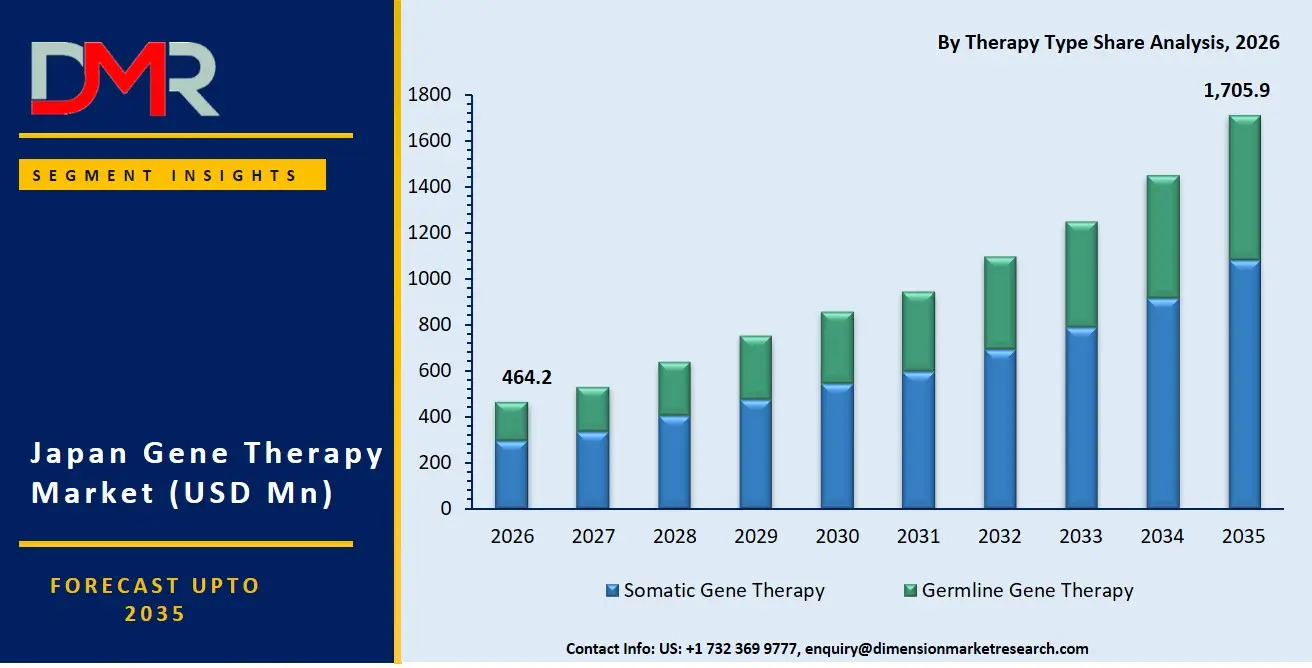
The Japan Gene Therapy Market is expected to reach a value of USD 464.2 million in 2026, and it is further anticipated to reach USD 1,705.9 million by 2035, growing at a CAGR of 15.6% during the forecast period.
ℹ
To learn more about this report –
Download Your Free Sample Report Here
The gene therapy market in Japan has witnessed impressive growth, alongside the focus by Japan to become a leader in the area of regenerative medicine and innovative healthcare products. The gene therapy market in Japan consists of somatic and germline therapies utilizing both viral and non-viral vectors to deal with various illnesses at the molecular level. The rise in demand for therapy options to address ultra-rare genetic illnesses amongst the Japanese community, as well as the growing burden of cancer cases, has necessitated gene therapy research and development. The entities carrying out such researches and pharmaceutical organizations are the major drivers in this industry. Adeno-associated viruses and CRISPR-Cas gene therapy approaches continue to be the dominant forms of therapies due to their precision and effectiveness.
ℹ
To learn more about this report –
Download Your Free Sample Report Here
Key Takeaways
- Market Size & Forecast: Based on forecasts, the size of the market for Japan's gene therapy will experience growth and will attain a value of USD 464.2 million by 2026, expanding dramatically to USD 1,705.9 million by 2035 due to two crucial factors, such as the existence of a fast track process in the area of regenerative medicine as well as a robust pipeline of cell and gene-based therapies.
- Growth Rate & Outlook: It is predicted that the market will register a CAGR of 15.6%, which will be attributed to the presence of important growth factors, such as having a critical mass of research efforts relating to gene editing technologies and an increased need to combat diseases in relation to a super-aging population.
- Primary Growth Drivers: Important growth factors will include the conditional approval granted for therapeutic regenerative products, an increase in government attention towards innovation due to the rise in healthcare costs owing to an aging population, and a large number of biotechnology companies working in the area of AAV vectors and LNPs.
- Key Market Trends: The market trends are mainly related to in vivo gene therapy to treat patients through systemic treatment utilizing viral vectors; usage of genetic manipulation technology in gene editing like the CRISPR-Cas system for ex vivo cellular therapy, and increased interest in gene therapy for eye disorders and neurological diseases, since the occurrence of these disorders is relatively higher in Japan.
- By Vector Type Analysis: The gene therapy market in Japan is driven by the use of viral vectors since they deliver genes at a higher efficiency and ensure long-lasting effects. Adeno-associated viral (AAV) vectors are extensively used for neurological and eye disorders, whereas lentiviral vectors are used for oncology and ex vivo therapy, with considerable backing from the pharmaceutical industry.
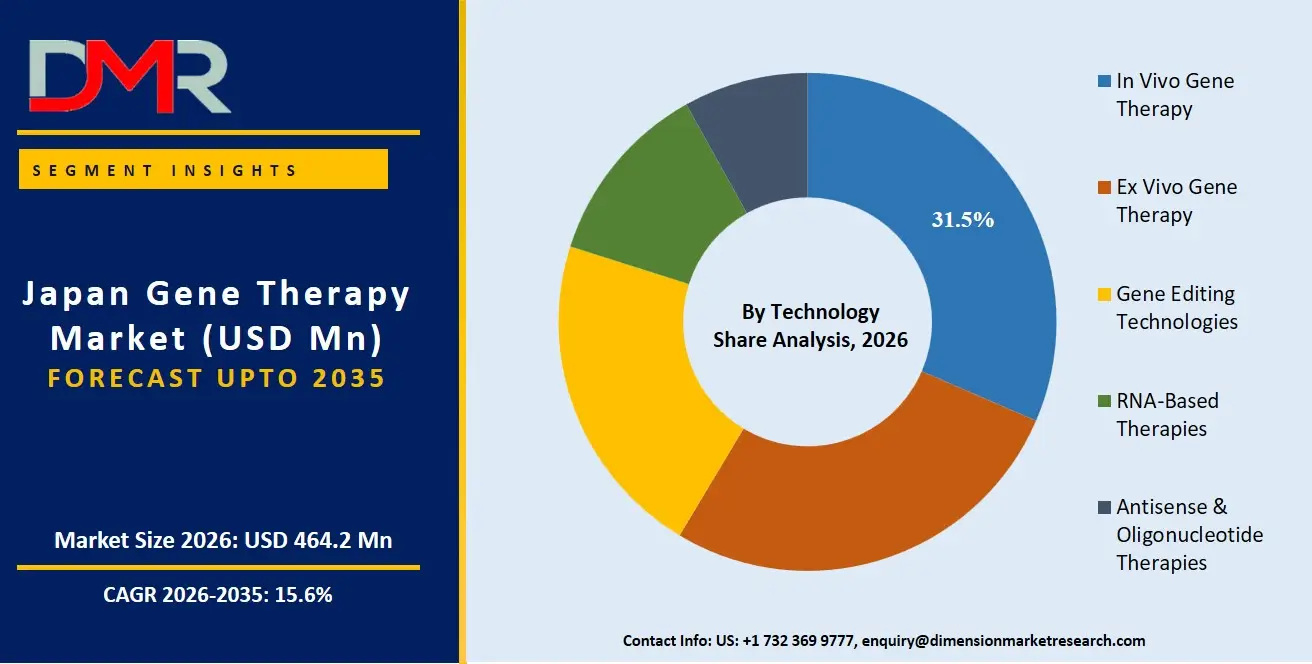
- By Technology Analysis: The gene therapy market in Japan is projected to be dominated by in vivo therapy as it allows the introduction of genetic information directly into the body without taking cells out of the body first.
What is the Gene Therapy?
Gene therapy can be described as the specific type of medicine that involves the introduction of genes to the cells within the body for the purpose of treating various types of diseases. Unlike small molecule drugs, the provision of gene therapy is different as it seeks to cure patients at the very source of their problems. This is done through two approaches like in-vivo approach which involves the use of vectors such as the AAV to transport genes directly to retinal cells and the Central Nervous System, while ex-vivo entails the use of lentivirus to transfer healthy genes to hematopoietic stem cells. Considering the fast-track approval process for regenerative medicine in Japan, gene therapies will require market authorization for early phase studies, hence the need for further studies even after approval.
Use Cases
- Therapy of Hematological Cancers: An ex vivo therapy involving the use of lentivirus vectors to engineer a person's T-cells so that they can produce chimeric antigen receptors (CARs) is adopted by hospitals and specialist cancer clinics to treat cancers in which B cells are involved.
- Treatment of Inherited Retinal Disease: An ophthalmological therapy involves applying gene therapy involving the use of AAV vectors delivered via subretinal injections in order to provide patients with an intact copy of the RPE65 gene.
- Treatment of Rare Genetic Disorders: Pharmaceutical companies together with academic research institutions apply the intravenous systemic administration of AAV vectors so as to provide babies suffering from spinal muscular atrophy with a functional copy of the SMN1 gene.
- Editing Genome to Cure Metabolic Diseases: Biotechnological companies adopt the use of non-viral vectors, such as lipid nanoparticles, in delivering CRISPR-Cas systems in the liver where they inhibit a gene causing the disease known as transthyretin amyloidosis.
How AI is Transforming the Gene Therapy Market?
The impact of AI on the Japanese gene therapy market covers quickening the process of creation of vectors with safety and effectiveness, as well as optimal clinical trials. Speaking about vector design, AI-driven prediction tools will be helpful for exploring large amounts of data in order to develop novel AAV capsid vectors demonstrating improved tissue tropism and reduced immune reaction without any liver toxicity signs. AI-based gene editing allows predicting off-target effects of CRISPR-Cas systems and optimizing guide RNAs.
Furthermore, the role of AI in the clinical development and implementation is quite important. Thus, while searching for patients to conduct clinical trials to treat rare diseases, artificial intelligence algorithms help explore electronic health records and genomics databases in order to identify the most appropriate candidates for participation in clinical trials. Last but not least, AI-driven assistants assist with filing strategies through simulating all phases of assessment, evaluating post-marketing surveillance data, and providing an overview of drug safety and efficacy.
Market Dynamics
Key Drivers in the Japan Gene Therapy Market
Rising Prevalence of Rare Genetic and Chronic Diseases
A rise in the number of aged individuals as well as a rise in the incidence rate of rare genetic diseases, cancers, and disorders associated with the nervous system among others in the country will form one of the major reasons for the increased demand for gene therapy in Japan. Although other forms of treatment can only serve to offer temporary relief from the diseases in question, gene therapy not only offers temporary but long-lasting solutions in most of these cases. Currently, some of the diseases that are contributing to this demand include spinal muscular atrophy, hereditary retinal conditions, and blood cancers.
Strong Government Support and Regulatory Reforms
It should be noted that Japan boasts one of the best-regulatory environments in the world for regenerative medicine and gene therapy drugs. Regulatory systems are known to provide a fast approval process in order to ensure the timely commercialization of innovative medical products, particularly those intended for the treatment of life-threatening illnesses. In addition, the government and its organizations have incentivized businesses to engage in innovations within the biotechnology field through funding initiatives, tax incentives, and cooperation with other enterprises. Advanced therapies' assessment procedures have also been streamlined at PMDA, enabling organizations to accelerate their product development processes.
Restraints in the Japan Gene Therapy Market
High Treatment Costs and Reimbursement Challenges
The treatments used in gene therapy remain expensive due to the complexity involved in manufacture and delivery mechanisms, as well as the personalized nature of treatment. Various gene therapy modalities involve complex viral vector design, lengthy period of development, and clinical trials that result in the therapies being very expensive. In Japan, despite the healthcare system taking care of the majority of patients, securing funding for expensive therapies remains hard and takes much time. The hospitals and insurers have also hesitated to adopt the gene therapy techniques due to their unknown future implications and expense.
Manufacturing Complexity and Supply Chain Limitations
The production of gene therapies involves elaborate manufacturing processes, quality assurance mechanisms, and others that are complicated. There is also the problem of a shortage in terms of the production capacity of viral vectors globally, limiting the potential of Japan in distributing these therapies commercially. Cold chain management and product stabilization in the course of transport are also logistical problems that need to be addressed. Additionally, personalized therapies such as CAR-T therapies involve individualized production processes, therefore raising both time and costs involved. Presently, Japan is seeking to improve its biomanufacturing capacity domestically.
Growth Opportunities in the Japan Gene Therapy Market
Expansion of Precision Medicine and Personalized Healthcare
The increasing focus on precision medicine in Japan is providing immense opportunities in the field of gene therapy. Genomic sequencing, biomarker identification, and AI-enabled diagnostics are paving the way for personalized medicine in diseases such as cancer, neurodegenerative disorders, and genetic conditions. There is growing reliance by healthcare practitioners on personalized medication, which helps treat genetic abnormalities. Companies in the pharmaceutical and biotechnology industry are making significant investments in developing companion diagnostics and personalized medicine solutions for their patients. Moreover, Japan has well-established healthcare infrastructure and digital health solutions, which give them an extra edge over other nations in this regard.
Increasing Investment in RNA and Gene Editing Technologies
Since the emergence of RNA-based treatments and gene editing technology platforms such as CRISPR, there seems to be a great deal of room for expansion in the field of gene therapy in the market of Japan. Following the success of mRNA treatments, Japanese drug companies and research institutions have been increasingly working on promoting the advancement of nucleic acid-based treatment methods. The use of gene editing technologies is becoming more popular when dealing with conditions previously believed to be incurable, as well as when addressing issues related to cancer. Furthermore, Japan offers one of the best environments for conducting scientific research.
Trends in the Japan Gene Therapy Market
Growing Adoption of CAR-T and Cell-Based Gene Therapies
The usage of CAR-T cells and other types of gene therapy is becoming a rising trend in the health care sector of Japan. Hospitals as well as pharmaceutical companies have started using such products because of high efficiency of such treatments as well as individualized treatment of patients. Innovations in the field of regenerative medicine in Japan and new developments in the sphere of oncology have promoted such practices in this country. Production of such treatments in Japan is being considered by companies so that the accessibility of these products to individuals could be increased and time of production reduced.
Rising Focus on Domestic Biomanufacturing and Strategic Partnerships
As observed in recent times, there has been an increasing focus by Japan on its domestic manufacturing of gene therapy so as to reduce dependency on the manufacturing of such products in other parts of the world. This includes, for instance, efforts by pharmaceutical companies in setting up production plants for viral vectors and biologics in Japan, along with streamlining their supply chain process. Another trend that has emerged as far as Japan is concerned is that of strategic partnerships among Japanese organizations, universities, and foreign biotech companies. Strategic partnerships go a long way in ensuring the successful transfer of technology, quickening clinical development, and streamlining commercialization processes of various products.
Research Scope and Analysis
The Japan Gene Therapy Market is segmented by therapy type into somatic gene therapy and germline gene therapy, by vector type into viral and non-viral vectors, by technology, delivery method, route of administration, distribution channel, application, and end user including hospitals, research institutes, biotechnology companies, pharmaceutical companies, and academic organizations.
ℹ
To learn more about this report –
Download Your Free Sample Report Here
By Therapy Type Analysis
The therapy type segment is projected to be dominated by somatic gene therapy in the Japanese gene therapy market owing to the capability of offering precision therapy that does not alter the genetic makeup and hence is considered to be ethical and commercially viable in Japan owing to the stringent regulatory framework governing the country's healthcare sector. The growing focus on sectors including precision medicine, oncology, and orphan drugs in Japan has driven the engagement of pharmaceutical and biotechnology companies in somatic gene therapy. In addition, the rapid approval pathway available for regenerative medicines in Japan will further enhance this segment's performance.
By Vector Type Analysis
The viral vectors are expected to dominate in the gene therapy market in Japan based on vector type since they have high efficiency and the ability to deliver genes for a longer period of time, as well as proven efficacy in already-approved therapies. Adeno-associated viral (AAV) vectors have dominated the market in this subsegment owing to their safety and success in the treatment of neurological and ocular diseases. Other types of viral vectors include lentiviral vectors that are used extensively in ex vivo cell therapy and oncology indications. There is still significant activity in Japan-based pharmaceutical firms and other foreign biotechnology companies in manufacturing viral vectors and conducting research on various applications.
By Technology Analysis
In vitro therapy is poised to dominate this segment as it is widely used in Japan due to its capability of delivering the genetic elements into the body without removing any cells from it for further treatment and re-implantation back into the body. This kind of therapy is particularly effective in case of neurodegenerative diseases, ophthalmologic disorders, and metabolic problems, which are quite common for Japan. The advancements within this subsegment are associated with an increased interest to viral vectors and drug approvals for rare diseases. Manufacturing difficulties associated with in vitro therapy are lower than other types of gene therapy due to the absence of cell handling.
By Delivery Method Analysis
The intravenous route is expected to take over the Japanese gene therapy market due to its ability to be utilized in delivering therapeutic genes across the body system while proving to be efficacious in the treatment of rare diseases, blood disorders, and metabolic disorders. Hospitals in Japan have embraced the use of intravenous route in drug delivery due to its high compatibility with the viral vector therapies and proper adherence to clinical guidelines. The intravenous route ensures easy delivery of drugs into various organs that is essential in the in vivo therapy procedures.
By Route of Administration Analysis
The injection method is estimated to dominate the market of gene therapy in Japan due to the requirement for the injection method as a technique for systemic and localized administration of existing and new therapies. Injection methods offer quick drug activity, simplicity in dosage calculation, and good availability with regard to the delivery through viral and non-viral vectors. The Japanese hospitals and specialized clinics have already made preparations for providing patients with drugs through infusion, especially those patients who suffer from various types of cancer and genetic diseases. The further development of intravenous and intrathecal therapies will facilitate the domination of injections in the market.
By Distribution Channel Analysis
The hospital pharmacies are expected to dominate the gene therapy market in Japan owing to the nature of gene therapies that require specific conditions during storage and administration by trained health practitioners. More advanced forms of gene therapies including CAR-T cell therapy and the use of viral vectors should be provided through major hospitals and medical centers that possess more advanced infrastructure. The hospital pharmacies in Japan can be considered to play a crucial part in ensuring the effective delivery of gene therapy products because of the existence of advanced hospital systems and payment methods in Japan.
By Application Analysis
The field of oncology is expected to lead the Japan gene therapy market as cancer continues to be one of the major killers in Japan and an area of innovation in biopharmaceutical products. The widespread acceptance of CAR-T treatments, oncolytic virus-based therapies, and the adoption of precision oncology techniques is driving the development of gene therapies against cancer diseases. The advanced cancer care facilities, along with government initiatives for regenerative medicine, help to further enhance this category. Companies are pouring money into their research for immune-oncology drugs against hematological cancers and solid tumors.
By End User Analysis
The hospital pharmacies are expected to dominate the gene therapy market in Japan owing to the nature of gene therapies that require specific conditions during storage and administration by trained health practitioners. More advanced forms of gene therapies including CAR-T cell therapy and the use of viral vectors should be provided through major hospitals and medical centers that possess more advanced infrastructure. The hospital pharmacies in Japan can be considered to play a crucial part in ensuring the effective delivery of gene therapy products because of the existence of advanced hospital systems and payment methods in Japan.
The Japan Gene Therapy Market Report is segmented on the basis of the following:
By Therapy Type
- Somatic Gene Therapy
- Germline Gene Therapy
By Vector Type
- Viral Vectors
- Adeno-Associated Virus (AAV)
- Lentiviral Vectors
- Retroviral Vectors
- Adenoviral Vectors
- Herpes Simplex Viral Vectors
- Other Viral Vectors
- Non-Viral Vectors
- Lipid Nanoparticles
- Plasmid DNA
- Polymer-Based Delivery Systems
- Other Non-Viral Vectors
By Technology
- In Vivo Gene Therapy
- Ex Vivo Gene Therapy
- Gene Editing Technologies
- CRISPR-Cas Systems
- TALEN
- Zinc Finger Nucleases (ZFNs)
- RNA-Based Therapies
- Antisense & Oligonucleotide Therapies
By Delivery Method
- Intravenous Delivery
- Intramuscular Delivery
- Intrathecal Delivery
- Intratumoral Delivery
- Topical Delivery
- Other Delivery Methods
By Route of Administration
By Distribution Channel
- Hospital Pharmacies
- Specialty Pharmacies
- Online Pharmacies
- Retail Pharmacies
By Application
- Oncology
- Rare Genetic Disorders
- Cardiovascular Diseases
- Neurological Disorders
- Ophthalmic Disorders
- Hematological Disorders
- Infectious Diseases
- Metabolic Disorders
- Musculoskeletal Disorders
- Other Applications
By End User
- Hospitals
- Specialty Clinics
- Research Institutes
- Biotechnology Companies
- Pharmaceutical Companies
- Academic & Government Organizations
Competitive Landscape
The nature of competition in the Japan gene therapy market has become very dynamic, given the diverse range of multinationals operating in the space, as well as Japanese pharmaceutical giants and small biotech firms focusing on gene therapy applications. Strategic alliances with major research centers and hospitals would be crucial for the company, as they help gain access to patients and get early validation of the company's innovative vector technology platforms. The trend of consolidation is growing at a rapid pace, as global pharmaceutical giants are acquiring local Japanese biotechnology companies specializing in AAV and CRISPR vectors in order to stay in business. IP differentiators such as proprietary capsid libraries, optimized LNPs, and disease models are playing an increasingly significant role compared to a traditional pipeline product or manufacturing platform.
Some of the prominent players in the Japan Gene Therapy Market are:
- Takeda Pharmaceutical Company
- Astellas Pharma
- Daiichi Sankyo
- Otsuka Holdings
- Chugai Pharmaceutical
- Kyowa Kirin
- Sumitomo Pharma
- Novartis AG
- F. Hoffmann-La Roche
- Pfizer Inc.
- Johnson & Johnson
- Gilead Sciences
- Bluebird Bio
- Sarepta Therapeutics
- BioMarin Pharmaceutical
- CSL Behring
- REGENXBIO
- Krystal Biotech
- MeiraGTx
- AnGes Inc.
- Other Key Players
Recent Developments
- May 2026: Japan approved ELEVIDYS for Duchenne muscular dystrophy, strengthening the country's rare disease gene therapy landscape and supporting wider commercialization of advanced genetic medicines for neuromuscular disorders across Japan's healthcare sector.
- April 2026: VYJUVEK received approval in Japan for dystrophic epidermolysis bullosa, becoming the country's first approved topical gene therapy and highlighting growing regulatory support for innovative genetic treatments targeting rare dermatological conditions.
- February 2026: Kyowa Kirin and Orchard Therapeutics obtained orphan regenerative medicine designation in Japan for OTL-200, an investigational gene therapy for metachromatic leukodystrophy, supporting future development of advanced therapies for rare neurological disorders.
Report Details
| Report Characteristics |
| Market Size (2026) |
USD 464.2 Mn |
| Forecast Value (2035) |
USD 1,705.9 Mn |
| CAGR (2026–2035) |
15.6% |
| Historical Data |
2021 – 2025 |
| Forecast Data |
2027 – 2035 |
| Base Year |
2025 |
| Estimate Year |
2026 |
| Segments Covered |
By Therapy Type, By Vector Type, By Technology, By Delivery Method, By Route of Administration, By Distribution Channel, By Application, By End User |
| Country Coverage |
Japan |
Frequently Asked Questions
How big is the Japan Gene Therapy Market?
▾ The Japan Gene Therapy market is poised to be valued at USD 464.2 million in 2026 and is projected to reach USD 1,705.9 million by 2035, driven by the universal need for one-time, curative solutions for an aging population with high rates of genetic and age-related diseases.
What is the CAGR of the Japan Gene Therapy Market from 2026 to 2035?
▾ The market is expected to grow at a CAGR of 15.6% from 2026 to 2035, reflecting the accelerating clinical pipeline and the nation's unique regulatory framework enabling faster market access for regenerative medicines.
What factors are driving the growth of the Japan Gene Therapy Market?
▾ Key drivers include Japan’s expedited conditional approval pathway for gene therapies, the escalating healthcare burden of a super-aging society, and a deep ecosystem of academic research excellence in viral vector and gene editing technologies.
What are the major trends in the Japan Gene Therapy Market?
▾ Major trends include the development of next-generation AAV capsids for safer in vivo delivery, the shift toward allogeneic "off-the-shelf" ex vivo therapies using CRISPR gene editing, and a strong focus on applications in neurological and ophthalmic disorders.
Who are the key players in the Japan Gene Therapy Market?
▾ Key players in the Japan Gene Therapy Market include Novartis, Takeda Pharmaceutical, Astellas Pharma, Pfizer, Sarepta Therapeutics, Kyowa Kirin, Daiichi Sankyo, and Orchard Therapeutics, driving innovation through research, clinical trials, vector development, and commercialization activities.
How is the Japan Gene Therapy Market segmented?
▾ The market is segmented by Therapy Type, Vector Type, Technology, Delivery Method, Route of Administration, Distribution Channel, Application, and End User.