Market Snapshot
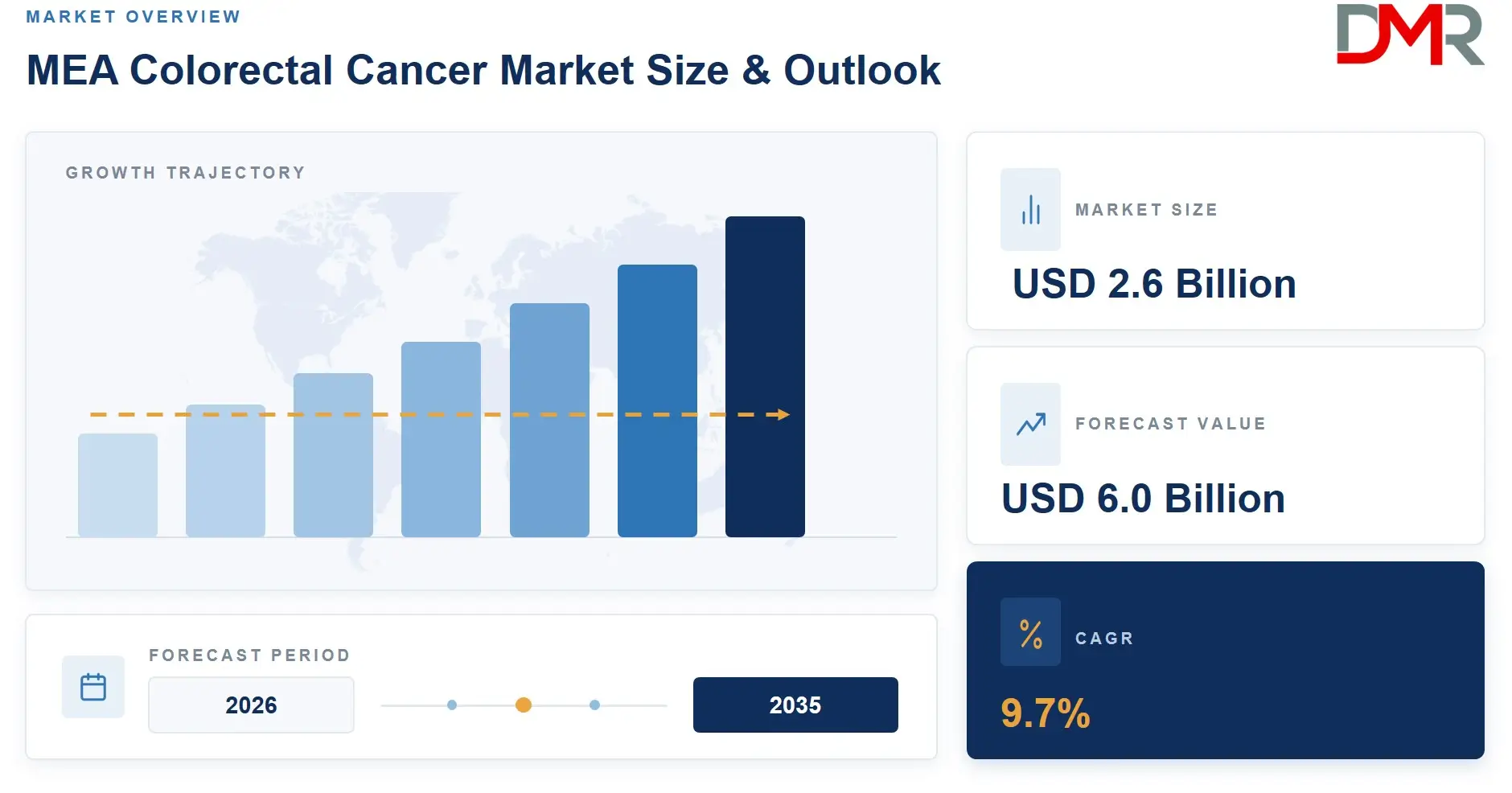
- Market Size (2026): USD 2.6 Bn
- Forecast Value (2035): USD 6.0 Bn
- CAGR (2026-2035): 9.7%
- Leading Test Type (2026): Colonoscopy, around 42%
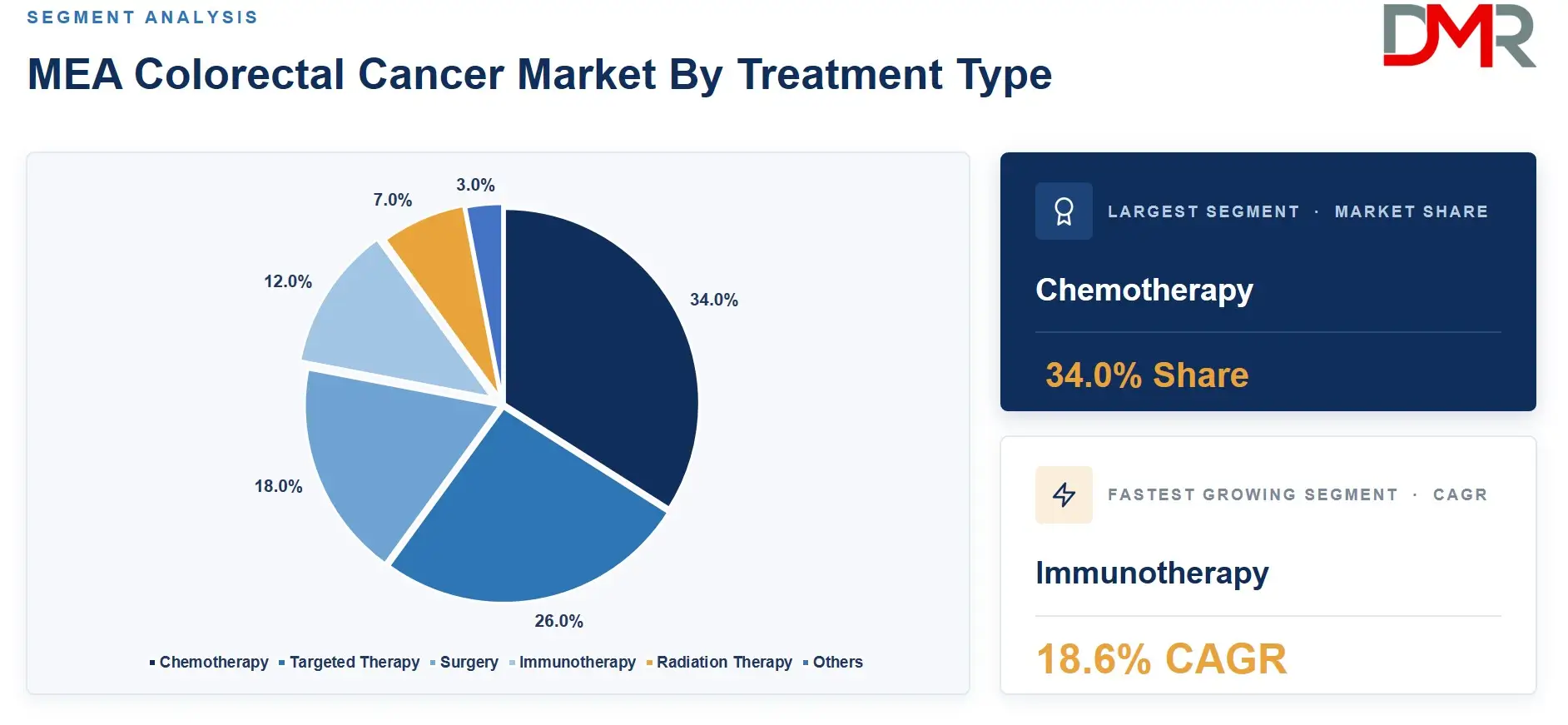
- Leading Treatment Type (2026): Chemotherapy, close to 34%
- Key Players: Roche, Bristol Myers Squibb, Merck & Co. and others
What is MEA Colorectal Cancer Market and its Market Size?
The MEA Colorectal Cancer Market size is estimated to reach USD 2.6 Bn in 2026 and is further anticipated to reach USD 6.0 Bn by 2035, at a CAGR of 9.7%.
ℹ
To learn more about this report –
Download Your Free Sample Report Here
The market spans every product and service line involved in identifying and managing colorectal cancer across the Middle East and Africa, from stool-based and endoscopic screening tools through surgical resection, radiation therapy and drug classes including cytotoxic chemotherapy, targeted monoclonal antibodies, tyrosine kinase inhibitors and immune checkpoint inhibitors. Coverage stretches across Saudi Arabia, the UAE and the wider GCC, South Africa, Egypt and the Levant, together with the smaller Sub-Saharan and North African territories grouped under a Rest of MEA classification. The figures quoted here capture demand generated for screening, diagnosis and treatment inside these territories; they are not the worldwide revenue booked by pharmaceutical or device companies that happen to be headquartered within the region.
Purchasing sits with three buyer classes. Ministry of health systems and national insurance schemes in Saudi Arabia, the UAE and South Africa run centralized tenders for chemotherapy agents, biologics and endoscopy platforms, setting formulary access and reimbursement bands that determine which drug classes reach public hospitals first. Private hospital groups and dedicated oncology networks purchase on a faster cycle, adopting newer biologic and immunotherapy regimens ahead of public formularies to serve insured and medical-tourism patients. Diagnostic laboratory chains and endoscopy centers buy screening consumables and imaging equipment, a segment that is expanding as awareness campaigns push average-risk adults toward earlier testing.
What is structurally changing is the collision of rising incidence with historically thin screening coverage. Dietary shifts, rising obesity and an aging population base in the Gulf states are pushing colorectal cancer up national cancer registries, while national uptake of recommended screening remains in the single digits across several MEA markets, so a disproportionate share of cases still present at an advanced stage. Government-led screening pushes, private hospital capacity build-out and a widening biologics and immunotherapy formulary are together reshaping how early this disease is caught and how it is subsequently treated.
Use Cases
- Government Screening Program Rollout: National ministries of health across Saudi Arabia and the UAE deploy fecal immunochemical testing kits through primary care networks to raise average-risk screening participation, referring positive results into colonoscopy confirmation slots at public hospitals.
- Private Oncology Network Biologic Adoption: Multi-site private hospital groups in the GCC stock targeted monoclonal antibody and immune checkpoint inhibitor regimens ahead of public formulary approval, positioning themselves to serve insured patients and medical-tourism referrals seeking newer treatment lines.
- Tender-Based Public Procurement: Centralized purchasing bodies such as Saudi Arabia's national procurement company negotiate multi-year supply contracts for chemotherapy agents and endoscopy consumables, consolidating volume across public hospital networks to secure lower unit pricing.
- Diagnostic Laboratory Capacity Expansion: Independent laboratory chains in South Africa and Egypt add biomarker and molecular pathology testing lines to support mismatch repair and microsatellite instability profiling, a prerequisite step for immunotherapy eligibility that regional labs previously had to outsource.
Key Takeaways
- Market Size & Share: Market size is projected at USD 2.6 Bn in 2026, expanding to USD 6.0 Bn by 2035.
- Treatment Type Analysis: Chemotherapy is expected to remain the leading treatment type, accounting for close to 34% of 2026 revenue.
- Demand Concentration: Saudi Arabia is expected to anchor the largest share of regional demand in 2026, supported by its national screening program and centralized procurement scale.
- Screening Technology Shift: Biomarker-based testing is projected to be the fastest-growing test type, expanding at a CAGR of 19.4% between 2026 and 2035.
- Regulatory Harmonization: The GCC's central drug registration pathway is shortening the time newly approved biologics take to reach Gulf hospital formularies.
- Immunotherapy Momentum: Immune checkpoint inhibitors are forecast to post the fastest drug-class growth, at a CAGR of 20.2% through 2035, as MSI-H and dMMR biomarker testing becomes more accessible.
How AI/Gen AI is Transforming the MEA Colorectal Cancer Market?
Artificial intelligence is entering this market first through the endoscopy suite rather than the drug pipeline. Computer vision models trained to flag polyps in real time during colonoscopy are being piloted at private hospital groups in the UAE and Saudi Arabia, where endoscopist supply is thinner relative to patient volume than in mature Western markets, making a second automated set of eyes commercially attractive rather than merely convenient.
Beyond the endoscopy suite, the more consequential shift is operational: digital pathology platforms that route tissue slides to centralized reading hubs let a single molecular pathology team serve multiple hospital sites across a country, cutting the turnaround time for mismatch repair and microsatellite instability results that determine immunotherapy eligibility. Regulatory documentation tools that auto-populate tender submission dossiers are also easing the administrative load public hospital procurement teams carry.
- Computer Vision Polyp Detection: Real-time image analysis during colonoscopy flags suspicious lesions that a single endoscopist might miss during high-volume screening sessions.
- Digital Pathology and Slide Triage: Cloud-hosted slide scanning routes biopsy samples to centralized molecular pathology hubs, shortening biomarker turnaround for regional hospitals lacking on-site testing.
- AI-Assisted Risk Stratification: Predictive models combine family history, lifestyle and prior screening data to flag average-risk patients who warrant earlier colonoscopy referral.
- Regulatory Documentation Automation: Software tools that pre-populate SFDA and GCC central-pathway submission dossiers reduce the administrative burden on regional market-access teams.
Key Drivers in the Colorectal Cancer Market
Two forces are pulling demand upward at different points in the care pathway.
- Rising Incidence Linked to Lifestyle Transition: Colorectal cancer has climbed into the leading cancers diagnosed among men in Saudi Arabia and ranks among the most common cancers in the UAE, a shift tied to rising obesity, sedentary lifestyles and dietary westernization across Gulf populations. As national cancer registries record this climb, ministries of health are directing budget toward both screening capacity and treatment formularies, lifting demand across the diagnostic and therapeutic segments simultaneously rather than one at a time. The trend is compounded by an aging national population in Saudi Arabia and the UAE, where age-standardized incidence rates rise sharply past the mid-forties threshold used for average-risk screening eligibility.
- Government Screening Program Expansion: Saudi Arabia's national colorectal cancer screening program, alongside UAE Ministry of Health and Prevention awareness initiatives, is pushing fecal immunochemical testing and colonoscopy referral pathways into primary care networks that previously had no structured screening protocol. Every positive fecal test that converts into a confirmatory colonoscopy adds directly to procedure volume, and every case caught at an earlier stage shifts a portion of the treatment mix toward surgery and away from the costlier late-stage chemotherapy and biologic regimens, altering segment economics even as it improves patient outcomes.
Restraints in the Colorectal Cancer Market
Two structural brakes temper the pace of adoption.
- Persistently Low Screening Uptake: Published clinical audits across Saudi Arabia and the UAE consistently report average-risk screening participation in the single digits, well below the rates seen in mature screening markets, so a large share of colorectal cancer cases are still diagnosed at an advanced stage where treatment cost and complexity are highest. Cultural reticence around discussing bowel symptoms, limited public awareness of stool-based testing and uneven primary care referral pathways all contribute, and closing this gap requires sustained public health investment rather than a single product launch.
- Access Disparity Across the Region: The gap between GCC private hospital formularies, which stock newer immunotherapy and targeted regimens relatively quickly, and public hospital systems in lower-income North and Sub-Saharan African markets, which often rely on older chemotherapy backbones, constrains how evenly newer drug classes penetrate the region. Out-of-pocket costs for biologics remain prohibitive for uninsured patients outside the Gulf's more comprehensive coverage schemes, capping addressable volume for the fastest-growing treatment categories.
Growth Opportunities in the Colorectal Cancer Market
Two pockets of white space stand out against the regional backdrop.
- Non-Invasive Biomarker Testing Adoption: Blood-based and stool DNA biomarker tests offer a route to raise screening participation among patients reluctant to undergo colonoscopy, and independent diagnostic laboratory chains expanding across South Africa and Egypt are well placed to introduce these assays as a lower-friction entry point into the screening funnel, converting a portion of currently unscreened adults into paying testing volume.
- Private Oncology Network Expansion Beyond the Gulf: Multi-site private hospital operators that have built out dedicated oncology centers in Saudi Arabia and the UAE are extending the same model into North Africa, where public treatment capacity is thinner relative to rising case counts, creating an opening for private-pay and insurance-backed cancer centers to capture demand that public systems cannot currently absorb.
Trends in the Colorectal Cancer Market
Two shifts are reshaping how care is delivered and paid for.
- Biomarker-Driven Treatment Selection: Mismatch repair and microsatellite instability testing is becoming a routine pre-treatment step rather than a specialist referral, as immune checkpoint inhibitor eligibility depends on it, pushing hospitals and reference laboratories to build in-house molecular testing capacity instead of outsourcing samples abroad and waiting weeks for results.
- Consolidated Tender Procurement: National and GCC-wide central purchasing bodies are increasingly bundling chemotherapy agents, biologics and endoscopy consumables into multi-year framework agreements, a shift that favors suppliers able to guarantee regional supply continuity over those competing purely on a single product's list price.
Research Scope and Analysis
Segment performance is assessed across five axes: test type, treatment type, drug class, end user and distribution channel. Each axis identifies the sub-segment carrying the largest share of 2026 revenue and the one expanding fastest through 2035, with the commercial reason behind each position.
ℹ
To learn more about this report –
Download Your Free Sample Report Here
By Test Type
Colonoscopy is projected to hold the largest share by test type in 2026, accounting for around 42% of revenue, since it remains the confirmatory step every positive stool-based result and every symptomatic referral is routed through, and public and private hospitals alike have prioritized endoscopy suite capacity as the anchor of their screening infrastructure. Growth, however, is concentrated in biomarker-based testing, expanding at a CAGR of 19.4% between 2026 and 2035 as blood-based and stool DNA assays give reluctant patients a lower-friction entry point into screening and as mismatch repair profiling becomes a prerequisite for immunotherapy eligibility, pulling volume toward laboratories that can run these panels in-house.
By Treatment Type
Chemotherapy is expected to remain the largest treatment type in 2026, holding close to 34% of revenue, because it remains the most affordable and widely reimbursed backbone regimen across public hospital formularies in every MEA market, including those with thinner biologics coverage. The steeper trajectory sits with immunotherapy, projected to grow at a CAGR of 18.6% through 2035 as immune checkpoint inhibitor access widens alongside expanding biomarker testing capacity, allowing a larger share of MSI-H and dMMR patients to qualify for first-line immunotherapy rather than chemotherapy alone.
By Drug Class
Monoclonal antibodies are set to lead by drug class in 2026, accounting for approximately 38% of revenue, reflecting their established role as the anti-angiogenic and anti-EGFR backbone added to chemotherapy across advanced-stage treatment protocols in both public and private settings. Growth, however, is concentrated in immune checkpoint inhibitors, forecast at a CAGR of 20.2% between 2026 and 2035 as regional formulary approvals catch up with the international clinical evidence base for MSI-H and dMMR colorectal cancer, opening up a treatment category that was largely unavailable in the region five years ago.
By End User
Hospitals are projected to hold the largest end-user share in 2026, at around 48%, since surgical resection, infusion-based chemotherapy and radiation therapy all require inpatient or day-case hospital infrastructure that stand-alone clinics cannot replicate. The fastest-growing end user is cancer treatment centers and specialty clinics, expanding at a CAGR of 13.6% through 2035 as private operators build dedicated oncology campuses across the Gulf and North Africa that offer a faster, more specialized alternative to general hospital oncology wards.
By Distribution Channel
Hospital pharmacies are expected to remain the leading distribution channel in 2026, close to 52% of revenue, because infused chemotherapy, biologics and immunotherapy agents are dispensed and administered on-site rather than taken home. The sharpest growth sits with online pharmacies, projected at a CAGR of 20.8% between 2026 and 2035, as oral targeted therapy formulations and supportive-care medications increasingly move to home delivery platforms that Gulf private insurers have begun to reimburse directly.
The Colorectal Cancer Market Report is Segmented Based on the Following
By Test Type
- Colonoscopy
- Stool-based Tests (FIT/FOBT)
- CT Colonography
- Biomarker-based Tests
- Flexible Sigmoidoscopy
- Others
By Treatment Type
- Chemotherapy
- Targeted Therapy
- Surgery
- Immunotherapy
- Radiation Therapy
- Others
By Drug Class
- Monoclonal Antibodies
- Chemotherapeutic Agents
- Tyrosine Kinase Inhibitors
- Immune Checkpoint Inhibitors
- Others
By End User
- Hospitals
- Cancer Treatment Centers & Specialty Clinics
- Diagnostic Laboratories
- Ambulatory Surgical Centers
- Others
By Distribution Channel
- Hospital Pharmacies
- Direct Tenders & Institutional Sales
- Retail Pharmacies
- Online Pharmacies
- Others
Regulatory Landscape
Regulatory oversight in the region currently runs through separate national authorities that are only partially converging. The Saudi Food and Drug Authority anchors approvals for the largest single market and participates in the GCC's central drug registration pathway, which lets a product cleared through that route reach all six Gulf states while each country still sets its own pricing and reimbursement terms; South Africa's health products regulator and Egypt's drug authority operate independently of this pathway and of each other. What is shifting now is the pace of biologic and immunotherapy approvals, which increasingly follow major Western clearances within a year or two rather than lagging by half a decade. The commercial opening sits with suppliers able to file simultaneously across the GCC central pathway and the region's larger non-GCC markets, cutting the time to full MEA coverage. The risk is that South Africa and Egypt's slower, fully independent review cycles keep pricing and access diverging across the region, complicating any supplier's single regional launch plan and keeping overall formulary access uneven well into the forecast window.
Epidemiology
Colorectal cancer incidence is rising unevenly across the region: it now ranks among the most frequently diagnosed cancers in men in Saudi Arabia and the UAE, while South Africa and several North African markets report lower but steadily climbing age-standardized rates tied to urbanization and dietary change. What is shifting now is the age profile, with a growing share of cases presenting before age fifty, prompting some clinicians to argue for lowering the standard screening threshold below the current forty-five-year benchmark. The commercial opening is in earlier-stage detection and treatment, since a larger screened population converts more cases from late-stage, biologic-heavy regimens into earlier-stage protocols centered on surgery and adjuvant chemotherapy. The persistent risk is that awareness and screening infrastructure are not rising as fast as incidence itself, so despite program investment, a large share of the region's disease burden could continue presenting at an advanced stage for much of the forecast period, keeping demand skewed toward the costliest treatment lines even as prevention efforts expand.
Competitive Landscape
Competition sits at two distinct levels. Multinational originators, mostly headquartered in the United States and Europe, dominate the biologics, targeted therapy and immunotherapy categories through direct affiliates or regional distribution partnerships, competing chiefly on clinical evidence, tender pricing and speed of GCC central-pathway registration. Regional manufacturers based in Saudi Arabia, the UAE, Egypt and South Africa compete mainly in generic chemotherapy and supportive-care segments, where local manufacturing and government procurement preferences give them a durable cost advantage over imports. Hospital groups and diagnostic laboratory chains form a third competitive layer, differentiating on screening capacity, molecular testing turnaround and specialist oncology staffing rather than on any single product line.
Some of the Prominent Players in the Colorectal Cancer Market Are
- Roche
- Bristol Myers Squibb
- Merck & Co.
- Amgen
- Pfizer
- Sanofi
- Bayer
- Eli Lilly and Company
- AstraZeneca
- Novartis
- Servier
- Exact Sciences Corporation
- Guardant Health
- Natera
- Illumina
- GRAIL
- Boston Scientific Corporation
- Medtronic
- Olympus Corporation
- Fujifilm Holdings Corporation
- Siemens Healthineers
- Abbott Laboratories
- Becton, Dickinson and Company
- Thermo Fisher Scientific
- Hologic
- Intuitive Surgical
- Agilent Technologies
- Cardinal Health
- Hikma Pharmaceuticals
- Aspen Pharmacare
- Julphar (Gulf Pharmaceutical Industries)
- SPIMACO Addwaeih
- Tabuk Pharmaceuticals
- Adcock Ingram
- Pharco Pharmaceuticals
- EVA Pharma
- EIPICO
- NUPCO (National Unified Procurement Company)
- Life Healthcare Group
- Netcare Limited
- Other Key Players
Recent Developments
- In April 2026, Dubai Science Park partnered with Neuro Spinal Hospital to launch the "Stools Saves Lives" colon cancer awareness campaign, offering screening tests to UAE residents to encourage earlier detection.
- In January 2026, a Saudi Medical Journal review of the Saudi National Screening Program for Colorectal Cancer reported average-risk screening uptake remained below 10%, prompting calls to expand fecal immunochemical testing outreach through primary care.
- In December 2025, Icon Oncology opened its Sapphire Coast Oncology Centre in Amanzimtoti, South Africa, a purpose-built full-service cancer treatment facility expanding chemotherapy and radiotherapy access along the KwaZulu-Natal coast.
- In August 2025, Icon Oncology unveiled an upgraded radiotherapy suite at its Wilgers Oncology Centre in Pretoria, South Africa, adding advanced treatment technology to its regional oncology network.
Report Details
| Report Characteristics |
| Market Size (2026) |
USD 2.6 Bn |
| Forecast Value (2035) |
USD 6.0 Bn |
| CAGR (2026-2035) |
9.7% |
| Historical Data |
2021 - 2025 |
| Forecast Data |
2026 - 2035 |
| Base Year |
2025 |
| Segments Covered |
By Test Type, By Treatment Type, By Drug Class, By End User and By Distribution Channel |
| Regional Coverage |
Middle East & Africa - Saudi Arabia, The UAE, South Africa, Rest of MEA |
Frequently Asked Questions
How big is the MEA Colorectal Cancer Market?
▾ The MEA Colorectal Cancer Market is estimated at USD 2.6 Bn in 2026 and is projected to reach USD 6.0 Bn by 2035, growing at a CAGR of 9.7% across screening, diagnosis and treatment.
What is the growth rate of the MEA Colorectal Cancer Market?
▾ The market is projected to expand at a CAGR of 9.7% between 2026 and 2035, driven by rising incidence tied to lifestyle change and by government screening program expansion across Saudi Arabia and the UAE.
Which country holds the largest share in the MEA Colorectal Cancer Market?
▾ Saudi Arabia is expected to hold the largest share of the MEA Colorectal Cancer Market in 2026, supported by its national screening program, the region's largest treated patient pool and centralized tender procurement scale, ahead of South Africa and the UAE.
Who are the key players in the MEA Colorectal Cancer Market?
▾ Key players include Roche, Bristol Myers Squibb, Merck & Co., Amgen, Pfizer and Hikma Pharmaceuticals, alongside regional manufacturers such as SPIMACO Addwaeih and Aspen Pharmacare serving public and private hospital formularies.
Which treatment type leads the MEA Colorectal Cancer Market in 2026?
▾ Chemotherapy is expected to lead by treatment type in 2026, accounting for close to 34% of revenue, reflecting its role as the most widely reimbursed backbone regimen across public hospital formularies region-wide.
What is driving demand for colorectal cancer screening in the MEA region?
▾ Demand is being driven by rising incidence linked to dietary and lifestyle change, national screening programs in Saudi Arabia and the UAE, and growing laboratory capacity for biomarker-based testing that lowers the barrier to participation for reluctant patients.
How is artificial intelligence influencing colorectal cancer diagnosis in the MEA region?
▾ Artificial intelligence is being applied mainly through computer vision tools that flag polyps during colonoscopy and through digital pathology platforms that route biopsy slides to centralized molecular testing hubs, shortening the turnaround for biomarker results that determine immunotherapy eligibility.