What is the Microbial Fermentation Technology Small Molecules Market Size?
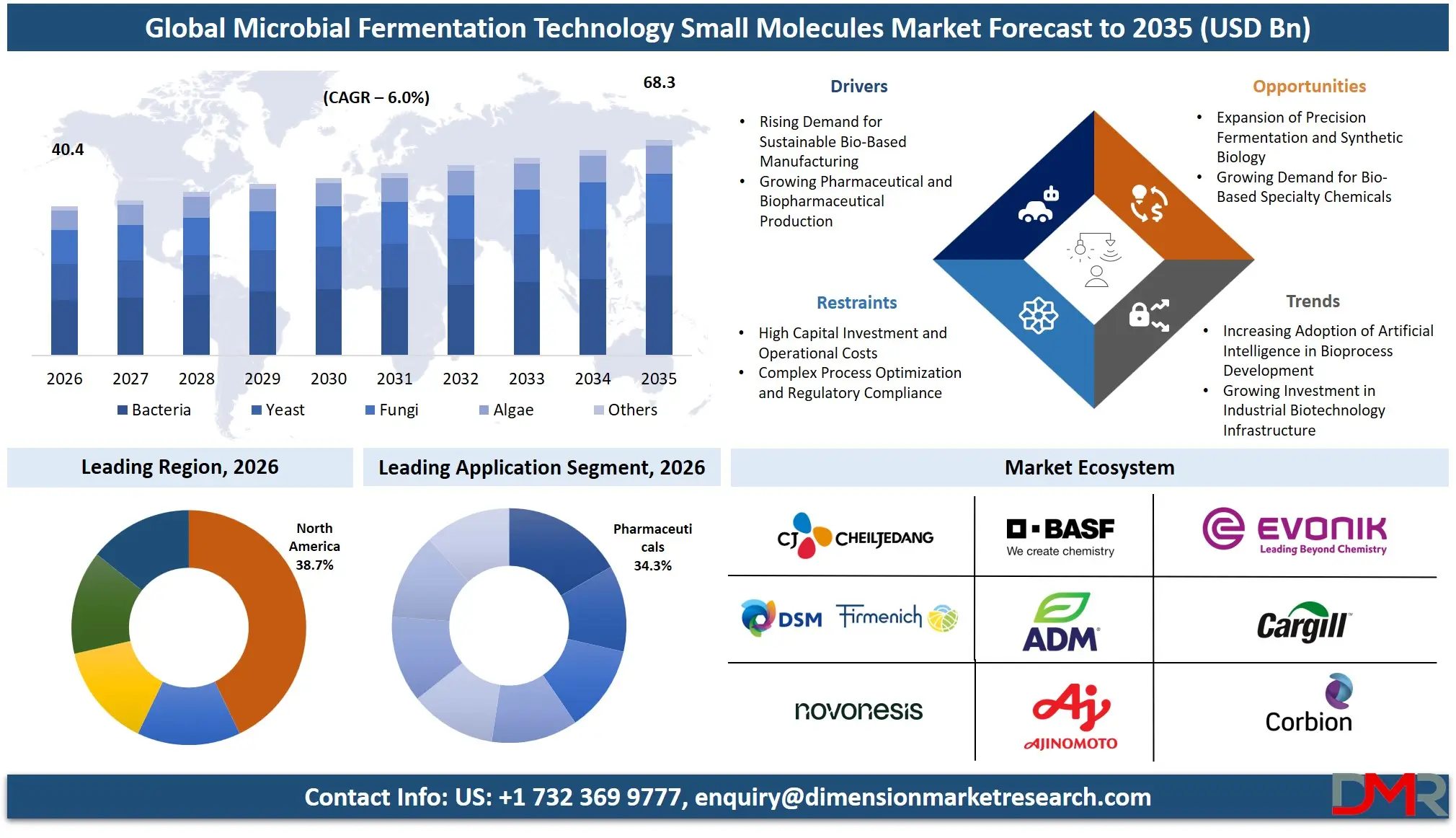
The Global Microbial Fermentation Technology Small Molecules Market is expected to reach a value of USD 40.4 billion in 2026, and it is further anticipated to reach USD 68.3 billion by 2035, growing at a CAGR of 6.0% during the forecast period.
ℹ
To learn more about this report –
Download Your Free Sample Report Here
The Microbial Fermentation Technology Small Molecules Market represents the production and commercialization of small molecules manufactured through microbial fermentation processes using bacteria, yeast, fungi, algae, and other microorganisms. These molecules include amino acids, organic acids, vitamins, antibiotics, enzymes, biopolymers, alcohols, solvents, and other fermentation-derived products.
Microbial fermentation enables manufacturers to produce commercially valuable molecules through controlled biological processes using renewable feedstocks and optimized microbial strains. The technology is widely applied across pharmaceutical and biotechnology manufacturing, food and beverage production, animal nutrition, nutraceuticals, and chemical manufacturing. Advances in strain engineering, synthetic biology, process optimization, automation, and downstream purification are improving yield, product consistency, scalability, and production economics across commercial fermentation operations.
The US Microbial Fermentation Technology Small Molecules Market
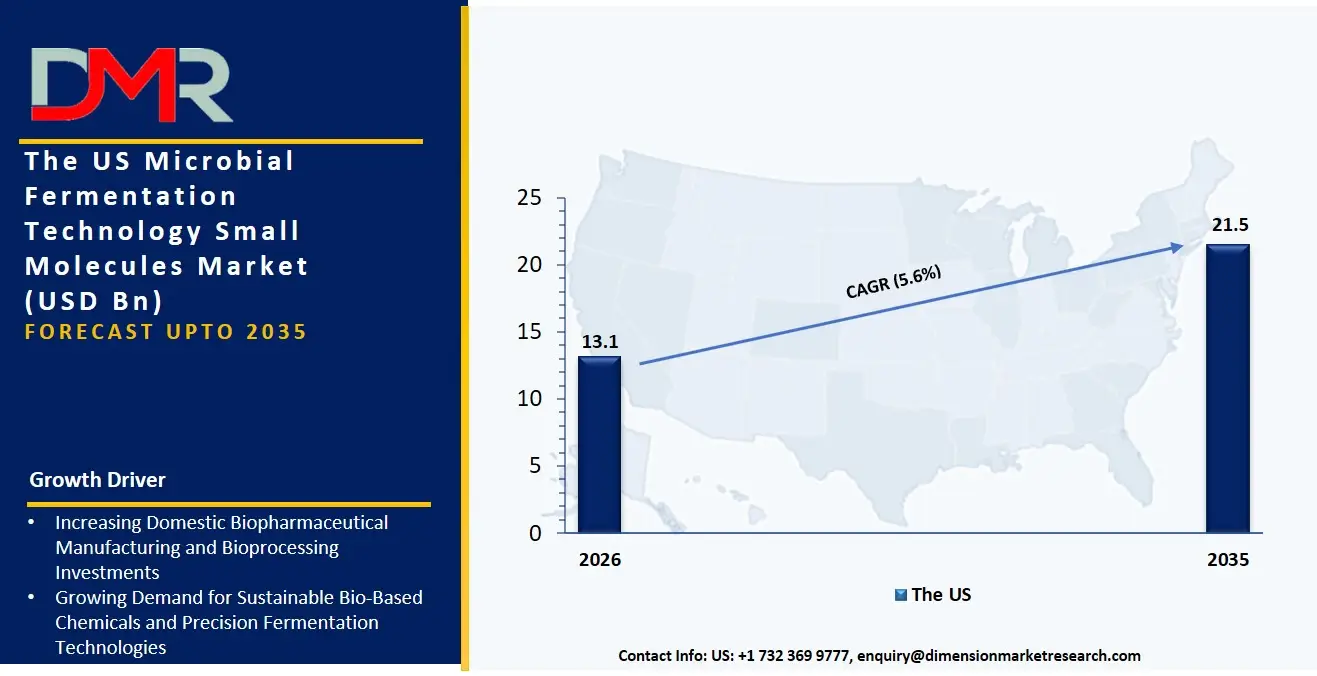
The United States Microbial Fermentation Technology Small Molecules Market is projected to reach USD 13.1 billion in 2026 and is expected to expand steadily through 2035.
ℹ
To learn more about this report –
Download Your Free Sample Report Here
The country represents a major market within the global microbial fermentation industry, supported by its advanced biotechnology ecosystem, strong pharmaceutical manufacturing base, and increasing demand for fermentation-derived products across food, nutraceutical, chemical, and industrial applications. Microbial fermentation is widely used in the United States for the production of antibiotics, amino acids, organic acids, vitamins, enzymes, pharmaceutical intermediates, specialty chemicals, and other bio-based molecules. Increasing investment in synthetic biology, precision fermentation, microbial strain optimization, and process automation is improving production efficiency and enabling manufacturers to develop higher-value molecules at commercial scale.
The presence of established biotechnology companies, research institutions, pharmaceutical manufacturers, and specialty chemical producers strengthens the domestic market. Growing demand for sustainable manufacturing processes and bio-based alternatives to conventional chemical production is also supporting wider adoption of microbial fermentation technologies.
The Europe Microbial Fermentation Technology Small Molecules Market
The Europe Microbial Fermentation Technology Small Molecules Market is estimated to be valued at USD 12.0 billion in 2026 and is further anticipated to reach USD 19.8 billion by 2035 at a CAGR of 5.7%. The regulatory frameworks including the EU's Green Deal and Farm-to-Fork strategy have a significant impact on the European market and drive the need for naturally-derived food ingredients and biopesticides. Accelerated growth of bio-based organic acid production is also being experienced in the region as the chemical industry, particularly in Germany and the Netherlands, seeks to decarbonize by replacing fossil-based building blocks with molecules like citric acid and lactic acid through industrial biotechnology. In addition, cross-sector initiatives are challenging technology providers to create dedicated continuous fermentation processes to ensure resource efficiency and product consistency across European bioeconomy ecosystems.
The Japan Microbial Fermentation Technology Small Molecules Market
The Japan Microbial Fermentation Technology Small Molecules Market is projected to be valued at USD 2.8 billion in 2026. It is further expected to witness steady growth, holding USD 4.5 billion in 2035 at a CAGR of 5.5%. The Japanese market benefits from deep industrial expertise in fermentation, particularly across amino acids, enzymes, vitamins, nutraceutical ingredients, and pharmaceutical intermediates. Established manufacturers are increasingly applying advanced microbial engineering and process optimization to develop higher-value specialty molecules, biopolymers, and bio-based chemicals. Integration of modern metabolic engineering, precision fermentation, and downstream purification with Japan's established chemical and pharmaceutical manufacturing base is expected to support continued market development.
Key Takeaways
- Market Size & Forecast: The Microbial Fermentation Technology Small Molecules Market is projected to reach USD 40.4 billion in 2026 and USD 68.3 billion by 2035.
- Growth Rate: The market is expected to expand at a CAGR of 6.0% during 2026–2035.
- Primary Growth Drivers: Growth is supported by increasing demand for bio-based chemicals, amino acids, organic acids, vitamins, antibiotics, enzymes, and sustainable alternatives to petrochemical-derived products.
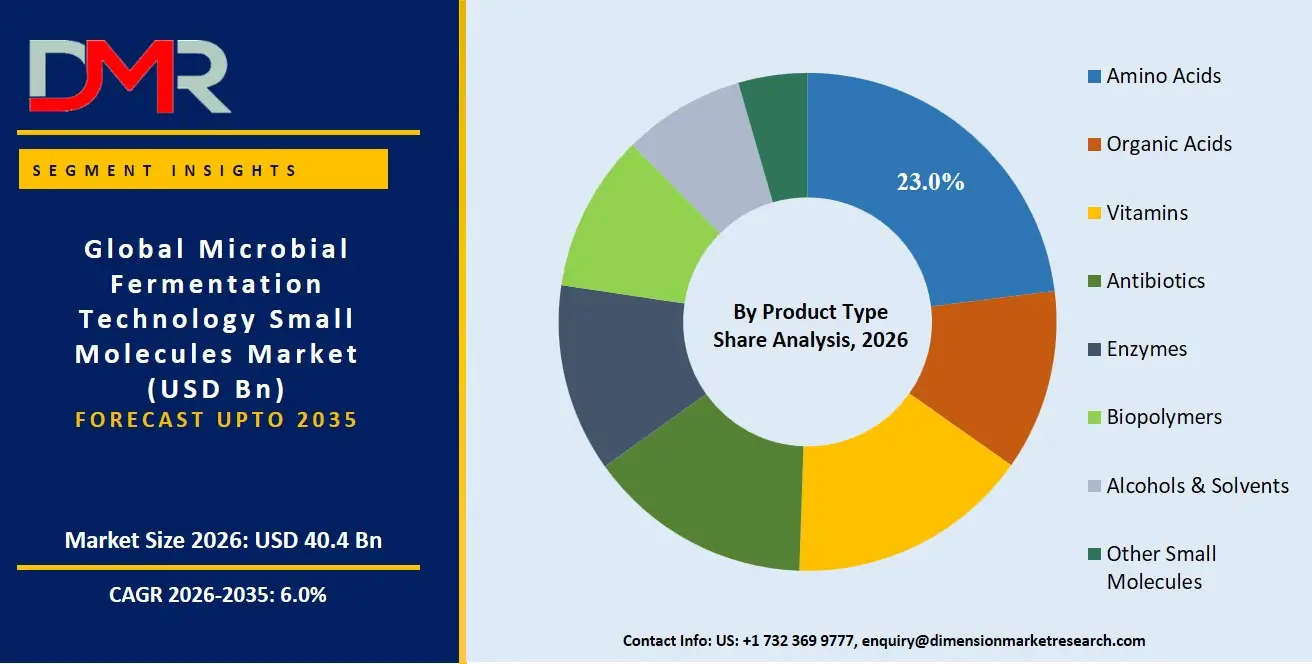
- Product Type: Amino acids are expected to represent a leading product category due to large-scale demand from animal nutrition, food processing, pharmaceuticals, and specialty applications.
- Microorganism: Bacteria are expected to remain a leading microorganism category because of their rapid growth, genetic adaptability, and commercial use in high-volume fermentation.
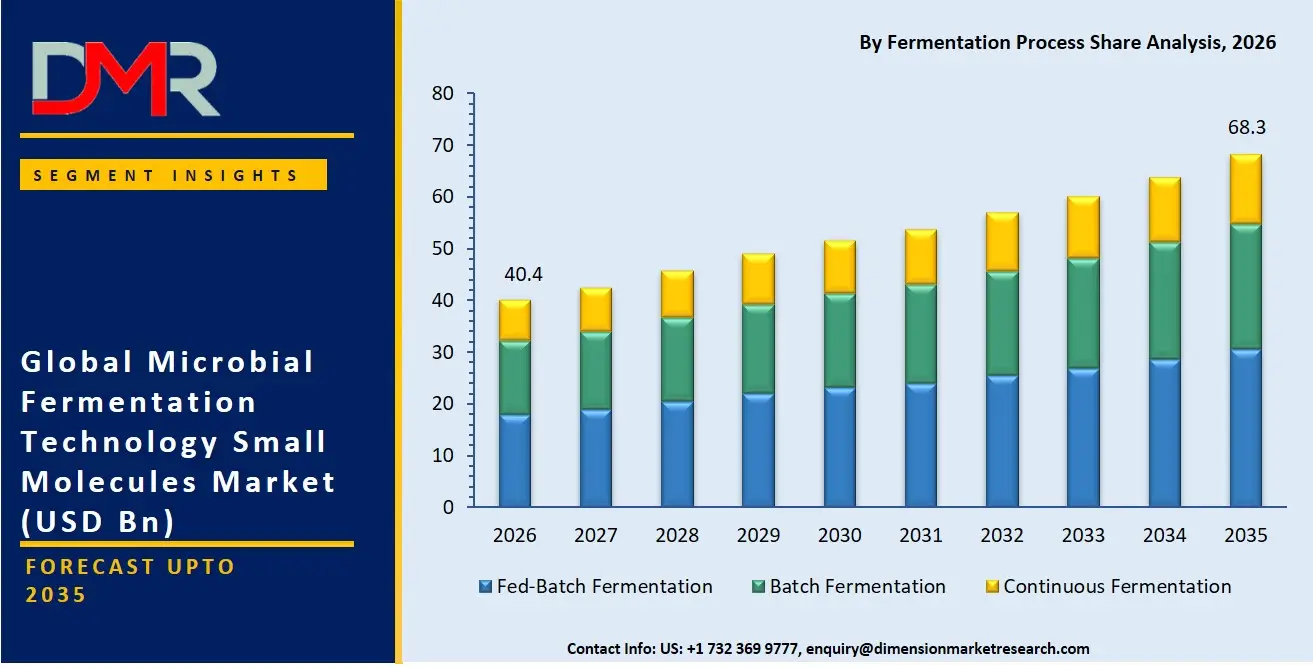
- Fermentation Process: Fed-batch fermentation is expected to remain widely adopted because it enables high cell density, controlled nutrient feeding, improved productivity, and scalable industrial production.
- Production Scale: Commercial-scale production is expected to dominate due to high-volume manufacturing of fermentation-derived molecules.
- End User: Pharmaceutical & biotechnology companies are expected to remain a major end-user group, supported by extensive use of fermentation-derived antibiotics, vitamins, enzymes, and pharmaceutical intermediates.
- Regional Leadership: North America is poised to dominate this market with 38.7% of the market share in 2026 due to its well-developed biotechnology ecosystem that utilizes this infrastructure to its fullest and makes it a leader in this market.
What is the Microbial Fermentation Technology Small Molecules?
Microbial fermentation technology for small molecules involves the controlled use of microorganisms such as bacteria, yeast, fungi, and algae to manufacture commercially valuable molecules through biological conversion processes. These products include amino acids, organic acids, vitamins, antibiotics, enzymes, alcohols, solvents, biopolymers, and other fermentation-derived compounds.
The process combines optimized microbial strains, nutrient feedstocks, fermentation systems, process monitoring, and downstream purification to achieve desired yield, purity, and production efficiency. Microbial fermentation is widely used across pharmaceutical, food and beverage, animal nutrition, nutraceutical, biotechnology, and chemical manufacturing because it provides scalable and sustainable alternatives to conventional chemical synthesis.
Use Cases
- High-Volume Amino Acid Production: Microbial fermentation is used to manufacture amino acids such as L-lysine, glutamic acid, and threonine at commercial scale for animal nutrition, food processing, pharmaceuticals, and specialty applications.
- Antibiotic Manufacturing: Pharmaceutical companies use microbial fermentation to produce antibiotics and pharmaceutical intermediates under controlled manufacturing conditions while maintaining required quality, purity, and regulatory standards.
- Bio-Based Organic Acid Production: Chemical and food manufacturers use microbial fermentation to produce citric acid, lactic acid, succinic acid, and other organic acids as alternatives to conventional petrochemical-based production routes.
- Industrial Enzyme Production: Microorganisms are used to manufacture proteases, amylases, lipases, cellulases, and other enzymes for food processing, detergents, pharmaceuticals, agriculture, and industrial applications.
How AI is Transforming the Microbial Fermentation Technology Small Molecules Market?
AI is also improving quality-by-design and commercial fermentation operations by enabling more precise process monitoring, predictive control, and data-driven decision-making. Intelligent batch analytics can evaluate historical and real-time fermentation data to identify critical quality attributes, contamination risks, process deviations, nutrient limitations, and opportunities for yield improvement. Machine learning models can support feed strategy optimization, temperature and pH control, oxygen transfer management, and early detection of abnormal process conditions. Generative AI and advanced modeling tools can further assist with scale-up planning, process simulation, media optimization, strain-performance assessment, and techno-economic evaluation before manufacturers commit significant resources to commercial production. These capabilities help improve consistency, reduce development timelines, lower process risk, and support more efficient production of fermentation-derived small molecules.
Market Dynamics
Key Drivers in the Global Microbial Fermentation Technology Small Molecules Market
Rising Demand for Sustainable Bio-Based Manufacturing
Growing emphasis on environmentally sustainable production methods is a major driver of the microbial fermentation technology small molecules market. Industries are increasingly replacing petroleum-based chemical synthesis with fermentation-based manufacturing due to its lower carbon footprint, reduced waste generation, and renewable feedstock utilization. Governments worldwide are promoting green chemistry and bioeconomy initiatives, encouraging investment in microbial fermentation technologies. Pharmaceutical, food, and industrial biotechnology companies are adopting fermentation processes to meet sustainability goals while improving production efficiency. Continuous advancements in microbial strain engineering and bioprocess optimization further enhance manufacturing performance, accelerating the global transition toward bio-based small molecule production.
Growing Pharmaceutical and Biopharmaceutical Production
Rapid expansion of the pharmaceutical and biopharmaceutical industries is significantly driving market growth. Microbial fermentation serves as the primary manufacturing platform for antibiotics, vitamins, amino acids, enzymes, and active pharmaceutical ingredients. Rising prevalence of chronic diseases, increasing demand for biologics, and expanding vaccine production have increased investments in advanced fermentation facilities worldwide. Pharmaceutical manufacturers continue adopting engineered microbial strains to improve production yields, reduce manufacturing costs, and enhance product quality. Continuous innovation in synthetic biology, precision fermentation, and industrial biotechnology is enabling efficient commercial-scale production of complex therapeutic molecules, supporting sustained market expansion across global healthcare industries.
Restraints in the Global Microbial Fermentation Technology Small Molecules Market
High Capital Investment and Operational Costs
Establishing commercial microbial fermentation facilities requires significant investment in bioreactors, downstream processing equipment, automation systems, and quality control infrastructure. Maintaining sterile operating conditions, process monitoring, and regulatory compliance further increases operational expenses. Small biotechnology companies and emerging manufacturers often face financial barriers when scaling laboratory processes to commercial production. Additionally, energy consumption, raw material costs, and skilled workforce requirements contribute to overall manufacturing expenditure. These financial challenges may delay facility expansion and technology adoption, particularly in developing economies where access to capital and advanced biotechnology infrastructure remains comparatively limited.
Complex Process Optimization and Regulatory Compliance
Microbial fermentation involves highly controlled biological processes that require continuous optimization to achieve consistent product quality and manufacturing efficiency. Variations in microbial strains, nutrient composition, fermentation conditions, and downstream purification can significantly affect product yield and purity. Pharmaceutical and food applications must also comply with stringent international regulatory standards related to safety, quality assurance, and manufacturing practices. Meeting evolving regulatory requirements requires extensive documentation, process validation, and quality testing, increasing production complexity and operational costs. These challenges can extend commercialization timelines and limit rapid expansion of fermentation-based manufacturing technologies.
Growth Opportunities in the Global Microbial Fermentation Technology Small Molecules Market
Expansion of Precision Fermentation and Synthetic Biology
Rapid advancements in precision fermentation and synthetic biology present substantial opportunities for market growth. Gene editing technologies, metabolic pathway engineering, and artificial intelligence-assisted strain optimization are enabling microorganisms to produce high-value small molecules with greater efficiency and selectivity. These innovations expand commercial production of specialty chemicals, nutraceuticals, pharmaceutical ingredients, and sustainable food compounds. Increasing investment from biotechnology companies, venture capital firms, and government research programs continues accelerating commercialization. As precision fermentation technologies mature, manufacturers will gain greater flexibility in producing novel bio-based molecules across multiple high-value industrial sectors.
Growing Demand for Bio-Based Specialty Chemicals
Industries worldwide are increasingly seeking renewable alternatives to petroleum-derived specialty chemicals, creating significant opportunities for microbial fermentation technologies. Fermentation-derived organic acids, alcohols, biopolymers, and industrial enzymes support sustainable manufacturing across chemicals, packaging, agriculture, and consumer products. Government initiatives promoting circular economy principles and carbon reduction strategies further encourage industrial adoption of bio-based chemicals. Continuous improvements in microbial engineering and process efficiency are reducing production costs while enhancing scalability. Expanding applications in green manufacturing, biodegradable materials, and renewable industrial feedstocks are expected to drive long-term market growth for fermentation-derived small molecules.
Trends in the Global Microbial Fermentation Technology Small Molecules Market
Increasing Adoption of Artificial Intelligence in Bioprocess Development
Artificial intelligence is becoming an important tool in microbial fermentation by improving strain selection, fermentation optimization, predictive process control, and production efficiency. Machine learning algorithms analyze complex biological datasets to optimize nutrient feeding strategies, monitor microbial growth, and predict fermentation outcomes in real time. Biotechnology companies increasingly integrate digital technologies with automated bioreactor systems to reduce development timelines and improve manufacturing consistency. AI-driven process optimization minimizes production variability while increasing yield and product quality. This digital transformation is accelerating innovation across pharmaceutical, food, industrial biotechnology, and specialty chemical manufacturing.
Growing Investment in Industrial Biotechnology Infrastructure
Public and private sector investments in industrial biotechnology infrastructure continue to reshape the microbial fermentation market. Governments are funding bioeconomy initiatives while pharmaceutical, chemical, and biotechnology companies expand commercial fermentation facilities to meet rising global demand. New large-scale biomanufacturing plants equipped with advanced automation, continuous monitoring, and energy-efficient technologies are improving production capacity and operational sustainability. Strategic collaborations between biotechnology firms, academic institutions, and contract manufacturing organizations are accelerating innovation and technology commercialization. These investments are strengthening global supply chains while expanding the availability of fermentation-derived small molecules across diverse industrial applications.
Research Scope and Analysis
The Global Microbial Fermentation Technology Small Molecules Market is segmented by Product Type, Microorganism, Fermentation Process, Production Scale, and End User. Product types include amino acids, organic acids, vitamins, antibiotics, enzymes, biopolymers, alcohols and solvents, and other small molecules, serving pharmaceutical, food, industrial biotechnology, agriculture, nutraceutical, and chemical manufacturing industries.
ℹ
To learn more about this report –
Download Your Free Sample Report Here
By Product Type Analysis
Amino Acids is poised to dominate the global microbial fermentation technology small molecules market due to their extensive use across animal nutrition, food processing, pharmaceuticals, and biotechnology. Products such as lysine, glutamic acid, and threonine are manufactured on a large commercial scale using microbial fermentation because of its high efficiency, sustainability, and cost-effectiveness. The rapidly expanding livestock industry and growing demand for protein-rich animal feed continue to increase amino acid consumption worldwide. In addition, rising applications in pharmaceutical formulations and functional foods further support market leadership. Continuous strain engineering and fermentation optimization have significantly improved production yields, reinforcing amino acids as the largest product segment.
By Microorganism Analysis
Bacteria projected to represent the dominant microorganism segment because of their rapid growth rates, genetic adaptability, and ability to efficiently produce a broad range of commercially valuable small molecules. Species such as Escherichia coli, Bacillus subtilis, and Corynebacterium glutamicum are widely utilized for manufacturing amino acids, organic acids, vitamins, enzymes, and pharmaceutical intermediates. Their well-established metabolic engineering platforms allow high product yields with lower production costs. Extensive industrial experience, scalable fermentation processes, and continuous advances in synthetic biology further strengthen bacterial dominance. Their versatility across pharmaceutical, food, feed, and industrial biotechnology applications ensures continued leadership within microbial fermentation technologies.
By Fermentation Process Analysis
Fed-Batch Fermentation is anticipated to dominate the market because it offers superior productivity, higher cell density, and better control over nutrient availability compared to conventional batch processes. Controlled nutrient feeding minimizes substrate inhibition while maximizing microbial growth and product formation, making it the preferred process for producing amino acids, antibiotics, vitamins, and industrial enzymes.
ℹ
To learn more about this report –
Download Your Free Sample Report Here
The technique provides greater flexibility, improved product quality, and enhanced scalability for commercial manufacturing. Pharmaceutical and biotechnology companies widely adopt fed-batch fermentation due to its proven industrial reliability and compatibility with modern bioprocess automation. Continuous improvements in process monitoring further reinforce its widespread commercial adoption.
By Production Scale Analysis
Commercial Scale is poised to dominate the production scale segment owing to the increasing global demand for fermentation-derived small molecules across multiple industries. Large-scale manufacturing facilities operate with highly optimized fermentation systems capable of producing bulk quantities of amino acids, organic acids, antibiotics, vitamins, and enzymes efficiently. Commercial production benefits from economies of scale, advanced automation, and continuous quality control, enabling cost-effective manufacturing while maintaining regulatory compliance. Growing investments in industrial biotechnology infrastructure, rising global consumption of bio-based chemicals, and expanding pharmaceutical production capacities continue to support the dominance of commercial-scale microbial fermentation operations worldwide.
By End User Analysis
Pharmaceutical & Biotechnology Companies are expected to dominate the end-user segment because they are the primary consumers of microbial fermentation technologies for producing high-value therapeutic molecules, antibiotics, vitamins, enzymes, and specialty pharmaceutical ingredients. These organizations invest heavily in advanced bioprocessing infrastructure, strain development, and fermentation optimization to improve production efficiency and regulatory compliance. Increasing biologics development, expanding biosimilar manufacturing, and rising investment in precision fermentation technologies continue to drive demand. Strong research capabilities, large-scale commercial manufacturing facilities, and continuous innovation in industrial biotechnology position pharmaceutical and biotechnology companies as the leading end users in this global market.
The Global Microbial Fermentation Technology Small Molecules Market Report is segmented on the basis of the following:
By Product Type
- Amino Acids
- Lysine
- Glutamic Acid
- Tryptophan
- Threonine
- Others
- Organic Acids
- Citric Acid
- Lactic Acid
- Acetic Acid
- Succinic Acid
- Itaconic Acid
- Others
- Vitamins
- Vitamin B2
- Vitamin B12
- Vitamin C
- Others
- Antibiotics
- Penicillins
- Cephalosporins
- Macrolides
- Tetracyclines
- Enzymes
- Proteases
- Amylases
- Lipases
- Cellulases
- Biopolymers
- Alcohols & Solvents
- Other Small Molecules
By Microorganism
- Bacteria
- Yeast
- Fungi
- Algae
- Others
By Fermentation Process
- Fed-Batch Fermentation
- Batch Fermentation
- Continuous Fermentation
By Production Scale
- Commercial Scale
- Laboratory Scale
- Pilot Scale
By End User
- Pharmaceutical & Biotechnology Companies
- Food & Beverage Manufacturers
- Contract Development and Manufacturing Organizations
- Academic & Research Institutes
- Chemical Manufacturers
- Others
Regional Analysis
Leading Region by Market Share
ℹ
To learn more about this report –
Download Your Free Sample Report Here
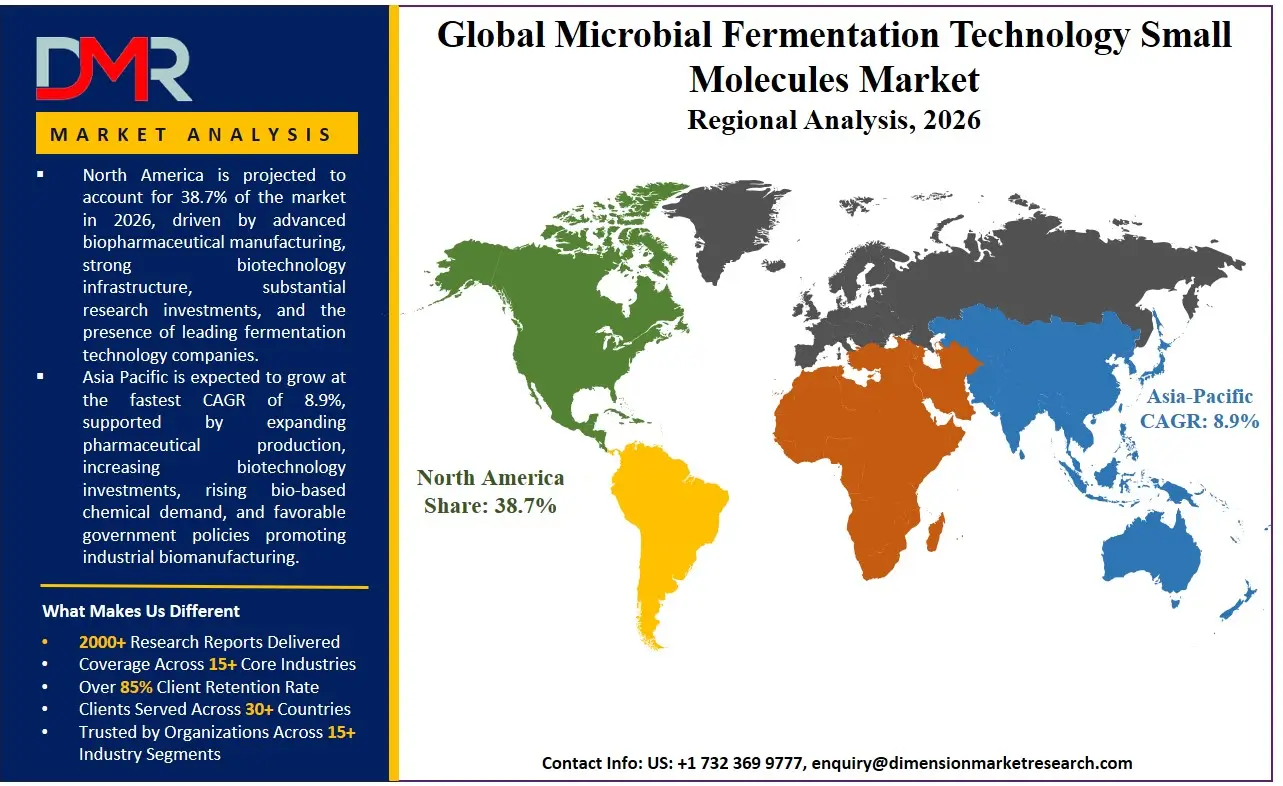
North America is expected to account for 38.7% of the Microbial Fermentation Technology Small Molecules Market in 2026, supported by strong pharmaceutical and biotechnology manufacturing, advanced fermentation infrastructure, and growing demand for bio-based chemicals, specialty ingredients, enzymes, vitamins, antibiotics, and other fermentation-derived molecules. The region benefits from established biotechnology companies, strong research capabilities, advanced process-control technologies, and increasing investment in synthetic biology and industrial biotechnology. The United States remains a major contributor due to its large pharmaceutical, food, nutraceutical, and specialty chemical industries, along with continued adoption of microbial fermentation for high-value and specialty small-molecule production.
Fastest-Growing Regional Market
Asia-Pacific is expected to be the fastest-growing regional market, supported by expanding industrial biotechnology capacity, increasing pharmaceutical and food production, and strong demand for fermentation-derived amino acids, organic acids, vitamins, antibiotics, enzymes, and specialty chemicals. China, India, Japan, South Korea, and Southeast Asian countries are investing in bio-based manufacturing, synthetic biology, precision fermentation, and sustainable chemical production. The region also benefits from large food and feed industries, expanding pharmaceutical manufacturing, competitive production costs, and government initiatives supporting bioeconomy development. Continued expansion of fermentation capacity and improvements in microbial strain engineering, automation, and downstream processing are expected to strengthen Asia-Pacific's position during the forecast period.
By Region
North America
Europe
- Germany
- The U.K.
- France
- Italy
- Russia
- Spain
- Benelux
- Nordic
- Rest of Europe
Asia-Pacific
- China
- Japan
- South Korea
- India
- ANZ
- ASEAN
- Rest of Asia-Pacific
Latin America
- Brazil
- Mexico
- Argentina
- Colombia
- Rest of Latin America
Middle East & Africa
- Saudi Arabia
- UAE
- South Africa
- Turkey
- Egypt
- Israel
- Rest of MEA
Competitive Landscape
The Microbial Fermentation Technology Small Molecules Market is characterized by competition among diversified chemical companies, fermentation-product manufacturers, industrial biotechnology companies, specialty ingredient producers, and synthetic biology firms. Companies compete on fermentation capacity, microbial strain performance, product yield, production cost, feedstock efficiency, downstream processing capabilities, product quality, and sustainability.
Leading participants continue to invest in strain engineering, precision fermentation, process automation, capacity expansion, and new bio-based product development. Strategic partnerships, acquisitions, technology licensing, and collaboration with research institutions are also supporting commercialization of new fermentation-derived molecules. Intellectual property related to microbial strains, metabolic pathways, fermentation processes, and purification technologies remains an important source of competitive differentiation.
Some of the prominent players in the Global Microbial Fermentation Technology Small Molecules Market are:
- BASF SE
- Evonik Industries AG
- Ajinomoto Co., Inc.
- CJ CheilJedang Corporation
- dsm-firmenich AG
- Cargill, Incorporated
- Archer Daniels Midland Company
- Corbion N.V.
- Novonesis A/S
- Ginkgo Bioworks Holdings, Inc.
- Lonza Group AG
- Solugen, Inc.
- Geno
- Meihua Holdings Group Co., Ltd.
- Daesang Corporation
- Meiji Holdings Co., Ltd.
- Fufeng Group Limited
- Ningxia Eppen Biotech Co., Ltd.
- Tate & Lyle PLC
- Codexis, Inc.
- Other Key Players
Recent Developments
- In September 2026, Novonesis announced an investment of approximately EUR 600 million to expand its Patalganga site in India and build a next-generation enzyme production facility. The project is designed to increase global production capacity for biosolutions used across food and beverages, biofuels, household care, and other industries. The expanded facility is expected to become fully operational in 2030.
- In September 2026, Evonik broke ground on an approximately EUR 80 million biotechnology expansion at its Fermas site in Slovenská Ľupča, Slovakia. The project will add advanced downstream fermentation technology to increase capacity for the development and manufacture of complex pharmaceutical intermediates. Completion is expected in early 2028, and the expansion is planned to create approximately 50 new jobs.
- In May 2026, BASF commissioned its new BioHub fermentation plant in Ludwigshafen, Germany, following a high double-digit million-euro investment. The facility uses microorganisms and renewable raw materials such as glucose to manufacture biological and biotechnology-based products. Commercial production began in 2026, including fermentation-derived active ingredients used in biological fungicides, seed treatment products, and insecticide manufacturing.
Report Details
| Report Characteristics |
| Market Size (2026) |
USD 40.4 Bn |
| Forecast Value (2035) |
USD 68.3 Bn |
| CAGR (2026–2035) |
6.0% |
| The US Market Size (2026) |
USD 13.1 Bn |
| Historical Data |
2021 – 2025 |
| Forecast Data |
2026 – 2035 |
| Base Year |
2025 |
| Estimate Year |
2026 |
| Segments Covered |
By Product Type, By Microorganism, By Fermentation Process, By Production Scale, By End User |
| Regional Coverage |
North America – The US and Canada; Europe – Germany, The UK, France, Russia, Spain, Italy, Benelux, Nordic, & Rest of Europe; Asia-Pacific – China, Japan, South Korea, India, ANZ, ASEAN, Rest of APAC; Latin America – Brazil, Mexico, Argentina, Colombia, Rest of Latin America; Middle East & Africa – Saudi Arabia, UAE, South Africa, Turkey, Egypt, Israel, & Rest of MEA |
Frequently Asked Questions
How big is the Global Microbial Fermentation Technology Small Molecules Market?
▾ The Microbial Fermentation Technology Small Molecules Market is projected to reach USD 40.4 billion in 2026 and USD 68.3 billion by 2035, supported by growing demand for fermentation-derived amino acids, organic acids, vitamins, antibiotics, enzymes, and bio-based industrial chemicals.
What is the CAGR of the Global Microbial Fermentation Technology Small Molecules Market from 2026 to 2035?
▾ The market is expected to grow at a CAGR of 6.0% from 2026 to 2035, driven by increasing adoption of sustainable bio-based manufacturing, advances in microbial engineering, and expanding demand across pharmaceutical, food, feed, and chemical applications.
What factors are driving the growth of the Global Microbial Fermentation Technology Small Molecules Market?
▾ Key growth drivers include rising demand for sustainable bio-based chemicals, increasing consumption of fermentation-derived amino acids and organic acids, expanding pharmaceutical and food applications, advances in synthetic biology, and improvements in industrial fermentation efficiency.
Which region held the largest share of the Microbial Fermentation Technology Small Molecules Market in 2026?
▾ North America held the largest share of the Microbial Fermentation Technology Small Molecules Market, accounting for 38.7% in 2026. The region's leadership is supported by strong pharmaceutical and biotechnology manufacturing, advanced fermentation infrastructure, established industrial biotechnology capabilities, and growing demand for fermentation-derived chemicals, enzymes, vitamins, antibiotics, and specialty ingredients.
Which region is expected to grow the fastest in the Microbial Fermentation Technology Small Molecules Market?
▾ Asia-Pacific is expected to grow at the fastest rate during the forecast period, supported by expanding industrial biotechnology capacity, increasing pharmaceutical and food production, rising demand for bio-based chemicals, and growing investment in fermentation infrastructure across China, India, Japan, South Korea, and Southeast Asia.
What are the major trends in the Global Microbial Fermentation Technology Small Molecules Market?
▾ Major trends include increasing adoption of artificial intelligence for strain optimization and process control, expansion of precision fermentation and synthetic biology, growing investment in commercial fermentation capacity, increased use of continuous and automated fermentation systems, and rising demand for advanced downstream purification technologies.
Who are the key players in the Global Microbial Fermentation Technology Small Molecules Market?
▾ Key players include BASF SE, Evonik Industries AG, Ajinomoto Co., Inc., CJ CheilJedang Corporation, dsm-firmenich AG, Cargill, Incorporated, Archer Daniels Midland Company, Corbion N.V., Novonesis A/S, Ginkgo Bioworks Holdings, Inc., Lonza Group AG, Solugen, Inc., Geno, Meihua Holdings Group Co., Ltd., Fufeng Group Limited, and Codexis, Inc.
How is the Global Microbial Fermentation Technology Small Molecules Market segmented?
▾ The market is segmented by Product Type, Microorganism, Fermentation Process, Production Scale, and End User.