What is the Rare Disease Clinical Trials Market Size?
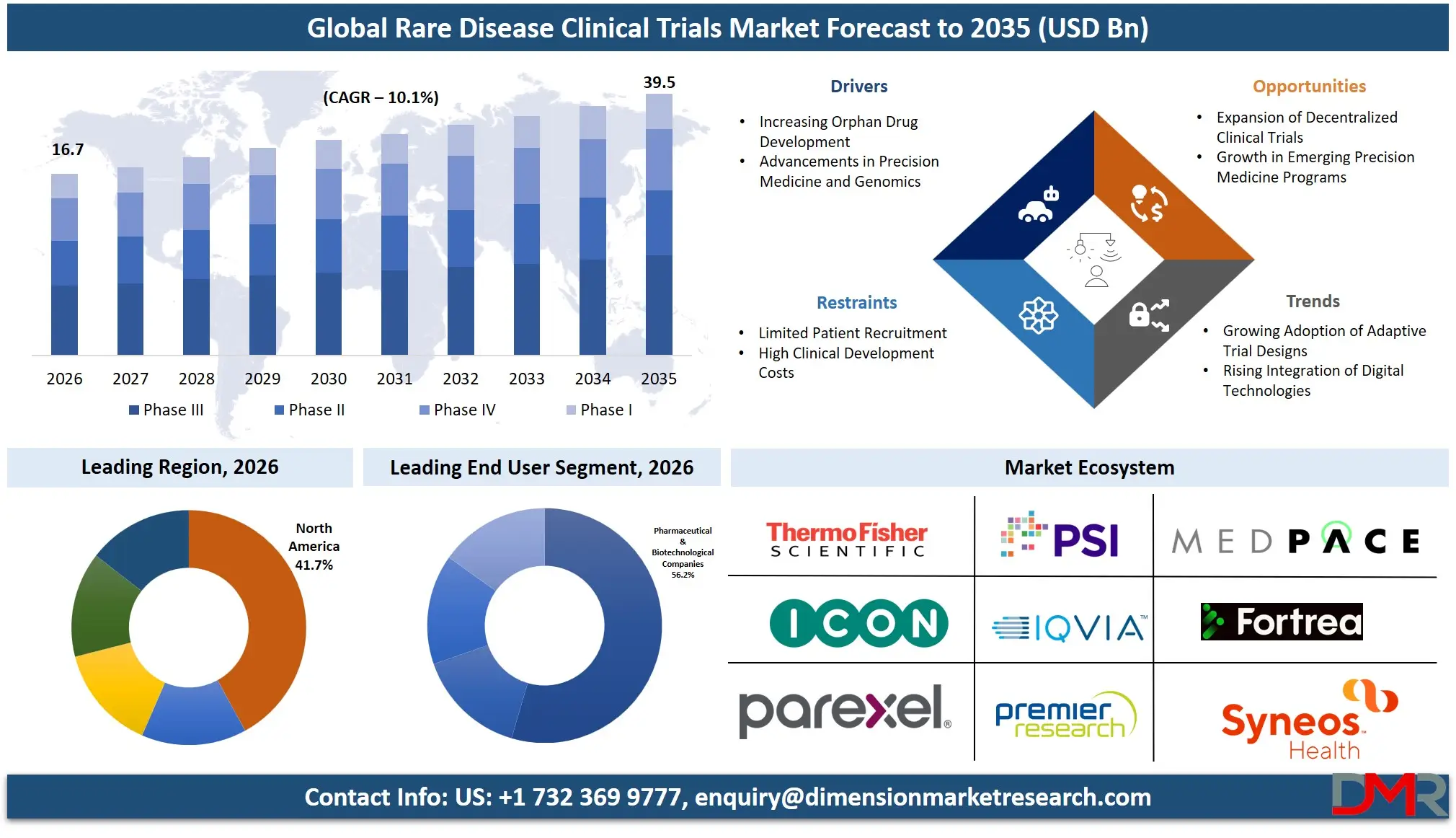
The Rare Disease Clinical Trials Market size is expected to be USD 16.7 billion in 2026 and increase at a compound annual growth rate of 10.1% to USD 39.5 billion in 2035 due to increasing orphan drug development.
ℹ
To learn more about this report –
Download Your Free Sample Report Here
Rare disease clinical trials market encompasses research activities designed to evaluate the safety, efficacy, and long-term outcomes of investigational therapies targeting orphan diseases affecting small patient populations. The market includes interventional and observational studies, adaptive trial designs, decentralized clinical trial technologies, patient recruitment platforms, biomarker testing, genomic sequencing, and contract research services. Increasing regulatory incentives for orphan drug development, advances in precision medicine, broader use of digital health technologies, and growing collaboration among pharmaceutical companies, academic institutions, patient advocacy organizations, and regulators are accelerating innovation and expanding the global clinical research ecosystem.
The US Rare Disease Clinical Trials Market
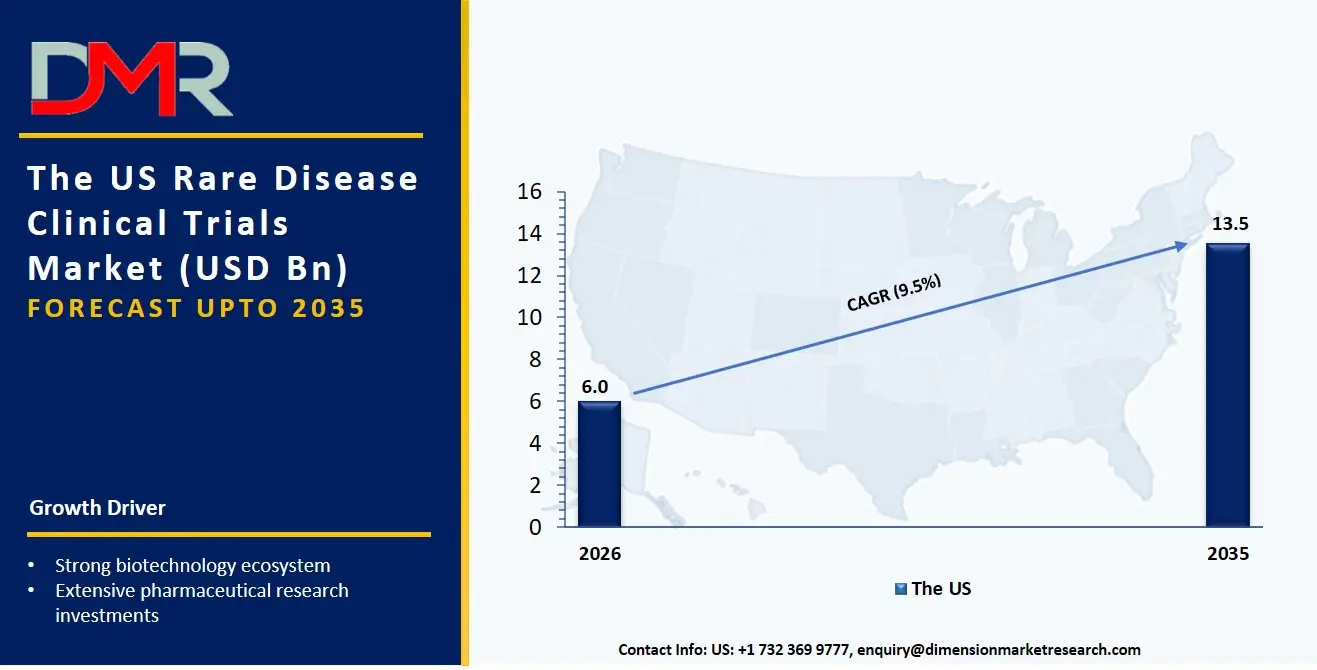
The US Rare Disease Clinical Trials Market size is estimated to be USD 6.0 billion in 2026 and is expected to increase at a CAGR of 9.5% over the forecast period.
ℹ
To learn more about this report –
Download Your Free Sample Report Here
The US Rare Disease Clinical Trials Market remains the largest globally because of its strong biotechnology ecosystem, extensive pharmaceutical research investments, favorable orphan drug regulations, and established clinical research infrastructure. Federal incentives encourage innovation while advanced genomic medicine capabilities improve patient identification. High participation from contract research organizations, academic medical centers, and patient advocacy groups supports efficient recruitment, decentralized trial adoption, and continuous expansion of investigational programs targeting ultra-rare disorders.
Europe Rare Disease Clinical Trials Market
The Europe Rare Disease Clinical Trials Market size is estimated to be USD 3.7 billion in 2026 and is expected to increase at a CAGR of 9.3% over the forecast period.
Europe Rare Disease Clinical Trials Market benefits from collaborative research frameworks, cross-border clinical networks, and supportive regulatory initiatives encouraging orphan drug development. The European Green Deal indirectly promotes sustainable research infrastructure while harmonized regulatory processes improve multinational trial execution. Increasing investments in personalized medicine, digital health platforms, and real-world evidence generation continue strengthening regional competitiveness, with academic collaborations playing a central role in advancing innovative therapies.
Japan Rare Disease Clinical Trials Market
The market size of Japan Rare Disease Clinical Trials will be USD 1.0 billion in 2026 and at a CAGR of 9.4% in the forecast period.
Japan Rare Disease Clinical Trials Market is expanding steadily through precision medicine initiatives, genomic research, and government policies supporting innovative pharmaceutical development. Advanced healthcare infrastructure and increasing collaboration between domestic companies and international sponsors enhance trial activity. Accelerated regulatory pathways, improved patient registries, and rising investment in regenerative medicine provide significant growth opportunities despite challenges related to limited patient populations and recruitment complexity.
Key Takeaways
- Market Size & Forecast: The Rare Disease Clinical Trials Market size is projected to reach USD 16.7 billion in 2026 and is anticipated to have a value of USD 39.5 billion in 2035.
- Growth Rate & Outlook: The Rare Disease Clinical Trials Market size is set to grow at a compound annual growth rate of 10.1% during the forecast period of 2026 to 2035.
- Primary Growth Drivers: Some of the major growth drivers in the market are Increasing Orphan Drug Development, and more.
- Key Market Trends: Some of the major trends in the market are Rising Integration of Digital Technologies, and more.
- By Phase Type: Phase III is anticipated to get the majority share of the Rare Disease Clinical Trials Market in 2026.
- By End User Type: Pharmaceutical & Biotechnology Companies are expected to get the largest revenue share in 2026 in the Rare Disease Clinical Trials Market.
- Regional Leadership: North America is set to lead the Rare Disease Clinical Trials Market with an estimated 41.7% share in 2026.
What is the Rare Disease Clinical Trials?
Rare disease clinical trials are structured medical research studies conducted to assess the safety, efficacy, dosage, and clinical outcomes of investigational therapies developed for diseases affecting relatively small patient populations. These trials often incorporate adaptive protocols, precision medicine approaches, genetic testing, patient registries, and specialized recruitment strategies to address limited participant availability while generating robust evidence required for regulatory approval and future therapeutic adoption.
Use Cases
- Gene Therapy Development: Clinical trials validate the safety and effectiveness of gene replacement, gene editing, and viral vector therapies targeting inherited rare disorders. These studies generate regulatory evidence while optimizing dosing strategies and long-term patient monitoring for durable therapeutic outcomes.
- Precision Medicine Research: Rare disease trials increasingly utilize genomic sequencing and biomarker-based patient selection to develop personalized therapies. Precision medicine improves treatment efficacy, enhances patient stratification, and supports regulatory approval through scientifically targeted clinical evidence.
- Natural History Studies: Observational studies establish disease progression patterns where approved therapies are unavailable. These datasets help define clinical endpoints, improve trial design, identify biomarkers, and strengthen evidence supporting future therapeutic interventions.
- Drug Repurposing Programs: Existing approved medicines are evaluated for rare disease indications through targeted clinical studies. Drug repurposing shortens development timelines, lowers research costs, and expands therapeutic options for underserved patient populations.
How AI Is Transforming the Rare Disease Clinical Trials Market
Artificial intelligence enhances rare disease clinical trials by accelerating patient identification through analysis of genomic databases, electronic health records, and disease registries. AI-driven predictive analytics improve protocol optimization, site selection, recruitment efficiency, and biomarker discovery, reducing development timelines while increasing trial accuracy.
Machine learning also supports automated data management, adverse event detection, medical imaging interpretation, and real-time monitoring of decentralized clinical trials. These capabilities improve operational efficiency, strengthen regulatory compliance, reduce research costs, and enable sponsors to make faster evidence-based decisions throughout the clinical development lifecycle.
Market Dynamic
Driving Factors in the Rare Disease Clinical Trials Market
Increasing Orphan Drug Development
Growing investments in orphan drug discovery are significantly expanding clinical trial activity. Regulatory incentives including market exclusivity, tax benefits, accelerated approvals, and research grants encourage pharmaceutical companies to develop therapies for rare diseases. Advances in molecular biology and genomics further improve target identification, enabling sponsors to initiate specialized clinical programs addressing previously untreatable conditions while strengthening the overall research ecosystem.
Restraints in the Rare Disease Clinical Trials Market
Limited Patient Recruitment
Recruiting sufficient participants remains one of the most significant challenges because eligible patients are geographically dispersed and affected by extremely low disease prevalence. Recruitment delays increase study duration and operational costs while complicating statistical analysis. Sponsors frequently require multinational collaborations, patient registries, and decentralized trial models to overcome enrollment limitations.
Opportunities in the Rare Disease Clinical Trials Market
Expansion of Decentralized Clinical Trials
Virtual consultations, wearable devices, remote patient monitoring, and electronic consent platforms create substantial opportunities for decentralized rare disease clinical trials. These technologies improve patient accessibility, reduce travel burdens, increase retention rates, and enable broader participation from geographically diverse populations while lowering operational complexities for research sponsors.
Trends in the Rare Disease Clinical Trials Market
Rising Integration of Digital Technologies
Digital transformation is reshaping rare disease clinical trials through electronic data capture, artificial intelligence, wearable sensors, telemedicine, and cloud-based trial management platforms. These technologies improve operational efficiency, strengthen data quality, enhance patient engagement, and facilitate continuous monitoring throughout the clinical development process.
Research Scope and Analysis
The research scope of the Rare Disease Clinical Trials Market covers analysis by phase, therapeutic area, study design, and end user. It evaluates market trends, growth drivers, adoption patterns, competitive strategies, technological advancements, and regional developments influencing clinical research activities for rare disease therapies.
ℹ
To learn more about this report –
Download Your Free Sample Report Here
By Phase Analysis
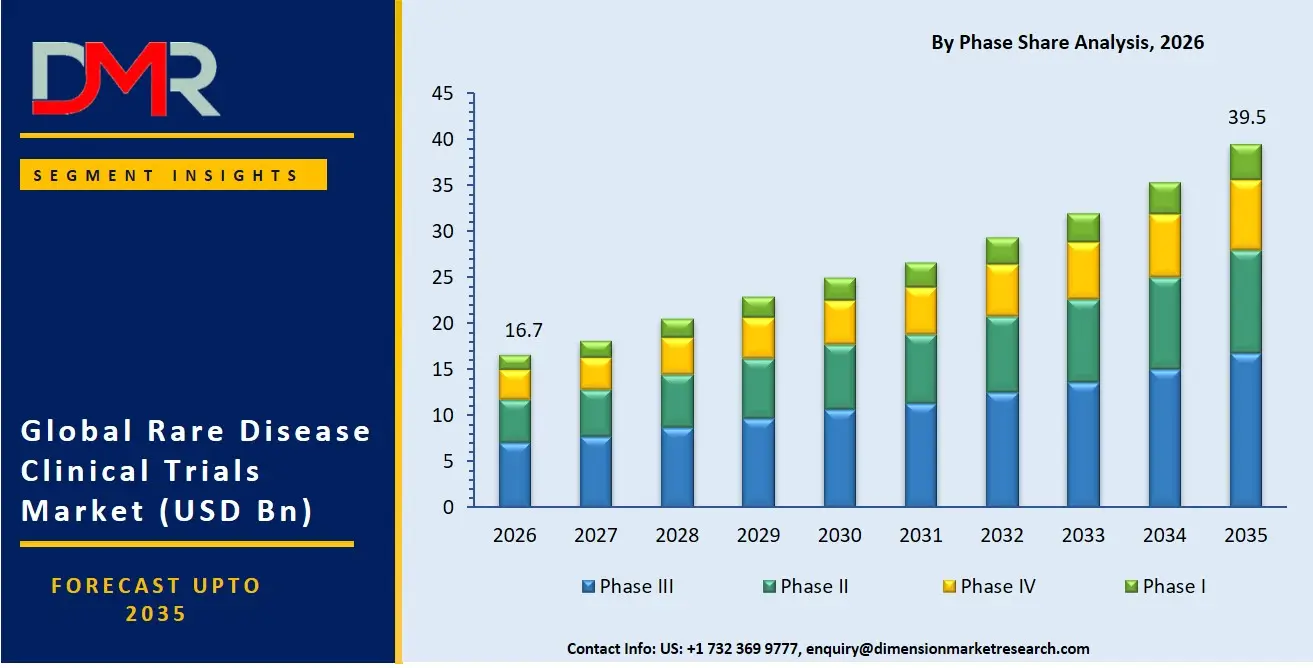
Phase III clinical trials represent the leading segment in the Rare Disease Clinical Trials Market, accounting for an estimated 42.5% share in 2026. This dominance is attributed to the increasing number of investigational therapies progressing toward late-stage validation, where large-scale efficacy and safety assessments are required before regulatory approval.
ℹ
To learn more about this report –
Download Your Free Sample Report Here
Pharmaceutical and biotechnology companies prioritize Phase III studies because successful outcomes directly support commercialization strategies. Meanwhile, Phase II trials are expected to be the fastest-growing segment due to rising early-stage pipeline development, increased orphan drug designations, and adaptive trial methodologies that allow efficient evaluation of promising therapies targeting small patient populations.
By Therapeutic Area Analysis
Rare genetic disorders are projected to remain the leading therapeutic area in the Rare Disease Clinical Trials Market, holding an estimated 34.8% share in 2026. The segment benefits from advancements in gene therapy, next-generation sequencing, and molecular diagnostics that enable identification of disease-causing mutations and development of targeted treatments. Growing investment in inherited metabolic disorders, neuromuscular diseases, and genetic syndromes is supporting segment expansion. Rare oncology is anticipated to be the fastest-growing therapeutic area due to increasing precision oncology applications, biomarker-driven trials, immunotherapy innovations, and rising adoption of personalized treatment approaches. Improved cancer genomics and accelerated regulatory pathways are further encouraging clinical research investments.
By Study Design Analysis
Interventional trials are expected to dominate the study design segment, representing an estimated 68.6% share in 2026. Their leading position is driven by the requirement for controlled evidence demonstrating safety and efficacy of novel rare disease therapies before regulatory approval. Pharmaceutical companies heavily invest in randomized and adaptive interventional studies to support commercialization of orphan drugs. However, observational studies are projected to experience rapid growth due to the increasing importance of real-world evidence, disease registries, and natural history data. These studies help researchers understand disease progression, identify clinical endpoints, and support regulatory decision-making, especially when patient availability is limited.
By End User Analysis
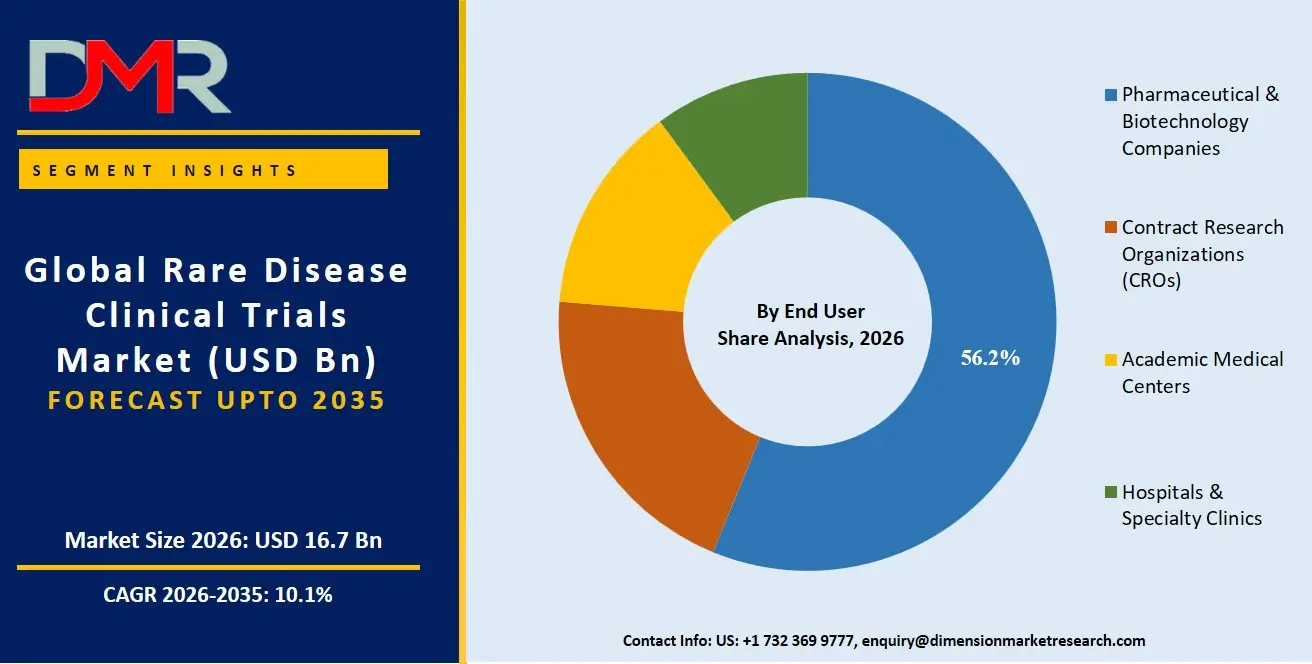
Pharmaceutical and biotechnology companies are anticipated to represent the largest end-user segment, accounting for an estimated 56.2% share in 2026. Their dominance is supported by extensive investments in orphan drug discovery, gene therapies, cell therapies, and precision medicine platforms. These organizations conduct a significant proportion of rare disease trials to expand therapeutic pipelines and achieve regulatory approvals. Contract research organizations (CROs) are expected to be the fastest-growing segment due to increasing outsourcing trends, specialized expertise requirements, and the need for global trial management capabilities. CROs provide operational support, patient recruitment services, regulatory assistance, and advanced clinical data management solutions.
The Rare Disease Clinical Trials Market Report is segmented on the basis of the following:
By Phase
- Phase I
- Phase II
- Phase III
- Phase IV
By Therapeutic Area
- Rare Genetic Disorders
- Rare Oncology
- Rare Neurological Disorders
- Rare Metabolic Disorders
- Rare Hematological Disorders
- Rare Immunological Disorders
- Rare Cardiovascular Disorders
- Other Rare Diseases
By Study Design
- Interventional Trials
- Observational Studies
- Expanded Access / Compassionate Use Programs
By End User
- Pharmaceutical & Biotechnology Companies
- Contract Research Organizations (CROs)
- Academic Medical Centers
- Hospitals & Specialty Clinics
Regional Analysis
Leading Region in the Rare Disease Clinical Trials Market
ℹ
To learn more about this report –
Download Your Free Sample Report Here
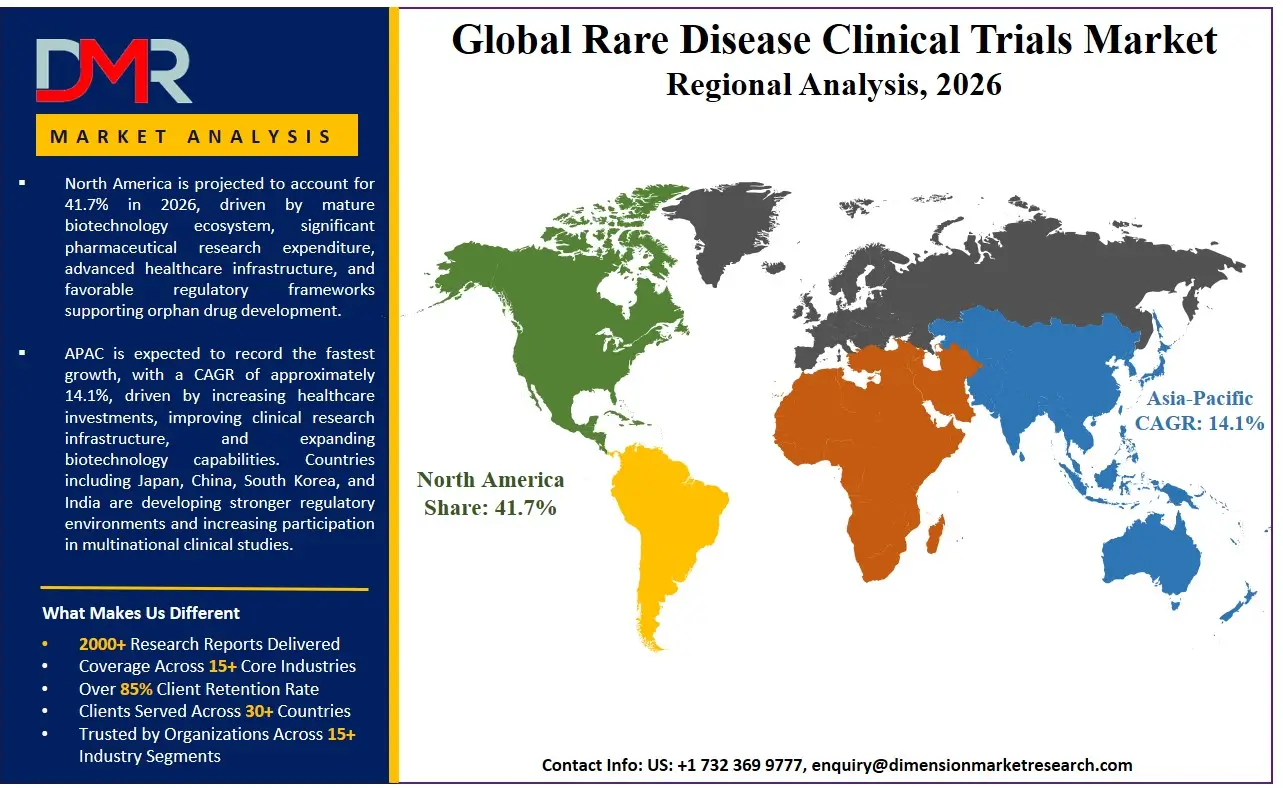
North America is expected to remain the leading region in the Rare Disease Clinical Trials Market, accounting for an estimated 41.7% market share in 2026. The region's dominance is supported by a mature biotechnology ecosystem, significant pharmaceutical research expenditure, advanced healthcare infrastructure, and favorable regulatory frameworks supporting orphan drug development. Government incentives, including expedited approval pathways and research funding programs, encourage innovation in rare disease therapies. The presence of specialized clinical research centers, extensive patient advocacy networks, and strong adoption of genomic technologies further strengthens North America's position as the global hub for rare disease clinical investigation.
Fastest Growing Region in the Rare Disease Clinical Trials Market
Asia-Pacific is projected to be the fastest-growing region in the Rare Disease Clinical Trials Market due to increasing healthcare investments, improving clinical research infrastructure, and expanding biotechnology capabilities. Countries including Japan, China, South Korea, and India are developing stronger regulatory environments and increasing participation in multinational clinical studies. Rising awareness of rare diseases, government-supported genomic initiatives, and growing demand for innovative therapies are accelerating regional adoption. Additionally, lower operational costs, expanding patient pools, and increasing collaborations between global sponsors and local research organizations are creating significant opportunities for clinical trial expansion throughout the region.
By Region
North America
Europe
- Germany
- The U.K.
- France
- Italy
- Russia
- Spain
- Benelux
- Nordic
- Rest of Europe
Asia-Pacific
- China
- Japan
- South Korea
- India
- ANZ
- ASEAN
- Rest of Asia-Pacific
Latin America
- Brazil
- Mexico
- Argentina
- Colombia
- Rest of Latin America
Middle East & Africa
- Saudi Arabia
- UAE
- South Africa
- Israel
- Egypt
- Rest of MEA
Competitive Landscape
The Rare Disease Clinical Trials Market is characterized by strong competition driven by innovation, specialized expertise, and strategic collaborations. Market participants focus on strengthening clinical trial capabilities through advanced patient recruitment platforms, artificial intelligence integration, decentralized trial technologies, and global research networks. High entry barriers exist due to complex regulatory requirements, limited patient availability, and significant investment needs. Organizations are increasingly adopting partnerships with academic institutions, patient advocacy groups, and technology providers to improve trial efficiency. Continuous investment in research and development, regulatory expertise, and precision medicine capabilities remains essential for maintaining competitive positioning.
Some of the prominent players in the global Rare Disease Clinical Trials are:
- IQVIA
- Thermo Fisher Scientific (PPD)
- ICON plc
- Parexel International
- Fortrea
- Syneos Health
- Medpace Holdings
- Worldwide Clinical Trials
- PSI CRO
- Premier Research
- Ergomed
- Precision for Medicine
- Veristat
- Caidya
- Lindus Health
- ClinChoice
- Emmes Group
- Charles River Laboratories
- CMIC Holdings Co., Ltd.
- Novotech
- Other Key Players
Recent Developments
- In June 2025, IQVIA enhanced its rare disease clinical trial capabilities by expanding digital research solutions designed to improve patient recruitment, data management, and decentralized trial execution. The company focused on leveraging analytics, automation, and technology-driven platforms to address challenges associated with small patient populations and complex trial requirements. The development reflected increasing demand for specialized contract research services capable of managing global rare disease studies efficiently.
- In March 2025, Roche expanded its rare disease research efforts by advancing clinical development initiatives focused on neurological and genetic disorders. The company continued investing in innovative trial methodologies, biomarker discovery, and personalized medicine approaches to improve therapeutic development efficiency. These initiatives reflected broader industry movement toward integrating advanced diagnostics, digital technologies, and real-world evidence into rare disease studies.
- In January 2025, Vertex Pharmaceuticals continued strengthening its rare disease clinical development strategy by advancing innovative therapeutic programs focused on genetic and molecular disease pathways. The company expanded research activities involving precision medicine approaches designed to address underlying disease mechanisms rather than only managing symptoms.
Report Details
| Report Characteristics |
| Market Size (2026) |
USD 16.7 Bn |
| Forecast Value (2035) |
USD 39.5 Bn |
| CAGR (2026–2035) |
10.1% |
| Historical Period |
2021 – 2025 |
| Forecast Period |
2027 – 2035 |
| Base Year |
2025 |
| Estimate Year |
2026 |
| Segments Covered |
By Phase, By Therapeutic Area, By Study Design, By End User |
| Regional Coverage |
North America – The US and Canada; Europe – Germany, The UK, France, Russia, Spain, Italy, Benelux, Nordic, & Rest of Europe; Asia-Pacific – China, Japan, South Korea, India, ANZ, ASEAN, Rest of APAC; Latin America – Brazil, Mexico, Argentina, Colombia, Rest of Latin America; Middle East & Africa – Saudi Arabia, UAE, South Africa, Turkey, Egypt, Israel, & Rest of MEA |
Frequently Asked Questions
How big is the Rare Disease Clinical Trials Market?
▾ The Rare Disease Clinical Trials Market size is expected to reach USD 16.7 billion by 2026 and is projected to reach USD 39.5 billion by the end of 2035.
What is the CAGR of the Rare Disease Clinical Trials Market from 2026 to 2035?
▾ The market is growing at a CAGR of 10.1 percent over the forecasted period.
What factors are driving the growth of the Rare Disease Clinical Trials Market?
▾ Increasing Orphan Drug Development, and more are the factors driving the growth of the Rare Disease Clinical Trials Market.
What are the major trends in the Rare Disease Clinical Trials Market?
▾ Rising Integration of Digital Technologies, and more are some of the major trends in the market.
Who are the key players in the Rare Disease Clinical Trials Market?
▾ Some of the key players in the Rare Disease Clinical Trials Market include IQVIA, PSI, Icon, more
How is the Rare Disease Clinical Trials Market segmented?
▾ The Rare Disease Clinical Trials Market is segmented by phase, therapeutic area, study design, end user.
Which region held the largest share of the Rare Disease Clinical Trials Market in 2026?
▾ North America is set to lead the Rare Disease Clinical Trials Market with an estimated 41.7% share in 2026.
Which region is expected to grow the fastest in the Rare Disease Clinical Trials Market?
▾ Asia Pacific is the fastest-growing region in the Rare Disease Clinical Trials Market during the forecast period.