UK Radiopharmaceuticals Market Snapshot
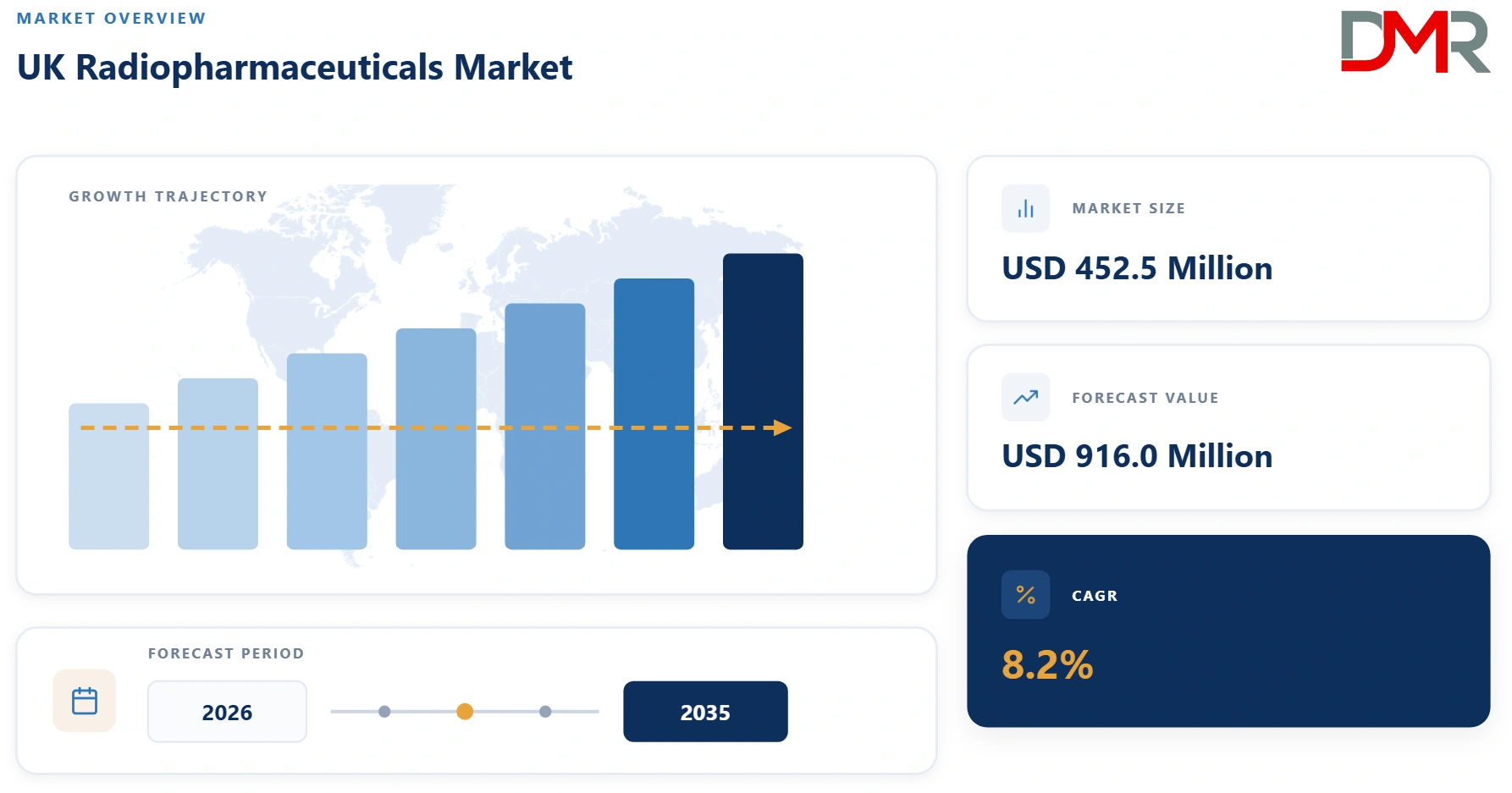
- UK Radiopharmaceuticals Market Size in 2026: USD 452.5 million
- UK Radiopharmaceuticals Market Size in 2035: USD 916 million
- UK CAGR from 2026 to 2035: 8.2%
- Fluorine-18 Derivatives is the leading Radioisotope segment in 2026: 35%
- Diagnostic Radiopharmaceuticals is the leading Type segment in 2026: 62%
- Cyclotrons is the leading Source segment in 2026: 48%
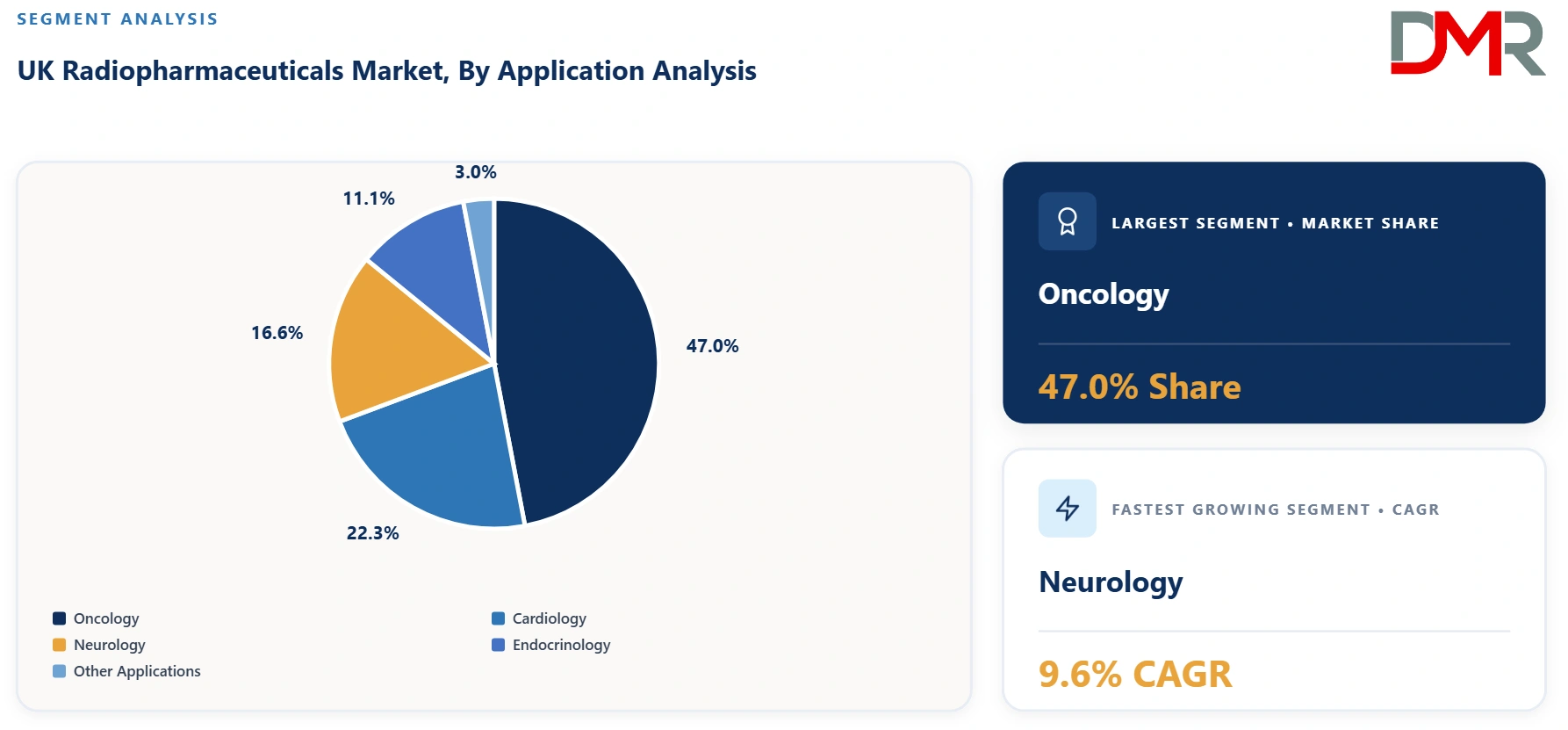
- Oncology is the leading Application segment in 2026: 47%
- Hospitals is the leading End User segment in 2026: 64%
What is the UK Radiopharmaceuticals Market and its Market Size?
The UK Radiopharmaceuticals Market is projected to reach approximately USD 452.5 million in 2026 and is expected to expand at an estimated compound annual growth rate of around 8.2% from 2026 to 2035, reaching approximately USD 916 million by 2035. The market encompasses radioactive medicinal products used for diagnostic imaging and targeted treatment, supported by growing PET and SPECT utilization, cancer diagnosis and treatment requirements, development of radioligand therapies, investment in domestic radionuclide production, and increasing NHS demand for reliable radiopharmaceutical supply.
ℹ
To learn more about this report –
Download Your Free Sample Report Here
Radiopharmaceuticals combine pharmaceutical compounds with radionuclides to enable functional imaging or targeted delivery of radiation to diseased tissue. In the UK, the market is supported by hospital radiopharmacies, commercial radiopharmaceutical manufacturers, cyclotron networks, nuclear medicine departments, research institutions, and NHS procurement frameworks. Diagnostic applications remain the largest portion of demand because PET and SPECT imaging are increasingly integrated into oncology, neurology, cardiology, and other clinical pathways. At the same time, therapeutic radiopharmaceuticals are gaining importance as lutetium-177 and other radionuclides support the expansion of targeted radionuclide and radioligand therapies.
The UK government has also been strengthening the medical radionuclide ecosystem. The Medical Radionuclide Innovation Programme has supported projects focused on Astatine-211, Iodine-124, copper isotopes, Actinium-225, scandium isotopes, and other emerging radionuclides to improve future domestic supply and therapeutic capabilities.
Use Cases
- PET and SPECT Diagnostic Imaging:Radiopharmaceuticals are widely used in PET and SPECT imaging to visualize physiological and metabolic processes that conventional anatomical imaging may not detect effectively. Fluorine-18 FDG supports cancer staging, treatment monitoring, and recurrence assessment, while technetium-99m remains important for SPECT procedures. Gallium-68 radiopharmaceuticals are increasingly used for receptor-targeted PET imaging, particularly in neuroendocrine tumors and prostate cancer. UK hospitals and specialist imaging centers rely on these products for increasingly personalized diagnosis and treatment planning.
- Targeted Cancer Therapy:Therapeutic radiopharmaceuticals deliver radiation directly to cancer cells by attaching radionuclides to molecules that selectively bind tumor-associated targets. Lutetium-177 has become particularly important for peptide receptor radionuclide therapy and prostate-specific membrane antigen targeted therapies. These approaches can provide systemic treatment while limiting radiation exposure to surrounding healthy tissue. Growing clinical adoption of radioligand therapies is increasing demand for therapeutic radionuclides, specialized radiopharmacies, treatment facilities, imaging support, and associated quality-control capabilities across the UK.
- Neurological Imaging and Research:Radiopharmaceuticals support neurological imaging by enabling visualization of brain metabolism, neurotransmitter activity, amyloid deposition, and other biological processes. Fluorine-18-labelled tracers and carbon-11 compounds are particularly relevant to PET-based neurological research and clinical assessment. These technologies assist investigations of dementia, Alzheimer's disease, Parkinson's disease, epilepsy, and other neurological disorders. UK academic medical centers and research institutes are also using radiotracers to support drug development, biomarker validation, patient selection, and longitudinal monitoring of neurological disease progression.
- Theranostic Drug Development:Radiopharmaceuticals increasingly support theranostic approaches in which a diagnostic radionuclide is paired with a therapeutic counterpart targeting the same biological mechanism. Gallium-68 and lutetium-177 combinations are prominent examples in receptor-targeted oncology. Diagnostic imaging can identify patients whose tumors express the required molecular target, while the corresponding therapeutic radiopharmaceutical delivers radiation to those tumors. This approach supports personalized treatment selection and monitoring and is encouraging pharmaceutical companies, hospitals, universities, and specialist radiopharmaceutical manufacturers to invest in new radionuclide and radioligand platforms.
Key Takeaways
- Market Size: The UK Radiopharmaceuticals Market is estimated at approximately USD 452.5 million in 2026 and is projected to reach USD 916 million by 2035.
- Growth Rate and Outlook: Market expansion is supported by increasing PET and SPECT utilization, rising cancer incidence, growing radioligand therapy adoption, improved radionuclide availability, development of theranostic platforms, and NHS investment in radiopharmaceutical procurement and supply continuity.
- Primary Growth Drivers: Increasing cancer burden, wider molecular imaging adoption, growing demand for targeted radionuclide therapy, development of new radioisotopes, expansion of cyclotron capacity, and improvements in domestic radionuclide supply are strengthening market growth.
- By Radioisotope Analysis: Fluorine-18 Derivatives are projected to remain the leading radioisotope category in 2026, supported by extensive PET applications in oncology, neurology, and other diagnostic procedures. Lutetium-177 is expected to record the fastest growth as radioligand and peptide receptor radionuclide therapies expand.
- By Type Analysis: Diagnostic Radiopharmaceuticals are anticipated to lead the market with an estimated 62% share in 2026, supported by widespread PET and SPECT imaging. Therapeutic Radiopharmaceuticals are expected to register faster growth as targeted radionuclide therapies gain clinical adoption.
- By Source Analysis: Cyclotrons are expected to account for the largest share of radionuclide supply in 2026, supported by short-lived PET isotopes such as fluorine-18. Generators are expected to show strong growth due to increasing demand for Gallium-68 and Technetium-99m decentralized production.
- By Application Analysis: Oncology is projected to dominate applications with an estimated 47% share in 2026, driven by rising cancer incidence, PET-based diagnosis, treatment planning, therapy response assessment, and targeted radioligand therapies.
- By End User Analysis: Hospitals are expected to lead end users with approximately 64% share in 2026 because nuclear medicine departments, radiopharmacies, PET and SPECT facilities, and radionuclide therapy services are concentrated within hospital networks.
How AI/Gen AI is Transforming the UK Radiopharmaceuticals Market?
Artificial intelligence and generative AI are improving radiopharmaceutical workflows by supporting image interpretation, lesion detection, quantitative PET and SPECT analysis, patient stratification, dose optimization, radiotracer development, and treatment-response assessment. AI can integrate imaging, pathology, genomic, and clinical information to identify patients likely to benefit from targeted radionuclide therapies. Generative AI can accelerate literature analysis, trial design, radiopharmaceutical discovery, and clinical documentation. In radiopharmacy operations, predictive analytics can help forecast demand, optimize production schedules, reduce wastage caused by radionuclide decay, and improve distribution planning for short-lived products across geographically dispersed NHS facilities.
Key Drivers in the UK Radiopharmaceuticals Market
Rising Cancer Burden and Expansion of Molecular Imaging
The increasing cancer burden in the UK is strengthening demand for advanced diagnostic and therapeutic radiopharmaceuticals. Cancer Research UK reported in April 2026 that more than 403,000 people are diagnosed with cancer each year in the UK, equivalent to approximately 1,100 diagnoses each day. PET and SPECT radiopharmaceuticals play important roles in cancer detection, staging, treatment planning, recurrence assessment, and response monitoring. Increasing use of molecular imaging is also supporting greater demand for Fluorine-18 and Gallium-68 products. As oncology pathways increasingly incorporate personalized treatment strategies, radiopharmaceuticals are becoming important tools for identifying molecular targets and selecting appropriate patients for targeted radionuclide therapies.
Increasing Adoption of Radioligand and Targeted Radionuclide Therapies
The expansion of targeted radiopharmaceutical therapy is creating a major growth opportunity for the UK market, particularly for Lutetium-177 and emerging therapeutic radionuclides. Lutetium-177-based products are being used in peptide receptor radionuclide therapy and prostate-specific membrane antigen targeted treatment, while clinical research is expanding into additional tumor targets and radionuclides. The UK Medical Radionuclide Innovation Programme has supported projects involving Astatine-211, Actinium-225, Copper-64, Copper-67, Scandium isotopes, and Iodine-124, demonstrating efforts to broaden domestic radionuclide capabilities. This expansion is expected to increase demand for specialized radiopharmaceutical manufacturing, isotope processing, dosimetry, and treatment infrastructure.
Restraints in the UK Radiopharmaceuticals Market
Short Half Lives and Complex Distribution Requirements
Many radiopharmaceuticals have short physical half-lives, creating substantial challenges in manufacturing, transportation, storage, scheduling, and inventory management. Products containing short-lived radionuclides must be produced close to the time and location of administration, requiring coordinated cyclotron operations, radiochemistry, quality control, logistics, and clinical scheduling. Transportation delays can reduce usable activity and increase product wastage. Geographic differences in access to PET centers and cyclotron facilities can further complicate distribution. These constraints increase operating costs and make supply-chain resilience particularly important for hospitals and commercial radiopharmacies serving multiple NHS facilities.
High Manufacturing, Compliance, and Infrastructure Costs
Radiopharmaceutical production requires specialized facilities, radiation shielding, automated synthesis equipment, hot cells, cleanrooms, quality-control laboratories, trained personnel, and strict regulatory compliance. Manufacturers and hospital radiopharmacies must maintain appropriate manufacturing and quality systems while managing radioactive materials safely. UK manufacturers are subject to licensing and inspection requirements, including manufacturer licences and GMP obligations. These requirements can increase barriers to entry and limit the ability of smaller organizations to commercialize new radiopharmaceuticals. High infrastructure costs can also slow the development of decentralized production capacity, particularly for advanced therapeutic radionuclides.
Growth Opportunities in the UK Radiopharmaceuticals Market
Development of Domestic Medical Radioisotope Production
Strengthening domestic radionuclide production represents a significant opportunity for the UK radiopharmaceuticals industry. Government-supported research has targeted new UK production capabilities for Astatine-211 and Iodine-124 as well as supply routes for copper isotopes and Actinium-225. Expanding domestic production could reduce exposure to international supply disruptions, improve availability of emerging therapeutic radionuclides, and support the growth of UK-based radiopharmaceutical research and manufacturing. The development of accelerator-based isotope production, improved target technologies, automated processing, and recycling of nuclear materials could further expand the domestic supply ecosystem and create opportunities for specialist technology providers.
Expansion of Theranostics and Personalized Nuclear Medicine
The growing integration of diagnostic imaging with targeted radionuclide treatment provides an important opportunity for market participants. Theranostic models allow physicians to identify target expression through molecular imaging before administering a therapeutic radiopharmaceutical. This approach can improve patient selection and support personalized treatment decisions. Increasing interest in radioligand therapies for prostate cancer, neuroendocrine tumors, and other cancers is encouraging pharmaceutical developers to expand pipelines and clinical trials. UK hospitals and cancer centers that build specialized nuclear medicine infrastructure can benefit from this shift through additional treatment capacity, while radiopharmaceutical manufacturers can develop new diagnostic and therapeutic isotope pairs.
Trends in the UK Radiopharmaceuticals Market
Shift Toward Theranostic and Precision Nuclear Medicine
The UK radiopharmaceutical market is moving beyond conventional diagnostic imaging toward integrated theranostic approaches. Molecular imaging increasingly identifies specific biological targets that can subsequently be treated using corresponding therapeutic radionuclides. Gallium-68 imaging paired with Lutetium-177 therapy is an important example of this model. The trend is encouraging pharmaceutical companies and academic centers to investigate new receptor targets, alpha emitters, beta emitters, and isotope pairs. As treatment becomes more personalized, demand is expected to increase for companion diagnostic imaging, patient selection, quantitative dosimetry, radioligand manufacturing, and specialist nuclear medicine facilities.
Greater Focus on Supply Security and Local Manufacturing
Supply resilience has become a prominent market theme because radiopharmaceuticals depend on complex international isotope supply chains and time-sensitive transportation. UK policymakers and healthcare organizations are increasingly examining domestic production options and regulatory arrangements for medical radionuclides. A government-led regulatory study published in April 2026 assessed the regulatory system covering medical radioisotope supply and the roles of relevant radiological and nuclear safety regulators. NHS procurement activity is also emphasizing continuity of supply, with the latest radiopharmaceutical framework covering diagnostic and therapeutic products, Technetium and Krypton generators, and Gallium generators.
Research Scope and Analysis
The research assesses the UK radiopharmaceuticals market across radioisotopes, product types, sources, applications, and end users, evaluating demand patterns, supply infrastructure, clinical adoption, regulatory conditions, technological advances, competitive positioning, investment activity, emerging opportunities, market risks, and evolving diagnostic and therapeutic requirements across hospitals, imaging centers, research institutes, specialist providers, and related healthcare organizations within the UK.
ℹ
To learn more about this report –
Download Your Free Sample Report Here
By Radioisotope Analysis
Fluorine-18 Derivatives are projected to maintain the largest share of the UK radiopharmaceuticals market in 2026, accounting for approximately 35%, supported by extensive PET imaging applications.
Lutetium-177 is expected to record the fastest growth, with an estimated CAGR of approximately 10.5% through 2035, driven by expanding radioligand therapy and peptide receptor radionuclide therapy.
The growth of Gallium-68 is also expected to remain strong as receptor-targeted PET imaging expands.
Technetium-99m will continue to represent an important established radioisotope because of its extensive use in SPECT procedures.
By Type Analysis
Diagnostic Radiopharmaceuticals are projected to dominate the UK market in 2026 with an estimated 62% share, supported by widespread PET and SPECT utilization across oncology, neurology, cardiology, and other specialties.
Therapeutic Radiopharmaceuticals are expected to register the fastest growth at approximately 10.0% CAGR through 2035.
Increasing adoption of Lutetium-177-based therapies and emerging alpha-emitting radionuclides will support therapeutic growth.
The expansion of theranostic treatment pathways will increasingly connect diagnostic and therapeutic radiopharmaceutical demand.
By Source Analysis
Cyclotrons are expected to account for the largest share of the source segment in 2026 at approximately 48%, supported by the production of short-lived PET radionuclides, particularly Fluorine-18.
Generators are expected to achieve the fastest growth at approximately 9.8% CAGR through 2035, supported by increasing demand for decentralized Gallium-68 and Technetium-99m production.
Nuclear reactors will remain important for radioisotopes requiring reactor-based production routes.
The development of domestic isotope capabilities is expected to improve supply resilience over the forecast period.
By Application Analysis
Oncology is expected to remain the largest application segment in 2026 with approximately 47% market share, supported by increasing cancer incidence and growing use of PET imaging and targeted radionuclide therapy.
Neurology is projected to record strong growth at approximately 9.6% CAGR through 2035.
Rising demand for functional brain imaging and molecular biomarkers will support neurological applications.
Cardiology, endocrinology, and other applications will continue to contribute to market expansion through established SPECT, PET, and targeted imaging procedures.
By End User Analysis
Hospitals are projected to lead the UK end-user segment with approximately 64% share in 2026 because most nuclear medicine departments, radiopharmacies, PET facilities, and radionuclide therapy services are integrated into hospital networks.
Cancer Research Institutes are expected to record the fastest growth at approximately 9.5% CAGR through 2035.
Growing radiopharmaceutical clinical research and development of novel radionuclides will increase demand from specialized research organizations.
Medical imaging centers will continue expanding their role in PET and SPECT diagnostic services.
The UK Radiopharmaceuticals Market Report is segmented based on the following:
By Radioisotope
- Fluorine-18 Derivatives
- Technetium-99
- Lutetium-177
- Gallium-68
- Zirconium-89
- 11C-Choline
- 14C-Urea
- Other Radioisotopes
By Type
- Diagnostic Radiopharmaceuticals
- Therapeutic Radiopharmaceuticals
By Source
- Cyclotrons
- Nuclear Reactors
- Generators
By Application
- Oncology
- Cardiology
- Neurology
- Endocrinology
- Other Applications
By End User
- Hospitals
- Medical Imaging Centers
- Cancer Research Institutes
- Other End Users
Regulatory Landscape Analysis
The UK radiopharmaceutical market operates under a regulatory framework involving the Medicines and Healthcare products Regulatory Agency, nuclear and environmental safety authorities, and relevant national healthcare bodies. Manufacturers of radiopharmaceuticals are subject to manufacturer licensing, GMP, quality-control, and radiation-safety requirements. In April 2026, the UK published updated guidance covering diagnostic radiopharmaceutical investigational medicinal products and GMP requirements, while amended Clinical Trials Regulations took full effect on 28 April 2026. The changes provide routes for certain diagnostic radiopharmaceutical IMPs to be manufactured at sites holding appropriate manufacturer licences, potentially supporting broader clinical research activity.
Investment and White Space Analysis
Investment opportunities are increasingly concentrated in domestic radionuclide production, radioligand therapy manufacturing, theranostic platforms, cyclotron infrastructure, automated radiochemistry, isotope recovery, and specialized radiopharmacy services. The UK Medical Radionuclide Innovation Programme has identified multiple projects aimed at strengthening domestic access to emerging isotopes, including Astatine-211, Iodine-124, Copper-64 and Copper-67, Actinium-225, and scandium isotopes. Significant white space exists in scalable production of therapeutic alpha emitters, decentralized isotope generation, automated quality control, radiopharmaceutical logistics, and personalized dosimetry. Companies capable of combining isotope production with radioligand development and clinical manufacturing could benefit from the expanding UK precision nuclear medicine ecosystem.
Competitive Landscape
The UK radiopharmaceuticals market is moderately concentrated around established radiopharmacy and pharmaceutical diagnostic suppliers, while specialized biotechnology companies are increasingly entering targeted radionuclide therapy. Major participants compete through manufacturing capacity, isotope availability, product portfolios, NHS procurement relationships, regulatory expertise, cyclotron infrastructure, and clinical development pipelines. The latest NHS Shared Business Services framework includes Alliance Medical Radiopharmacy, Curium Pharma UK, GE Healthcare, Siemens Healthcare, and Xiel for diagnostic and therapeutic radiopharmaceutical products. Competitive differentiation is increasingly shifting toward reliable supply, advanced radioligands, emerging therapeutic isotopes, manufacturing scalability, and integrated diagnostic-therapeutic solutions.
Some of the prominent players in the UK Radiopharmaceuticals Market are:
- Alliance Medical Radiopharmacy
- Curium Pharma UK
- GE HealthCare
- Siemens Healthineers
- Advanced Accelerator Applications
- Novartis
- Xiel
- Bayer
- Bracco
- Lantheus Holdings
- Cardinal Health
- IBA
- Eckert & Ziegler
- Telix Pharmaceuticals
- ITM Isotope Technologies Munich
- SHINE Technologies
- NorthStar Medical Radioisotopes
- RadioMedix
- SOFIE Biosciences
- Nucleus RadioPharma
- Isotopia Molecular Imaging
- PharmaLogic
- Jubilant DraxImage
- PanTera
- Orano Med
- Clarity Pharmaceuticals
- Perspective Therapeutics
- Ratio Therapeutics
- Artbio
- Aktis Oncology
- Alpha-9 Oncology
- AdvanCell
- Mariana Oncology
- Convergent Therapeutics
- AstraZeneca
- Eli Lilly
- POINT Biopharma
- RayzeBio
- Fusion Pharmaceuticals
- Immunomedics
- Invicro
- Other Key Players
The UK nuclear medicine industry also includes organizations such as Alliance Medical, Curium, GE Healthcare, Siemens Healthineers, and other specialist participants active in radiopharmaceuticals, nuclear medicine, imaging, and associated technologies.
Recent Developments
- NHS Shared Business Services — January 2026: NHS Shared Business Services awarded its radiopharmaceutical products framework covering diagnostic and therapeutic radiopharmaceuticals, Technetium and Krypton generators, and Gallium generators. The diagnostic and therapeutic lot includes Alliance Medical Radiopharmacy, Curium Pharma UK, GE Healthcare, Siemens Healthcare, and Xiel, while separate generator lots include Curium, GE Healthcare, and Xiel.
- UK Government and MHRA — April 2026: The UK introduced updated guidance for diagnostic radiopharmaceutical investigational medicinal products and GMP requirements. The amended Clinical Trials Regulations became fully effective on 28 April 2026, creating clearer requirements for manufacturing and clinical use of diagnostic radiopharmaceutical IMPs.
- UK Government — April 2026: The government published a review of the UK regulatory system for medical radioisotope supply. The study examined the roles and requirements of radiological and civil nuclear safety regulators across the medical radiopharmaceutical supply chain and followed the Medical Radionuclide Innovation Programme.
Report Details
| Report Characteristics |
| Market Size (2026) |
USD 452.5 Mn |
| Forecast Value (2035) |
USD 916.0 Mn |
| CAGR (2026–2035) |
8.2% |
| Historical Data |
2021 – 2025 |
| Forecast Data |
2026 – 2035 |
| Base Year |
2025 |
| Segments Covered |
By Radioisotope, By Type, By Source, By Application, By End User |
Frequently Asked Questions
How big is the UK Radiopharmaceuticals Market?
▾ The UK Radiopharmaceuticals Market is estimated to reach approximately USD 452.5 million in 2026 and is projected to reach approximately USD 916 million by 2035.
What is the CAGR of the UK Radiopharmaceuticals Market from 2026 to 2035?
▾ The UK Radiopharmaceuticals Market is expected to expand at approximately 8.2% CAGR from 2026 to 2035, based on the supplied 2025 and 2035 market values.
What factors are driving the growth of the UK Radiopharmaceuticals Market?
▾ Major growth factors include rising cancer incidence, increasing PET and SPECT utilization, expanding radioligand therapies, development of theranostic approaches, increasing demand for emerging therapeutic radionuclides, and efforts to strengthen domestic medical isotope supply.
What are the major trends in the UK Radiopharmaceuticals Market?
▾ Major trends include increasing adoption of targeted radionuclide therapy, expansion of theranostic medicine, development of emerging alpha and beta emitters, investment in domestic radionuclide production, automated radiopharmacy, AI-supported nuclear medicine, and stronger emphasis on supply-chain resilience.
Who are the key players in the UK Radiopharmaceuticals Market?
▾ Key players include Alliance Medical Radiopharmacy, Curium Pharma UK, GE HealthCare, Siemens Healthineers, Advanced Accelerator Applications, Novartis, Xiel, Bayer, Bracco, Lantheus, IBA, Eckert & Ziegler, Telix Pharmaceuticals, ITM Isotope Technologies, and other radiopharmaceutical and nuclear medicine companies.
How is the UK Radiopharmaceuticals Market segmented?
▾ The UK Radiopharmaceuticals Market is segmented by Radioisotope, Type, Source, Application, and End User. Radioisotope categories include Fluorine-18 Derivatives, Technetium-99, Lutetium-177, Gallium-68, Zirconium-89, 11C-Choline, 14C-Urea, and Other Radioisotopes. Type includes Diagnostic and Therapeutic Radiopharmaceuticals, while Source covers Cyclotrons, Nuclear Reactors, and Generators. Applications include Oncology, Cardiology, Neurology, Endocrinology, and Other Applications, while end users include Hospitals, Medical Imaging Centers, Cancer Research Institutes, and Other End Users.