What is the Agentic AI Security Market Size?
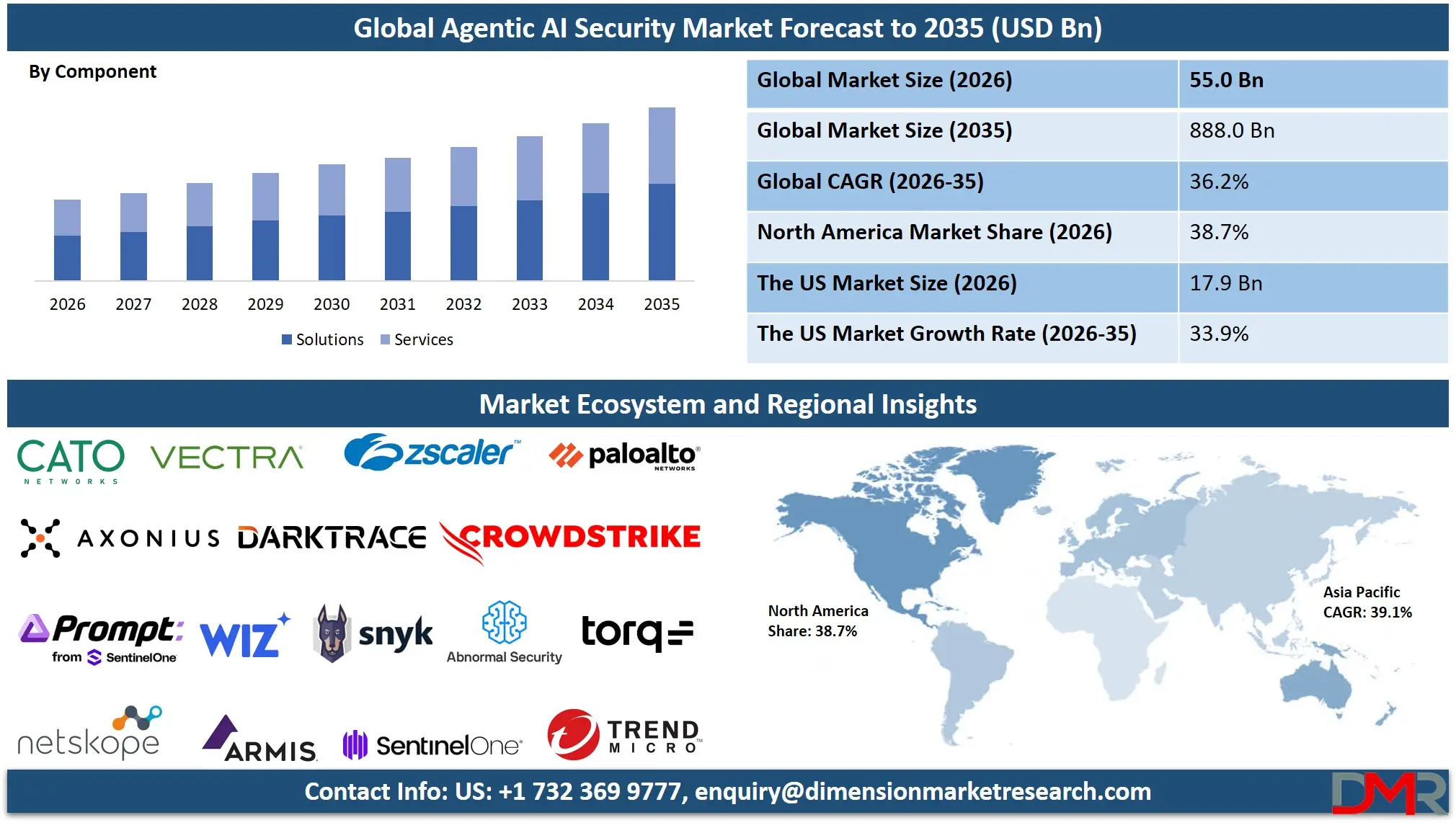
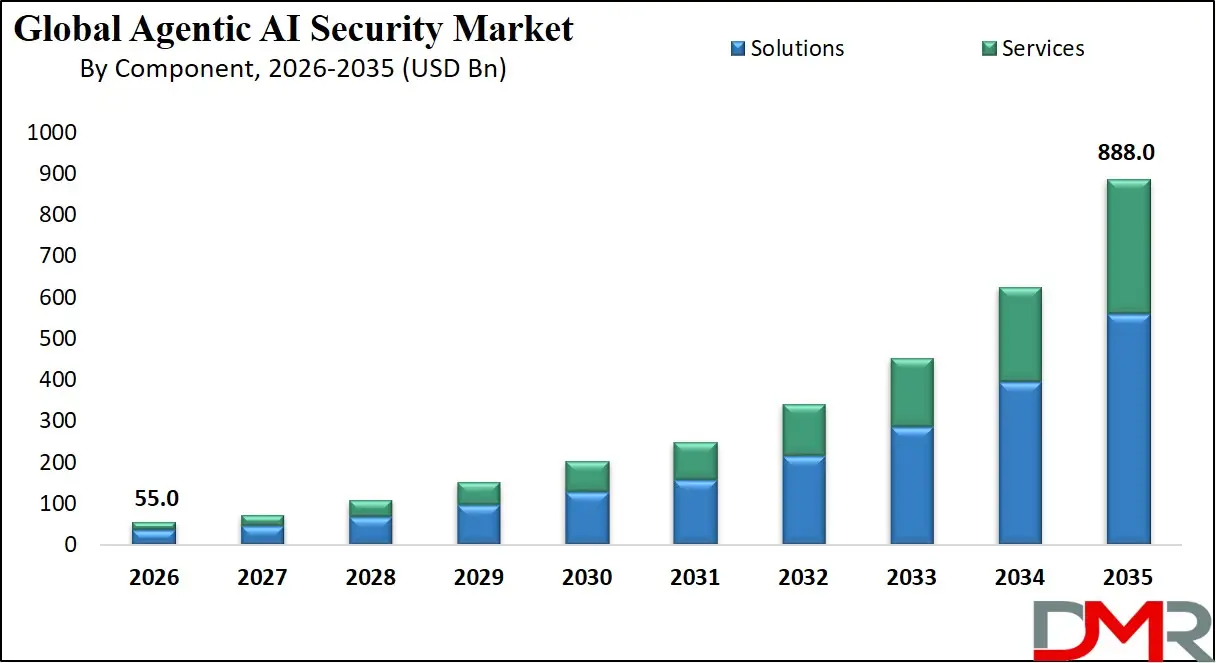
The Global Agentic AI Security Market is expected to reach a value of USD 55.0 billion in 2026, and it is further anticipated to reach USD 888.0 billion by 2035, growing at a CAGR of 36.2% during the forecast period.
ℹ
To learn more about this report –
Download Your Free Sample Report Here
The Global Agentic AI Security Market encompasses specialized security solutions and services designed to protect autonomous and semi-autonomous AI agents throughout their operational lifecycle. The market covers agent behavior monitoring, AI-specific threat detection and response, non-human identity and access management, AI agent runtime protection, security governance, and related integration and managed security services.
Market estimates should account only for revenue directly attributable to securing agentic AI systems. Revenue from broader cybersecurity platforms, general-purpose cloud security, conventional identity management, and AI-enabled security operations should be included only to the extent that it directly supports agent-specific security requirements. This approach reduces double counting and distinguishes agentic AI security expenditure from overall cybersecurity spending.
ℹ
To learn more about this report –
Download Your Free Sample Report Here
The US Agentic AI Security Market
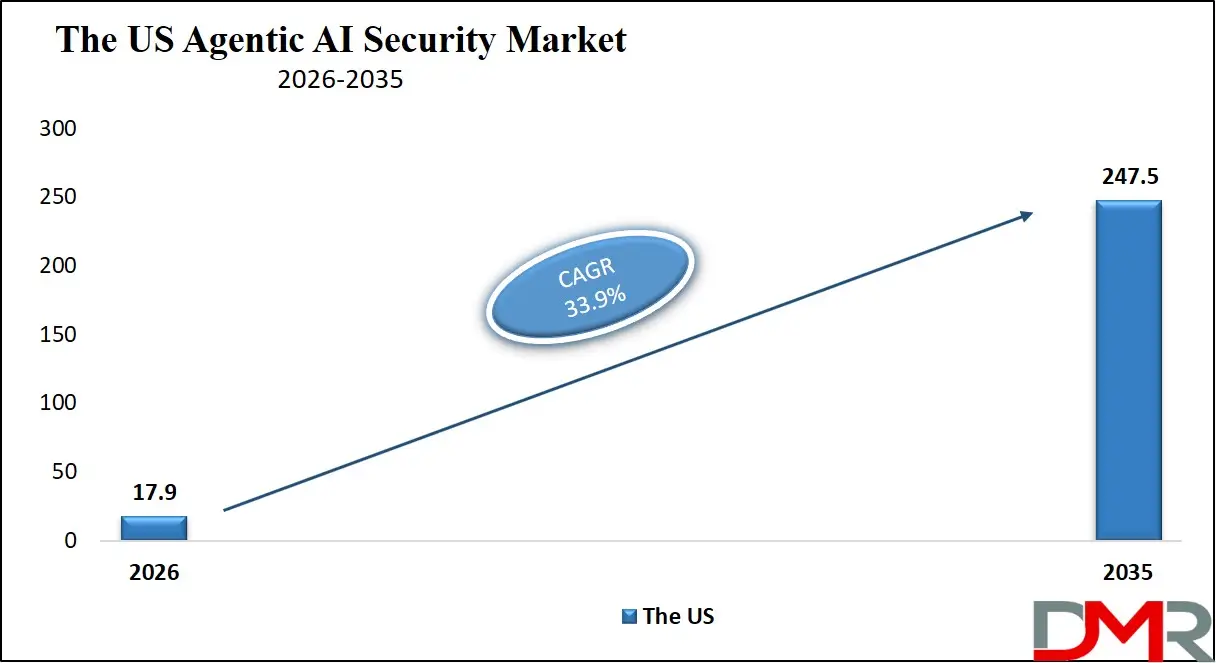
The US Agentic AI Security Market is projected to reach USD 17.9 billion in 2026 at a compound annual growth rate of 33.9% over its forecast period, culminating in a value of USD 247.5 billion by 2035.
ℹ
To learn more about this report –
Download Your Free Sample Report Here
The US remains the biggest and most developed market in terms of agentic AI security because of the aggressive implementation of autonomous AI agents within Fortune 500 corporations, federal governments, and defense contractors, and the quick growth of AI-driven security operations facilities. The market has been typified by an overwhelming demand of Agent Behavior Monitoring Tools and Non-Human Identity Management solutions as organizations struggle with the issue of managing thousands of autonomous agents with delegated authority in hybrid cloud environments. In addition, the incorporation of Generative AI agents in key business processes has triggered a concomitant upsurge in demand of Secure AI Application Testing and Runtime Protection services to ward off immediate injection attacks as well as autonomous agent manipulation. The rapid uptake of multi-agent systems by the US Department of Defense and intelligence community on autonomous surveillance and threat analysis has also spurred considerable investment in Reinforcement Learning-based Security Systems and Predictive Threat Intelligence platforms.
The Europe Agentic AI Security Market
The Europe Agentic AI Security Market is estimated to be valued at USD 15.8 billion in 2026 and is further anticipated to reach USD 244.7 billion by 2035 at a CAGR of 35.6%.
The regulatory environment of the European market, especially the provisions of the EU AI Act that govern high-risk AI systems and autonomous agents, significantly influences the market by enforcing strict security, transparency, and human oversight requirements. This regulatory push has resulted in an unprecedented demand on Compliance and Governance solutions specifically designed to address agentic AI systems, and AI Security Platforms with comprehensive audit trails and explainability capabilities of autonomous agent decisions. There is also a faster implementation of Hybrid deployment models of agentic AI security in the region with manufacturing and automotive giants in Germany and France trying to strike a balance between operational technology security and cloud-based AI agent orchestration.
The Japan Agentic AI Security Market
The Japan Agentic AI Security Market is projected to reach USD 5.2 billion in 2026 and is anticipated to expand to USD 78.4 billion by 2035, growing at a CAGR of approximately 35.2% during the forecast period.
Japanese market has distinctive features, as the country has the strategic necessity to overcome the critical workforce shortage by automating and using autonomous systems in the manufacturing, elderly care, and infrastructure monitoring sectors. The Japanese companies are implementing collaborative agents and semi-autonomous systems at an increasing rate, and this puts pressure on the development of Agent Behavior Monitoring Tools and Autonomous Threat Detection Systems that can work within the limits of the traditional industrial control environment. Integration and Deployment Services are also in high demand to close security gaps between autonomous AI agents and decades-old functioning technology systems in factories and critical infrastructure.
Key Takeaways
- Market Size and Forecast: The Global Agentic AI Security market is projected to reach USD 55.0 billion in 2026, expanding dramatically to USD 888.0 billion by 2035, due to the exponential growth of autonomous AI agents in enterprise settings and the resulting emergence of novel attack surfaces that cannot be addressed with conventional security solutions.
- Growth Rate and Outlook: The Global Agentic AI Security Market is projected to expand at a CAGR of 36.2% from 2026 to 2035, driven by the growing shortage of cybersecurity professionals with expertise in autonomous AI systems and the increasing complexity of securing multi-agent environments across hybrid cloud infrastructures.
- Primary Growth Drivers: Market growth is primarily driven by the rapid deployment of autonomous AI agents in mission-critical enterprise workflows, increasing demand for specialized security monitoring, and the rising importance of non-human identity and access management as organizations expand their AI agent ecosystems.
- Key Market Trends: The most notable trends are the convergence of AI-driven Security Orchestration, Automation and Response platforms with autonomous incident response features, the emergence of Graph-based AI Security to map complex agent relationships and dependencies, and the increasing focus on AI Agent Lifecycle Security across the development, deployment, and decommissioning phases.
- By Component Analysis: Solutions are poised to dominate this segment because of the need to have AI security platforms, threat detection, and identity control. Services increase alongside consulting and integration demand but are secondary, complementing deployments and not leading to core investments in agentic AI security systems.
- By Security Type Analysis: Threat detection and response are expected to dominate this segment with AI-driven automation and real-time mitigation. Non-human identities are also a critical issue because of identity and access management, and cloud and application security are also expanding in proportion to the increasing AI-driven infrastructures and workloads.
- By End-Use Industry Analysis: BFSI is poised to dominate this segment due to the need for a high level of security and regulation. IT and telecom are next with massive infrastructural demands, with healthcare and government increasing over time, embracing agentic AI security in securing sensitive data and systems.
- Regional Leadership: North America is poised to dominate this market with 38.7% of the market share in 2026 due to its concentration of AI research and development, leading agentic AI platform vendors and vigorous federal investment into secure autonomous systems to support defense and intelligence applications.
What is Agentic AI Security?
Agentic AI Security refers to the specialized discipline, technologies, and services dedicated to protecting autonomous and semi-autonomous artificial intelligence agents throughout their operational lifecycle. In contrast to conventional cybersecurity, which aims at ensuring the safety of the human-controllable systems and applications, agentic AI security is concerned with the special issues related to the autonomy of AI systems to set and pursue goals, plan, use tools, and make decisions based on those plans. This includes solutions, such as AI Security Platforms with both comprehensive governance and monitoring capabilities, Agent Behavior Monitoring Tools to detect anomalous agent behavior and possible goal drift, Autonomous Threat Detection Systems to detect adversarial manipulation attempts, and Identity and Access Control Solutions that explicitly address managing non-human identities and delegated authority chains.
The Services component consists of consulting to design agentic AI security, Integration and Deployment to implement security controls into agent architectures, Managed Security Services to monitor populations of agents continuously, and Training and Support to provide security specialists with the specialized skills needed to monitor autonomous AI behavior.
Use Cases
- Autonomous Threat Detection & Response: Agentic AI systems are persistent scanners of networks, who identify anomalies and automatically take actions to address threats in real time. They decrease the time of response, decrease human involvement, and enhance precision in detecting advanced cyberattacks in complicated digital settings.
- Non-Human Identity & Access Management: Agentic AI handles machine identities by providing authentication, authorization, and privileges to AI agents. It averts unauthorized access, identity-based assaults, and establishes secure communication among autonomous structures, APIs, and enterprise applications.
- AI-Driven Security Operations (Autonomous SOC): Autonomous SOC agents can automate security operations centers by processing alerts, ranking incidents, and processing response workflows. This enhances efficiency in operations, lowers the work load of the analysts and allows continuous and scalable monitoring of the security infrastructures of the enterprise.
- Fraud Detection & Risk Analytics: Agentic AI processes behavioral data and transactional data to identify fraud in real time. It allows predictive risk evaluation, minimizes financial losses, and optimizes decision-making in such industries as BFSI, e-commerce, and digital payments.
Market Dynamics
Key Drivers in the Global Agentic AI Security Market
Exponential Proliferation of Autonomous AI Agents
The most basic force behind the agentic AI security market is the rising pace of implementation of autonomous and semi-autonomous AI agents in enterprise settings. Companies are gradually integrating AI agents that can act autonomously into key business workflows, such as automated customer support, automated financial transactions, supply chain optimization, and automated IT operations management. Every deployed agent is a possible attack surface with its own vulnerabilities regarding its goal specifications, tool access permissions, memory systems, and reasoning architectures.
Emergence of Novel Agent-Specific Attack Vectors
The agentic AI security market is being propelled by the swift development and complexity of attack methods that are specifically tailored to take advantage of vulnerabilities that autonomous AI systems have. Attackers have created specific techniques such as indirect prompt injection attacks, which abuse agents using poisoned data sources, goal hijacking attacks, which abuse agent planning systems to achieve malicious goals, and memory poisoning attacks, which abuse agent long-term memory systems to affect future decision-making. Also, multi-agent collusion attacks have been shown in which compromised agents collude to evade detection during the execution of malicious instructions.
Restraints in the Global Agentic AI Security Market
Nascent State of Security Standards and Best Practices
The lack of established industry standards, best practices, and generally accepted security frameworks unique to autonomous AI systems is a major limitation to agentic AI security market. Although the historic experience of cybersecurity has been formalized into standards like NIST Cybersecurity Framework and ISO 27001, the security of agentic AI systems is a new field with only a few agreements about the core security needs, testing procedures, or certification standards. There exist no standardized methods that security teams use when analyzing agent risk profiles, substantiating agent behavior limits, or defining the right granularity of access control to non-human identities.
Complexity of Securing Heterogeneous Multi-Agent Environments
The natural complexity of environmental protection with the presence of various agent populations of different vendors, poses a significant barrier to market growth in the market. Enterprise agentic AI deployments are usually agent implementations that are constructed around alternative foundation models, apply different reasoning architectures, run on hybrid infrastructure based on cloud providers, on-premises systems, and communicate over multiple protocols and APIs. This heterogeneity poses significant integration problems to security solutions trying to offer unified visibility, uniform policy implementation, and end-to-end threat detection of the entire population of agents.
Growth Opportunities in the Global Agentic AI Security Market
Specialized Managed Security Services for Agentic AI Environments
The acute lack of specialized security talent and the complexity of operations involved in the protection of autonomous agent populations provide a significant growth opportunity in Managed Security Services specifically designed to secure agentic AI environments. Service providers may build specific services in which they integrate sustained agent behavioral observation, automatic threat identification and reaction, and human oversight to deal with the entire security lifecycle of agent deployments to enterprises. These managed services can leverage AI-driven monitoring platforms to achieve economies of scale while providing customers with access to specialized expertise that would be prohibitively expensive to develop internally.
AI Agent Lifecycle Security Platforms
A significant growth opportunity exists in developing comprehensive platforms that address security requirements across the entire AI agent lifecycle, from initial development through deployment, operation, and eventual decommissioning. Current security approaches typically focus narrowly on runtime protection, leaving substantial gaps in development-time security, supply chain integrity, and secure decommissioning processes. Platforms that integrate Secure AI Application Testing for vulnerability identification during development, automated security validation as part of CI/CD pipelines, runtime protection with behavioral monitoring, and secure credential revocation during agent decommissioning can capture substantial market share by addressing the complete security lifecycle.
Trends in the Global Agentic AI Security Market
Convergence of Agent Behavior Monitoring and AI Alignment
One major trend in the agentic AI security market is that security monitoring capabilities are converging with AI alignment and safety goals. Created as security tools, Agent Behavior Monitoring Tools are now becoming useful in identifying more general compatibility failures, such as unintentional goal drift, specification gaming behaviors, and emergent mismatch of human values. Telemetry of agent reasoning traces, patterns of tool selection, and goal satisfaction metrics can be used to provide visibility into agent decision-making, which is also valuable in safety assurance and security monitoring.
Autonomous Security Operations Centers Powered by AI Agents
The implementation of autonomous AI agents is transforming the security operations center itself, forming a recursive dynamic of agentic AI security solutions being implemented to protect the same population of agents that constitute the workforce of the SOC itself. The industry is shifting towards autonomous SOC analyst agents that can triage alerts, correlate threat intelligence across multiple disparate sources, perform initial investigation and execute automated response playbooks without human intervention. The trend brings forth complicated security demands, since the independent entities that run the SOC should themselves be safeguarded against compromise, manipulation and goal hijacking.
Research Scope and Analysis
The research scope and analysis highlights dominance of AI-driven solutions, threat detection, cloud deployment, and autonomous agents, with strong adoption across BFSI, large enterprises, and evolving security technologies.
ℹ
To learn more about this report –
Download Your Free Sample Report Here
By Component Analysis
Solutions are poised to dominate the component segment, with enterprises focusing on AI-powered security systems, autonomous threat detection, and identity control systems to protect agentic environments. These tools directly respond to changing cyber threats by autonomous agents. Vendors with integrated platforms which combine monitoring, detection and response capabilities are at the forefront of adoption. In the meantime, the services business is expanding, particularly consulting, integration, and managed security services, as organizations need expertise to implement and operate complex AI security frameworks. Training and support is also on the rise because of the skills gap on AI security. Services are however more of a complement to solution deployments as opposed to core spending. The growth of agentic AI usage will result in more demand for specialized services, yet solutions will remain dominant because of their direct involvement in ensuring AI-based operations.
By Security Type Analysis
Threat detection & response is projected to dominate this segment, fueled by the necessity of real-time and autonomous detection of advanced cyber threats and mitigation against AI agents. SOAR platforms based on AI, predictive intelligence, and automated incident response systems are becoming common. Identity and access management (IAM), especially non-human identity management and privileged access control, is also paramount due to the increasing proliferation of machine identities. The segments of cloud security and application security are experiencing rapid growth owing to the growth in AI workloads and API-based ecosystems. Compliance and privacy still rely on data security, and endpoint and network security are still fundamental layers. Generally, proactive and automated defense mechanisms are the most important to organizations, and threat detection and response are the most common segment with robust increases in identity-centric and cloud-native security strategies.
By Technology Analysis
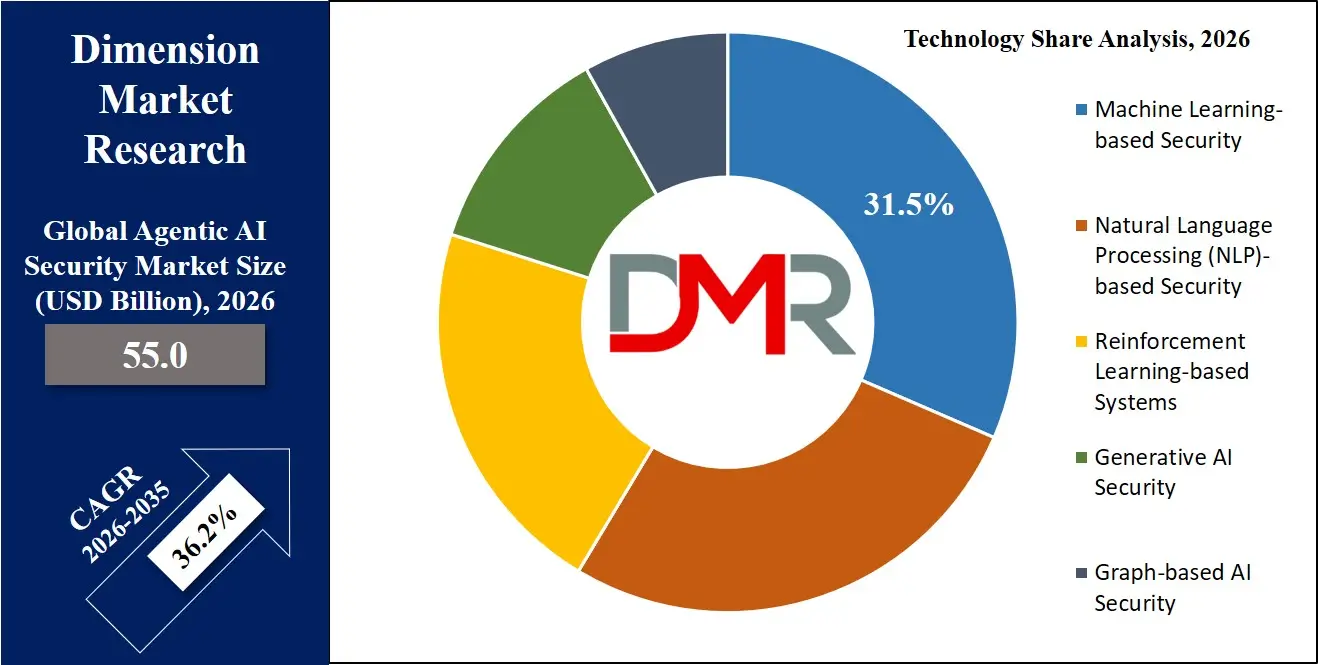
Machine learning-based security is expected to dominate the technology segment because it is more mature, scalable and is extensively used in anomaly detection, behavioral analytics and threat prediction. It lies at the core of the majority of AI security systems. Nonetheless, the area of generative AI security is the most rapidly developing one because companies want to protect the content the AI creates and protect against adversarial offenses. NLP security is essential in tracking agent conversations and identifying malicious prompts. Adaptive defense systems are starting to rely on reinforcement learning, allowing continuous refinement of the response plan to threats. In the meantime, graph-based AI security is becoming more popular as a means of visualizing intricate plots and identifying latent attack patterns. Although machine learning is leading in adoption, intersections of various AI technologies are defining the next generation agentic security models.
By Agent Type Analysis
Autonomous agents are anticipated to dominate this segment as organizations are adopting entirely independent systems, which have the ability to make decisions and carry out the decision without human intervention. Such agents are sensitive to strong security structures because of their high degree of autonomy and possible exposure to risks. Multi-agent systems are also rapidly expanding especially within complex enterprises where a number of AI agents work together to accomplish tasks which necessitate coordinated security capabilities. Semi-autonomous agents and collaborative agents are also important, particularly in the regulated industries where human control is still required. Nevertheless, with the shift towards more automation and efficiency in business, fully autonomous agents are now of interest, pushing the need to implement more sophisticated security solutions to adapt to their behavior, which is dynamic and self-directed.
By Deployment Mode Analysis
Cloud-based deployments are expected to dominate deployment modes because of their flexibility, scalability, and capability to handle dynamic AI workloads. Cloud environments are the most favored by organizations that implement agentic AI security solutions since it allows them to provide real-time updates, centralized monitoring, and integration with other cloud-native services. Hybrid deployment models are also becoming popular as a compromise between the scalability of the cloud and on-premises control, especially in sensitive data and regulated industries. On-premises deployment is also applicable to companies that need to have strict data control and low latency. But the pace of transition into digital transformation and distributed architecture is pushing cloud adoption as the primary deployment model, which is the leading segment in current use and future growth potential.
By Organization Size Analysis
Large enterprises are poised to dominate the market because they have large IT budgets, intricate infrastructures, and are more vulnerable to advanced cyber threats. Early adopters of agentic AI security solutions are these organizations, which invest a lot of money in new technologies to ensure the safety of critical assets and regulatory compliance. They can also afford investing in an extensive security architecture such as AI-based SOCs and automatic threat response applications. In the meantime, small and medium enterprises (SMEs) are growing more rapidly, as there is growing awareness of cyber risks and the affordability of cloud-based security systems.
By Application Analysis
Threat detection and response are projected to dominate this segment due to its critical role in identifying and mitigating cyber threats in real time, especially in dynamic AI-driven environments. Autonomous security operations (AI-driven SOC) are also gaining significant traction, enabling continuous monitoring and automated incident handling. Fraud detection and risk analytics are widely adopted in industries like BFSI, leveraging AI for predictive insights. Vulnerability management and compliance applications remain essential for maintaining security posture and regulatory adherence. AI agent lifecycle security is an emerging area, focusing on securing agents throughout their development and deployment stages. While multiple applications contribute to market growth, threat detection and response remain the primary focus due to their direct impact on organizational security.
By End-Use Industry Analysis
BFSI is projected to lead the Global Agentic AI Security Market due to its high exposure to cyber threats, stringent regulatory requirements, and significant investments in advanced security infrastructure. Financial institutions increasingly use agentic AI security solutions to detect fraud, manage operational risks, and protect digital transactions. IT and telecom represent another major end-use industry, supported by extensive data-processing requirements and complex network infrastructures. Healthcare organizations are also adopting advanced AI security solutions to protect sensitive patient information and meet regulatory requirements. Meanwhile, government and defense organizations are strengthening their security frameworks to safeguard critical infrastructure and confidential information. The retail, manufacturing, and energy sectors are gradually increasing their adoption of agentic AI security technologies.
The Global Agentic AI Security Market Report is segmented on the basis of the following:
By Component
- Solutions
- AI Security Platforms
- Agent Behavior Monitoring Tools
- Autonomous Threat Detection Systems
- Identity & Access Control Solutions
- Services
- Consulting
- Integration & Deployment
- Managed Security Services
- Training & Support
By Security Type
- Endpoint Security
- Device Behavior Analytics
- AI Agent Endpoint Protection
- Network Security
- AI-driven Network Monitoring
- Intrusion Detection & Prevention
- Application Security
- Secure AI Application Testing
- Runtime Protection
- Cloud Security
- AI Workload Protection
- Container & API Security
- Data Security
- Data Encryption
- Data Loss Prevention (DLP)
- Identity & Access Management (IAM)
- Non-Human Identity Management
- Privileged Access Management (PAM)
- Threat Detection & Response
- Autonomous Incident Response
- Predictive Threat Intelligence
- Security Orchestration, Automation & Response (SOAR)
- Workflow Automation
- AI-driven Playbooks
- Others
By Technology
- Machine Learning-based Security
- Natural Language Processing (NLP)-based Security
- Reinforcement Learning-based Systems
- Generative AI Security
- Graph-based AI Security
By Agent Type
- Autonomous Agents
- Semi-Autonomous Agents
- Multi-Agent Systems
- Collaborative Agents
By Deployment Mode
- On-Premises
- Cloud-Based
- Hybrid
By Organization Size
- Large Enterprises
- Small & Medium Enterprises (SMEs)
By Application
- Threat Detection & Response
- Vulnerability Management
- Autonomous Security Operations (AI-driven SOC)
- Fraud Detection & Risk Analytics
- Compliance & Governance
- AI Agent Lifecycle Security
- Others
By End-Use Industry
- BFSI
- Healthcare
- IT & Telecom
- Retail & E-commerce
- Government & Defense
- Manufacturing
- Energy & Utilities
- Others
Regional Analysis
Leading Region by Market Share
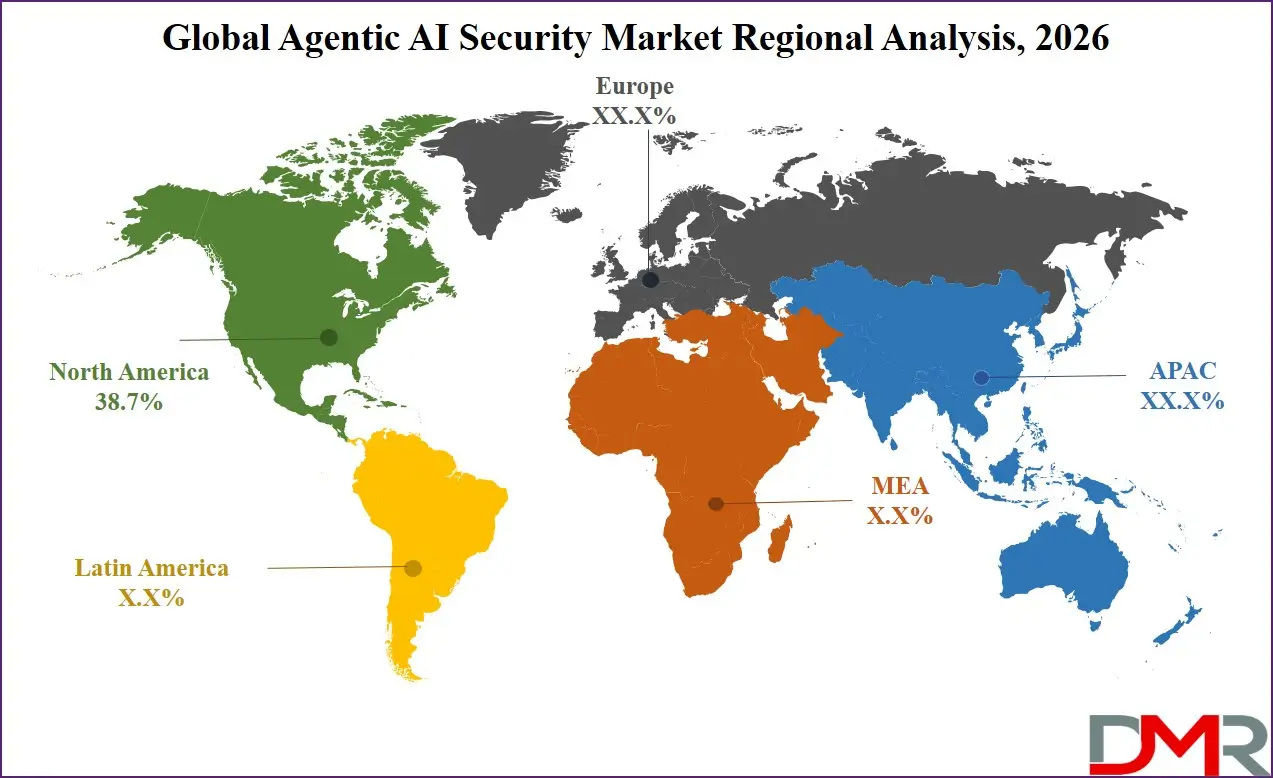
North America is poised to dominate the global agentic AI security market, projected to hold 38.7% of the market share by the end of 2026. North America has its market leadership anchored by the United States, which has the highest concentration of agentic AI security operations because of the unmatched concentration of AI research and development, the existence of top autonomous agent platform vendors, and aggressive federal funding of secure autonomous systems to use in defense and intelligence applications. The ecosystem supporting AI security startups, a highly developed system of venture capital, has been built to serve AI security. There is a full-scale deployment of autonomous agents at early-adopter enterprises in BFSI, technology, and healthcare industries.
ℹ
To learn more about this report –
Download Your Free Sample Report Here
The strategic focus on leading in AI and autonomous systems by the US government has led to significant investment in agentic AI security research by DARPA, Department of Defense, and the intelligence community. The efforts towards securing autonomous systems, preventing adversarial AI attacks, and establishing robust agent governance frameworks have increased the speed of technology development and established an advanced early market of agentic AI security solutions.
Fastest-Growing Regional Market
Asia-Pacific will become the fastest-growing agentic AI security market, with highly-aggressive government-led AI projects in China, Japan, South Korea, and Singapore, as well as a rapid adoption of autonomous agent technologies in manufacturing, financial services, and smart city applications by enterprises. The national approach towards AI leadership in China has certain points on AI security and AI governance, which establishes a large market of agentic AI security within the confines of national regulatory frameworks. The demographic-based trend of Japan to independent systems in manufacturing, healthcare, and government is creating the demand of specialized security capabilities. The high density of electronics production and industrial automation in the region establishes special needs in the protection of agentic AI systems into operational technology and industrial control environments.
By Region
North America
Europe
- Germany
- The U.K.
- France
- Italy
- Russia
- Spain
- Benelux
- Nordic
- Rest of Europe
Asia-Pacific
- China
- Japan
- South Korea
- India
- ANZ
- ASEAN
- Rest of Asia-Pacific
Latin America
- Brazil
- Mexico
- Argentina
- Colombia
- Rest of Latin America
Middle East & Africa
- Saudi Arabia
- UAE
- South Africa
- Israel
- Egypt
- Rest of MEA
Competitive Landscape
The global agentic AI security market is highly dynamic and convergence is occurring among the players of various adjacent markets, such as traditional cybersecurity vendors, cloud service providers, AI platform companies, and specialized agentic AI security startups. The market is still in its initial phases of growth with no dominant market players with a significant market share, which opens the chances of entrenched technology sellers and innovative new entrants to build a leadership position. Global system integrators and consulting firms such as Accenture, Deloitte, PwC, and EY have developed specific agentic AI security practices and are using their strong relationships with clients and cross-industry capabilities to grab strategic advisory and implementation services revenue. These companies are actively purchasing specialty agentic AI security shops and are building their own approaches to securing autonomous AI deployments.
Some of the prominent players in the Global Agentic AI Security Market are:
- Wiz
- CrowdStrike
- Palo Alto Networks (including Protect AI)
- SentinelOne
- Snyk
- Zscaler
- Abnormal Security
- Torq
- Trend Micro
- Vectra AI
- Darktrace
- Armis
- Axonius
- Cato Networks
- Cyera
- HiddenLayer
- Prompt Security
- Netskope
- Optiv
- Other Key Players
Recent Developments
- March 2026: Google Cloud announced new security agents for its agentic security operations center and highlighted its completed acquisition of Wiz, strengthening cloud security capabilities and AI-driven threat response.
- October 2025: Palo Alto Networks introduced Prisma AIRS 2.0, integrating Protect AI technologies to improve security across AI models, applications, and autonomous agents through enhanced runtime protection and risk management.
- July 2025: Palo Alto Networks completed its acquisition of Protect AI, expanding its Prisma AIRS platform with AI model scanning, security posture management, AI red teaming, and agent security capabilities.
- April 2025: Google Cloud introduced Google Unified Security, bringing together threat intelligence, security operations, cloud security, secure enterprise browsing, and Mandiant expertise in an AI-powered security offering.
Report Details
| Report Characteristics |
| Market Size (2026) |
USD 55.0 Bn |
| Forecast Value (2035) |
USD 888.0 Bn |
| CAGR (2026–2035) |
36.2% |
| The US Market Size (2026) |
USD 17.9 Bn |
| Historical Data |
2021 – 2025 |
| Forecast Data |
2027 – 2035 |
| Base Year |
2025 |
| Estimate Year |
2026 |
| Segments Covered |
By Component (Solutions, and Services),
By Security Type (Endpoint Security, Network Security, Application Security, Cloud Security, Data Security, Identity & Access Management (IAM), Threat Detection & Response, Security Orchestration, Automation & Response (SOAR), and Others),
By Technology (Machine Learning-based Security, Natural Language Processing (NLP)-based Security, Reinforcement Learning-based Systems, Generative AI Security, and Graph-based AI Security),
By Agent Type (Autonomous Agents, Semi-Autonomous Agents, Multi-Agent Systems, and Collaborative Agents),
By Deployment Mode (On-Premises, Cloud-Based, and Hybrid),
By Organization Size (Large Enterprises, and Small & Medium Enterprises (SMEs)),
By Application (Threat Detection & Response, Vulnerability Management, Autonomous Security Operations (AI-driven SOC), Fraud Detection & Risk Analytics, Compliance & Governance, AI Agent Lifecycle Security, and Others),
By End-Use Industry (BFSI, Healthcare, IT & Telecom, Retail & E-commerce, Government & Defense, Manufacturing, Energy & Utilities, and Others) |
| Regional Coverage |
North America – The US and Canada;
Europe – Germany, The UK, France, Russia, Spain, Italy, Benelux, Nordic, & Rest of Europe;
Asia-Pacific – China, Japan, South Korea, India, ANZ, ASEAN, Rest of APAC;
Latin America – Brazil, Mexico, Argentina, Colombia, Rest of Latin America;
Middle East & Africa – Saudi Arabia, UAE, South Africa, Turkey, Egypt, Israel, & Rest of MEA |
Frequently Asked Questions
How big is the Global Agentic AI Security Market?
▾ The Global Agentic AI Security market is poised to be valued at USD 55.0 billion in 2026 and is projected to reach USD 888.0 billion by 2035, driven by the exponential proliferation of autonomous AI agents across enterprise environments and the critical requirement for specialized security solutions addressing novel agent-specific attack vectors.
What is the CAGR of the Global Agentic AI Security Market from 2026 to 2035?
▾ The market is expected to grow at a CAGR of 36.2% from 2026 to 2035, reflecting the accelerating deployment of autonomous agents in mission-critical applications and the corresponding urgency to implement robust security and governance frameworks.
What factors are driving the growth of the Global Agentic AI Security Market?
▾ Key drivers include the exponential proliferation of autonomous AI agents across enterprise environments, the emergence of sophisticated agent-specific attack vectors including prompt injection and goal hijacking, stringent regulatory requirements for AI system governance, and the critical shortage of security professionals with agentic AI security expertise.
Which region held the largest share of the Agentic AI Security Market in 2026?
▾ North America is expected to dominate this market with 38.7% of market share in 2026, driven by concentrated AI research and development activity, aggressive federal investment in secure autonomous systems, and a mature ecosystem of technology vendors and early-adopter enterprises.
Which region is expected to grow the fastest in the Agentic AI Security Market?
▾ The Asia-Pacific region is expected to grow the fastest, fueled by aggressive government-led AI initiatives, rapid enterprise adoption of autonomous agent technologies across manufacturing and financial services, and substantial investment in AI capabilities across China, Japan, South Korea, and Southeast Asia.
What are the major trends in the Global Agentic AI Security Market?
▾ Major trends include the rise of specialized Non-Human Identity and Access Management solutions, convergence of agent behavior monitoring with AI alignment and safety objectives, the emergence of autonomous security operations centers powered by AI agents, and the development of comprehensive AI Agent Lifecycle Security platforms.
Who are the key players in the Global Agentic AI Security Market?
▾ Prominent players in the Global Agentic AI Security Market include Wiz, CrowdStrike, Palo Alto Networks (including Protect AI), SentinelOne, Snyk, Zscaler, Abnormal Security, Torq, Trend Micro, Vectra AI, Darktrace, Armis, Axonius, Cato Networks, Cyera, HiddenLayer, Prompt Security, Netskope, and Optiv.
How is the Global Agentic AI Security Market segmented?
▾ The Global Agentic AI Security Market is segmented by Component, Security Type, Technology, Agent Type, Deployment Mode, Organization Size, Application, and End-Use Industry.